
Walking up to 3 miles per day at a moderate pace of 2 mph over a combination of paved and unpaved terrain, including trails with minimal elevation gain. Standing up to 3 hours per day with limited opportunities to sit. Program will require approximately 8 miles of walking over 4 days. Must be able to use stairs, sometimes without handrails, in order to navigate field trip sites. Elective hiking and paddling according to personal choice. Traveling by motorcoach up to 3 hours per day. Boat field trip includes boarding via a dock ramp; steps up and down may be required depending on vessel. Due to unavoidable stairs and field trip sites that cannot accommodate mobility devices, wheelchairs and scooters cannot be accommodated on this program. Must be physically capable of participating in all planned program activities.
Wisconsin
A Superior Exploration: Lake Superior’s History & Ecology
Program No. 24850RJ
See More Photos
A Superior Exploration: Lake Superior’s History & Ecology
A Superior Exploration: Lake Superior’s History & Ecology
1 of 6
Start Enrolling

Program
At a Glance
Duration
6 days
Program Begins
Superior, Wisconsin
Program Concludes
Superior, Wisconsin
Meals
12 (
5B, 4L, 3D
)
Activity Level
From
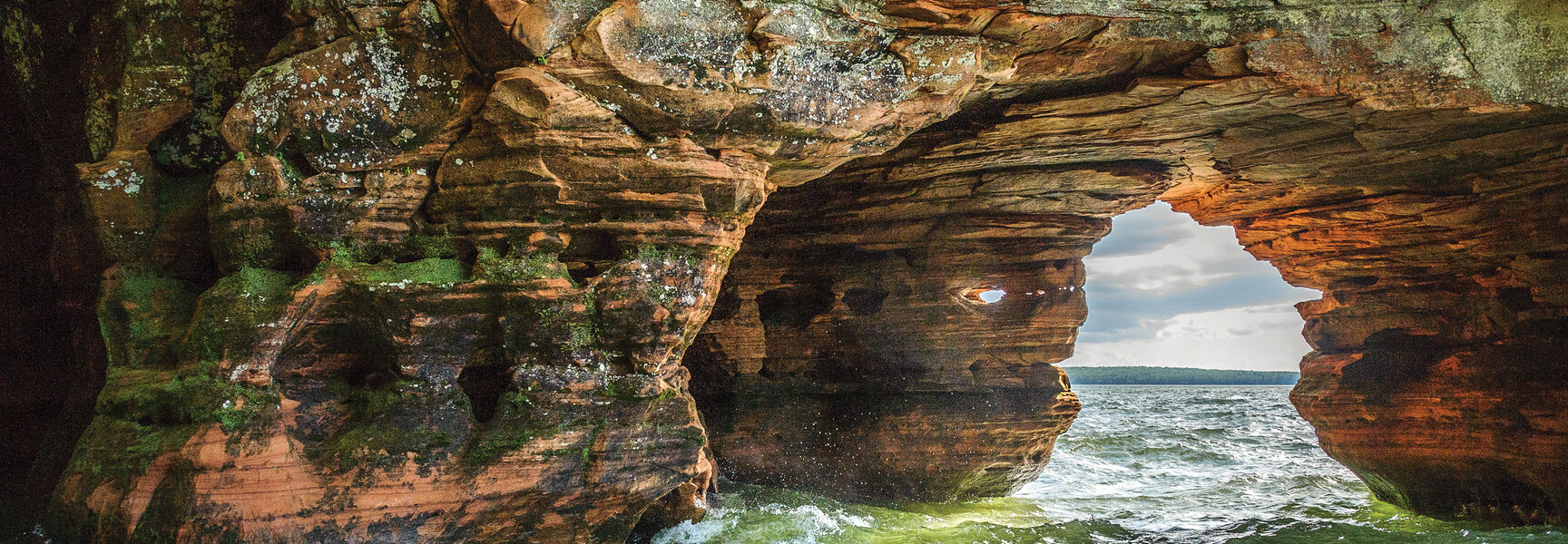
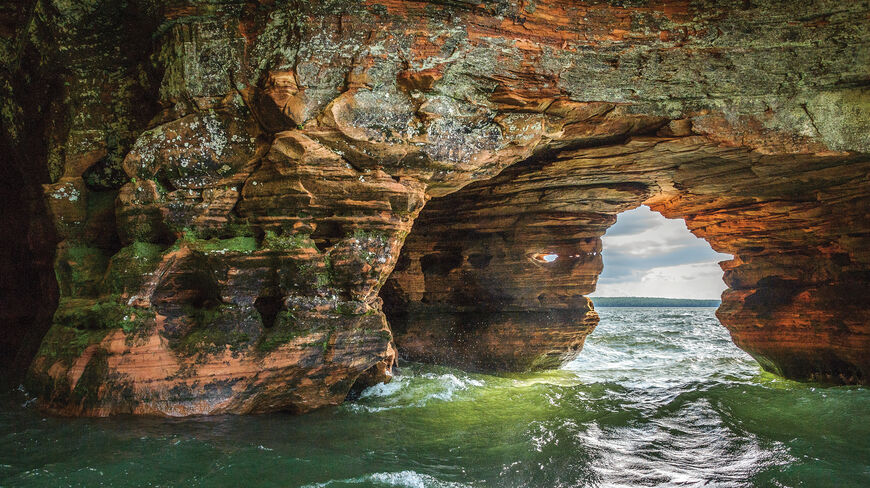
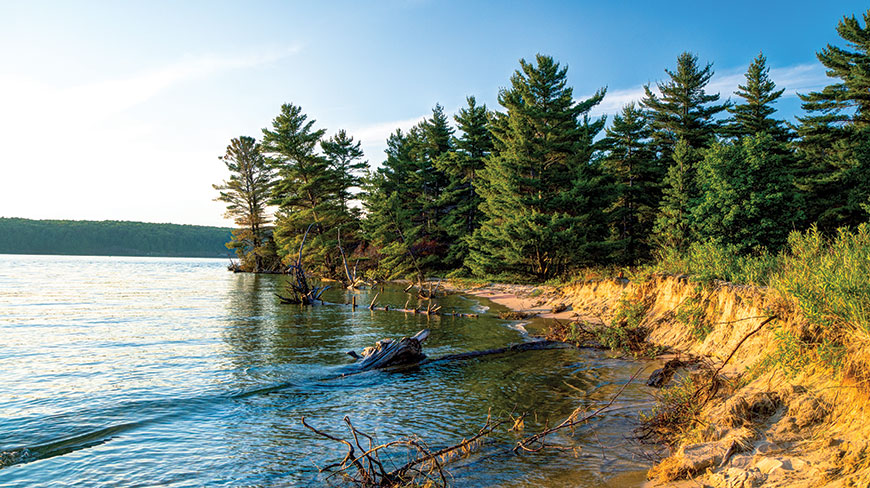
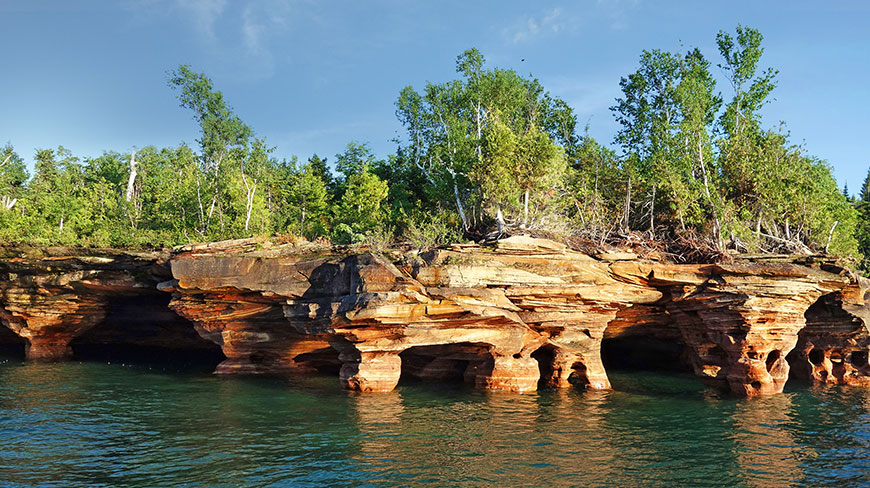
2,099From Lake Superior’s glacial and tectonic geology to its significance to indigenous peoples and importance to environmental research, the largest freshwater lake in the world makes a fascinating study. Embark on a journey exploring western and southern Lake Superior, including a history of the Twin Ports, field trips to historical sites and presentations by local indigenous elders and historians. Enjoy hands-on learning while exploring the aquatic life of the Brule River State Forest and the region's natural wonders through canoeing and hiking.
Best of all, you'll...
- Investigate freshwater ocean ecology through the University of Wisconsin-Superior’s Lake Superior Research Institute Floating Classroom, a new hybrid research and educational vessel.
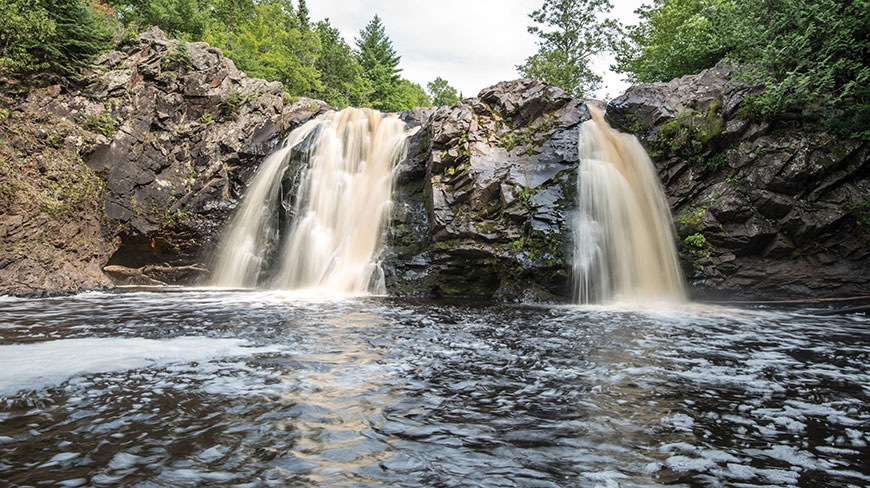
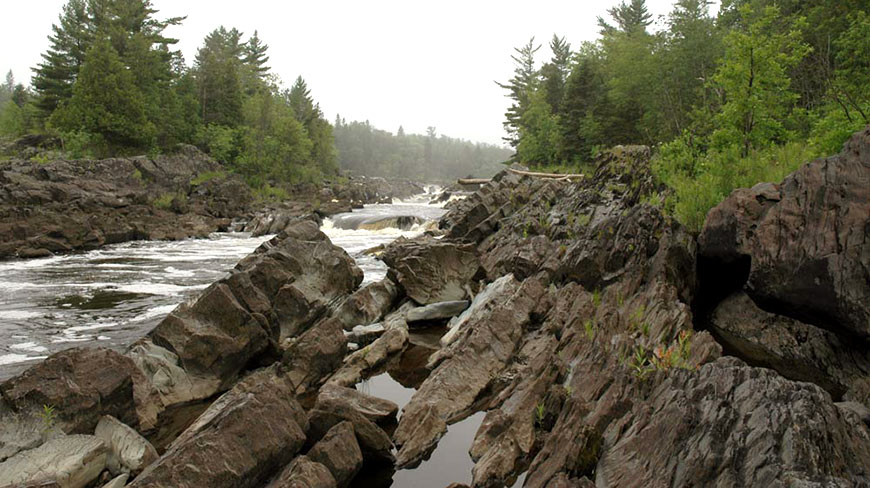
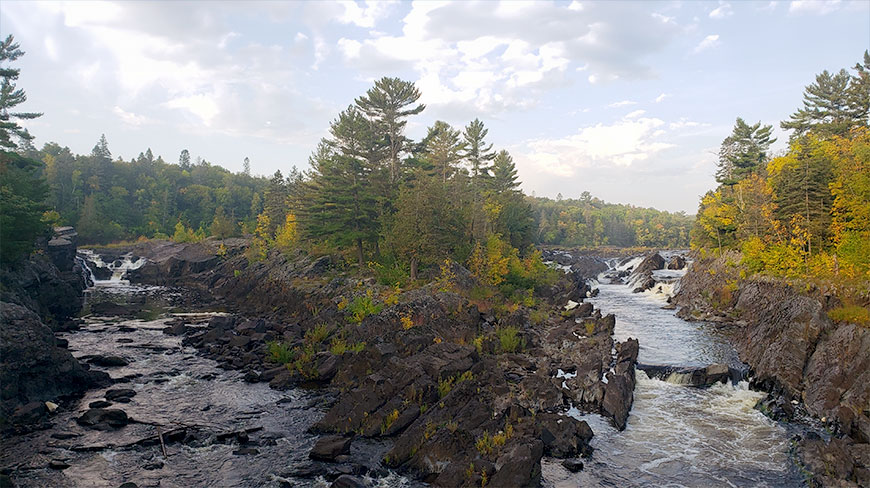
- Learn from park experts about the rich geology and ecology of Amnicon Falls State Park, Pattison State Park and Jay Cooke State Park.
- Explore the Indigenous history of the area through presentations from a local tribal historian and tribal environmental scientist.
Featured Expert
All Experts
Kathryn Guimond
Kathryn Guimond serves as the director of UW-Superior’s Center for Continuing Education. She has a B.A. in geology and a M.Ed. in science and math for teachers. Her areas of expertise include lifelong learning and K-12 STEM education. Kathryn resides in her birthplace of South Range, Wisconsin. Her current hobbies include enjoying the 80 acres of land surrounding the house her father built, her two dogs, and getting out to lakes, streams, and forests; equally important is spending quality time with her partner and family.
Please Note:
This expert may not be available for every date of the program
Please Note:
These experts may not be available for every date of the program
Kathryn Guimond
Kathryn Guimond serves as the director of UW-Superior’s Center for Continuing Education. She has a B.A. in geology and a M.Ed. in science and math for teachers. Her areas of expertise include lifelong learning and K-12 STEM education. Kathryn resides in her birthplace of South Range, Wisconsin. Her current hobbies include enjoying the 80 acres of land surrounding the house her father built, her two dogs, and getting out to lakes, streams, and forests; equally important is spending quality time with her partner and family.
Julie Marckel
Julie Marckel (she/her) is a science educator and artist who has sought to learn about, participate in, or lead projects related to equitable engagement and access to natural spaces and experiences, environmental justice, and climate change. She has worked in education and nonprofit program development and management for most of her career. For 14 years, Julie served as program specialist at the Science Museum of Minnesota, supporting informal science, technology, engineering, and math programming for K-12 students throughout the state.
Kelly Beaster
Kelly Beaster is a plant ecologist and artist, living in Duluth, MN with her husband and two boys. She is well versed in the Brule River, having studied the water velocity and channel depths for the Lake Superior Research Institute. She surveyed the surrounding inland wetlands in the watershed and studied the coastal wetland at the mouth of the Brule River. She has a deep knowledge of peatlands from her continued work as the land steward for the Friends of Sax-Zim Bog in northern Minnesota.
Alan Brew
Alan Brew earned his undergraduate degree from Gustavus Adolphus College and his graduate degrees in literature from the University of North Carolina at Chapel Hill. Before joining the Lake Superior Research Institute as the outreach program manager, Alan worked as a professor and as the director of an environmental institute. Alan loves water, in all its forms, and he enjoys paddling, skiing, and fishing.
Michael Nagel
Michael Nagel earned his B.S. in biological sciences at Michigan Technological University with a focus on aquatic ecology. He joined the Lake Superior Research Institute in 2020, incorporating experiences in aquatic toxicology and interest in crustacean zooplankton, the microscopic animals that inhabit our lakes. Michael is also pursuing a graduate degree through the Water Resources Science program at the University of Minnesota Duluth, where his research examines how zooplankton communities have changed over the last few decades within the St. Louis River Estuary and potential drivers of those differences.
Bob Banks
Bob Banks is a cultural historian and expert on the Brule River. He is a member of the Brule River Coalition and has deep family ties to Brule from two important area lineages, Banks and Noyes.
Teddie Meronek
Teddie Meronek is a proud graduate of UW-Superior. Her degree in history and library science served her well during her 40 years as a librarian at the Superior Public Library. It was at the library that she discovered her love of Superior’s history and shared her knowledge of her hometown with patrons. Teddie has also co-authored two books, 'Superior Catholics' and 'Central A to Z,' and written four comic plays set in Superior that have been performed by local community theatre groups. Several of her articles, such as "The Librarian and the Architect: Designing Frank Lloyd Wright’s Below Zero" and "'Their Community on the Wall’: the Local History Murals of the Superior Public Library,” are included in the Area Research Collection at the library. Since retiring, Teddie continues to volunteer at the library and to be involved with local history projects, including the recent acquisition of a Wisconsin Historical Society historical marker honoring the loss of the Edmund Fitzgerald.
Mark McConnell
Mark McConnell is an Elder with the Fond du Lac Band of Lake Superior Chippewa and a proud descendant of Chief Joseph Osaugie, who in 1852 walked to Washington, DC to stand up for the rights of the Anishinaabe people. Whether he's talking to kids or lifelong learners, Mark brings history to life with warmth, wisdom, and heart. His teachings help others better understand Anishinaabe traditions and the lasting importance of community, land, and resilience.
Jerry Shepard
Jerry Shepard grew up in Superior and earned a B.S. in ecology and aquatic biology at UW-Superior in 1997. He went on to earn his M.S. in water resources ecology from UW-Stevens Point in 2002, with a focus on aquatic entomology and biomonitoring. Jerry's career as an aquatic entomologist was kickstarted in 2004 when he worked for the Great Lakes Environmental Center in Traverse City, MI. In 2012, Jerry relocated to Superior and started the invertebrate taxonomy lab at the EPA facility in Duluth.
Dan Cocchiarella
Dan Cocchiarella is a Minnesota native whose love for water and geology spans throughout his life. After he grew up on the Mississippi River in the suburbs of St. Paul, he migrated downriver and attained his B.S. in geology from Winona State University. Dan worked as a cave guide at Mystery Cave State Park for three summers, talking about the impacts of pollution in a vulnerable ecosystem. Dan is now a full-time interpretive naturalist at Jay Cooke State Park.
Andy Breckenridge
Andy Breckenridge is a professor of geology and environmental science within the natural sciences department at the University of Wisconsin-Superior. His teaching and research interests cover the areas of sedimentology, stratigraphy, global climate change, glacial geology, and the study of the Earth’s landforms. He is fascinated by lake sediments because they provide a window into the past through which people can see how landscapes and climate have changed.
Ryan Feldbrugge
Ryan Feldbrugge serves as the education specialist for the Rivers2Lake education program. In this role, he works to facilitate and enable classroom teachers to get their students outside and engaged in authentic learning about the St. Louis River Estuary and Lake Superior Basin. Ryan holds a B.A. in philosophy from Minnesota State University, Mankato and a master of environmental education from the University of Minnesota Duluth. He has been involved in education since 2011. In his spare time, Ryan enjoys running, hiking, climbing, kayaking, and spending time with his partner, Sara, and son, Everett.
Amy Eliot
Amy Eliot is a recently retired associate director and water resources biologist who grew up near Lake Superior and spent her entire career working in the Lake Superior basin. Her diverse experience in research, regulation, and conservation planning at the Lake Superior Research Institute and the Wisconsin Department of Natural Resources accounts for her holistic viewpoint and approach to education. She has conducted habitat assessments on northern rivers for many years and enjoys sharing information about how aquatic organisms help measure the health of a river. Amy is a member of the Douglas County Conservation Committee and the Brule Town Board, and she supports local organizations dedicated to preserving the Brule River.
Luciana Ranelli
Luciana Ranelli has demonstrated experience and leadership in environmental education (EE), recently as Youth and Family Programs Director at Wolf Ridge Environmental Learning Center and Field Education Faculty at Teton Science Schools. Luciana trains environmental educators on practices for authentic community engagement as part of the ee360 team at Antioch University New England. Luciana earned an M.S. in environmental studies at Antioch and a B.A. in biology and secondary education at the University of Minnesota, Morris.
Matt TenEyck
Dr. Matt TenEyck is the center director of the Lake Superior Research Institute at the University of Wisconsin–Superior, where he has worked for over 25 years. He earned his B.S. from UW–Superior, his M.S. from Oklahoma State University, and his Ph.D. from the University of Minnesota–Duluth, where his research focused on the role of zooplankton propagule pressure in ballast water discharge. Dr. TenEyck has served as principal investigator and co-investigator on numerous sediments, water toxicology, and aquatic invasive species projects.
Activity Level
Keep the Pace
Suggested Books and Resources
View Full List
You can also find many of the books we recommend at the Road Scholar store on bookshop.org, a website that supports local bookstores.
HAVE QUESTIONS?
Prefer to enroll or inquire by phone?
We can help. Give us a call, and we can answer all of your questions!
Call
800-454-5768
Helpful Links
Enroll with Confidence
Peace of Mind
We want your Road Scholar learning adventure to be something to look forward to—not worry about. That’s why we go to the ends of the earth to give you peace of mind, from the moment you enroll until the day you return home.

Assurance Plan
Road Scholar is committed to the well-being of every participant, whether on a program in the United States or abroad. That’s why all participants are covered under our Road Scholar Assurance Plan, which provides 24-hour assistance in the event of an emergency during your program, as well as insurance for emergency medical evacuation.

Want to Protect Your Investment?
Road Scholar is pleased to offer its Trip Protection Plan as a way to protect your program investment. You may purchase this optional trip protection plan when enrolling in your program.
Sustainable Travel
We offset a portion of the emissions created by your travel. Read about our commitment to a more sustainable planet.

- Peace of Mind
We want your Road Scholar learning adventure to be something to look forward to—not worry about. That’s why we go to the ends of the earth to give you peace of mind, from the moment you enroll until the day you return home.
- Assurance Plan
Road Scholar is committed to the well-being of every participant, whether on a program in the United States or abroad. That’s why all participants are covered under our Road Scholar Assurance Plan, which provides 24-hour assistance in the event of an emergency during your program, as well as insurance for emergency medical evacuation.
- Want to Protect Your Investment?
Road Scholar is pleased to offer its Trip Protection Plan as a way to protect your program investment. You may purchase this optional trip protection plan when enrolling in your program.
- Sustainable Travel
We offset a portion of the emissions created by your travel. Read about our commitment to a more sustainable planet.
1 of 4