The Emerald Mile: The Epic Story of the Fastest Ride in History Through the Heart of the Grand Canyon
by Fedarko, Kevin
In the spring of 1983, massive flooding along the length of the Colorado River confronted a team of engineers at the Glen Canyon Dam with an unprecedented emergency that may have resulted in the most catastrophic dam failure in history. In the midst of this crisis, the decision to launch a small wooden dory named “The Emerald Mile” at the head of the Grand Canyon, just fifteen miles downstream from the Glen Canyon Dam, seemed not just odd, but downright suicidal.
The Emerald Mile, at one time slated to be destroyed, was rescued and brought back to life by Kenton Grua, the man at the oars, who intended to use this flood as a kind of hydraulic sling-shot. The goal was to nail the all-time record for the fastest boat ever propelled—by oar, by motor, or by the grace of God himself—down the entire length of the Colorado River from Lee’s Ferry to Lake Mead. Did he survive? Just barely. Now, this remarkable, epic feat unfolds here, in The Emerald Mile.
An Introduction to Grand Canyon Prehistory
by Coder, Christopher M.
People have inhabited Grand Canyon for the past twelve thousand years. Evidence of their lives exists throughout the canyon; but it is up to their ancestors and archaeologists to interpret those remains for us. This book provides a popular look at the architecture, art, and tools of prehistoric Puebloan peoples, as well as information about modern-day Native American tribes. With illustrations and color photographs.
Ancient Peoples of the American Southwest
by Steve Plog
The American Southwest is home to some of the most remarkable monuments of America's prehistoric past, such as Chaco Canyon and Mesa Verde. Stephen Plog, who has spent decades working in the region, provides the most readable and up-to-date account of the predecessors of the modern Hopi and Pueblo Indian cultures in this well-received account. Chaco Canyon became the center of a thriving Anasazi cultural tradition. It was the hub of a trading network extending over hundreds of miles, whose arteries were a series of extraordinary roads that are still being discovered and mapped. Interweaving the latest archaeological evidence with early first-person accounts, Professor Plog explains the rise and mysterious fall of Southwestern cultures. 224pp.
Beyond the Hundredth Meridian: John Wesley Powell and the Second Opening of the West
by Stegner, Wallace
Here Wallace Stegner, a Pulitzer Prize-winner, gives us a thrilling account of Powell's struggle against western geography and Washington politics. We witness the successes and frustrations of Powell's distinguished career, and appreciate his unparalleled understanding of the West. "Stegner's most exciting work." (San Francisco Chronicle)
496pp
Cadillac Desert: The American West and Its Disappearing Water
by Reisner, Marc
The story of the American West is the story of a relentless quest for a precious resource: water. It is a tale of rivers diverted and dammed, of political corruption and intrigue, of billion-dollar battles over water rights, of ecologic and economic disaster. In Cadillac Desert Marc Reisner writes of the earliest settlers, lured by the promise of paradise, and of the ruthless tactics employed by Los Angeles politicians and business interests to ensure the city's growth. Cadillac Desert is a stunning expose and a dramatic, intriguing history of the creation of an Eden--and Eden that may be only a mirage. 608pp
Carving Grand Canyon: Evidence, Theories, and Mystery
by Ranney, Wayne
Ranney explains how rivers in general can physically carve canyons, looks chronologically at the numerous theories that have been presented by successive generations of geologists regarding the Grand Canyon's formation, and describes a plausible sequence of geologic events that could create such a landscape. Numerous color photographs, detailed illustrations, and maps are provided. Annotation ©2005 Book News, Inc., Portland, OR 160pp; 2nd edition 2012.
Desert Solitaire
by Abbey, Edward
Edward Abbey's Desert Solitaire, the noted author's most enduring nonfiction work, is an account of Abbey's seasons as a ranger at Arches National Park outside Moab, Utah. Abbey reflects on the nature of the Colorado Plateau desert, on the condition of our remaining wilderness, and on the future of a civilization that cannot reconcile itself to living in the natural world.
Grand Canyon Geology
by Beus, Stanley
This second edition of the leading book on Grand Canyon geology contains the most recent discoveries and interpretations of the origin and history of the canyon. It includes two entirely new chapters: one on debris flow in the Canyon and one on the impact of water flow releases from the Glen Canyon Dam. All chapters have been updated where necessary and all photographs have been replaced or re-screened for better resolution. Written by acknowledged experts in stratigraphy, paleontology, structural geology, geomorphology, volcanism and seismology, this book offers a wealth of information for geologists and general readers interested in acquiring an understanding of the geological history of this great natural wonder. 423pp
Grand Canyon: A History of a Natural Wonder and National Park
by Lago, Don
The Grand Canyon has long inspired deep emotions and responses. For the Native Americans who lived there, the canyon was home, full of sacred meanings. For the first European settlers to see it, the canyon drove them to great exploration adventures and Wild West dreams of wealth. The canyon also held deep importance for America’s pioneer conservationists such as Teddy Roosevelt, John Muir, and Aldo Leopold, and it played a central role in the emerging environmental movement.
The Grand Canyon became a microcosm of the history and evolving values of the National Park Service, long conflicted between encouraging tourism and protecting nature. Many vivid characters shaped the canyon’s past. Its largest story is one of cultural history and changing American visions of the land.
Grand Canyon: A History of a Natural Wonder and National Park is a mixture of great storytelling, unlikely characters, and important ideas. The book will appeal to both general readers and scholars interested in seeking a broader understanding of the canyon.
Lee's Ferry: From Mormon Crossing to National Park
by Reilly, P.T.
The Colorado River and its deeply entrenched canyons create a lengthy barrier to travel in the interior West. Here and there, ancient Indian foot trails descend canyon walls and find access to the bottoms, but one of the few places between Colorado and California where wheeled vehicles can approach the river's banks is at its confluence with the Pahreah River, between Glen Canyon and the steep drop toward Grand Canyon. Here, from the mid-nineteenth until well into the twentieth century, Lee's Ferry was a primary link between Utah and Arizona.. Mormons trying to reach potential Indian converts and new lands for colonization to the south first developed the site. John D. Lee and members of his family, seeking an inconspicuous spot after the Mountain Meadows Massacre, were the first residents at what they called Lonely Dell. In subsequent decades, many interesting and important western characters passed through this topographical and historical funnel, from John Wesley Powell to Buffalo Bill. 542pp.
Living at the Edge: Explorers, Exploiters, and Settlers of the Grand Canyon Region
by Anderson, Michael F
A comprehensive look at the pioneer history of the Grand Canyon Region, from its earliest residents to the creation of the national park at the end of the pioneer era (circa 1920). Included are close to two hundred historic photographs, many never published before, and 12 custom maps of the region. 184pp
Secret Sedona: Sacred Moments in the Landscape
by Larry Lindahl
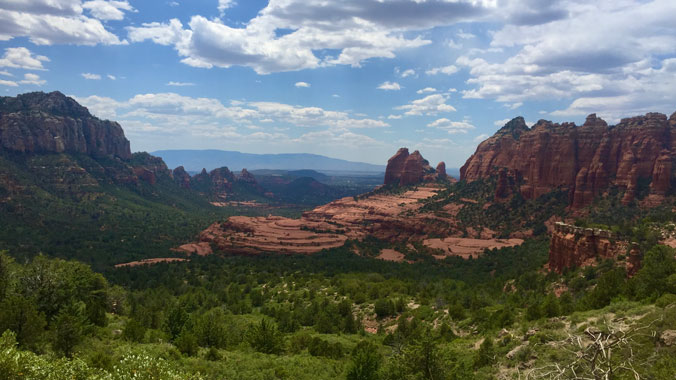
This book provides an overview of the terrain, ancestral Indian ruins and petroglyphs found in Sedona's wilderness areas. Extraordinary photography from one of the nations most photogenic areas. 80 pages.
Sedona through time: Geology of the Red Rocks
by Ranney, Wayne
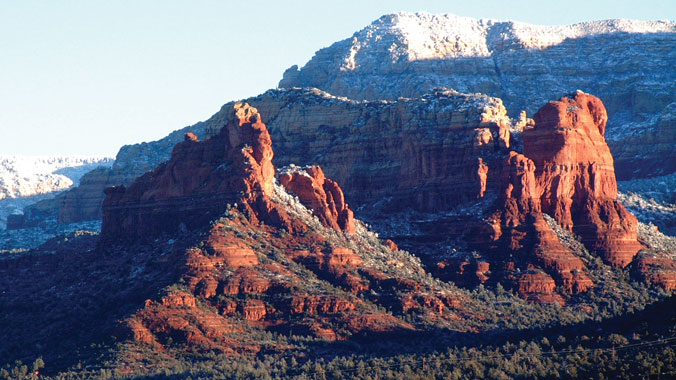
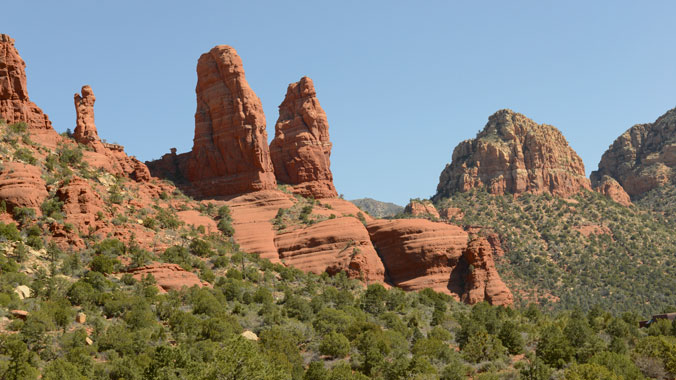
Visitors to the towering red rock cliffs near Sedona seldom realize that the area was once a broad river floodplain that lay beyond the Ancestral Rocky Mountains. Or that this same place was later buried in a vast, Sahara-like desert, still later to lie beneath the waters of a warm tropical sea filled with ancient life forms. Sedona Through Time is an eminently readable story of the evolution of this fantastic landscape through the eons of geologic time.
Sunk Without a Sound
by Dimock, Brad
Grand Canyon, this adventure / mystery / biography details the true story of Glen and Bessie Hyde, who vanished on their 1928 honeymoon river trip through Grand Canyon. When they did not appear at journey's end, Glen's father launched an exhaustive search of Grand Canyon. Although the boat was soon found upright and fully loaded, no trace of the honeymooners was ever found. They had vanished from the face of the earth. Or had they? In the years since, four people appearing to be either Glen or Bessie have emerged, each with a tale implying murder and mayhem. Author and boatman Brad Dimock has unearthed the true story of the Hydes, followed each tale to its source, and gone so far as to retrace the Hydes' fateful voyage in a replica of their archaic scow.
The Archaeology of Ancient Arizona
by Jefferson Reid and Stephanie Whittlesey
General overview of the archaeology of Arizona written by archaeologists with combined experience of over half a century of a combination of laboratory and fieldwork.