
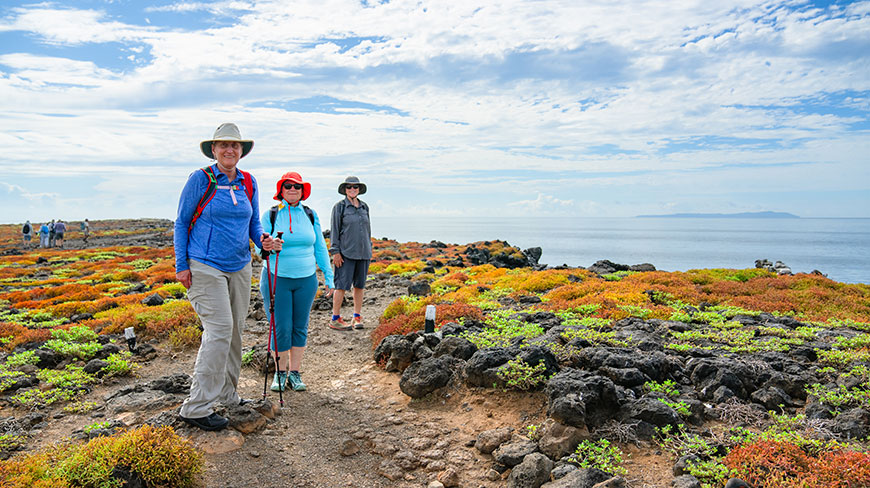
Walking up to 4 miles per day at a moderate pace of 2 mph over city streets, undulating trails, loose rocks, irregular volcanic terrain, and jagged lava formations. Standing up to 1.5 hours per day. Program will require approximately 24 miles of walking over 9 days. Getting in/out of motorized dinghies is required for transfers between yacht and islands; potentially rough waters during wet/dry landings. Snorkeling is included almost daily and up to twice in a day. The strong Equatorial sun, lack of shade, and heat-absorbing volcanic rocks may increase the level of difficulty during island field trips. Elevations up to 9,500 feet. Due to unavoidable stairs, undeveloped natural sites and dinghy transfers, wheelchairs and scooters cannot be accommodated on this program. Must be physically capable of participating in all planned program activities.
Galápagos Islands, Ecuador
The Galápagos: Natural and Cultural History
Program No. 6043RJ
Watch Video
See More Photos
The Galápagos: Natural and Cultural History
The Galápagos: Natural and Cultural History
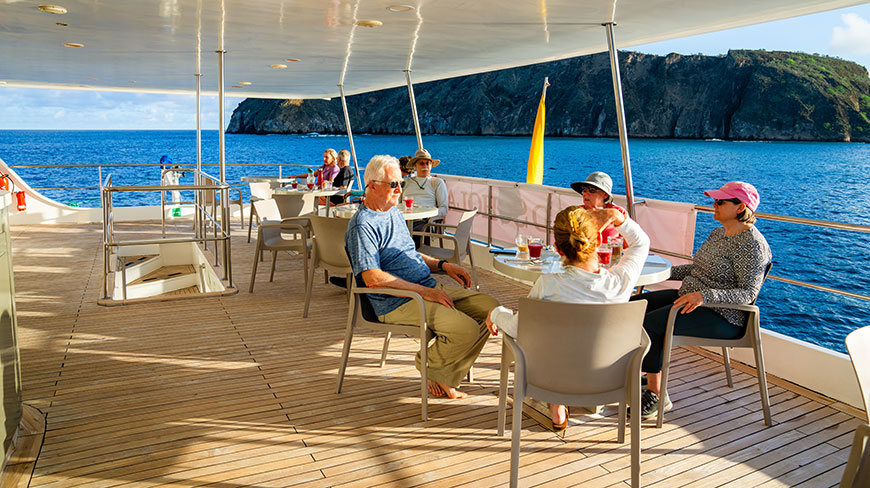
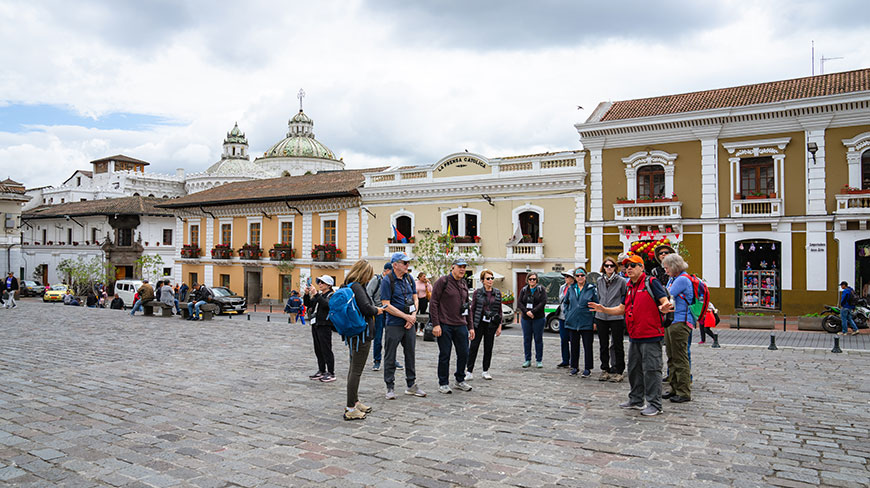
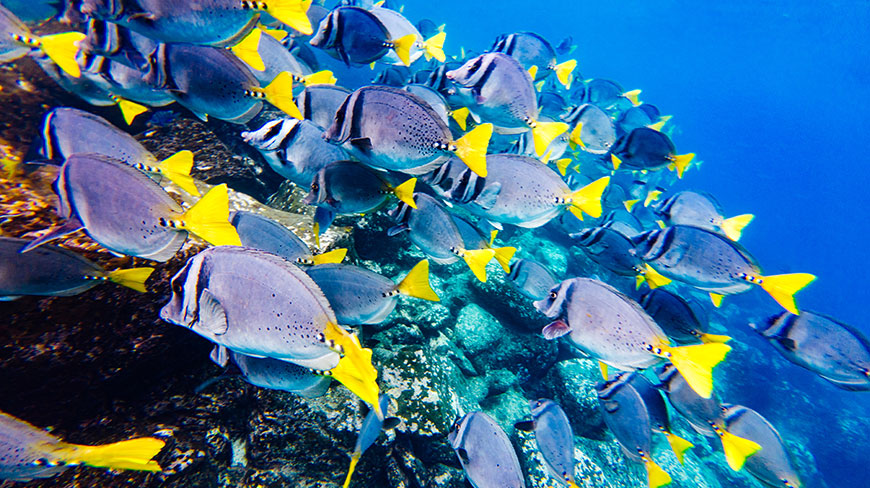
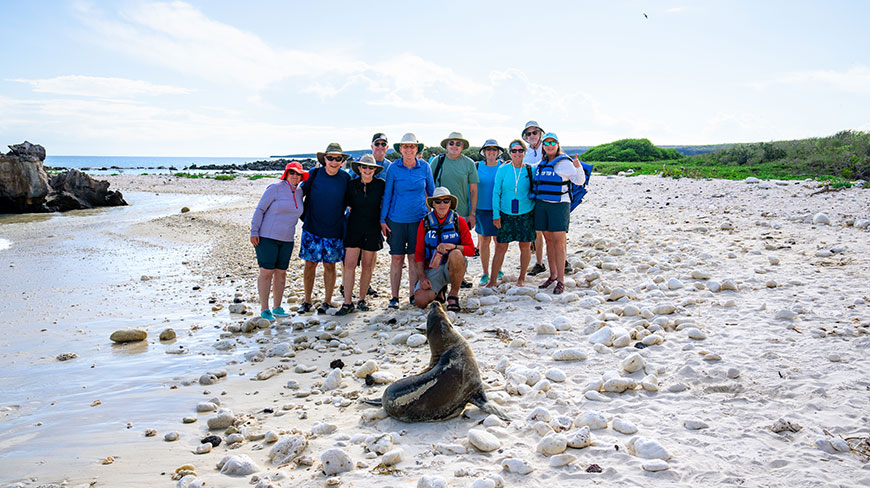
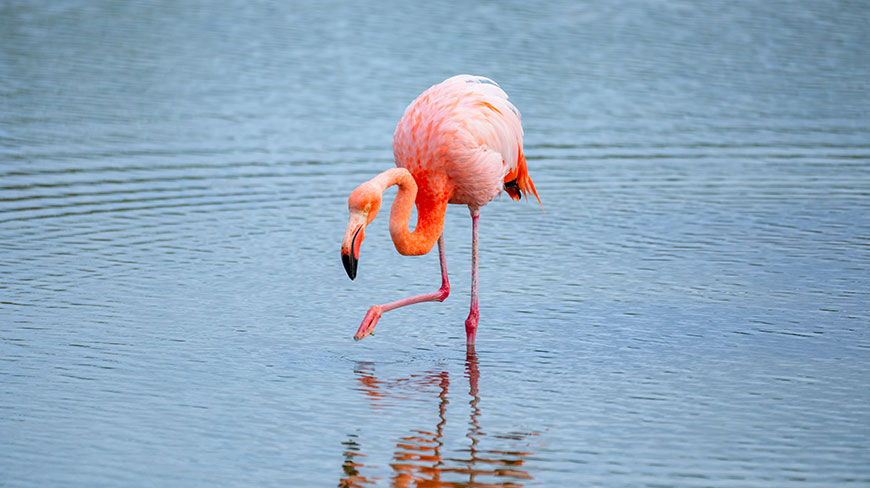
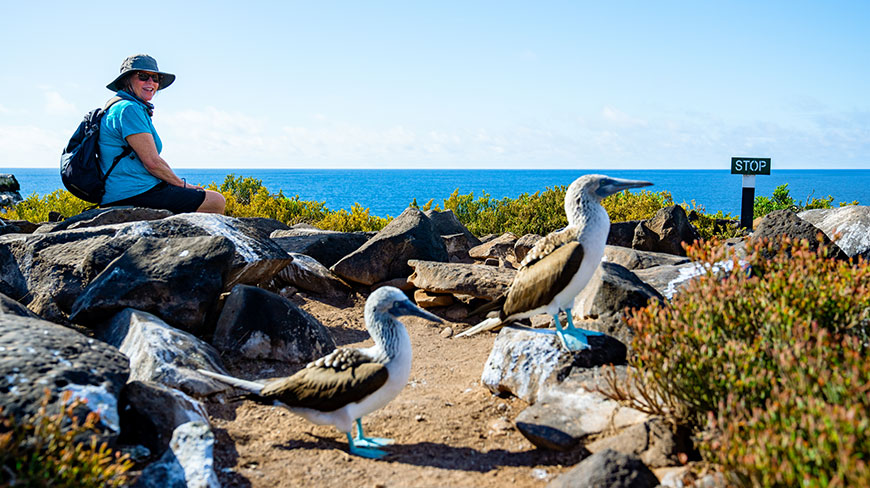
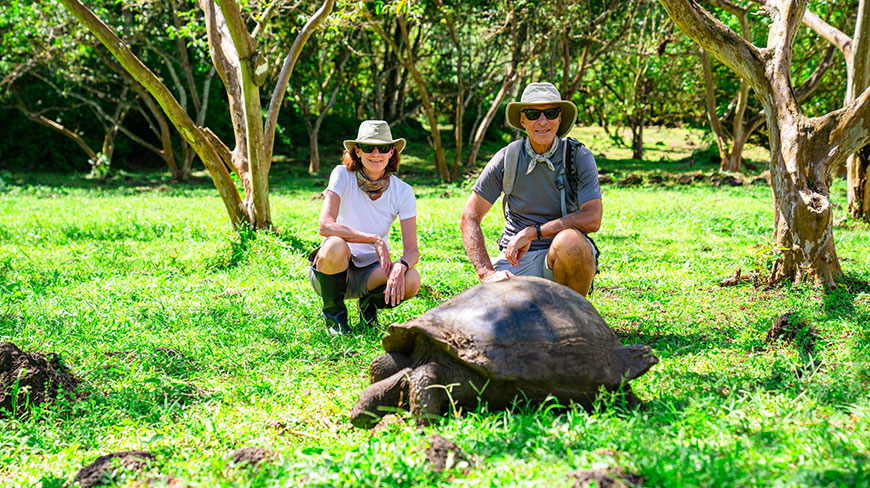
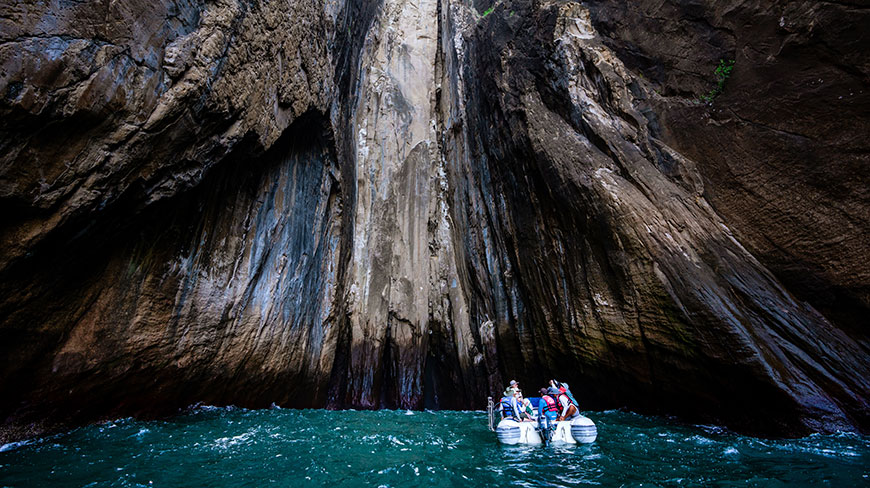
1 of 16
Start Enrolling

Program
At a Glance
Duration
11 days
Program Begins
Quito
Program Concludes
Quito
Group Type
Small Group
Meals
27 (
10B, 8L, 9D
)
Activity Level
From
6,799Study unique animal and plant species on this small ship voyage in one of the world’s most extraordinary settings — the Galápagos Islands. Encounter the fascinating wildlife that inspired Charles Darwin’s theory of evolution.
Best of all, you'll...
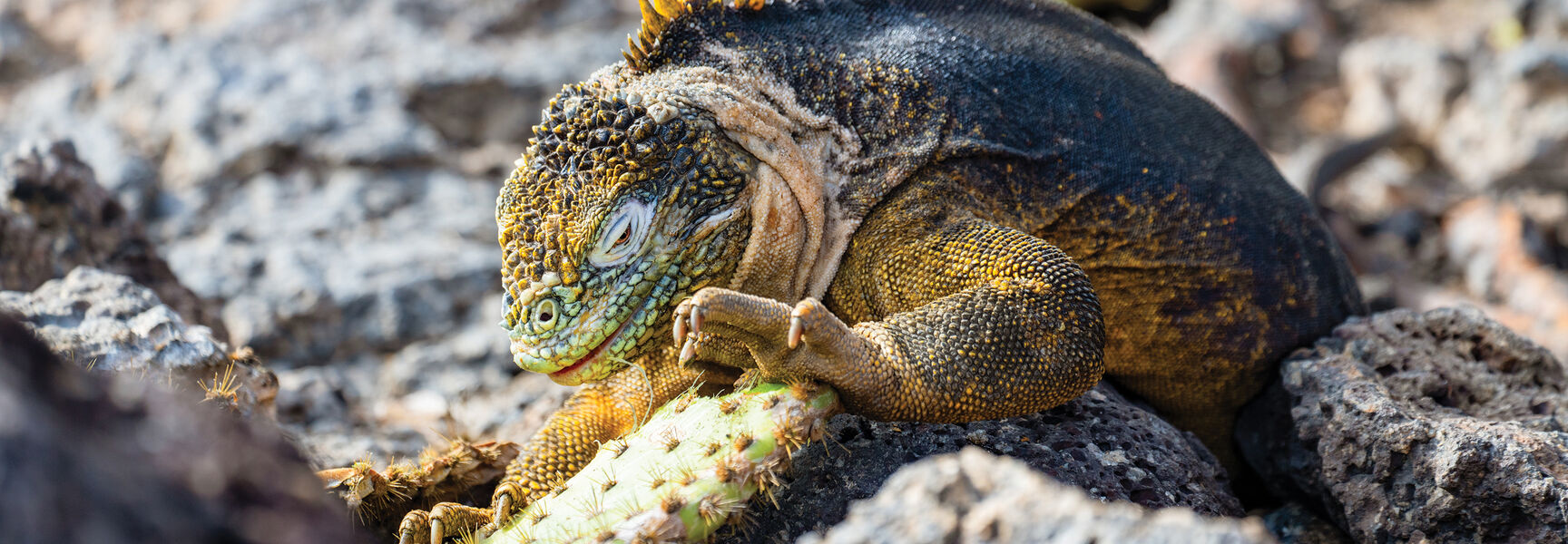
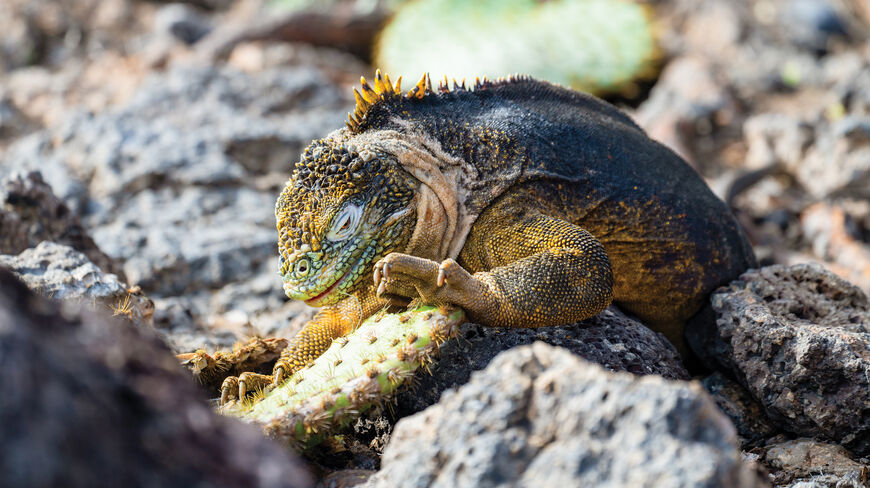
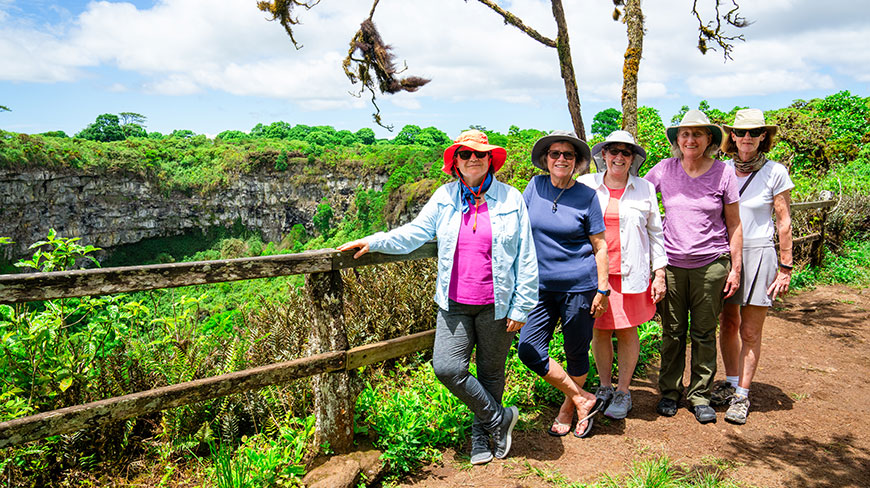
- Encounter exotic animals that made the Galápagos famous including Blue-footed Boobies, Darwin finches, iguanas and giant tortoises.
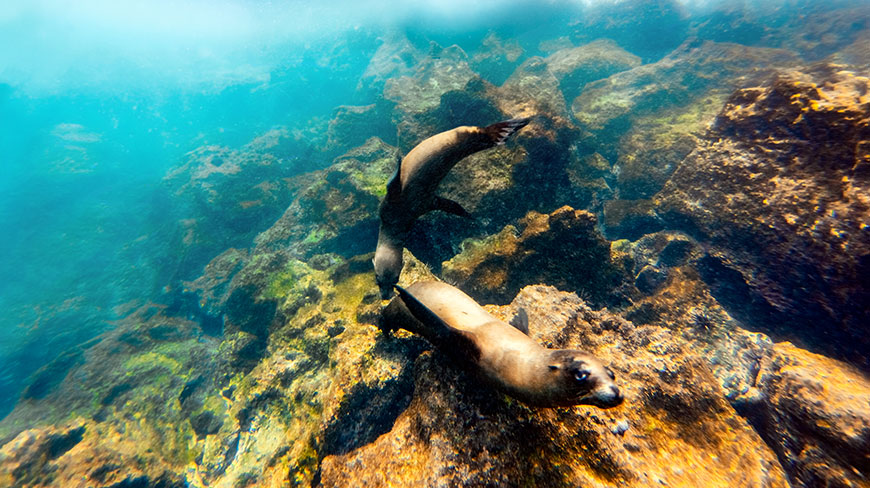
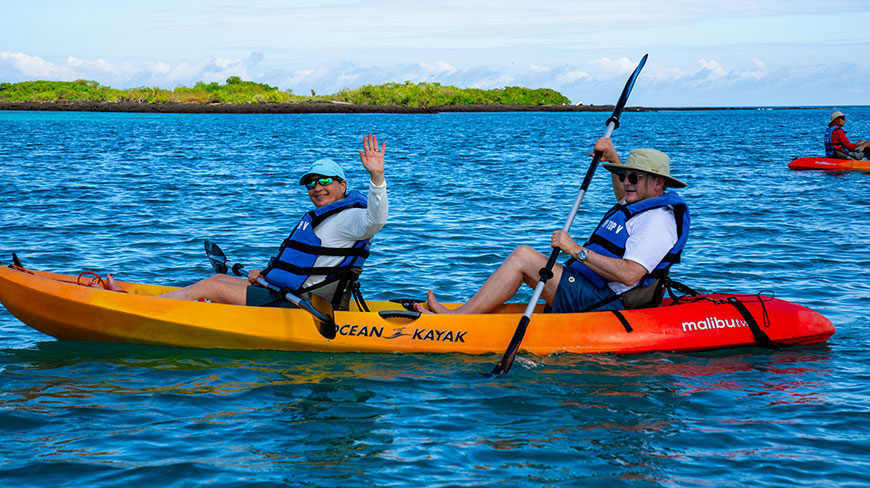
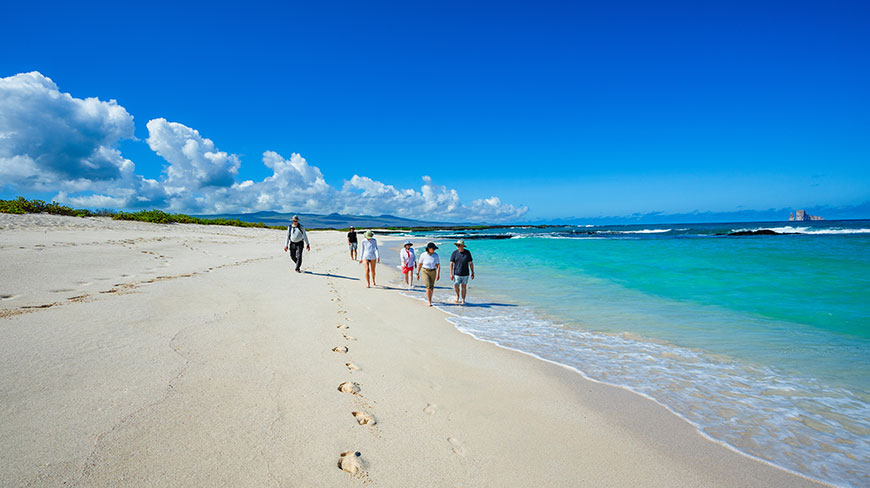
- Navigate inlets, swim with sea lions and snorkel off remote beaches in search of tropical marine life.
- Learn about the unique and hardy vegetation of the Galápagos including lava cacti, Scalesia trees, lichens, mangroves and Opuntia cacti.
General Notes
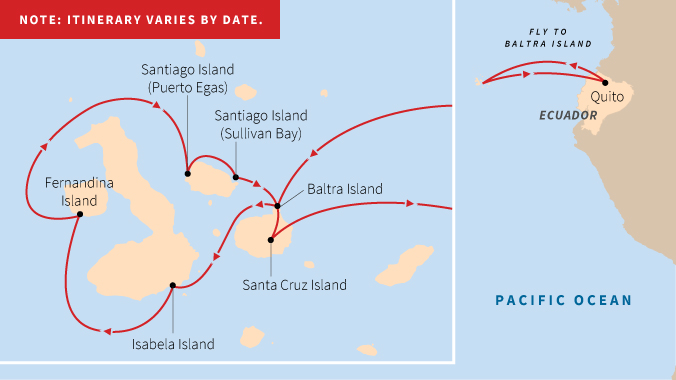
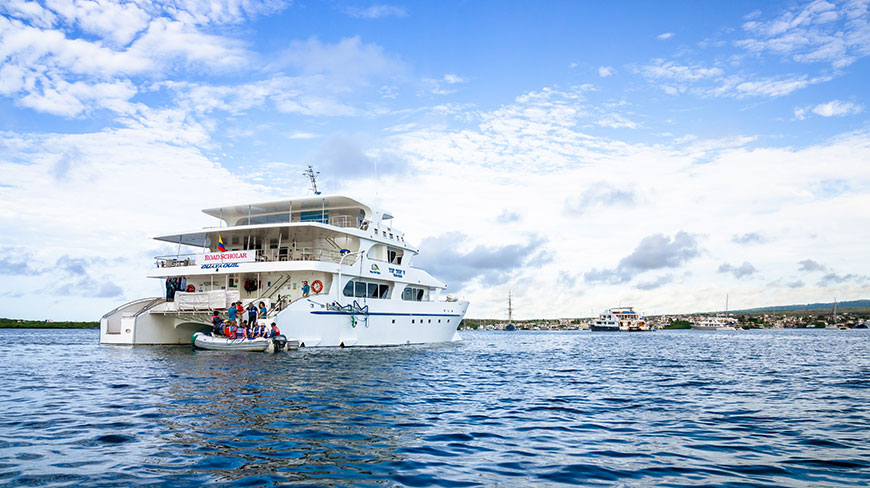
Actual itinerary and islands visited are assigned by the Galapágos National Park and can be changed without prior notice. Please refer to the date-specific detailed itinerary on the Road Scholar website to check on the vessel and visitor sites included in your program. Those interested in a program intended exclusively for women and led by a female Group Leader may enjoy "The Galápagos: Natural and Cultural History for Women" (#23941).
Featured Expert
All Experts
Eduardo Borja
Although he is a native of Quito, Eduardo Borja lived in the U.S.A. for a time as a child, then perfected his English at the American School of Quito after returning to Ecuador. Following high school, he rediscovered his passion for Ecuador’s wonders and his enjoyment of sharing them. He returned to the U.S.A. to earn a bachelor’s degree in hotel and restaurant management. Today, Eduardo lives in Quito and enjoys both the city’s cultural offerings and the natural beauty of Ecuador’s countryside.
Please Note:
This expert may not be available for every date of the program
Please Note:
These experts may not be available for every date of the program
Eduardo Borja
Although he is a native of Quito, Eduardo Borja lived in the U.S.A. for a time as a child, then perfected his English at the American School of Quito after returning to Ecuador. Following high school, he rediscovered his passion for Ecuador’s wonders and his enjoyment of sharing them. He returned to the U.S.A. to earn a bachelor’s degree in hotel and restaurant management. Today, Eduardo lives in Quito and enjoys both the city’s cultural offerings and the natural beauty of Ecuador’s countryside.
Sandie Salazar
Sandie Salazar’s lifelong love of the sea inspired her to study marine biology at the Pontificia Universidad Católica del Ecuador. In 2003, she earned a scholarship from the Organization of American States and traveled to Baja California to pursue her master's degree. She wrote her thesis on Galápagos sea lions in collaboration with the Charles Darwin Foundation (CDF). Sandie served as a CDF research associate and led their marine mammal research 2006-2008, becoming a park guide in 2009 to be more involved in Galápagos conservation.
Marco Vizcaino
Marco Vizcaino is a certified Galapagos Islands naturalist and a Galapageño from birth. In 2007 he earned a college scholarship and left the islands to study biology at the Escuela Superior Politecnica del Litoral (ESPOL) in Guayaquil. After he returned home in 2013, he started his own business offering sustainable tourism options while he worked on getting accepted into the competitive naturalist certification program. Marco believes there is still much room for research in the islands, including deep-sea ecosystems and endemic invertebrates.
Ivan Tarapuez
Ivan Tarapuez is a certified Ecuadorian expedition leader and a photography aficionado. He studied environmental conservation and tourism at Quito’s Universidad Tecnologica Equinoccial (2018-2022). After college, Ivan sought employment with local and international destination management companies and worked his way from operations to in-the-field as an expedition leader. Ivan enjoys using photography to capture elements that help to showcase his country’s history and culture as well as its unique landscapes, flora, and fauna.
Activity Level
Let's Go!
Small Group
(13 to 24)
Love to learn and explore in a small-group setting? These adventures offer small, personal experiences with groups of 13 to 24 participants.
Suggested Books and Resources
View Full List
You can also find many of the books we recommend at the Road Scholar store on bookshop.org, a website that supports local bookstores.
HAVE QUESTIONS?
Prefer to enroll or inquire by phone?
We can help. Give us a call, and we can answer all of your questions!
Call
800-454-5768
Helpful Links
Enroll with Confidence
Peace of Mind
We want your Road Scholar learning adventure to be something to look forward to—not worry about. That’s why we go to the ends of the earth to give you peace of mind, from the moment you enroll until the day you return home.

Assurance Plan
Road Scholar is committed to the well-being of every participant, whether on a program in the United States or abroad. That’s why all participants are covered under our Road Scholar Assurance Plan, which provides 24-hour assistance in the event of an emergency during your program, as well as insurance for emergency medical evacuation.

Want to Protect Your Investment?
Road Scholar is pleased to offer its Trip Protection Plan as a way to protect your program investment. You may purchase this optional trip protection plan when enrolling in your program.

Sustainable Travel
We offset a portion of the emissions created by your travel. Read about our commitment to a more sustainable planet.

- Peace of Mind
We want your Road Scholar learning adventure to be something to look forward to—not worry about. That’s why we go to the ends of the earth to give you peace of mind, from the moment you enroll until the day you return home.
- Assurance Plan
Road Scholar is committed to the well-being of every participant, whether on a program in the United States or abroad. That’s why all participants are covered under our Road Scholar Assurance Plan, which provides 24-hour assistance in the event of an emergency during your program, as well as insurance for emergency medical evacuation.
- Want to Protect Your Investment?
Road Scholar is pleased to offer its Trip Protection Plan as a way to protect your program investment. You may purchase this optional trip protection plan when enrolling in your program.
- Sustainable Travel
We offset a portion of the emissions created by your travel. Read about our commitment to a more sustainable planet.
1 of 4