
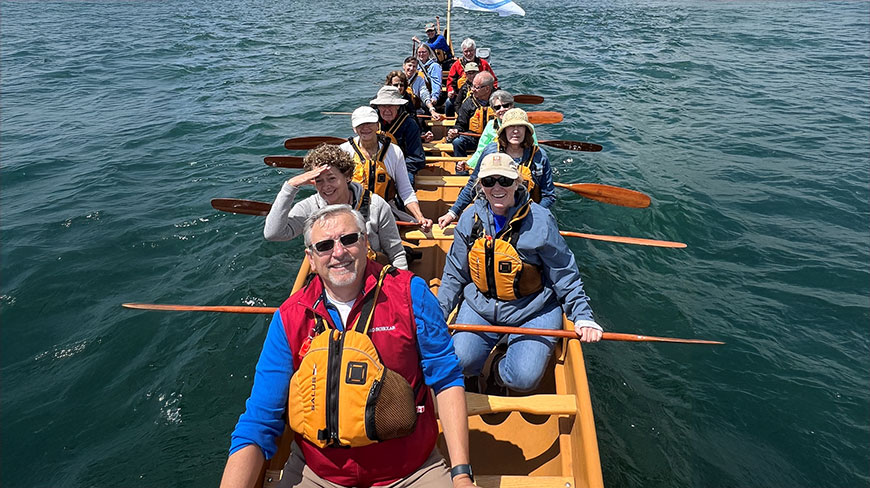
Walking up to 3 miles per day at a moderate pace of 2 mph over a combination of paved and unpaved terrain, including maintained nature trails and uneven beach terrain with exposed roots, rocks, and gravel. Standing up to 3 hours per day with opportunities to sit periodically at some locations. Program will require approximately 12 miles of walking over 7 days. Must be able to use stairs, once without handrails, in order to navigate some field trip sites and transportation. Getting in and out of horse carriage, ferry, tram, canoe and a motorcoach with limited assistance. Traveling by motorcoach up to 3.5 hours per day, including longer scenic driving segments. Due to unavoidable stairs and field trip sites that cannot accommodate mobility devices, wheelchairs and scooters cannot be accommodated on this program. Must be physically capable of participating in all planned program activities.

Michigan/Ontario
The Best of Sault Ste. Marie and Mackinac Island: A Trans-Border Discovery
Program No. 21920RJ
Watch Video
See More Photos
The Best of Sault Ste. Marie and Mackinac Island: A Trans-Border Discovery
The Best of Sault Ste. Marie and Mackinac Island: A Trans-Border Discovery

1 of 4
Start Enrolling

Program
At a Glance
Duration
8 days
Program Begins
Traverse City, MI
Program Concludes
Traverse City, MI
Group Type
Small Group
Meals
18 (
7B, 6L, 5D
)
Activity Level
From
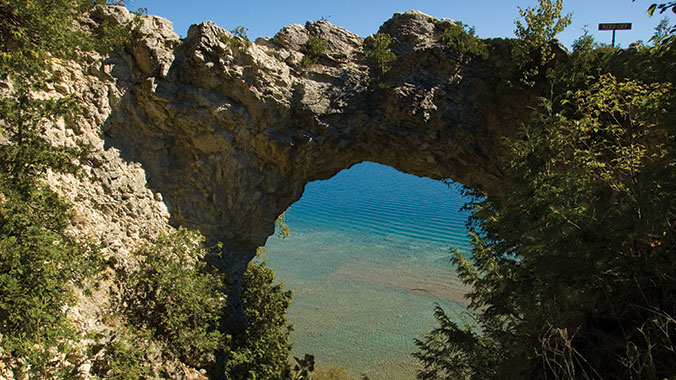
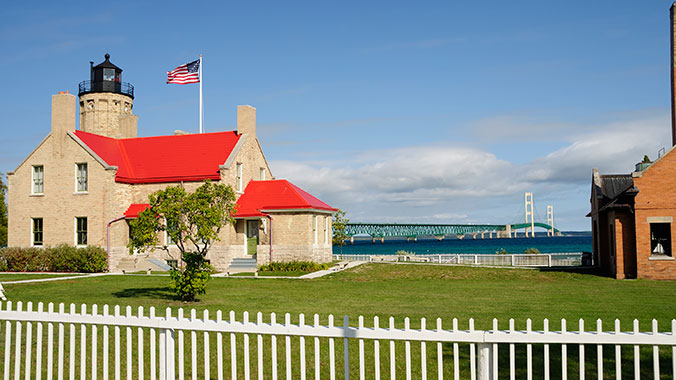
3,149Join us for a cross-border learning adventure that takes you from one of the oldest continuous settlements in North America to an island suspended in time. Sault Ste. Marie in Ontario, Canada, has been inhabited for thousands of years. Equally ancient Mackinac Island became popular as a vacation destination in the late 19th century. Accessible only by boat and plane, the island maintains its Victorian ambiance with a focus on simple pleasures and a ban on cars. Learn from experts about history, culture, people and achievements through the ages.
Best of all, you'll...
- Recall earlier eras as you explore Mackinac Island by horse-drawn carriage to study its architecture and history with lunch at the Grand Hotel.
- Travel to Sleeping Bear Dunes National Lakeshore to view the dunes above Lake Michigan and learn about the geology and ecology of the dune plateau area.
- Learn about the importance of the fur trade during a field trip to Ermatinger-Clergue National Historic Site.
Featured Expert
All Experts
Candice Dunnigan
Candi Dunnigan is a longtime resident and equestrian on Mackinac Island. She resides at Easterly Cottage with her family, and an assorted menagerie of horses, dogs, and cats. She has been the weekly equine columnist for The Mackinac Island Town Crier for fifteen years, and served as the first president of the Mackinac Island Horsemen’s Association. A former fox hunter, she enjoys cross country and trail riding more than anything. As an international rider she has ridden in across Europe and in Costa Rica.
Please Note:
This expert may not be available for every date of the program
Please Note:
These experts may not be available for every date of the program
Candice Dunnigan
Candi Dunnigan is a longtime resident and equestrian on Mackinac Island. She resides at Easterly Cottage with her family, and an assorted menagerie of horses, dogs, and cats. She has been the weekly equine columnist for The Mackinac Island Town Crier for fifteen years, and served as the first president of the Mackinac Island Horsemen’s Association. A former fox hunter, she enjoys cross country and trail riding more than anything. As an international rider she has ridden in across Europe and in Costa Rica.
Kim Johnson
Kim Johnson is a lifelong Michigander. A graduate of Michigan State University, she spent over 30 years as a commercial banker. When she discovered group leading by happenstance, this allowed her to retire early from her banking career, a change that perfectly coincided with her grown sons venturing out on their own career paths. Today, Kim and her husband Greg are both enjoying life as group leaders with both students and adults. Her hobbies include hiking, reading, cycling, pet-sitting, and researching new places to visit.
Activity Level
Keep the Pace
Small Group
(13 to 24)
Love to learn and explore in a small-group setting? These adventures offer small, personal experiences with groups of 13 to 24 participants.
Suggested Books and Resources
View Full List
You can also find many of the books we recommend at the Road Scholar store on bookshop.org, a website that supports local bookstores.
HAVE QUESTIONS?
Prefer to enroll or inquire by phone?
We can help. Give us a call, and we can answer all of your questions!
Call
800-454-5768
Helpful Links
Enroll with Confidence
Peace of Mind
We want your Road Scholar learning adventure to be something to look forward to—not worry about. That’s why we go to the ends of the earth to give you peace of mind, from the moment you enroll until the day you return home.

Assurance Plan
Road Scholar is committed to the well-being of every participant, whether on a program in the United States or abroad. That’s why all participants are covered under our Road Scholar Assurance Plan, which provides 24-hour assistance in the event of an emergency during your program, as well as insurance for emergency medical evacuation.

Want to Protect Your Investment?
Road Scholar is pleased to offer its Trip Protection Plan as a way to protect your program investment. You may purchase this optional trip protection plan when enrolling in your program.

Sustainable Travel
We offset a portion of the emissions created by your travel. Read about our commitment to a more sustainable planet.

- Peace of Mind
We want your Road Scholar learning adventure to be something to look forward to—not worry about. That’s why we go to the ends of the earth to give you peace of mind, from the moment you enroll until the day you return home.
- Assurance Plan
Road Scholar is committed to the well-being of every participant, whether on a program in the United States or abroad. That’s why all participants are covered under our Road Scholar Assurance Plan, which provides 24-hour assistance in the event of an emergency during your program, as well as insurance for emergency medical evacuation.
- Want to Protect Your Investment?
Road Scholar is pleased to offer its Trip Protection Plan as a way to protect your program investment. You may purchase this optional trip protection plan when enrolling in your program.
- Sustainable Travel
We offset a portion of the emissions created by your travel. Read about our commitment to a more sustainable planet.
1 of 4