Skip to Main Content
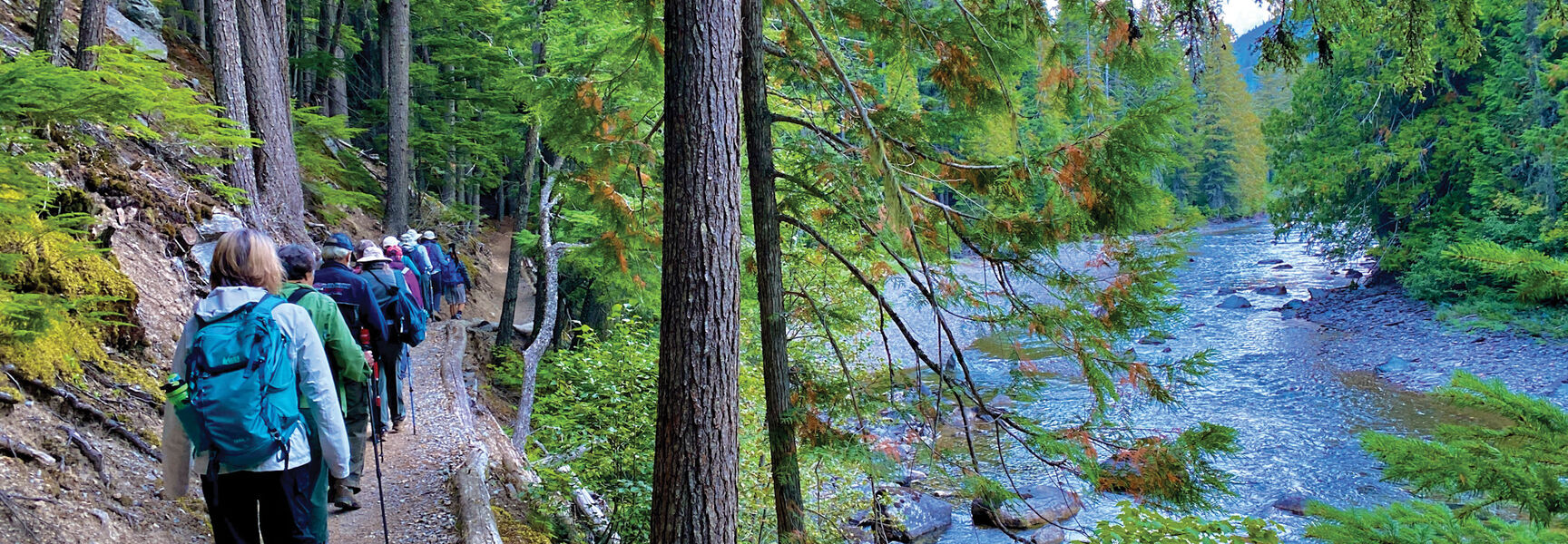
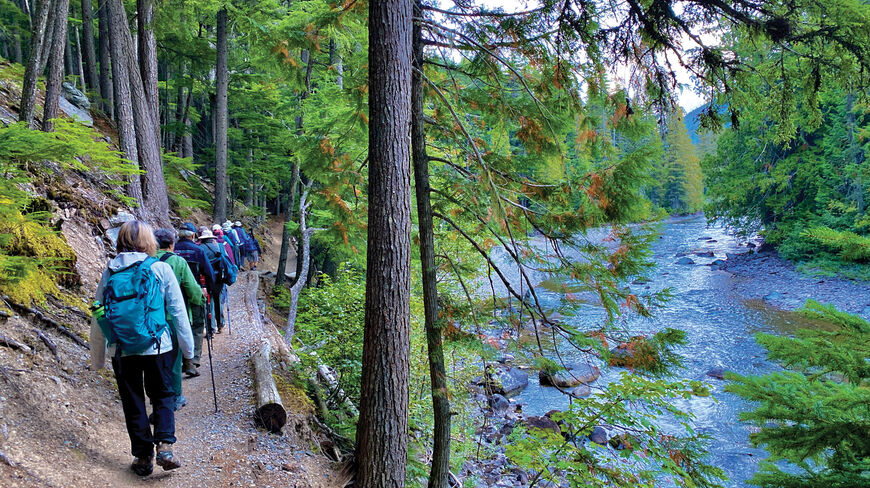
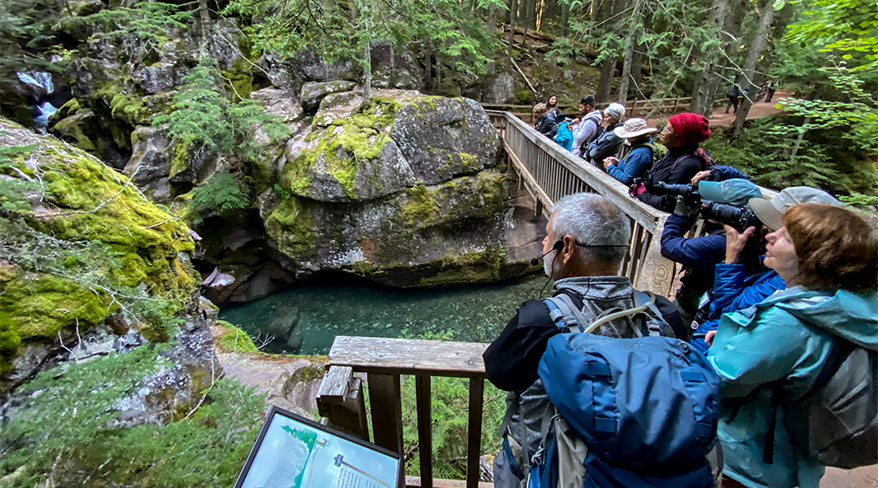
A group of hikers follows a trail through a lush forest beside the Flathead River in Glacier National Park, Montana.
Montana

The Best of Glacier National Park
Program No. 21016RJ
View Departure Dates
Program
At a Glance
Duration
6 days
Program Begins
Whitefish, MT
Program Concludes
Whitefish, MT
Meals
12 ( 5B, 3L, 4D )
Activity Level
From
2,999
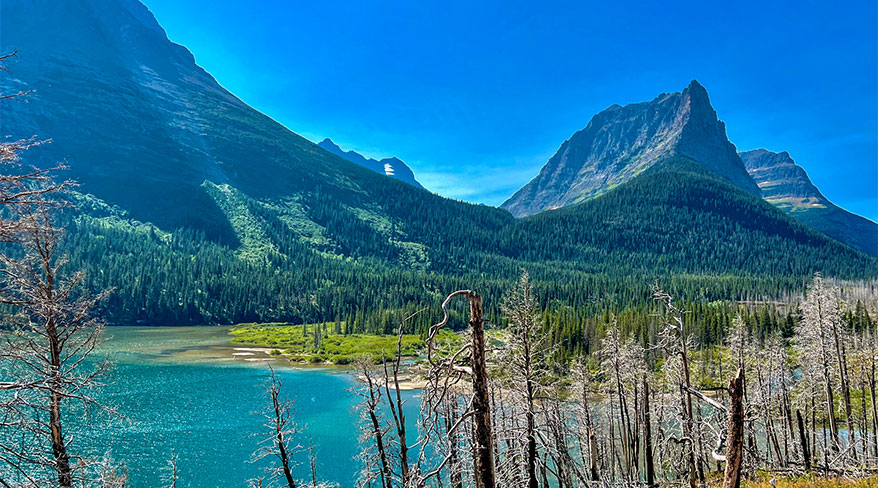
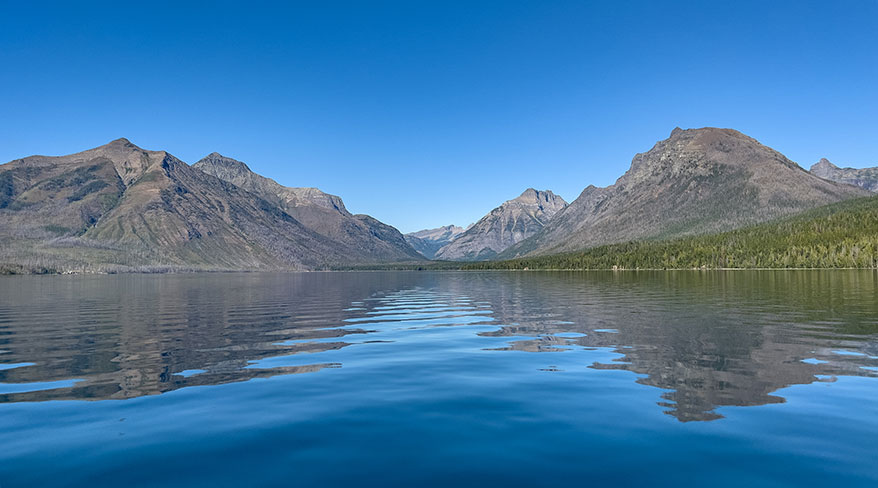
Immerse yourself in the awe-inspiring landscape of Glacier National Park, a land profoundly shaped by ancient glaciers, earning its title as the "Crown of the Continent." Each day, venture into different realms of this natural masterpiece, from the tranquil shores of Lake McDonald to the soaring heights of Logan Pass and the engineering marvel of Going-to-the-Sun Road. With instructors, naturalists and other experts as your guides, you'll gain profound insights into the park's vibrant ecosystems, its mammoth lakes and its serrated peaks—truly one of nature's greatest works of art.
Best of all, you'll...
  • Travel the historic Going-to-the-Sun Road for spectacular views of rugged peaks, vast valleys and idyllic waterfalls.
  • Float down the scenic Middle Fork of the Flathead River.
  • Touch the Continental Divide.
General Notes
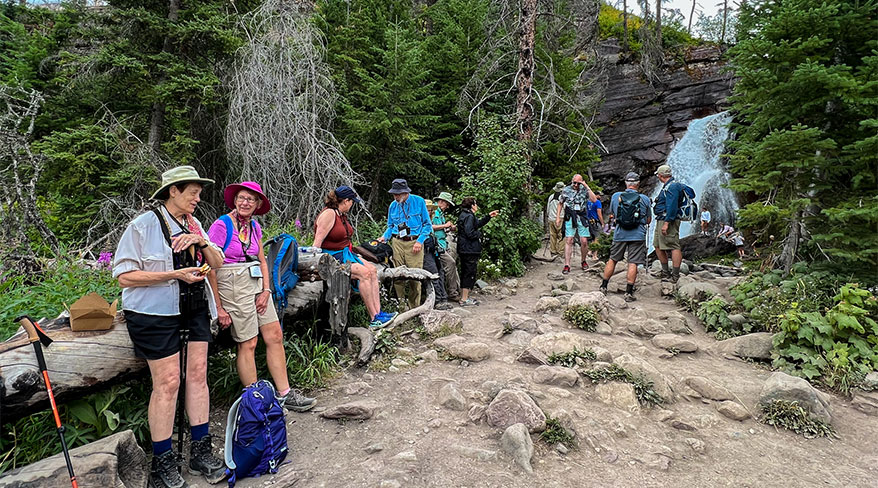
Participants split into smaller groups of about 10 for daily field trips and hikes.
All Experts
Please Note:
These experts may not be available for every date of the program
Candi Naylor is a Montana native from Townsend. She has worked with Road Scholar in Glacier National Park since 2011. In 2010, she and her husband, Craig, built their home on 10 acres west of Kalispell on the last remnant of her great grandparents’ homestead settled in 1899.
Ashley Mason has spent over three decades as a naturalist, educator, and guide in Glacier National Park and Northwest Montana. She specializes in distilling the amazing geologic wonders of the area into captivating stories. She is a former ranger naturalist for Glacier National Park and has worked for many organizations, including The Glacier Institute, Swan Ecosystem Center, Flathead Audubon Society, Crown of the Continent Ecosystem Education Consortium, and Flathead Valley Community College. In 2012, she was voted Audubon Educator of the Year.
Josh Gubits is an environmental scientist for Whitefish Lake Institute. While in school, Josh worked as a fishing guide on the Blackfoot, Clark Fork, Bitterroot and Missouri rivers. After receiving his environmental studies degree from the University of Montana, he worked for the Audubon Society to develop education and outreach programs in Santa Fe, N.M. Before joining WLI, Josh worked for the Watershed Education Network as the field programs coordinator where he taught teachers, students, and volunteers about water quality, through the collection of chemical, biological, and physical data on stream sites across Western Montana. Josh is a certified Montana Master Naturalist, and in 2009 he was the recipient of the Montana Water Teacher of the Year award presented by the Montana Environmental Education Association.
Denny Olson is an award-winning naturalist and acclaimed author. He received an M.S. in zoology and geology from the University of Minnesota and has researched beavers, hares, and loons. Using Native American and personal stories as tools, he blends science, humor, and drama. Denny has experience leading hundreds of interpretive hikes, writing the nature and science sections for the park website and an 88-activity International Peace Park K-12 curriculum, leading Road Scholar trips for over a decade, and making presentations in 44 other national parks.
Dave Streeter spent seven years traveling the world auditing computer systems, then had a flat tire in Great Falls, MT where he remains four decades later, having taught at Flathead Valley Community College in Kalispell and exploring Montana at every opportunity. He has been a Road Scholar instructor since 1990. He is experienced with bears, mountain goats, wolves, weather, flowers, glaciation, winter ecology, backcountry skiing, and healthy hiking with his 50 years of experience in the high country of Glacier.
Marilyn Wood is a retired conservation biologist who has had the opportunity to work in two iconic landscapes – the Greater Yellowstone Ecosystem and the Continental Divide Ecosystem (the Crown of the Continent). Her career experience includes wildlife projects with state and federal agencies followed by leadership roles with the Nature Conservancy and the Flathead Land Trust; all focused on conservation issues across broad landscapes. She has a decade of experience as a Road Scholar presenter and field instructor.
Al Koss has lived and worked in the Glacier Park area for over 30 years. His love for the out-of-doors and passion for hiking was well represented in his career with the U.S. Forest Service and National Park Service. Al taught environmental education and is a Master Trainer for the Leave No Trace Program. His experience as a Park Naturalist has given him extensive experience and knowledge of the flora and fauna of the park. He enjoys sharing his passion for natural areas with others.
Tanya Brist was raised on a large wheat farm in eastern Montana. After graduating from college, she invested nearly three decades in elementary and middle school classrooms in western Montana. She has been a trainer of teachers at the local, county, and state levels in science. Even after retiring, Tanya kept on teaching, this time as a field instructor for lifelong learners exploring the incredible outdoor classroom of Glacier National Park.
Susan Atkinson is an award-winning architect and professor of environmental design at Colorado State University. She has traveled the world researching how people design and build in response to culture and climate. Susan grew up in the Flathead Valley, learning about wildflowers and spotting grizzlies in Glacier National Park every summer since 1980. She is an avid trail runner who loves fly fishing, watercolor painting, and reading about wolverines. Susan is certified as a backcountry first responder.
Rob Quist is an artist, musician, and public figure. Known for his versatile talents, he is a celebrated singer, songwriter, instrumentalist, and vocalist. His connection to Montana is evident in the theme of his music. He draws inspiration from the state's rich landscapes and the experiences of its residents. His influence extends into Montana's cultural and political spheres. Quist's legacy is characterized by his commitment to preserving Montana's musical heritage and his contributions to the artistic and social tapestry of the region.
Rick Moore is a forester with a distinct interest in forest ecology, wild and prescribed fire effects, and plant identification. He has much experience in the Rocky Mountain West, having lived and practiced forestry in five different states. He has also hiked in many of the national parks and Forest Service wilderness areas, preferring those located in the higher elevations. Rick has degrees in forestry and outdoor recreation. His interests include hiking, rafting, fishing, exploring, and photography.
Chris Crane began his outdoor education journey in North Carolina. He followed his passion to Montana, where he spent years exploring and teaching in and around Glacier National Park. By assisting in multiple research projects with bears and bull trout, he grew his understanding and respect for wild things and habitats. He spent the next 21 years as a Montana Fish Wildlife and Parks Game Warden. He retired as a Sergeant in 2025, in which capacity he protected the wildlife, places, and people of Montana.  His years of patrolling the outdoor spaces of Montana enables Chris to bring a game warden’s experience, a tracker’s eye, a naturalist’s curiosity and a deep respect for Glacier’s rugged beauty to every hike.
Melissa Jenkins worked as a silviculturist (tree specialist) for the Forest Service for 40 years, retiring from the national forest adjacent to Glacier National Park in 2020. Her expertise is in whitebark pine, a “threatened” species that only grows at high elevations. Since retiring, she has focused her time on hiking in Glacier and the surrounding area, along with volunteering at the Glacier Native Plant Nursery, the Whitebark Pine Ecosystem Foundation, and a local foodbank. She is a Master Gardener; at home, she can often be found in her vegetable and flower gardens with her golden retriever, Reya.
Activity Level
Outdoor: No Sweat
Hiking two miles daily over varied terrain. Possible optional hikes up to five miles some days. Some stairs; getting in/out of vans, bus, and water raft. Elevations of 3,153-7,200 feet.
Suggested Books and Resources
View Full List
You can also find many of the books we recommend at the Road Scholar store on bookshop.org, a website that supports local bookstores.
HAVE QUESTIONS?
Prefer to enroll or inquire by phone?
We can help. Give us a call, and we can answer all of your questions!
Call 800-454-5768
Enroll with Confidence
Peace of Mind

We want your Road Scholar learning adventure to be something to look forward to—not worry about. That’s why we go to the ends of the earth to give you peace of mind, from the moment you enroll until the day you return home.

An illustration of a hand using a pen to check off the final item on a clipboard checklist
Assurance Plan

Road Scholar is committed to the well-being of every participant, whether on a program in the United States or abroad. That’s why all participants are covered under our Road Scholar Assurance Plan, which provides 24-hour assistance in the event of an emergency during your program, as well as insurance for emergency medical evacuation.

An illustration of an elderly man sitting at a computer with a pair of binoculars beside him
Want to Protect Your Investment?

Road Scholar is pleased to offer its Trip Protection Plan as a way to protect your program investment. You may purchase this optional trip protection plan when enrolling in your program.

An illustration of an elderly woman holding a piggy bank, with the Eiffel Tower in the background
Sustainable Travel

We offset a portion of the emissions created by your travel. Read about our commitment to a more sustainable planet.

An illustration of a hand holding a globe with a small bird flying around it