What Holds Older Adults Back From Solo Traveling? New Survey Data Reveals

- According to a recent study, 82% of American adults have hit the road alone or are open to doing so.
- Older generations lead the way in solo travel, with 58% of Boomers and 64% of the Silent Generation having taken at least one trip by themselves.
- The most common barriers to solo traveling include safety concerns (26%), cost (25%), and loneliness (23%).
- Group experiences offer an ideal bridge, allowing older adults to enjoy solo travel without the stress of being alone.
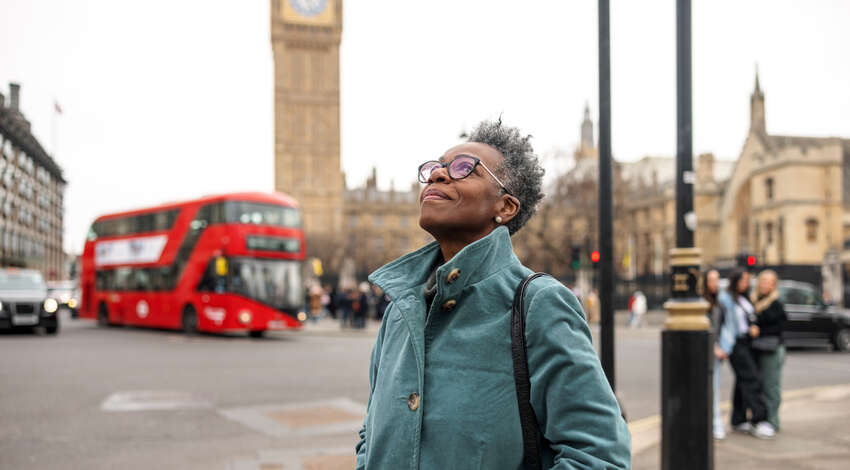
Solo Traveling Is Popular, But Many Adults Still Feel Hesitant
Have you ever felt the pull to explore a faraway city or country on your own? You’re not the only one! A 2026 study of 2,000 adults, conducted by Talker Research for Road Scholar1, found that 50% of Americans have already traveled solo, and 32% of those who haven't are open to trying it.
But there’s a big difference between dreaming about a solo vacation and making it happen. The same study reveals that while fewer than 1 in 3 adults aged 50 to 70 are hesitant about solo travel, a few common fears can mean those dream trips simply never happen.
What makes older adults hold off on their travel plans? Let’s explore the most common hurdles and how to overcome them.
Top Reasons Adults Avoid Solo Travel
Traveling alone lets you choose your own excursions, try whatever food strikes your fancy, and chase whatever opportunities interest you. So what’s the holdup?
Maeve Hartney, Chief Program Officer at Road Scholar, says that “there’s a real stigma about being out in public alone, both from a social anxiety perspective and for safety reasons.” Respondents agreed: While the thrill of exploring the world solo is enticing, concerns about safety, cost, isolation, unfamiliar places, and sharing experiences stand in the way.
Safety Concerns
Safety is the leading reason adults avoid traveling solo. Nearly 1 in 4 Gen X adults (24%) and over 1 in 3 Boomers (34%) cited safety concerns as the reason they haven’t traveled alone, whether domestically or overseas. Walking alone at night or in unfamiliar neighborhoods was the chief concern of solo travel for both Gen X and Boomer respondents (66%). Among women who haven’t taken a solo trip, 28% cite safety concerns as the top reason.
Cost and Travel Expenses
Traveling alone means you pay the whole way yourself, which can be intimidating. Gen X and Boomers agreed, with 27% and 28%, respectively, citing the price of travel as a reason why they haven’t taken that solo trip. Among those who have traveled alone, about 1 in 4 respondents from both age groups cited cost as one of the biggest challenges they encountered.
Fear of Being Alone or Social Anxiety
While Gen X is less worried about loneliness (19%), fears of feeling isolated while traveling are a major hurdle for Boomers (26%), and an even greater concern for the Silent Generation (46%). Interestingly, these fears generally fail to manifest in real life. Among individuals from these generations who have traveled solo, fewer than 1 in 6 found social isolation a major challenge.
Unfamiliar Places and Transportation
While seeing the world is exciting, figuring out how to get there is less so. Roughly 50% of all Gen X and Boomer respondents cited fears of driving long distances or navigating airports and public transit in strange cities as reasons they’re hesitant about solo travel. An even greater portion (up to 59% for Boomers) were reluctant to stay in a hotel or rental without a companion.
The Companion Problem
Speaking of companions, the lack of a partner is one of the most basic yet powerful challenges of traveling alone. Solo travelers enjoy a free and unfettered experience, but for many, sharing the adventure is the point of the adventure. Among respondents over 60, handling emergencies (51%), dining (46%), and sightseeing (44%) without a companion were reasons enough to stay home.
Why Solo Travel Over 50 Looks Different
Millennials and Gen Z are no strangers to traveling solo. They may take independent trips to escape career burnout, gain social influence, or simply to feel spontaneous. Since they’re generally more willing to sacrifice comfort for a “genuine experience,” staying in a hostel or backpacking to stretch a tight budget aren’t serious concerns.
Solo travel over 50 is different. At this stage of life, adults are looking for comfort, predictability, and intellectual enrichment. You probably have no desire to rough it or deal with open-ended plans. While younger generations find that traveling alone helps them learn about themselves (28%) by leaving their comfort zones and exploring new cultures, travelers over 50 have other priorities. Those who have gone solo report feeling more independent (30%), recharged (about 30%), and self-confident (about 27%).
The focus shifts from merely collecting passport stamps to engaging in meaningful, life-enriching learning adventures.
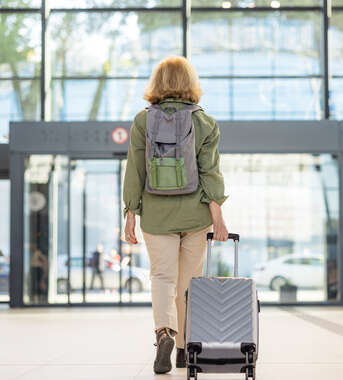
What Holds Women Back From Solo Traveling?
The survey shows a clear divide in how men and women perceive the risks of traveling alone. While men are more likely to worry about the financial cost of a trip (27%), women consistently rank personal safety as their top concern (28%). Solo traveling as a woman demands a layer of hyper-awareness that men rarely have to consider.
According to the study, women express significantly greater hesitation about virtually every solo activity, from walking at night (65%) to interacting with strangers (47%). The fear of being targeted, harassed, or simply getting lost in an unfamiliar neighborhood can be a powerful deterrent.
It’s no surprise that, as Maeve Hartney notes, “solo travel takes a lot of courage, especially for women and older adults!” Solo female travel tips from Road Scholar can help women enjoy more confidence without giving up on the adventure of a lifetime.

Solo Travel Over 60 and 70: The Role of Confidence, Comfort and Planning
There is a common misconception that traveling alone is a young person's game, but the data flips that stereotype on its head. 50% of Gen X, 58% of Baby Boomers, and 64% of the Silent Generation have traveled solo. Older adults are actually leading the charge in independent travel! The difference in solo travel over 60 comes down to the confidence of experience. Adults at this age know what they can handle and value proactive planning that lets them go at a comfortable pace. While solo travel over 70 can raise concerns about walking long distances or handling medical needs in a foreign country, a well-organized plan can help seniors of all ages keep their excitement for travel alive.
What Older Adults Hope to Gain From Solo Traveling
Despite the natural hesitations, those who embark on solo senior travel consistently say it changes their lives for the better. Solo travelers over 50 find that the experience makes them more independent, confident, and engaged in self-reflection.
The proof is in the results: A resounding 70% of solo travelers say they would absolutely take another independent trip. Over 1 in 3 even found that solo travel strengthened their relationships by giving them a chance to recharge and explore interests their partner doesn’t share.
Why Group Travel Can Help Solo Travelers Feel Less Alone
You don’t have to choose between staying home and traveling completely alone. If you love the idea of exploring the historic streets of Old Québec or taking a solo cruise to the Galápagos Islands, but hate the thought of dining alone or planning the logistics by yourself, educational group travel is the perfect middle ground.
The survey revealed that 6 in 10 Americans enjoy meeting new people while traveling, and 53% are open to grouping up with other adventurers. Older generations show the strongest desire for connection: 43% of Baby Boomers and members of the Silent Generation actively want to participate in group activities while solo traveling, compared to just 27% of younger generations.

An educational learning adventure lets you explore our world with other lifelong learners. You get your own private room at night, but during the day, you share field trips, lectures, and meals with people who share your passion for learning. You never have to worry about the logistics of moving between cities or calculating unexpected costs. If you’re nervous about solo traveling as a woman, women-only travel packages offer a great solution.
Everything is handled by local experts and experienced organizers. All you need to do is enjoy the journey!
What the Survey Says About the Future of Solo Travel
Solo travel over 50 is just getting started. Among adults who have never taken a solo trip before, 1 in 3 say they’re eager to give it a shot. Independent journeys don’t mean you need to travel alone. When organized to help adults overcome hurdles like safety, cost, and isolation, solo travel in a group offers learners of all ages the chance to explore and feel empowered. Want to learn more? Road Scholar is the not-for-profit leader in educational travel for adults 50+. Explore solo travel tips and get excited for your next adventure!
1Methodology: This study was commissioned by Road Scholar and conducted online by Talker Research between Feb. 9 and Feb. 13, 2026. The survey queried a random sample of 2,000 U.S. adults, comprising 1,000 experienced solo travelers and 1,000 respondents from the general population with internet access.