
Korea
The Best of South Korea: Local Culture and Ancient History
Program No. 23495RJ
See More Photos
The Best of South Korea: Local Culture and Ancient History
The Best of South Korea: Local Culture and Ancient History
1 of 10
Itinerary
While we make every effort to ensure the accuracy of our published materials, programs are typically advertised more than a year prior to their start date.
Read More.
While we make every effort to ensure the accuracy of our published materials, programs are typically advertised more than a year prior to their start date. As a result, some program activities, schedules, accommodations, personnel, and other logistics occasionally change due to local conditions or circumstances. Should a major change occur, we will make every effort to alert you. For less significant changes, we will update you during orientation. Thank you for your understanding.
Duration
14 days
13 nights
What's Included
Included
28 meals (
12B, 11L, 5D
)
3 expert-led lectures
30 expert-led field trips
2 flights during the program
2 hands-on experiences
1 performance
An experienced Group Leader
Taxes and customary gratuity
Road Scholar Assurance Plan
Seoul
The Best of South Korea: Local Culture and Ancient History
Oct 13 - Oct 26, 2027
Program Number
23495
Day
1
In Transit to Program
Location:
In Flight
Activity Note
In Transit Overnight. Flights cross the International Date Line.
Day
2
Arrive Seoul, Check-in
Location:
Seoul
Stay:
Four Points by Sheraton Josun, Seoul Myeongdong
Activity Note
Hotel check-in from 3:00 p.m. Remember to bring your name tag. Arrivals throughout the day and early evening. There is no programming on this day.
Afternoon:
Varied arrival times throughout the afternoon and early evening. After checking in, the remainder of the day is free at leisure. Unpack and relax after your travels to South Korea. Your Group Leader will connect with you at the hotel today.
Dinner:
This meal has been excluded from the program cost and is on your own to have what you like. The hotel has restaurants and room service. The hotel front desk and the Group Leader will be happy to offer suggestions.
Evening:
At leisure.
Day
3
Orientation, Lecture, Changdeokgung Palace, Welcome Dinner
Location:
Seoul
Meals:
B,L,D
Stay:
Four Points by Sheraton Josun, Seoul Myeongdong
Activity Note
Getting on/off a motorcoach; driving about 4.5 miles throughout the day; approximately 1.5 hours total. Walking about 2-3 miles, approximately 2 hours; paved and gravel paths, some steps and inclines.
Breakfast:
At the hotel.
Morning:
After orientation, we will be joined by a local expert to begin our study of Korea with a lecture on "Traditional Values of Korea." This presentation will provide an overview of Korean culture, focusing on five key elements: cultural symbols, the Korean language, social norms, beliefs, and values.
Following our lecture, we will board our motorcoach and travel to Insadong Antique Street for a guided walking tour led by our Group Leader. We will take in the sights along the street, which is lined with traditional tea houses, modern galleries, and historic buildings dating back to the Joseon Dynasty.
Following our lecture, we will board our motorcoach and travel to Insadong Antique Street for a guided walking tour led by our Group Leader. We will take in the sights along the street, which is lined with traditional tea houses, modern galleries, and historic buildings dating back to the Joseon Dynasty.
Lunch:
At a local restaurant.
Afternoon:
After lunch, we travel to Changdeokgung Palace. The palace was built in 1405 during the Joseon Dynasty and is one of Seoul's five grand palaces. It served as the principal royal residence for 270 years. Changdeokgung Palace’s connection to the end of the Joseon Dynasty culminated with Emperor Sunjong, the final Korean monarch, who resided there until his death in 1926. The palace was the tragic backdrop for the end of Joseon sovereignty and the beginning of Japanese colonization.
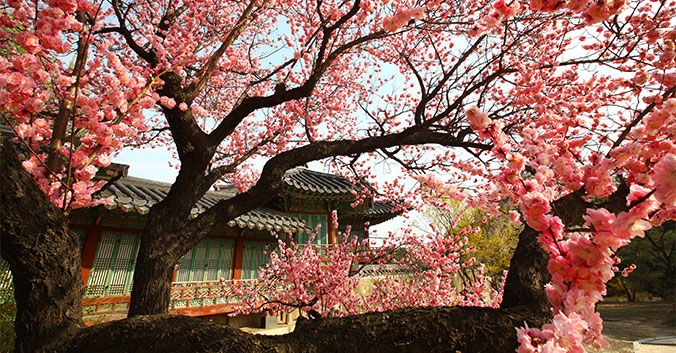
The UNESCO World Heritage Site also contains a “Secret Garden,” which takes up 60% of the palace grounds and features terraces of flowering trees, flowers, and lotus ponds. The garden, once used for royal entertainment and ceremonies, contains over 56,000 specimens representing various species of trees and plants, demonstrating the harmony between architecture and nature.
We will then reboard our motorcoach and transfer for a field trip to the National Museum of Korean Contemporary History. Here we will examine artifacts that illustrate Korea’s history from 1876 to the present. We will learn about efforts to establish an independent, modern nation, the Korean War, the process of South Korea’s economic development and democratization, and the “Great Leap Forward” that changed South Korea from one of the world’s poorest nations to one of the most advanced.
We return to the hotel in time for dinner.
The UNESCO World Heritage Site also contains a “Secret Garden,” which takes up 60% of the palace grounds and features terraces of flowering trees, flowers, and lotus ponds. The garden, once used for royal entertainment and ceremonies, contains over 56,000 specimens representing various species of trees and plants, demonstrating the harmony between architecture and nature.
We will then reboard our motorcoach and transfer for a field trip to the National Museum of Korean Contemporary History. Here we will examine artifacts that illustrate Korea’s history from 1876 to the present. We will learn about efforts to establish an independent, modern nation, the Korean War, the process of South Korea’s economic development and democratization, and the “Great Leap Forward” that changed South Korea from one of the world’s poorest nations to one of the most advanced.
We return to the hotel in time for dinner.
Dinner:
Welcome dinner at the hotel.
Evening:
At leisure.
Be sure to bring your passport for our DMZ field trip tomorrow.
Be sure to bring your passport for our DMZ field trip tomorrow.
Day
4
History and Two Koreas Lecture, Demilitarized Zone
Location:
Seoul
Meals:
B,L
Stay:
Four Points by Sheraton Josun, Seoul Myeongdong
Activity Note
Getting on/off a motorcoach; driving about 80 miles throughout the day; approximately 3 hours total. Walking about 2 miles over varied terrain, including a steep descent if you enter the tunnel and a paved uphill climb to the observatory. Walking sticks are recommended if you use them. You are required to have your passports with you to clear the security checkpoints at the DMZ.
Breakfast:
At the hotel.
Morning:
We will gather in a hotel meeting room for a lecture on "The Modern History of the Korean Peninsula & the Relationship of the Two Koreas (North & South)." This will give us important background for today's trip to the DMZ.
After a short break, we board a motorcoach with our Group Leader and depart for the Demilitarized Zone (DMZ).
After a short break, we board a motorcoach with our Group Leader and depart for the Demilitarized Zone (DMZ).
Lunch:
At a local restaurant close to the DMZ we pause for lunch.
Afternoon:
Next, we will ride to Imjingak, the last village at the border of North and South Korea, and at the start of the DMZ. We will explore the DMZ exhibition that explains the reality of Korea, which remains the only country divided by a demilitarized zone. We will learn about life on the Korean Peninsula before and after the Korean War, the meaning of the armistice line established by the armistice agreement, the sorrow of families separated by the armistice line, and the ongoing military conflict between North and South Korea.
The DMZ line is 155-miles long and 2.4-miles wide, creating a buffer dividing the Korean Peninsula. Uninhabited by humans due to military fortifications and landmines, it has become an ecological sanctuary that harbors thousands of wildlife species and protects over a third of South Korea's threatened wildlife.
We travel further towards the DMZ line and stop at the Third Infiltration Tunnel, a tunnel discovered after a tip by a North Korean defector. Discovered in 1978, the tunnel is located 73 meters underground, designed for a surprise attack that could accommodate thousands of soldiers per hour.
Next, we travel on to the Dora Observatory, located on Dorasan Mountain, near the 38th parallel. Dora Observatory is the closest DMZ observatory to North Korea, where we can see Panmunjeom (where the 1953 armistice suspending the Korean War was signed), mountains, and farmlands on the North Korean side.
We will return to Seoul in the late afternoon.
Please note that at times we may be unable to visit the DMZ due to military or other issues. In this scenario, an alternative tour will be arranged that will include Odusan Observatory, the DMZ Peace Gondola Ride (including Camp Greaves), and Imjingak Park (Mangbaedan, Gyeongui Seon Jangdan Station Steam Locomotive and Freedom Bridge).
The DMZ line is 155-miles long and 2.4-miles wide, creating a buffer dividing the Korean Peninsula. Uninhabited by humans due to military fortifications and landmines, it has become an ecological sanctuary that harbors thousands of wildlife species and protects over a third of South Korea's threatened wildlife.
We travel further towards the DMZ line and stop at the Third Infiltration Tunnel, a tunnel discovered after a tip by a North Korean defector. Discovered in 1978, the tunnel is located 73 meters underground, designed for a surprise attack that could accommodate thousands of soldiers per hour.
Next, we travel on to the Dora Observatory, located on Dorasan Mountain, near the 38th parallel. Dora Observatory is the closest DMZ observatory to North Korea, where we can see Panmunjeom (where the 1953 armistice suspending the Korean War was signed), mountains, and farmlands on the North Korean side.
We will return to Seoul in the late afternoon.
Please note that at times we may be unable to visit the DMZ due to military or other issues. In this scenario, an alternative tour will be arranged that will include Odusan Observatory, the DMZ Peace Gondola Ride (including Camp Greaves), and Imjingak Park (Mangbaedan, Gyeongui Seon Jangdan Station Steam Locomotive and Freedom Bridge).
Dinner:
On your own to enjoy what you like. The Group Leader will be happy to offer suggestions.
Evening:
At leisure.
Day
5
National Museum of Korea, Deoksugung Palace
Location:
Seoul
Meals:
B,L,D
Stay:
Four Points by Sheraton Josun, Seoul Myeongdong
Activity Note
Getting on/off a motorcoach; driving about 13 miles, approximately 1.5 hours. Walking about 2 mile outdoors or further according to personal choice; walking and standing in museum approximately 2 hours.
Breakfast:
At the hotel.
Morning:
We will depart the hotel by motorcoach with our Group Leader and ride to the National Museum of Korea. We will explore the Medieval and Early Modern History sections of the museum to examine historical and cultural items from the Goryeo Dynasty (918 - 1392), Joseon Dynasty (1392 - 1897), and Korean Empire (1897 - 1910). We will learn about events, conflicts, and achievements in these three most significant periods of Korea's national development. We will also have some time for independent exploration to see what interests each of us most.
From the museum, we will transfer to lunch.
From the museum, we will transfer to lunch.
Lunch:
At a local restaurant.
Afternoon:
After lunch, we head to Deoksugung Palace, one of the five grand palaces of the Joseon Dynasty in Seoul. Here we witness the ceremony of the changing of the Royal Guards.
The rest of the afternoon is free. The Group Leader will return to the hotel with those who want to go back. Those who wish to stay on and explore independently are welcome to do so and return on your own. In the late afternoon we gather in the hotel lobby and transfer by motorcoach to dinner.
The rest of the afternoon is free. The Group Leader will return to the hotel with those who want to go back. Those who wish to stay on and explore independently are welcome to do so and return on your own. In the late afternoon we gather in the hotel lobby and transfer by motorcoach to dinner.
Dinner:
At a local restaurant.
Evening:
At leisure. Prepare for tomorrow’s train transfer to the south. Plan to bring your large suitcase to the hotel lobby to be loaded onto the motorcoach that will take our luggage to Gyeongju. Take a carry-on bag you can easily manage on the train.
Day
6
Bullet Train to Gyeongju, Yangdong Village, Donggung Palace
Location:
Gyeongju
Meals:
B,L,D
Stay:
Lahan Select Gyeongju
Activity Note
Today is a full day of walking and sightseeing across a variety of terrains. Getting on/off a motorcoach; on/off a train. The train journey is about 172 miles, approximately 2 hours. Driving via motorcoach about 46 miles, approximately 1.5 hours. Walking up to 4 miles, approximately 3 hours; up/down hills with one long set of uphill stone steps (approx 50 steps) with no handrails. Evening, minimal walking at palace and pond, mostly flat terrain.
Breakfast:
At the hotel.
Morning:
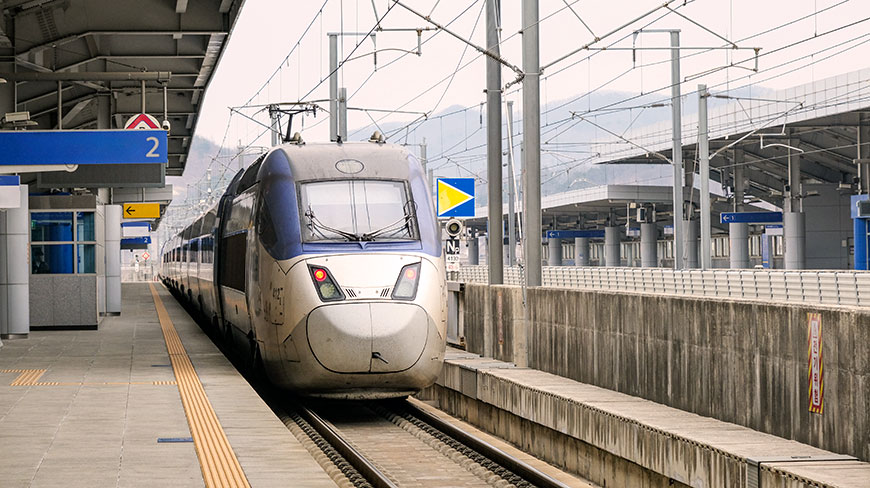
After checking out of the hotel, we transfer by motorcoach to Seoul Station, where we board the KTX high-speed train bound for Gyeongju in the southeast of the country. Once the capital of the Silla Kingdom from 57 BCE to 935 CE, Gyeongju flourished as a center of power, culture, and trade. Often called the “Golden Kingdom” for its exquisite gold crowns and jewelry, Silla cultivated a rich Buddhist heritage here and served as an important eastern hub along the Silk Road.
Upon arrival in Gyeongju, we board our waiting motorcoach and transfer to a local restaurant for lunch.
Upon arrival in Gyeongju, we board our waiting motorcoach and transfer to a local restaurant for lunch.
Lunch:
At a local restaurant.
Afternoon:
Next, we will ride to Yandong Folk Village, a village of the Son and Lee clans with over 600 years of tradition. This UNESCO World Heritage Site is a village that still has many “hanok” — houses built in the traditional style. The village sits in a scenic and strategic position on the hillside overlooking the Hyeongsan River. It is one of the largest and most important villages in South Korea due to its preserved architecture that demonstrates the lifestyle of Korean aristocracy and neo-Confucian traditions of the Joseon Dynasty.
We will visit one of the houses of the village Manho Gotaek. With one of the hosts, we will learn how the traditional distilled rice wine is made and have an opportunity to taste it.
We then transfer to our hotel and check in.
We will visit one of the houses of the village Manho Gotaek. With one of the hosts, we will learn how the traditional distilled rice wine is made and have an opportunity to taste it.
We then transfer to our hotel and check in.
Dinner:
At a local restaurant.
Evening:
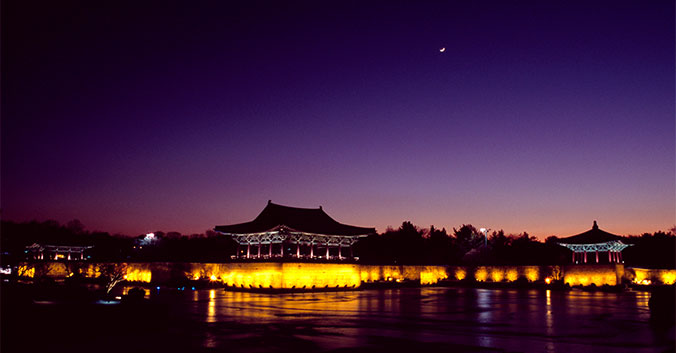
We carry on to a night visit to Donggung Palace and Wolji Pond. Formally known as Anapji, Donggung Palace and Wolji Pond is an artificial pond built in 674 CE by King Munmu of Silla in Gyeongju. It was restored in the 1970s, revealing 33,000 relics that offer insights into Silla's art and daily life, and it now serves as a testament to Silla's historical and cultural legacy.
We return to our hotel and have the remainder of the evening at leisure.
We return to our hotel and have the remainder of the evening at leisure.
Day
7
Bulguksa Temple, Cooking Class, Silla Kingdom Site
Location:
Gyeongju
Meals:
B,L
Stay:
Lahan Select Gyeongju
Activity Note
Walking about 1 mile uphill/downhill at Bulguksa Temple; steep narrow steps with no railings. Standing approximately 1 hour during cooking class. Getting on/off a motorcoach; driving about 81 miles, approximately 3 hours total, throughout the day.
Breakfast:
At the hotel.
Morning:
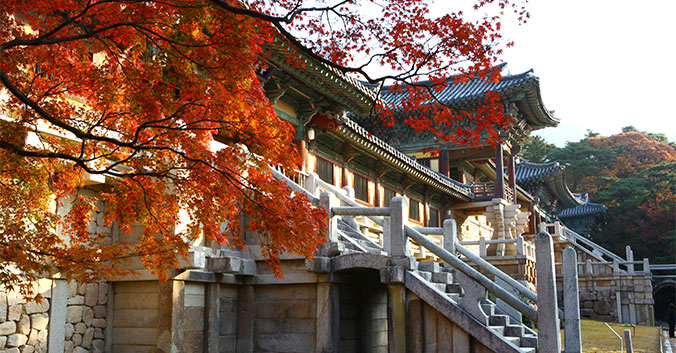
This morning, we focus on Korean Buddhism with a field trip to the Bulguksa Temple, a UNESCO World Heritage Site. We will explore the temple grounds with our Group Leader, and learn about this monumental masterpiece of Buddhist art and Silla architecture. Built in 774 CE on the slopes of Mount Toham, Bugulska Temple (Temple of the Buddha Land) is intentionally designed to be a manifestation of the Buddhist paradise.
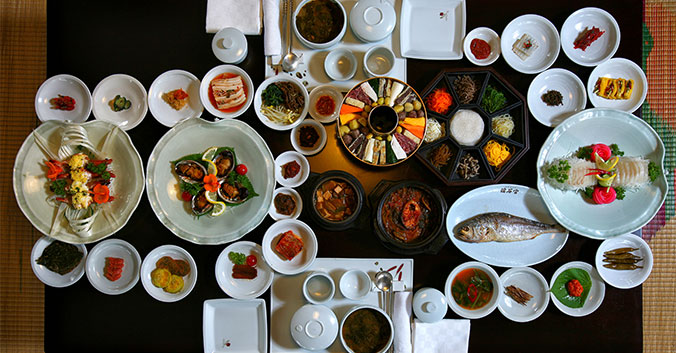
Next, we board a motorcoach and transfer to a local cooking school and begin our hands-on cooking class. During our class we will learn about the ingredients and process of creating a typical Korean meal, featuring beef barbecue.
Next, we board a motorcoach and transfer to a local cooking school and begin our hands-on cooking class. During our class we will learn about the ingredients and process of creating a typical Korean meal, featuring beef barbecue.
Lunch:
For lunch, we will enjoy the Korean food made during class.
Afternoon:
After lunch, we transfer to Gyeongju's World Heritage-listed Historic Sites. We first visit the Daereungwon Tomb complex, consisting of 23 ancient burial mounds of Silla Kingdom royalty and nobles. Located in Hwangnam-dong, it includes prominent tombs such as Cheonmachong and Hwangnamdaechong. Cheonmachong, discovered in 1973, contains over 11,000 artifacts, including the only known Silla-era painting and two golden crowns. Hwangnamdaechong, the largest tomb, is a twin mound believed to house a royal couple with over 30,000 relics, highlighting the queen's high social status. Here we will explore the rich cultural heritage and opulent lifestyles of Silla royalty from 1,500 years ago.
We carry on to the Gyeongju National Museum. The museum showcases relics of the Silla Kingdom, including the Emille Bell, Silla crowns, and artefacts from Anapji Pond and Hwangnyongsa Temple. Established in 1945, the museum features four main exhibition areas and an outdoor exhibit area with Buddhist sculptures and artifacts from royal palaces and temples, providing insight into the cultural history of Gyeongju and the Silla period.
We carry on to the Gyeongju National Museum. The museum showcases relics of the Silla Kingdom, including the Emille Bell, Silla crowns, and artefacts from Anapji Pond and Hwangnyongsa Temple. Established in 1945, the museum features four main exhibition areas and an outdoor exhibit area with Buddhist sculptures and artifacts from royal palaces and temples, providing insight into the cultural history of Gyeongju and the Silla period.
Dinner:
On your own to enjoy what you like. The hotel features convenient room service and a vibrant food court with many options. The Group Leader will assist with placing orders of ramen, bibimbap, dwaeji-gukbap (hearty soup), korean bbq, and more.
Evening:
At leisure. If interested, enjoy a stroll around Bomun Lake, located in front of the hotel. Prepare for check-out and transfer in the morning.
Day
8
Lecture, Ulsan Heavy Industry, UN Cemetery, Busan
Location:
Busan
Meals:
B,L
Stay:
Shilla Stay Haeundae
Activity Note
Getting on/off a motorcoach; driving about 60 miles, approximately 2 hours total, throughout the day. Walking about 1 mile uphill/downhill at cemetery.
Breakfast:
At the hotel.
Morning:
We board our motorcoach and transfer to a meeting room in Ulsan, where we will be joined by a local lecturer and learn about "South Korea's Economic Development and Characteristics Post-Korean War."
We then drive to Ulsan, Korea’s industrial center. We stop at the Ulsandaegyo Observatory and take an elevator to the top for a panoramic view of the Ulsan Industrial Zone, Ulsan Bridge and Hyundai Industries. Through a self-guided tour in the observatory, we will gain understanding of the might of South Korea's industry.
We reboard our coach and continue on towards Busan.
We then drive to Ulsan, Korea’s industrial center. We stop at the Ulsandaegyo Observatory and take an elevator to the top for a panoramic view of the Ulsan Industrial Zone, Ulsan Bridge and Hyundai Industries. Through a self-guided tour in the observatory, we will gain understanding of the might of South Korea's industry.
We reboard our coach and continue on towards Busan.
Lunch:
At a local restaurant.
Afternoon:
Moving on to Busan, we head first to the United Nations Memorial Cemetery. The cemetery is the burial ground for UN Command casualties of the Korean War and the only United Nations cemetery in the world, with 2,300 graves of service members from 11 countries, including 36 graves from the United States, most of whom were later reinterred in the United States. We will have time for independent exploration in the cemetery grounds, learning about the casualties of the war.
Next, we transfer to the Haeundae Beach area and check into our hotel. The remainder of the afternoon is free to stroll along the nearby beachfront promenade or just relax. Refer to the free time opportunities listed in the first program mailing.
Next, we transfer to the Haeundae Beach area and check into our hotel. The remainder of the afternoon is free to stroll along the nearby beachfront promenade or just relax. Refer to the free time opportunities listed in the first program mailing.
Dinner:
On your own to enjoy local fare. The Group Leader will be happy to offer suggestions. There are many eateries to explore nearby at Haeundae Beach.
Evening:
At leisure.
Day
9
Busan, Gamcheon & Amidong Villages, Jagalchi Fish Market
Location:
Busan
Meals:
B,L
Stay:
Shilla Stay Haeundae
Activity Note
Getting on/off a motorcoach; driving about 34 miles, approximately 2 hours total throughout the day, multiple stops. Walking about 3 miles over the course of the day; city streets, narrow alleys with a few steep steps with no railings.
Breakfast:
At the hotel.
Morning:
Via motorcoach and walking with our Group Leader, we will explore the city of Busan.
We first transfer to Gamcheon Cultural Village and Amidong Tombstone Cultural Village, neighboring hillside communities. Led by a local cultural commentator, we will go on a walking tour of Amidong Tombstone Cultural Village, learning about the hillside village built on top of a former Japanese cemetery.
Walking in Amidong, we will stop at Choiminsik Gallery, and learn more about the local history through photographic displays documenting the history of this area.
We continue walking to nearby Gambcheon Village and have time for independent exploration of this vibrant, color-filled, hillside village.
We first transfer to Gamcheon Cultural Village and Amidong Tombstone Cultural Village, neighboring hillside communities. Led by a local cultural commentator, we will go on a walking tour of Amidong Tombstone Cultural Village, learning about the hillside village built on top of a former Japanese cemetery.
Walking in Amidong, we will stop at Choiminsik Gallery, and learn more about the local history through photographic displays documenting the history of this area.
We continue walking to nearby Gambcheon Village and have time for independent exploration of this vibrant, color-filled, hillside village.
Lunch:
At a local restaurant.
Afternoon:
In the traditional old quarter of Busan, we take in the lively scene at the Jagalchi Fish Market with its amazing array of fresh seafood. The group leader will guide us on a walking tour of the largest fish market in South Korea and one of the largest in Asia.
We return to our hotel and have the remainder of the afternoon and evening at leisure.
We return to our hotel and have the remainder of the afternoon and evening at leisure.
Dinner:
On your own to enjoy what you like.
Evening:
At leisure. Prepare for check-out and our flight to Jeju Island in the morning.
Day
10
Fly to Jeju Island, Lecture, Jeju City Discovery
Location:
Jeju City
Meals:
B,L,D
Stay:
Maison Glad Jeju
Activity Note
Flight time 1 hour. Getting on/off a motorcoach; on/off an airplane, driving approximately 28 miles. Walking about 1.5 miles over the course of the day; mostly level ground. Walking and standing in museum and market, approximately 1 hour each.
Breakfast:
At the hotel.
Morning:
After checking out of the hotel, we will transfer to Busan airport for the short flight to Jeju Island.
Situated off the south coast of South Korea, Jeju is 45 miles wide east to west and 25 miles from north to south. It is dominated by Mount Halla in the middle, a dormant shield volcano, 6,388 feet high — the highest mountain in South Korea. The volcano and its lava tubes are part of a UNESCO Natural World Heritage Site. The island is a popular holiday destination for the East Asia region. The Jeju airport is situated in the heart of the city.
Upon our arrival, we will board our motorcoach and transfer to lunch.
Situated off the south coast of South Korea, Jeju is 45 miles wide east to west and 25 miles from north to south. It is dominated by Mount Halla in the middle, a dormant shield volcano, 6,388 feet high — the highest mountain in South Korea. The volcano and its lava tubes are part of a UNESCO Natural World Heritage Site. The island is a popular holiday destination for the East Asia region. The Jeju airport is situated in the heart of the city.
Upon our arrival, we will board our motorcoach and transfer to lunch.
Lunch:
At a local restaurant.
Afternoon:
After lunch, a local artist will join us to discuss "The Korean Wave (Hallyu)" and how K-pop and K-dramas have captured global audiences and shaped culture worldwide.
We board our motorcoach and set out and explore Jeju City, stopping at the Folklore and Natural History Museum, which will give us an overview of the island’s history and people in its multiple exhibit halls.
Next, we visit Dongmun Market which offers an abundance of fruits, seafood, medicinal herbs, grains, and clothing. Our Group Leader will guide us as we explore.
We then ride to our hotel and check in. We have some down time before we head out for dinner.
We board our motorcoach and set out and explore Jeju City, stopping at the Folklore and Natural History Museum, which will give us an overview of the island’s history and people in its multiple exhibit halls.
Next, we visit Dongmun Market which offers an abundance of fruits, seafood, medicinal herbs, grains, and clothing. Our Group Leader will guide us as we explore.
We then ride to our hotel and check in. We have some down time before we head out for dinner.
Dinner:
At a local restaurant.
Evening:
At leisure.
Day
11
Volcanic Stone and Crater, Traditional Village
Location:
Jeju City
Meals:
B,L
Stay:
Maison Glad Jeju
Activity Note
Travel by motorcoach, approx. 69 miles (3 hours total), with field trip stops. Walking around 4 miles during the day, with 1 to 1.5 hours at each site. Some of the terrain may be hilly. At Seongsan Peak, those interested in hiking can take the 500-step climb (with railings) to the summit, with rest stops along the way. To view the women divers, you will need to descend 150 steps from the parking area to the shoreline, and then climb back up. These steps are also equipped with railings.
Breakfast:
At the hotel.
Morning:
Today we focus on the east side of Jeju Island. During our drive east, our Group Leader will present an overview of the island’s unique culture and history.
Our first stop is at the Jeju Stone Culture Park. Here we learn about local traditions and examine a unique collection of natural stone formations as sculptural art.
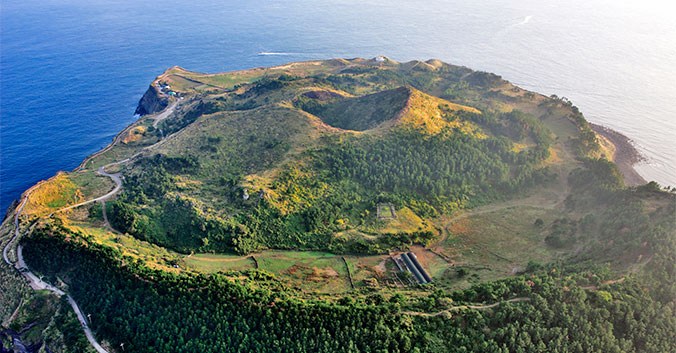
Moving on, we will ride to Sangumburi Crater and walk up and around the 1.5 mile rim of the crater. The walk will give us panoramic views of Hallasan National Park. Sangumburi Crater is an example of the island’s many “oreum” — parasitic cones formed by magma bursting through fissures on the flanks or base of the main volcano.
We next drive to Seongeup Village. Seongeup has been constantly inhabited for more than 500 years and still retains its traditional architecture, with thatched-roof houses surrounded by high walls. As we walk through the village, we will see examples of traditional houses.
Our first stop is at the Jeju Stone Culture Park. Here we learn about local traditions and examine a unique collection of natural stone formations as sculptural art.
Moving on, we will ride to Sangumburi Crater and walk up and around the 1.5 mile rim of the crater. The walk will give us panoramic views of Hallasan National Park. Sangumburi Crater is an example of the island’s many “oreum” — parasitic cones formed by magma bursting through fissures on the flanks or base of the main volcano.
We next drive to Seongeup Village. Seongeup has been constantly inhabited for more than 500 years and still retains its traditional architecture, with thatched-roof houses surrounded by high walls. As we walk through the village, we will see examples of traditional houses.
Lunch:
At a local restaurant.
Afternoon:
After lunch we transfer to Seongsan Peak, formed more than 5,000 years ago by an underwater explosion near the shoreline. Originally an island, sedimentary deposits now connect it to the land. It is possible to walk up 500 steps to the very top of the crown of the crater, or just enjoy the views of the shoreline from the base of the crater.
We’ll next descend the 150 steps leading to the shoreline for an up-close look at the women who dive for shellfish. During this time, we’ll learn about the unique tradition of these female divers, a cherished part of Jeju's culture.
We return to Jeju City in the late afternoon.
We’ll next descend the 150 steps leading to the shoreline for an up-close look at the women who dive for shellfish. During this time, we’ll learn about the unique tradition of these female divers, a cherished part of Jeju's culture.
We return to Jeju City in the late afternoon.
Dinner:
On your own to enjoy what you like. There are many casual eateries near the hotel. The Group Leader will be happy to offer suggestions.
Evening:
At leisure.
Day
12
Cheonjiyeon Falls, Jusangjeolli Pillars, Botanic Garden
Location:
Jeju City
Meals:
B,L,D
Stay:
Maison Glad Jeju
Activity Note
Getting on/off a motorcoach; driving approximately 1 hour each way from Jeju to the Southwest coastal area. Walking about 3 miles over the course of the day; mostly flat terrain. There are 130 steps (with railings) to the base of Jeonbang Waterfall. Walking approximately 1 hour at Cheonjiyeon Falls; mostly flat, paved walkways.
Breakfast:
At the hotel.
Morning:
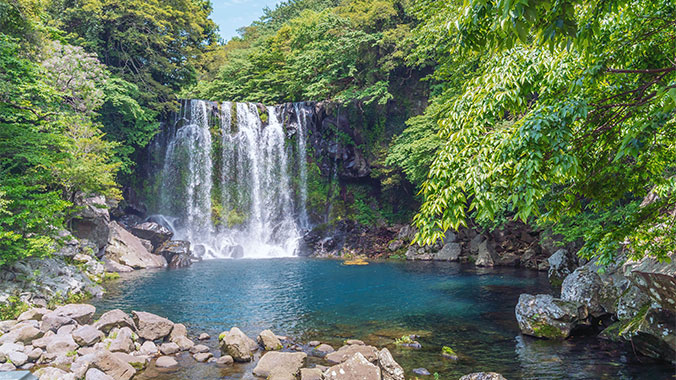
We will head to the southwest corner of Jeju Island. Our first stop will be Cheonjeyeon Falls, part of the most significant waterfalls on the island that flow from the foot of the mountains towards the sea.
We next move on to Jeonbang Falls, the final stage of the waters’ flow from Hallasan — the only waterfall in Asia that drops directly into the sea, falling more than 70 feet. Those who wish may take the 130 steps down for the view at sea level.
We next move on to Jeonbang Falls, the final stage of the waters’ flow from Hallasan — the only waterfall in Asia that drops directly into the sea, falling more than 70 feet. Those who wish may take the 130 steps down for the view at sea level.
Lunch:
At a local restaurant.
Afternoon:
While we are still on the coast, we will stop at Jusangjeolli Pillars (also known as the Jusangjeolli Cliffs) for a stroll. We walk along a paved path with views of the columnar basalt lava tubes that were created more than 100,000 years ago.
On our way back to Jeju City, we stop in at an outdoor botanical garden that was created on reclaimed wasteland beginning in 1968, The garden is home to hundreds of bonsai trees set within a natural landscape inspired by oreum (volcanic cones) and water.
On our way back to Jeju City, we stop in at an outdoor botanical garden that was created on reclaimed wasteland beginning in 1968, The garden is home to hundreds of bonsai trees set within a natural landscape inspired by oreum (volcanic cones) and water.
Dinner:
Farewell Dinner at the hotel.
Evening:
At leisure. Prepare for check-out and our flight to Seoul in the morning.
Day
13
Fly to Seoul, Free Time, Overnight in Incheon
Location:
Incheon
Meals:
B,L
Stay:
Grand Hyatt Incheon
Activity Note
Flight from Jeju Island to Seoul approximately 1 hour. Getting on/off a motorcoach; driving about 18 miles, approximately 1.5 hours throughout the day. Walking about 1/2 mile; city streets and sidewalks.
Breakfast:
At the hotel.
Morning:
After checking out of the hotel, we will transfer to Jeju Airport for our flight to Seoul Gimpo Airport. Once arrived, we will travel to Incheon and have lunch.
Lunch:
At a local restaurant.
Afternoon:
After lunch, we coach to the hotel and check-in. The remainder of the afternoon will be free for independent exploration or just to relax. The hotel has many amenities to enjoy or pack & prepare for flights home tomorrow.
Dinner:
On our own to choose what we like.
Evening:
At leisure. Prepare for check-out and departure in the morning.
Day
14
Program Concludes, In Transit
Location:
In Flight
Meals:
B
Activity Note
Hotel check-out 11:00 a.m. Driving distance from hotel to airport is around 1 mile. See your program’s travel details regarding transfers.
Breakfast:
At the hotel.
Morning:
Check out of the hotel and transfer to nearby Seoul Incheon International Airport. If your flight leaves later, shuttle service operated by Grand Hyatt Incheon runs every 30 minutes between the hotel and Incheon International Airport, located less than a mile from the airport. This concludes our program.
If you are returning home, safe travels. If you are staying on independently, have a wonderful time. If you are transferring to another Road Scholar program, detailed instructions are included in your Information Packet for that program. We hope you enjoy Road Scholar learning adventures and look forward to having you on rewarding programs in the future. Don’t forget to join our Facebook page and follow us on Instagram. Best wishes for all your journeys!
If you are returning home, safe travels. If you are staying on independently, have a wonderful time. If you are transferring to another Road Scholar program, detailed instructions are included in your Information Packet for that program. We hope you enjoy Road Scholar learning adventures and look forward to having you on rewarding programs in the future. Don’t forget to join our Facebook page and follow us on Instagram. Best wishes for all your journeys!
Please select a day to update the map
Map details are not available for this location.