
Virginia
Birding Virginia’s Eastern Shore and Chincoteague Island
Program No. 2019RJ
See More Photos
Birding Virginia’s Eastern Shore and Chincoteague Island
Birding Virginia’s Eastern Shore and Chincoteague Island
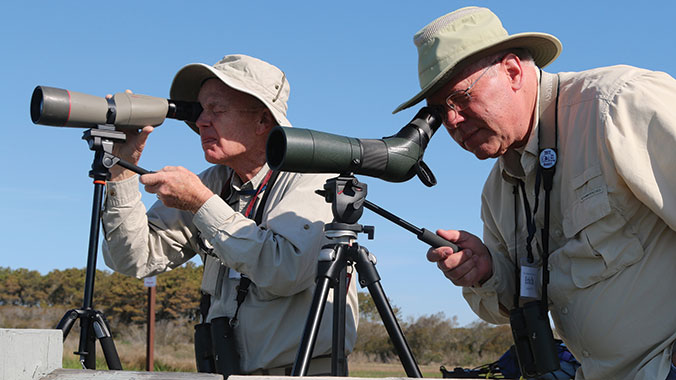
1 of 12
Itinerary
While we make every effort to ensure the accuracy of our published materials, programs are typically advertised more than a year prior to their start date.
Read More.
While we make every effort to ensure the accuracy of our published materials, programs are typically advertised more than a year prior to their start date. As a result, some program activities, schedules, accommodations, personnel, and other logistics occasionally change due to local conditions or circumstances. Should a major change occur, we will make every effort to alert you. For less significant changes, we will update you during orientation. Thank you for your understanding.
Duration
6 days
5 nights
What's Included
Included
14 meals (
5B, 4L, 5D
)
3 expert-led lectures
7 expert-led field trips
1 performance
An experienced Group Leader
Taxes and customary gratuity
Road Scholar Assurance Plan
Wallops Island
Birding Virginia’s Eastern Shore and Chincoteague Island
Nov 14 - Nov 19, 2027
Program Number
2019
Day
1
Check-in, Registration, Orientation
Location:
Wallops Island
Meals:
D
Stay:
Chincoteague Bay Field Station
Activity Note
Field station check-in from 3:00 p.m.
Afternoon:
Program Registration: 3:00 – 5:00 p.m. Come to the Road Scholar table in the lobby to register with the program staff and get your welcome packet containing your room assignment, up-to-date schedule that reflects any last-minute changes, other important information, and to confirm when and where the Orientation session will take place. If you arrive late, please contact the Chincoteague Bay Field Station to find out where to meet the group.
Dinner:
In the Chincoteague Bay Field Station dining hall, the dining staff will prepare and serve our meals cafeteria style, with options ranging from a hot meal to a diverse salad bar. Coffee, tea, water, and a selection of juices and sodas are available.
Evening:
Orientation. The Group Leader will greet everyone and lead introductions. We will review the up-to-date program schedule, discuss roles and responsibilities, logistics, safety guidelines, emergency procedures, and answer questions.
Day
2
Boat Trip, Chincoteague NWR, Birding Skills Review
Location:
Wallops Island
Meals:
B,L,D
Stay:
Chincoteague Bay Field Station
Activity Note
Getting on/off buses and on/off a boat with assistance. We will be participating in a guided boat tour in the morning. In the afternoon, we will access many parts of the refuge to take advantage of birding opportunities as they arise. Please dress according to the weather. It can be quite windy on the beach.
Breakfast:
In the Chincoteague Bay Field Station dining hall, our staff will present an array of fruits, hot and cold cereals, meats, breads/biscuits, eggs, and pancakes for your choosing. Coffee, tea, water, and a selection of soft drinks are available.
Morning:
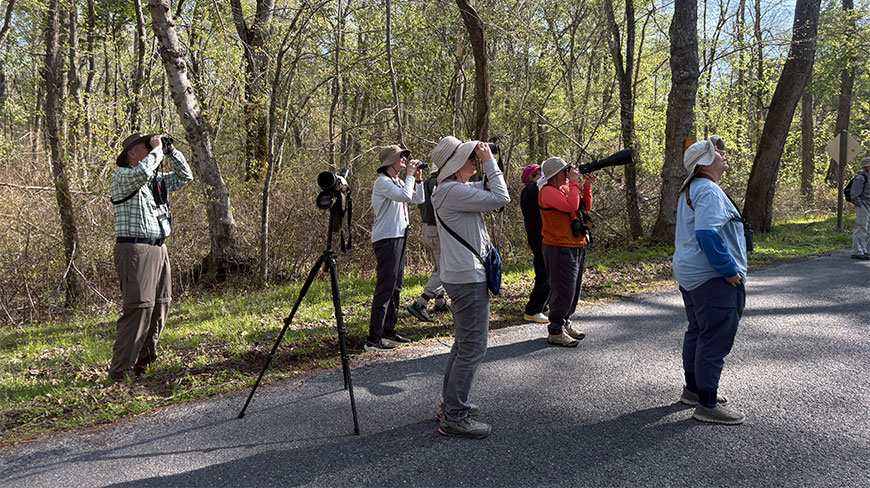
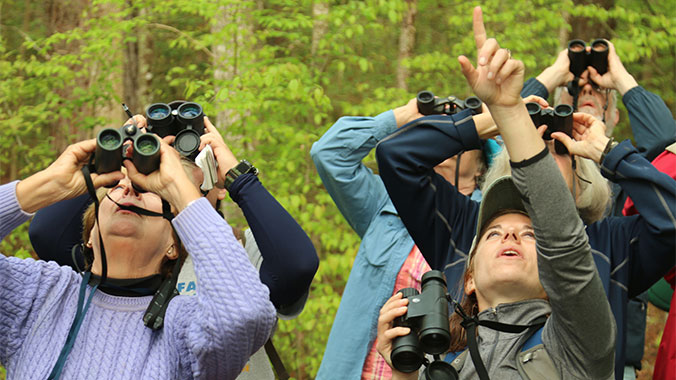
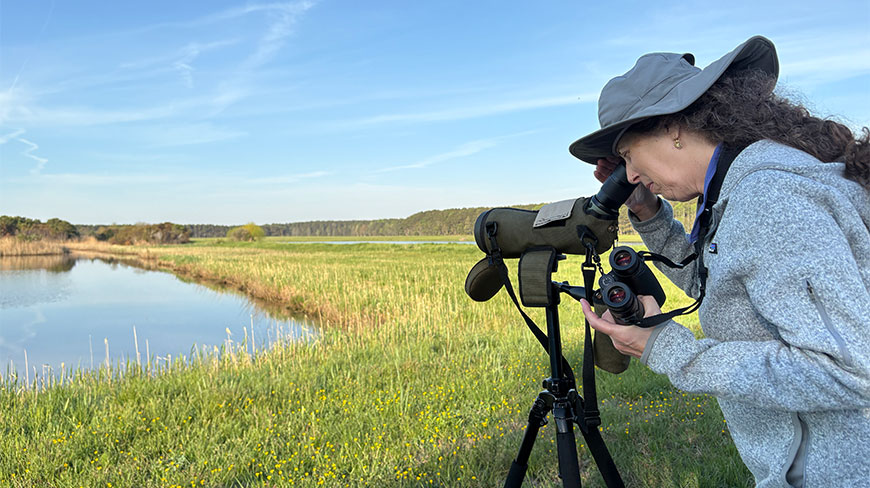
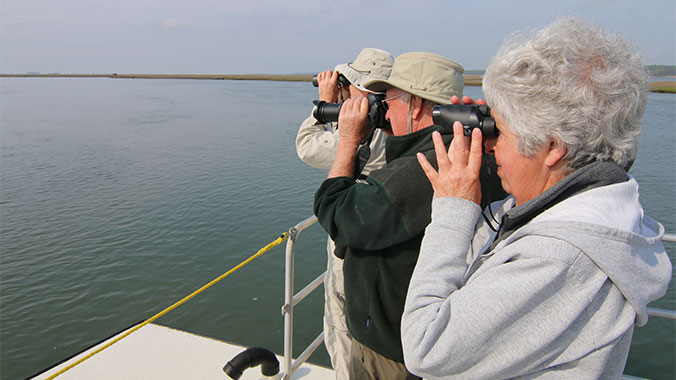
The tidal creeks and marshes and sandy shores surrounding Chincoteague and Assateague Islands are home to some elusive wetland birds. We'll climb aboard a pontoon boat to get up close and personal with this unique habitat and look for some of its residents. Common species include Great Blue Herons, Bald Eagles, Northern Harriers, Green Herons, Little Blue Herons, Great Egrets, Clapper Rails, American Oystercatchers, and more!
Lunch:
The Eastern Shore is home to some outstanding American fare and seafood restaurants. Your meal will not disappoint at one of our fine local eateries.
Afternoon:
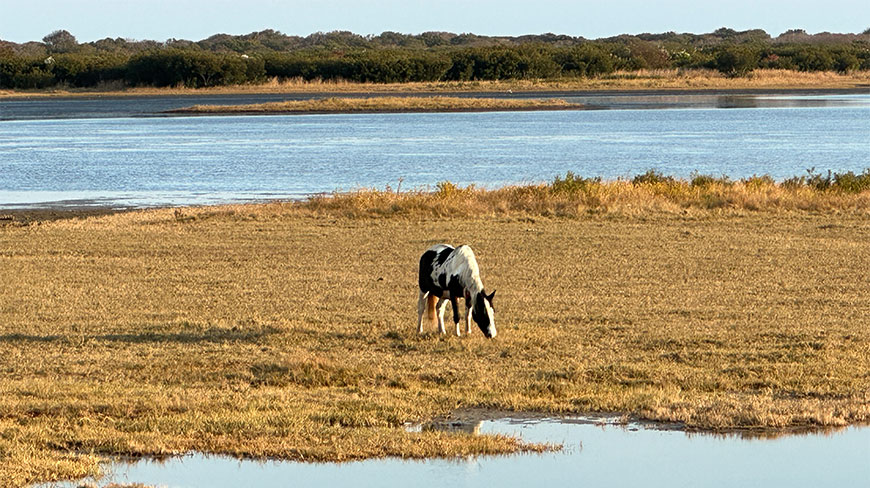
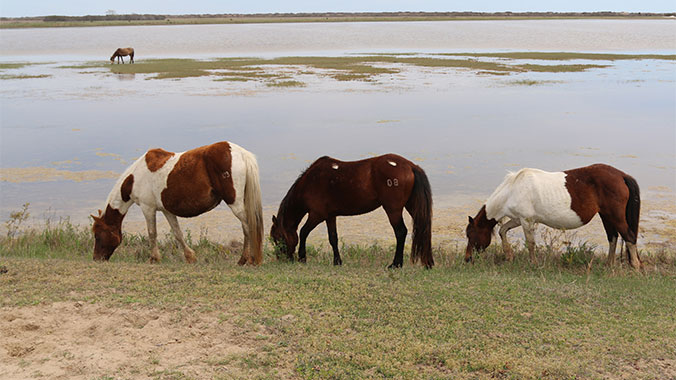
Chincoteague National Wildlife Refuge is one of the most visited refuges in the country, and is a great site for birding year-round. The shallow pools, grasslands, and woodlands are managed to provide plenty of food and resting spots for native wildlife and migratory waterfowl, so the diversity of birds will not disappoint! We’ll be on the lookout for Glossy Ibis, Caspian Tern, Merlin, Whimbrel, and an assortment of sandpipers, not to mention the famous Chincoteague wild ponies!
Dinner:
In the dining hall.
Evening:
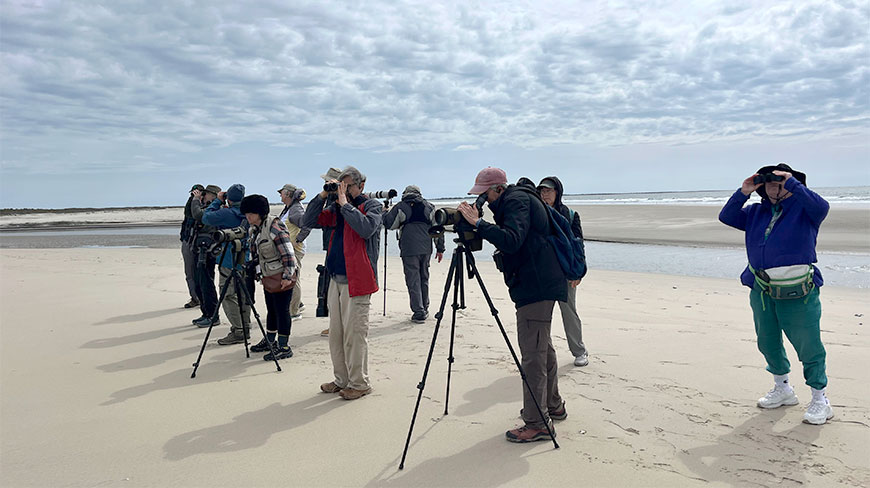
We will begin each evening with a review of the birds that we encountered during the day. Hundreds of species migrate through this region during spring and fall, and many regularly spend the winter months here. We’ll learn and practice key skills in turning any bird seen in the field into a positive identification. Also, we’ll get a review of the many resources birders today have at their fingertips; from field guides and magazines to websites and phone apps.
Day
3
Kiptopeke SP, Southern ES Birding Sites, Guest Lecture
Location:
Wallops Island
Meals:
B,L,D
Stay:
Chincoteague Bay Field Station
Activity Note
Getting on/off buses multiple times throughout the day; driving up to an hour between stops. Walking up to a mile at stops. We will be making many stops throughout the day to take advantage of birding opportunities as we find them. Our longest drive will be around an hour. Our longest walk will be about a mile, but will be taken at a very slow pace as we bird. Please dress according to the weather.
Breakfast:
In the dining hall.
Morning:
We’ll travel to the southern portion of the Eastern Shore and spend the morning at Kiptopeke State Park, home to a world famous hawk watch, looking for migrating songbirds, sparrows, and birds of prey. Our target species include Prairie Warbler, Palm Warbler, Northern Harrier, Sharp-Shinned Hawk, and Brown Pelican.
Lunch:
We'll have a packed lunch in the field with a variety of sandwich toppings, chips, and fruit.
Afternoon:
After lunch, we will travel to several other birding sites in the southern part of the Eastern Shore. Some possible sites we may visit include the Eastern Shore National Wildlife Refuge, the Edward S. Brinkley Nature Preserve, and Mutton Hunk Fen Natural Area Preserve.
Dinner:
The Eastern Shore is home to some outstanding American fare and seafood restaurants. Your meal will not disappoint at one of our fine local eateries.
Evening:
We will listen to a stimulating presentation by a local guest lecturer.
Day
4
Wallops Island, Free Afternoon, Ornithology Lecture
Location:
Wallops Island
Meals:
B,L,D
Stay:
Chincoteague Bay Field Station
Activity Note
Getting on/off buses multiple times throughout the day; driving up to 20 minutes between stops. We will be making many stops throughout the day to take advantage of birding opportunities as we find them. Our longest walk will be about a mile and a half, but will be taken at a very slow pace as we bird. Please dress according to the weather. It is often windy on the beach.
Breakfast:
In the dining hall.
Morning:
This morning we will travel to NASA-owned and restricted access Wallops Island, which provides an intriguing contrast between the innovative science and technology being studied there and the relatively untouched marshes and dunes systems. Resident Peregrine Falcons are often seen on the marsh. On the beach, we frequently get up-close views of rare Piping Plovers and Red Knots, as well as an assortment of gulls and terns like the Great & Lesser Black-backed Gulls and Royal Terns. We may be the only footprints of this Atlantic beach all day, so plan to look for shells or just relax and let the birds come to you! NOTE: Our access to Wallops Island will depend on the security level of the base at the time, which is influenced by a number of factors independent of the Chincoteague Bay Field Station and its actions.
Lunch:
In the dining hall.
Afternoon:
Free time. This block of time has been set aside for your personal independent exploration to see and do what interests you most. Please refer to the list of Free Time Opportunities. The Group Leader will be happy to offer suggestions.
Dinner:
Get ready for a seafood feast! In the dining hall, we will sample local crabs and shrimp, or, if you choose, chicken or roasted vegetables. It’s a traditional Chesapeake boil! Beverage options include coffee, tea, water, and a variety of soft drinks.
Evening:
Tonight we will hear an enlightening evening lecture by our field station staff on Ornithology and the Eastern Shore of Virginia.
Day
5
MD Coastal Bays, Pocomoke River SP, Museum, Musicians
Location:
Wallops Island
Meals:
B,L,D
Stay:
Chincoteague Bay Field Station
Activity Note
Getting on/off buses. Driving up to 30 minutes between stops. Walking up to 1.5 miles at a very slow pace at State Park; possibly wet, muddy, and uneven ground on trail. Walking and standing for about 90 minutes at museum; seating available.
Breakfast:
Breakfast will be a tailgate breakfast served in the field. Choose from hard-boiled eggs, fresh fruit, bagels, scones, yogurt, cream cheese, etc. with beverage options of coffee, tea, and orange juice.
Morning:
Heading north into Maryland, we will visit Maryland's Coastal Bays along the Atlantic Ocean. These protected areas are the perfect place to spot wading birds, waterfowl, and migratory species as they take advantage of plentiful feeding grounds and safe rest areas. Keep an eye out for waterfowl, Avocets, Yellowlegs, Common Loons, and a variety of sparrows.
Lunch:
We will pack our lunch with us and eat upon our arrival at Pocomoke River SP. Lunch options will include a variety of sandwiches, fruits, chips, and cookies. Please bring a refillable water bottle. Extra water will be available.
Afternoon:
Built on the banks of the Pocomoke River, the Delmarva Discovery Museum has exhibits that explore the culture, history, and natural environment of the Eastern Shore. These exhibits include a collection of decoys and wooden carvings of a variety of bird species as well as live animals.
Dinner:
The Eastern Shore is home to some outstanding American fare and seafood restaurants. Your meal will not disappoint at one of our fine local eateries.
Evening:
This evening, we will have a wonderfully entertaining performance by a locally cherished musical group. They present Celtic, nautical, and original music in a humorous and original way while providing rich historical context to music of the Eastern Shore of Virginia and beyond!
Day
6
Program Concludes
Location:
Wallops Island
Meals:
B
Activity Note
Field station check-out 9:30 a.m.
Breakfast:
In the dining hall. This concludes our program.
Morning:
If you are returning home, safe travels. If you are staying on independently, have a wonderful time. If you are transferring to another Road Scholar program, detailed instructions are included in your Information Packet for that program. We hope you enjoy Road Scholar learning adventures and look forward to having you on rewarding programs in the future. Don’t forget to join our Facebook page and follow us on Instagram. Best wishes for all your journeys!
Please select a day to update the map
Map details are not available for this location.