
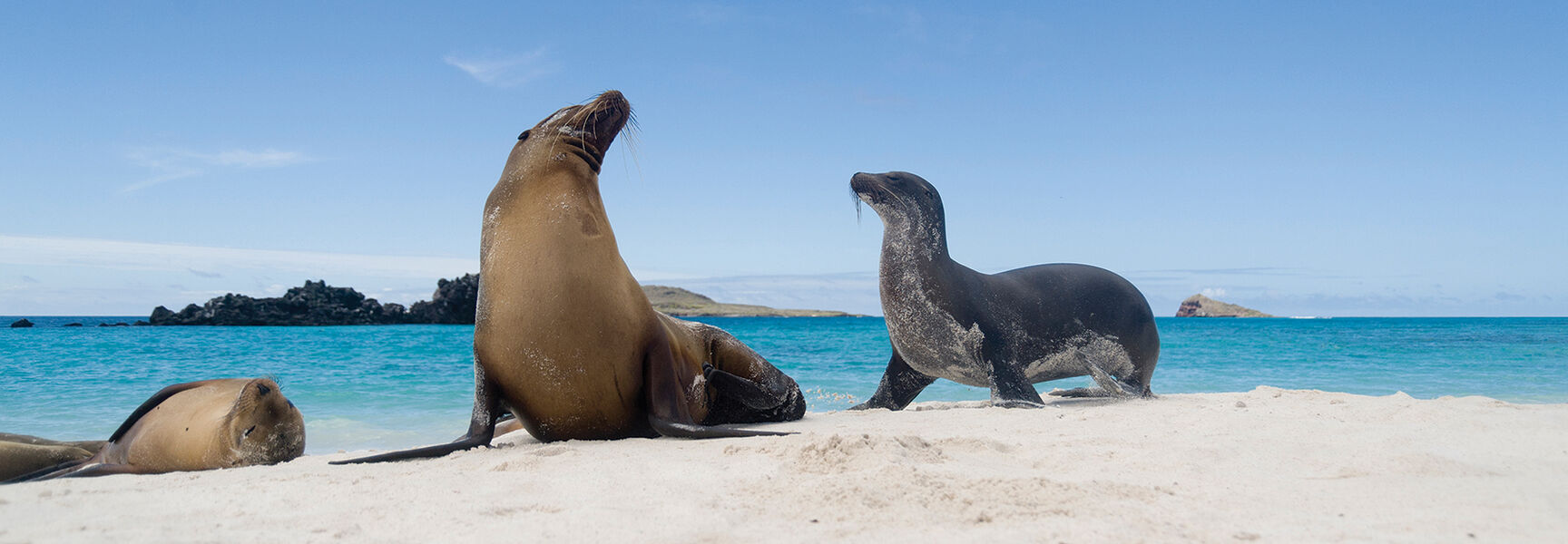
Galápagos Islands/Ecuador/Peru
The Best of the Galápagos and Peru: From Enchanted Islands to Machu Picchu
Program No. 18484RJ
Watch Video
See More Photos
The Best of the Galápagos and Peru: From Enchanted Islands to Machu Picchu
The Best of the Galápagos and Peru: From Enchanted Islands to Machu Picchu
1 of 5
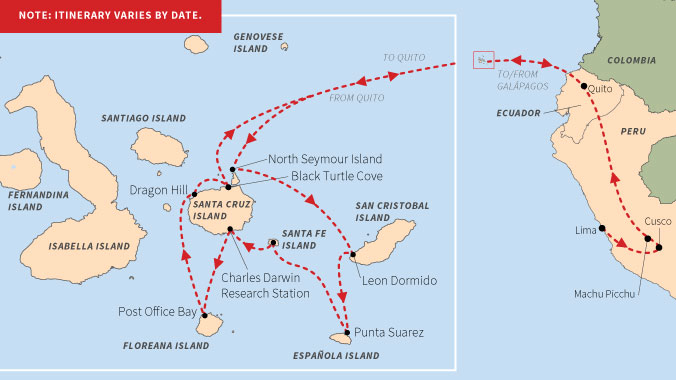
Itinerary
While we make every effort to ensure the accuracy of our published materials, programs are typically advertised more than a year prior to their start date.
Read More.
All itineraries and excursions are subject to change. Weather and water conditions may affect the progress of the ship, and we may miss ports if it is not safe to dock. The operators reserve the right to change the content and duration of excursions without prior notice and so the cruise itinerary should always be regarded as provisional. Whenever possible, Road Scholar’s published daily schedule will indicate port arrival and departure times. Prior to departure, if there is a major change, we will make every effort to alert you. For less significant changes, we will update you during orientation. Thank you for your understanding.
Duration
17 days
16 nights
What's Included
41 meals (
16B, 13L, 12D
)
8 expert-led lectures
26 expert-led field trips
5 flights during the program
1 hands-on experience
An experienced Group Leader
Taxes and customary gratuity
Road Scholar Assurance Plan
Lima
The Best of the Galápagos and Peru: From Enchanted Islands to Machu Picchu
Dec 2 - Dec 18, 2027
Program Number
18484
Day
1
In Transit to Program, Arrivals in Lima, Check-in
Location:
Lima
Stay:
Casa Andina Select Miraflores
Activity Note
The Jorge Chávez International Airport in Lima, Peru is located approximately 45 minutes from the arrival hotel. See your program’s preparatory information regarding transfers. Remember to bring your nametag. Hotel check-in at 3:00 p.m.
Evening:
At leisure. Settle in and get a good night’s rest for the day ahead.
Day
2
Larco Museum, Peru Cuisine Presentation, Malecon
Location:
Lima
Meals:
B,L
Stay:
Casa Andina Select Miraflores
Activity Note
Getting on/off a bus; driving about 21 miles, approximately 2 hours riding time. Walking up to 2 miles; flat paved surfaces, some steps.
Breakfast:
At the hotel.
Morning:
Orientation: 8:30 a.m. at the hotel. The Group Leader will greet everyone and lead introductions. We will review the up-to-date program schedule, discuss roles and responsibilities, logistics, safety guidelines, emergency procedures, and answer questions. We will learn from the Group Leader as well as local experts who will give lectures and lead field trips. Meals on our program feature local cuisine. Periods in the schedule designated as “Free time” and “At leisure” offer opportunities to do what you like and make your experience even more meaningful and memorable according to your personal preferences. The Group Leader will be happy to offer suggestions. Program activities, schedules, personnel, and indicated distances or times may change due to local circumstances/current conditions. In the event of changes, we will alert you as quickly as possible. Thank you for your understanding. At the hotel, we’ll learn about Peru’s ancient cultures during an introductory presentation by a local archeologist. We will board a bus and ride to the Larco Museum and learn about the ancient civilizations discussed during our lecture. After we disembark a local expert will lead us through the exhibits and provide historical insights. The privately funded Larco Museum, also known as Museo Rafael Larco Herrera, holds one of the world’s largest collections of Peruvian pre-Colombian artifacts and showcases pieces from lesser known Peruvian cultures such as the Moche, Chimú, and Nazca, as well as the famous Inca. Its name honors the founder’s father, Don Rafael Larco Herrera, a well-known collector of pre-Columbian artifacts and archaeology aficionado. The museum is housed in an 18th century mansion in the Pueblo Libre District of Lima and has 6 exhibit halls, 11 storage rooms, a vault for gold and silver exhibits, a terrace with large stone displays, and a garden with a patio.
Lunch:
Welcome lunch at local restaurant including a Peruvian Food presentation.
Afternoon:
We’ll climb aboard the bus and ride to Miraflores to explore the Malecon and enjoy some typical Peruvian snacks, including the deliciously fruity and refreshing cremolada. At Miraflores we will participate in a favorite Limeño pastime as we walk along the landscaped coastal paths of the Malecon and pause to soak up the ocean breeze and beautiful clifftop views. Then we will hop back on the bus and ride to Kennedy Park, known for its great street food, to sample some more local treats such as picarones (picarón, singular). Peruvians’ beloved fried pastry is made with sweet potato and/or pumpkin, then deep fried and topped with chancaca syrup. At the end of our explorations we will climb aboard the bus and ride back to the hotel.
Dinner:
On your own to explore the local fare.
Evening:
At leisure. Prepare luggage for tomorrow morning’s check out.
Day
3
Fly to Cusco, Transfer to Sacred Valley, Ollantaytambo Ruins
Location:
Yucay
Meals:
B,L,D
Stay:
Sonesta Posada del Inca - Yucay
Activity Note
Checked luggage allowance on flight is one bag per person, weighing up to 23 kg/50 lb. Getting on/off a bus; driving about 55 miles, approximately 2.5-3 hours riding time. Walking about 1/2 mile; sloping, cobblestone paths. Ollantayambo has steep stone steps (about 100) to top of the fortress. Cusco elevation approx. 11,000 feet; Yucay approx. 9,375 feet. Minimize chances of altitude sickness by avoiding alcohol and fatty foods; increase consumption of liquids and high carbohydrate foods.
Breakfast:
At the hotel.
Morning:
We’ll check out and depart to the airport for our morning flight to Cusco. Traditional Inca welcome with coca tea upon arrival at the Cusco airport. Then we’ll begin our transfer to Ollantaytambo with an en route visit to the Awanakancha Alpaca Center. The Awankancha Alpaca Center is a living museum where visitors can see llamas, alpacas and vicuna. A demonstration will show how the wool from these South American animals is used to make woven textiles. On our way, we will briefly visit the handicraft market in Pisac for a look at locally made crafts from the area.
Lunch:
At a local restaurant en route.
Afternoon:
After lunch, we will stroll through the Ollantaytambo ruins to learn about the engineering genius of the Inca. The Ollantaytambo Ruins are not ruins in the traditional sense. Ollantaytambo is a town with original buildings of Inca construction where the Inca retreated to make their last stand in the highlands against the Spanish. Running water still flows through the town in aqueducts and the agricultural terraces above the town are still in use. The pinnacle above the town is a small burial ground. Next, we'll learn about Andean agricultural techniques and how local farms still use these practices today during a presentation by a local expert. Once at the hotel, we will check in and settle into our rooms.
Dinner:
At the hotel.
Evening:
At leisure. Prepare for an early check out and transfer tomorrow. There is a weight limit of 11 pounds for luggage on the Peru Rail transfer to Machu Picchu. Plan to pack an overnight bag for one night in the Machu Picchu area. This bag must weigh no more than 11 pounds and measure no more than 62 inches /157 cm (length, plus height, plus width). Excess luggage can be left with the driver and vehicle, and will be secured until your return to Cuzco.
Day
4
Aguas Calientes, Machu Picchu, UNESCO World Heritage Site
Location:
Machu Picchu
Meals:
B,L
Stay:
El MaPi Hotel
Activity Note
Getting on/off a train to Aguas Calientes; approximately 1.5 hours rail time. Getting on/off a bus (Aguas Calientes Town - Machu Picchu ruins) is about 4 miles each way; approx. ½ hour riding on mountain switchbacks. Walking and standing at least 3 hours; dirt paths and grass; many staircases and lack of shade. Wear or bring long-sleeved shirt for insect protection. Elevation at Aguas Calientes is approx. 6,695 ft.
Breakfast:
Early, at the hotel.
Morning:
We will ride to the Ollantaytambo train station and board a train to Aguas Calientes Station en route to Machu Picchu. This scenic journey by rail follows the meandering path of the Urubamba River and provides spectacular views of the snowcapped Andes. Our Group Leader will provide commentary as we go. We will disembark at Aguas Calientes Station (6,693 feet elevation).
Lunch:
At a local restaurant.
Afternoon:
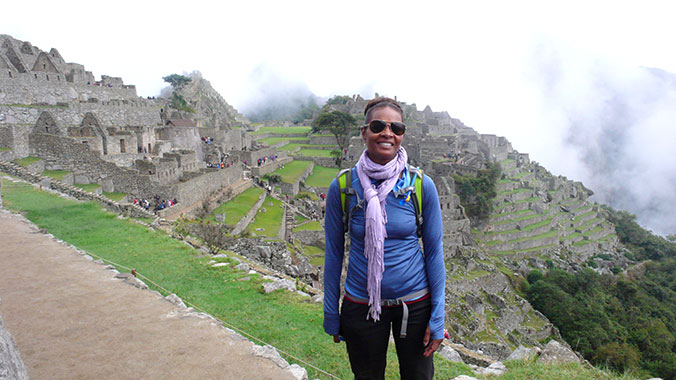
We will walk to a local bus stop then climb aboard a bus that will take us up the mountain to the Machu Picchu ruins. Then we will spend the afternoon walking in Machu Picchu, exploring in and around the ruins with a local expert. NOTE: Seating on the buses is on a “first come, first served” basis. We do not have a set departure time and will wait in line to board the bus. The modern day discovery of this ancient and incredible Inca city is credited to Hiram Bingham, a Yale graduate and former U.S. senator who was fascinated with Inca archaeology. While he was searching for Vilcabamba and Vitcos, Bingham “found” Machu Picchu with the help of a local farmer who knew about the ruins. Bingham hypothesized that the site was a “citadel” existing for strategic and defense purposes. He also speculated that the site was a refuge for Cusco’s Virgins of the Sun, based upon the finding of skulls there, although not scientifically classified as female. Breakthroughs in archaeology since 1985 have largely supported the emerging view of Machu Picchu as a royal estate. Archaeologists believe the site was built around 1450-1460 at the orders of Inca ruler Pachacutec Inca Yupanqui. It is estimated that the ruler lived here with more than 750 laborers, servants, family and relatives, and priests. Machu Picchu was built, flourished, and fell into demise within a period of only 100 years. The reason for its disuse remains a mystery, although archaeologists speculate it may have had to do with the Spanish conquest. We will ride back to Aguas Calientes and then walk to our hotel.
Dinner:
On your own for a chance to explore local fare.
Evening:
At leisure.
Day
5
Train to Ollantaytambo, Visit Chinchero, Transfer to Cusco
Location:
Cusco
Meals:
B,L,D
Stay:
Casa Andina Premium – Cusco
Activity Note
Elevation in Cusco is approximately 11,000 ft. Participants who plan to return to Machu Picchu this morning should purchase their entrance tickets in advance. Park tickets are sold in Aguas Calientes but availability is not guaranteed. For more information, please refer to the program notes section of your program materials.
Breakfast:
At the hotel.
Morning:
We’ll accompany our Group Leader on foot to explore the town of Aguas Calientes including a visit to the local market. Participants who wish to revisit Machu Picchu are welcome to skip the town excursion and spend the morning at the ruins (at own expense--entrance fee is not included and tickets should be purchased in advance).
Lunch:
At the hotel.
Afternoon:
We’ll transfer to the train station and then board the early afternoon train to Ollantaytambo Station. Once we arrive at the Ollantaytambo Station, we will board a bus to Cusco with an en route stop in Chinchero. Our field trip to Chinchero town will include a visit to a weaving cooperative, where we will meet with locals and learn about traditional weaving styles and techniques. Weaving is a way of life in Chinchero, as important for preserving ancient traditions as it is for earning a livelihood. Located in the Peruvian Andes on the Inca road between Cusco and Machu Picchu, Chinchero was an early Inca center built by emperor Tupa Inca as his country estate. During Inca reign, textiles were woven and offered to mark special occasions, from peace treaties and sacrifices to marriage ceremonies and puberty rites. In Chinchero, children grow up playing with their mother's spindle and loom. By age six or seven, most children learn to weave by watching their elders. They begin by weaving jakimas, or narrow ribbons, before moving on to more complicated pieces. We will reboard the bus and continue with our transfer to Cusco. Then, we'll check in at the hotel and get room assignments.
Dinner:
At a local restaurant.
Evening:
Time at leisure.
Day
6
Sacsayhuaman Ruins & Introduction to Cusco
Location:
Cusco
Meals:
B,L
Stay:
Casa Andina Premium – Cusco
Activity Note
Getting on/off a bus; driving about 8 miles, approximately 1/2 -1 hour riding time. Walking up to 2 miles; dirt paths, undulating grassy terrain, cobblestones. Elevation in Cusco is approx. 11,000 ft.
Breakfast:
At the hotel.
Morning:
We’ll board the bus and ride to the Sacsayhuaman Ruins. Once there, we’ll accompany our Group Leader on an exploratory walk through the historic site. The fortress of Sacsayhuaman forms the head of the Puma design of old Cusco. It is a wonder of technical achievement and a testament to human will. It is a mystery how it was constructed, since the stones are not found in the region, and most of the blocks weigh more than a ton. The largest rock weighs more than 300 tons. Sacsayhuaman is constructed of huge polygonal blocks which interlock with one another. The stones are so precisely placed that a knife blade cannot be inserted between them. Some sections of the ruins were built by the Killke culture which occupied the region from 900 to 1200 A.D. and was expanded and added to with the arrival of the Incas. We will reboard the bus and ride back to Cusco in preparation for a walking exploration of the city center. Cusco is a city of great historical value as is noted in its inscription as a UNESCO World Heritage Site: “The City of Cuzco provides a unique testimony to the urban and architectural achievements of important political, economic and cultural settlements during the pre-Columbian era in South America. It is a representative and exceptional example of the confluence of two distinct cultures; Inca and Hispanic, which through the centuries produced an outstanding cultural syncretism and configured a unique urban structure and architectural form.”
Lunch:
At a café next to the main plaza where you can enjoy the colonial architecture of the city.
Afternoon:
Enjoy the rest of the day at leisure to experience the ancient city of Cusco at your own pace. Please see the “Notes” section for a list of points of interest and activities in Cusco. Pre-dinner presentation by local expert on the history of Inca and Andean musical instruments. Your Group Leader will provide instructions for the best times to arrive back to the hotel.
Dinner:
On your own.
Evening:
Time at leisure. Prepare luggage for tomorrow's hotel check out and international travel.
Day
7
Fly to Quito via Lima
Location:
Quito
Meals:
B,D
Stay:
Sheraton Quito Hotel
Activity Note
The Mariscal Sucre International Airport is located approximately one hour from downtown Quito. Elevations in Quito range from 9,223 feet - 9,883 feet.
Breakfast:
Early, at the hotel.
Morning:
Check-out of the hotel and transfer to the Cusco airport for flight to Quito via Lima.
Lunch:
On your own. There will be opportunities for lunch at the Lima airport.
Afternoon:
Upon arrival to Quito, we will go through Immigrations, Baggage Claim, and Customs. Our Quito Group Leader will be waiting outside the restricted area, in the Arrivals Hall. After boarding the bus we’ll transfer to the hotel and check into our rooms. Our Quito Group Leader will review the up-to-date daily schedule and any changes, discuss responsibilities, safety guidelines, emergency procedures, and answer any questions you may have. Next, we’ll enjoy an expert presentation on Andean culture and European and Indigenous syncretism.
Dinner:
At the hotel.
Evening:
Time at leisure.
Day
8
Orientation to Quito, UNESCO World Heritage Site
Location:
Quito
Meals:
B,L,D
Stay:
Sheraton Quito Hotel
Activity Note
Getting on/off a bus; driving about 15 miles, approximately 1.5 hours riding time. Walking approximately 1.5 miles; mostly flat terrain, some steps. Layered clothing and comfortable walking shoes suggested for today's activities.
Breakfast:
At the hotel.
Morning:
After breakfast we will travel by bus to Quito's colonial section and accompany the Group Leader in a walking exploration of the historic UNESCO World Heritage Site. While walking through the narrow streets, we will learn about Quito’s rich history going from pre-Hispanic times, through the Colonial Period, to the Republican Era. The architecture found in Quito’s historical center is a great example of the Baroque style which is a fusion of Spanish, Moorish, Flemish and Indigenous art. Our field trip will include visits to the Museo Casa del Alabado, La Compañia Church, San Francisco Church and Convent, and the Plaza Grande.
Lunch:
At a local restaurant including an introduction to Ecuadorian food products and typical Ecuadorian cuisine. As a treat, we will learn how to make the city's signature canelazo drink.
Afternoon:
After lunch we will walk a couple of blocks to the Escuela de Arte Quiteño (Quito Art School). The school aims to preserve, through hands-on classes, the artistic techniques and traditions of the Quito School established during the colonial era. During our visit we will learn from a school instructor about the art techniques and theory behind the use of gold leaf before we try our hands at creating our own gilded artwork. In the mid-16th century, Roman Catholic monks began teaching indigenous artisans in Quito the artistic techniques needed to illuminate manuscripts and create religious sculptures, paintings, and other decorative elements that would eventually adorn the city’s many impressive churches and stately homes. While initial efforts attempted to replicate the Baroque styles brought from Spain and Italy, it soon evolved into something uniquely Quiteño; a style that incorporated indigenous imagery and artistic elements pointing to Flemish, Spanish, Italian, and even Moorish aesthetic influences. Late afternoon we’ll ride back to our hotel and attend a geology presentation by a local expert.
Dinner:
At the hotel.
Evening:
Prepare for check out and flight tomorrow. There is a 50 lb weight limit for checked luggage on the flights to the islands. Please pack accordingly. Extra luggage can be stored with your driver in Quito.
Day
9
Flight to Baltra, Embarkation, North Seymour
Location:
Galápagos Islands
Meals:
B,L,D
Stay:
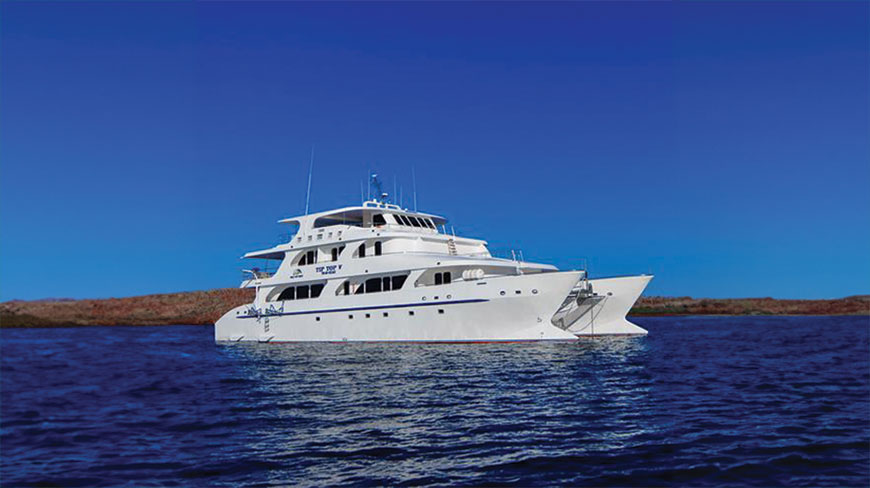
Tip Top IV
Activity Note
Flight to/from Galapagos is approximately 2 hours and makes a stop in Guayaquil; passengers remain on board. This flight allows each person to bring a 50 lb checked bag/suitcase, plus a carry on. Schedule is representative; actual cruise itinerary and islands visited are determined by the National Park. The park reserves the right to change cruise itineraries without prior notice. N. Seymour: dry landing, walking on mostly flat terrain.
Breakfast:
Early, at the hotel.
Morning:
Hotel check out. After boarding the bus we will transfer to the airport in preparation for our flight to the Galapagos Islands. Our Quito Group Leader will assist us with check-in procedures and bid us farewell as we proceed through security and get ready to embark on our flight. Upon arrival to the Galápagos Islands we'll deplane and walk across the tarmac to the airport building and follow the arrival signs to Immigration. With passport in hand we will stop at the Immigration counter for an inspection of our travel documents before we can proceed to the baggage claim area. After collecting our luggage, we will meet our naturalist Galápagos Group Leader and board a bus that will drive us to the pier in preparation for our embarkation on the yacht. After attending a welcome orientation and a safety drill, the yacht will set sail to the first visitor site on our cruise.
Lunch:
Aboard the yacht.
Afternoon:
After lunch we will tender ashore to North Seymour. After a dry landing, our naturalist will lead us on a walk along local trails. The island has a major nesting colony of Blue-footed Boobies and Magnificent Frigatebirds. During April-May the Blue-footed Boobies can be spotted performing their comical mating dance. Blue-footed Boobies oftentimes nest very near the trails, giving visitors the opportunity to get a closer view during the walks. From August-November sea lions are giving birth and it is possible to view pups of all sizes. Just remember to stay at a safe distance as females tend to be very protective of their young. A walk near known iguana nesting sites offers a good opportunity to view marine iguanas and land iguanas. Besides boasting abundant fauna, North Seymour Island is dotted with the endemic Palo Santo tree (Bursera graveolens). At the end of our explorations we will tender back to the yacht.
Dinner:
Aboard the yacht, after a welcome cocktail with the crew.
Evening:
Orientation to the next day's activities.
Day
10
Española, Punta Suarez, Gardner Bay, Osborn & Gardner Islets
Location:
Galápagos Islands
Meals:
B,L,D
Stay:
Tip Top IV
Activity Note
Punta Suarez: dry landing and difficult trail conditions due to rocky, uneven terrain. Gardner Bay: wet landing and easy, sandy trail conditions. Osborn and Gardner Islets: panga ride.
Breakfast:
Aboard the yacht.
Morning:
We'll make a dry landing at Punta Suarez this morning in preparation for our approximately 2 hour hike. Our walking exploration will take us over loose boulders and challenging rocky ground as we make our way to view nesting boobies and the famous blowhole. Punta Suarez is home to the Galápagos Hawk and the red form of the marine iguana. In January, the iguanas change color, adopting bright hues that are attractive to potential mates. Visitors have a good chance of seeing Blue-footed Booby chicks around October. Española is also the breeding site of most of the archipelago's Waved Albatrosses, so be on the lookout for these large and graceful flyers! Albatrosses display courtship behavior in April, nest and lay eggs in May, and by December the young fledge and leave for a few months before returning in March. A panga will take us back to the yacht in time for lunch.
Lunch:
Aboard the yacht.
Afternoon:
Following a panga ride to Española we will make a wet landing at the white sand beach in Gardner Bay. A short walk and swimming/snorkeling activities off the beach will give us the opportunity to relax in one of the islands' most beautiful locations. Gardner Bay's white beach is usually dotted with large quantities of sunbathing sea lions, especially during breeding season which takes place from May through January. This is also an important nesting site for sea turtles! In January, green sea turtles steal ashore under cover of night to dig pits and lay eggs before making their way back to sea. Eggs hatch from April to May. After our visit to Gardner Bay we will enjoy a panga ride around Osborn and Gardner Islets before returning to the yacht.
Dinner:
Aboard the yacht.
Evening:
Enjoy an expert presentation by our naturalist Group Leader, followed by an orientation to the next day's activities. (Please note that the day/time of lectures is subject to change).
Day
11
San Cristobal, Punta Pitt, Kicker Rock, Cerro Brujo
Location:
Galápagos Islands
Meals:
B,L,D
Stay:
Tip Top IV
Activity Note
Punta Pitt: wet landing on a beach frequented by sea lions (young males and retired adults). Keep your distance to avoid disturbing them. Parts of the trail are challenging as it requires climbing a steep ravine on slippery terrain. Kicker Rock/Leon Dormido: no landing. Cerro Brujo: wet landing and walking on and around the beach.
Breakfast:
Aboard the yacht.
Morning:
Wet landing at the northeast end of San Cristóbal Island. Next, we’ll join our naturalist Group Leader on a walking exploration in search of local flora and fauna at Punta Pitt. This is the only site in the islands where visitors can watch all three species of boobies and two species of frigates nesting in the same area. The abundant supply of food in the area makes it unnecessary for the birds to compete, leading to a peaceful coexistence among the species. Blue-footed Boobies generally nest in the interior areas of the island, while Red-footed boobies nest on bushes, and Masked Boobies nest along the cliffs. The wind-carved landscape of this seemingly barren island is quite breathtaking. A closer look reveals a surprising array of plant life that, against all odds, continues to thrive here. We’ll also look for Palo Santo trees, small cacti, saltbush, and red Vesuvius. Return to the yacht.
Lunch:
Aboard the yacht.
Afternoon:
We'll navigate around Leon Dormido (a.k.a. Kicker Rock) to get a closer look at the iconic stone formation and search for nesting sea birds. The tuff-rock, which rises almost 500 feet from the ocean, has eroded to give it the shape seen as a shoe or sleeping lion. We will be on the lookout for Blue-footed Boobies, Masked Boobies, and frigatebirds dotting its cliffs. Then we will make a wet landing at Cerro Brujo and begin walking on a white sand beach that is often frequented by lively sea lions. Return to the yacht.
Dinner:
Aboard the yacht.
Evening:
Orientation to the next day's activities.
Day
12
Santa Cruz Highlands, Charles Darwin Station
Location:
Galápagos Islands
Meals:
B,L,D
Stay:
Tip Top IV
Activity Note
Highlands: walking on trails and forested areas with irregular terrain and small incline. Potentially muddy conditions.
Breakfast:
Aboard the yacht.
Morning:
We will tender ashore to Santa Cruz Island. After a dry landing we will walk to the Charles Darwin Research Station in preparation for our field trip to the Fausto Llerena Center that is located inside the station. Our naturalist will lead us on foot through the facility and introduce us to the station's mission and its tortoise breeding projects. The Charles Darwin Research Station (CDRS) is a biological research station based on Santa Cruz Island and operated by the Charles Darwin Foundation. The organization plays an important role in scientific research, environmental education, and conservation efforts in the islands. The station conducts its projects with the help of a large team of scientists, educators, volunteers, research students and support staff from all over the world. Next, we will board a bus and ride into the highlands.
Lunch:
Aboard the yacht.
Afternoon:
We will board a bus and ride to a local trail head. Our naturalist will lead us on a walking field trip on local trails and lightly wooded areas to view Los Gemelos (The Twins) pit craters and the surrounding Scalesia forest. Then we’ll drive to a nearby location to walk on grassy trails in search of giant tortoises living in the wild. We'll learn more about their diet, breeding habits and overall biology as we observe them in their natural habitat. In addition to giant tortoises, Santa Cruz is home to several species of Darwin's finches as well as Yellow Warblers, Galápagos Rails and Paint-billed Crakes. A dramatic change in vegetation zones can be seen as one travels into the highland region of the island.
Dinner:
Aboard the yacht.
Evening:
Enjoy an expert presentation by our naturalist Group Leader, followed by an orientation to the next day's activities. (Please note that the day/time of lectures is subject to change).
Day
13
Santa Fe Island, South Plaza
Location:
Galápagos Islands
Meals:
B,L,D
Stay:
Tip Top IV
Activity Note
Santa Fe: wet landing and moderate difficulty due to rocky, uneven trail conditions. South Plaza: dry landing and moderate difficulty due to slippery rocks and uneven trail conditions.
Breakfast:
Aboard the yacht.
Morning:
Wet landing on a small beach on Santa Fe Island; a favorite sea lion hangout. We'll walk along a short looping trail that runs close to the beach. On the trail we will have the opportunity to get close-up views of the large Santa Fe Opuntia cactus while we look for Santa Fe land iguanas and Galapagos hawks. We’ll have the opportunity to swim or snorkel before going back to the yacht.
Lunch:
Aboard the yacht.
Afternoon:
Following our dry landing on Plaza Sur (South Plaza) Island we will embark on a walking field trip on rocky trails in search of local flora and fauna. As we follow the trail to a cactus forest, we hope to get a closer look at land iguanas and their habitat before moving on in search of local sea lion colonies. Sea lions usually give birth from August - November and females begin mating within weeks of having their young. South Plaza is also a great place for viewing seabirds in flight including Red-billed Tropicbirds, frigatebirds, pelicans, Swallow-tailed Gulls, and other pelagic species.
Dinner:
Aboard the yacht.
Evening:
Orientation to the next day's activities.
Day
14
Bartolome Island, Santiago Island, Sullivan Bay
Location:
Galápagos Islands
Meals:
B,L,D
Stay:
Tip Top IV
Activity Note
Bartolome Island: dry and wet landings, moderate to difficult trail conditions due to a long walkway of 375 wooden steps rising 374 ft. (114 meters) up to the lookout point. Sullivan Bay: wet landing and moderate difficulty due to rocky, volcanic terrain. The looping visitor trail is approximately 1 mile in length. Wear comfortable tennis shoes with good ankle support.
Breakfast:
Aboard the yacht.
Morning:
We will board a panga and navigate to Bartolomé Island. After making a dry landing on the island we will accompany our Galapagos naturalist on an uphill walk, on a trail and staircase, to reach the lookout point at the top of Escalera Hill. On Bartolomé Island we will be able to view volcanic formations such as lava bombs, spatter, and cinder cones. From the summit it is possible to see surrounding islands as well as Pinnacle Rock's eroded tuff cone. On the way to the summit, we will watch for colonies of marine iguanas, lava lizards, tiquilla and various cacti. Bartolomé is one of the best places to find Galápagos penguins. At the end of our field trip we will return the way we came and tender back to the yacht.
Lunch:
Aboard the yacht.
Afternoon:
After a panga ride to Santiago Island and wet landing, we will accompany our naturalist leader on a walking exploration of the volcanic formations at Sullivan Bay. A volcanic eruption that took place in the early 1900’s formed huge lava flows in the area that is now Sullivan Bay. As the lava cooled off, it solidified into a black sheet of interesting shapes and textures that made their way to the sea. The rope-like lava seen on this island is called pahoehoe lava. Other interesting formations include lava bubbles and tree shapes; ghosts of Santiago’s past. Few plant species have been able to root in this harsh environment. Once we complete our walk we'll have the option to swim and snorkel before boarding a panga for the journey back to the yacht.
Dinner:
Aboard the yacht.
Evening:
Orientation of next day's activities.
Day
15
Rabida Island, Sombrero Chino
Location:
Galápagos Islands
Meals:
B,L,D
Stay:
Tip Top IV
Activity Note
Rabida Island: wet landing and walking approximately 2.5 hours; easy to moderate trail conditions due to hills and sandy terrain. Sombrero Chino: wet/dry landing (depending on local weather conditions).
Breakfast:
Aboard the yacht.
Morning:
Following a panga ride and wet landing at Rabida Island, our naturalist leader will point out the island's unique flora and fauna during a walking exploration of the beach and local trails. Rabida (Jervis) has a dark red beach favored by sea lions and nesting pelicans. A saltwater lagoon located a small distance from the beach is home to flamingoes and the occasional White-cheeked Pintail. Palo Santo trees cover the island's volcanic peak, which can be seen from a short trail (approximately a 1/2 mile walk). Some of the Galápagos' rarest bird species are here in abundance, including Large-billed Flycatchers, Galápagos Hawks and nine varieties of finches. We will have the opportunity to swim and snorkel before making our way back to the yacht.
Lunch:
At a ranch in the highlands.
Afternoon:
We'll navigate around Sombrero Chino (Chinese Hat) to observe its resident wildlife and lava formations. Depending on the weather conditions, we may also make a wet or dry landing and undertake a short hike around the island with our naturalist. This small island can be seen a short distance from Santiago Island’s southeastern tip. The name, meaning Chinese hat, describes the volcanic cone’s unique shape. A cove on the northern side of the island offers good conditions for swimming and snorkeling; it is also a favored sea lion hangout. Other species frequently seen in and around the island include American Oystercatchers, Brown Noddys, Galápagos Hawks, Sally Lightfoot crabs, spotted eagle rays, whitetip reef sharks, Galápagos Penguins, marine iguanas, Lava Herons, lava lizards, and Brown Pelicans. We’ll have the opportunity to swim and snorkel before returning to the yacht and readying ourselves for dinner.
Dinner:
Aboard the yacht.
Evening:
Orientation to the next day's activities. Prepare luggage for final disembarkation.
Day
16
Bachas Beach, Fly to Lima via mainland Ecuador
Location:
Quito
Meals:
B,D
Stay:
Hotel Rincon de Puembo
Activity Note
Wet landing and easy walking on beach and swimming and snorkeling activities. There is a 50 lb weight limit for checked luggage on the flights to and from the islands.
Breakfast:
Aboard the yacht.
Morning:
Early this morning we will make a Wet landing at Playa las Bachas for a field trip to a flamingo lagoon. Apart from being an important nesting site for sea turtles (Chelonia mydas), Playa las Bachas is also a great location for viewing migratory and aquatic birds. The name of this location dates back to WWII, when the U.S. army abandoned two barges on the beach. Locals found it hard to pronounce the word "barges" in English; over time, the common mispronunciation of the word became the norm, resulting in the name Playa las Bachas. Opportunity for snorkeling and/or swimming before returning to our vessel. Return to the yacht and gather your personal belongings in preparation for final disembarkation. We will then transfer by bus to the airport. After checking in for our flight to Quito, it will be time for us to bid farewell to the Islas Encantadas and our Galápagos Group Leader.
Lunch:
On your own. The airport offers a variety of food options like sandwiches and empanadas.
Afternoon:
Late afternoon arrival to Quito. Time at leisure to finish packing or relax before joining the rest of the group for dinner.
Dinner:
At the hotel. During a farewell dinner, share your favorite experiences with new Road Scholar friends.
Evening:
At leisure. Prepare for check out and international flights to North America. Participants with international flights departing very late this evening/before dawn next morning will check out of the hotel and transfer to the Mariscal Sucre International Airport (UIO) in preparation for airline check in.
Day
17
Program Concludes
Location:
In Flight
Meals:
B
Activity Note
Participants with independent travel arrangements and/or scheduled on later flights can keep their hotel rooms until check-out time on this day. Except for breakfast, all other meals are on your own on this day. See your program’s preparatory information regarding transfers. Check out by 12:00 p.m.
Breakfast:
At the hotel restaurant (dependent on flight times). This concludes our program.
Morning:
If you are returning home, safe travels. If you are staying on independently, have a wonderful time. If you are transferring to another Road Scholar program, detailed instructions are included in your Information Packet for that program. We hope you enjoy Road Scholar learning adventures and look forward to having you on another rewarding program in the future. Don’t forget to like our Facebook page and follow us on Instagram. Best wishes for all your journeys!
Please Note:
This program has itinerary variations on certain dates.
Dec 2 - Dec 18, 2027 Itinerary Differences:
This program date starts in Lima and ends in Quito and sails on the Tip Top IV. Cruise Itinerary varies by date. Actual cruise itinerary and islands visited are assigned by the Galápagos National Park and can be changed without prior notice.