
Chile/Rapa Nui
The Atacama Desert and Easter Island: Different Worlds
Program No. 3892RJ
See More Photos
The Atacama Desert and Easter Island: Different Worlds
The Atacama Desert and Easter Island: Different Worlds
1 of 4
Itinerary
While we make every effort to ensure the accuracy of our published materials, programs are typically advertised more than a year prior to their start date.
Read More.
While we make every effort to ensure the accuracy of our published materials, programs are typically advertised more than a year prior to their start date. As a result, some program activities, schedules, accommodations, personnel, and other logistics occasionally change due to local conditions or circumstances. Should a major change occur, we will make every effort to alert you. For less significant changes, we will update you during orientation. Thank you for your understanding.
Duration
20 days
19 nights
What's Included
Included
52 meals (
17B, 18L, 17D
)
10 expert-led lectures
19 expert-led field trips
4 flights during the program
5 hands-on experiences
2 performances
An experienced Group Leader
Taxes and customary gratuity
Road Scholar Assurance Plan
Santiago
The Atacama Desert and Easter Island: Different Worlds
Oct 15 - Nov 3, 2027
Program Number
3892
Day
1
In Transit to Program
Location:
In Flight
Day
2
Check-in, Registration, Orientation, Welcome Dinner
Location:
Santiago
Meals:
L,D
Stay:
Solace Santiago
Activity Note
This day includes an afternoon program orientation after lunch followed by a Santiago city excursion by private bus with some stops that will require getting on and off the bus and walking of short distances on even terrain to explore city highlights.
Morning:
Airport transfers for scheduled passengers from Santiago's International Airport (SCL) to the Hotel. Check in at hotel if available and time to rest until lunch. (Standard Check out at 12:00 pm and Check In time is at 02:00 pm)
Lunch:
At the hotel.
Afternoon:
After lunch complete program introduction will be given to program participants that will cover what to expect in Chile (money issues, safety, detailed program itineraries, domestic travel, etc) which is reviewed item by item. A Santiago city excursion will be the next activity that will give participants a first site impression of a dynamic South American capital and a city of contrasts.
Dinner:
At a local eatery
Day
3
Valparaiso City
Location:
Santiago
Meals:
B,L,D
Stay:
Solace Santiago
Activity Note
Day trip will be done on a bus with some stop overs that will require getting on and off the bus. The day also includes a short boat ride around Valparaiso harbor and bay that could be done in or out of the boat cabin. Walking of short distances is also part of the overall experience. Upon return to Santiago, you will be introduced to Chile and its current affairs by a lecturer.
Breakfast:
At the hotel.
Morning:
Day trip to Valparaíso city, a UNESCO World Heritage site, crossing the coastal mountain range from Santiago to Valparaiso through the Casablanca wine valley. Experience a 30 minute boat ride to see Valparaiso harbor and hills from the ocean. Learn of the pioneer history of Valparaiso city and explore some of its hills.
Lunch:
At a local eatery.
Afternoon:
Set out on foot to continue exploring the city. We will walk the Alegre and Concepcion Hills to discover the history of its inhabitants and how people were able to adapt to the geography of the place. The drive back to Santiago is approximately 2 hours. After returning to Santiago, you will have some time to rest before the next activity: a lecture that will introduce Chile and its different aspects that include geography, economy, politics, education among other topics.
Dinner:
At a local eatery.
Day
4
San Pedro de Atacama, Tulor Archaeological Village
Location:
San Pedro de Atacama
Meals:
B,L,D
Stay:
Hotel Diego de Almagro San Pedro de Atacama
Activity Note
Walking excursion around San Pedro de Atacama village (dirt road) on even flat terrain, no climbing or hikes. 50 minute walk app. to get familiar with the town. Tulor exploration is on even terrain covering a distance of approximately 0.75 mile to view point. Please note that we are unable to confirm your seat assignment for this flight until arrival at the airport.
Breakfast:
At the hotel.
Morning:
Introduction to site. Check out from Santiago Hotel, Transfer to airport to check in for flight. Domestic flight to Calama is approximately 2 hours. Upon arrival in Calama, transfer by coach to San Pedro de Atacama (2 hour drive) with stop over to admire the landscape and photo options. The highest point on the road is a pass at 9,700 ft.(Domeyko mountain range) after which we will rapidly descend to San Pedro village at 7,900 ft..
Lunch:
At a local eatery.
Afternoon:
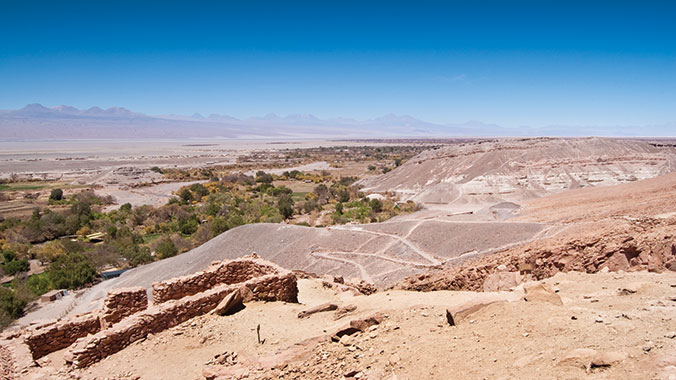
Field trip to El Tulor Village, one of the oldest settlements in Northern Chile dated between 800BC-100AC. Buried in the sand and discovered in 1958 by the founder of San Pedro de Atacama archeological museum, father Le Paige. Best example to understand human settlement and landscape of the first Atacameño people. Walk from visitor's center of approximately 0,62 mile on even terrain to view point and replica of old dwelling.
Dinner:
At a local eatery.
Day
5
Pukara de Quitor
Location:
San Pedro de Atacama
Meals:
B,L,D
Stay:
Hotel Diego de Almagro San Pedro de Atacama
Activity Note
Hiking and climbing of the hsitoric and panoramic Quitor Pukara. Two climbing options available. First, easy climb to 360° viewpoint of the area. Second, walk up through the fortified complex of the Pukara. Hiking shoes or shoes without flat soles are recommended, walking stick (if necessary).
Breakfast:
At the hotel.
Morning:
Lecture: Anthropological development of the Atacameño people. Local Archeological museum visit will be subject to updates on the date for the reopening of museum due to major restoration project.
Lunch:
At a local eatery.
Afternoon:
Depart for the Pre Inca Fortress Pukara de Quitor. Hiking and climbing to explore this defensive labyrinth set on the side of a hill by the Atacameños.
Dinner:
At a local eatery.
Day
6
Salt Mountain & Magical Moon Valley
Location:
San Pedro de Atacama
Meals:
B,L,D
Stay:
Hotel Diego de Almagro San Pedro de Atacama
Activity Note
Explore the salt mountain range and climb a sand dune to wait for sunset in the moon valley.
Breakfast:
At the hotel.
Morning:
Lecture: Atacameño culture, Religion and Family life.
Lunch:
At a local eatery.
Afternoon:
Half Day excursion to visit the Moon Valley and geological formations located in the salt mountain range nearby San Pedro de Atacama town (40 Mins). Hiking of a sand dune to experience the sunset and light reflection over the Andes range and salt mountain range. Return to hotel after sunset.
Dinner:
At a local eatery.
Day
7
Atacama Salt Flat, Flamingoes & Toconao Village
Location:
San Pedro de Atacama
Meals:
B,L,D
Stay:
Hotel Diego de Almagro San Pedro de Atacama
Activity Note
Walk on the Atacama Salt Flat on even terrain to experience salt crust formations and admire flamingo colonies and other bird species. Walking is done on marked pathways and may take an hour app. Binoculars and comfortable walking close shoes are suggested. A hat, sun screen, sun lotion and sun glasses are recommended. Water will be available.
Breakfast:
At the hotel.
Morning:
Lecture: Flora & Fauna of the Atacama region,
Free time for optional suggested activities by group leader, such as, death valley walking excursion, biking or car ride to the the devil's gorge, etc.
Free time for optional suggested activities by group leader, such as, death valley walking excursion, biking or car ride to the the devil's gorge, etc.
Lunch:
At a local eatery.
Afternoon:
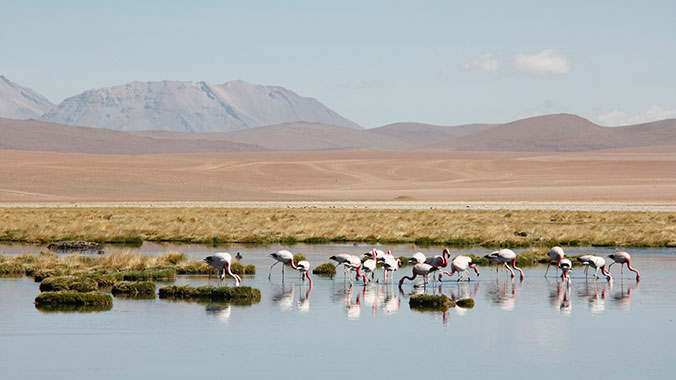
Trip to Chaxa Lagoon in the heart of the Atacama Salt Flat to observe flora and fauna, flamingo colonies and other birds. Stopover in Toconao village to learn from local people of the agricultural work and use of water resources.
Dinner:
At a local eatery.
Day
8
Cross the driest section of the Atacama desert
Location:
Iquique
Meals:
B,L,D
Stay:
Hotel Diego de Almagro Iquique
Activity Note
Transfer by private coach from San Pedro de Atacama to Iquique city with stop overs in Calama city and other places on the way. Crossing the driest section of the Atacama desert.
Breakfast:
At the hotel.
Morning:
Transfer by private coach to Iquique city crossing the driest section of the Atacama desert through plains and hills, salt flats and abandoned ghostly towns. Stop over in Calama City, viewpoint next to Chuquicamata copper mine, world's largest open pit mine and Quillagua town on the way to Iquique.
Lunch:
Picnic-style lunch during bus ride from Calama to Iquique city.
Afternoon:
Site orientation during bus ride. Arrival in Iquique city. Time to rest or to explore city on your own.
Dinner:
At a local eatery.
Day
9
Iquique's History, Festival of La Tirana Virgin
Location:
Iquique
Meals:
B,L,D
Stay:
Hotel Diego de Almagro Iquique
Activity Note
Bus ride around Iquique city that includes getting on and off the bus plus walking and standing during visits.
Breakfast:
At the hotel.
Morning:
City exploration by coach and on foot with stopover at local museums, theater, etc. to discover Iquique's history and people.
Lunch:
At a local eatery.
Afternoon:
Lecture on Iquique's history to discover its impact on Chile's political and social development. Introduction to Religious festival of La Tirana Virgin with hands on experience with locals.
Dinner:
At a local eatery.
Day
10
Pintados Geoglyphs & the Aymara Ethnic Group
Location:
Iquique
Meals:
B,L,D
Stay:
Hotel Diego de Almagro Iquique
Activity Note
Walking on even and uneven flat terrain to eye witness the Pintados geoglyphs that extend for 2.5 miles on the hill sides. Hat, sun screen and sun glasses are necessary.
Breakfast:
At the hotel.
Morning:
Field trip to Pintados hills (59 miles from Iquique) covered by more than 300 geoglyphs that were made between the year 500 to 1450 AC. Display of geoglyphs that extend for 2,5 miles on the hill sides of the coastal mountain range.
Lunch:
At a local eatery.
Afternoon:
Embrace the Aymara Culture of northern Chile and its shared widely spread cosmovision in neighbor countries such as Peru, Bolivia and Argentine Lecture: Aymara Culture of Chile Free time
Dinner:
At a local eatery.
Day
11
Santa Laura, Humberstone towns, Pica & La Tirana.
Location:
Iquique
Meals:
B,L,D
Stay:
Hotel Diego de Almagro Iquique
Activity Note
Bus ride to the pampa salitrera (nitrate plains) to walk around the nitrate towns. Walking on even terrain that resquest standing in some parts of the excursion. Hat, sun screen and sun glasses are necessary. Walking on even and uneven terrain duirng visit to Pica Oasis town, Matilla and la Tirana towns. Paved streets and some dirt paths.
Breakfast:
At the hotel.
Morning:
Guided trip to explore Santa Laura and Humberstone (World Heritage Site declared by UNESCO) mining towns Discover life and mineral extraction process in the old days. After the exploration of these nitrate mining towns, cross the Pampa (plains) towards the oasis towns of Matilla and Pica located on the foot of the Andes.
Lunch:
At a local eatery.
Afternoon:
After lunch explore the orchards of Pica with its Mango trees and limes, try the traditional mango cakes or simply walk to the Cochas, spring water pools. On the way back, a stop in La Tirana town, place that hosts the most important religious festival in the country.
Dinner:
At a local eatery.
Day
12
Iquique to Santiago, Introduction to Easter Island
Location:
Santiago
Meals:
B,L,D
Stay:
Solace Santiago
Activity Note
Flight from Iquique to Santiago takes app. 2hours 30 mins. Please note that we are unable to confirm your seat assignment for this flight until arrival at the airport.
Breakfast:
At the hotel.
Morning:
Lecture to introduce Easter Island: from the Continent to Rapa Nui.
Transfer to Iquique airport and check in for flight to Santiago.
Transfer to Iquique airport and check in for flight to Santiago.
Lunch:
Lunch during flight
Afternoon:
Arrive in Santiago. Depart airport and check in to hotel. After arrival, free time to get settled.
Dinner:
At a local eatery.
Day
13
Fly to Rapa Nui (Easter Island), Free Time
Location:
Easter Island
Meals:
B,L,D
Stay:
Hotel O'tai
Activity Note
Getting on/off a bus. Early departure for transfer to airport. The non-stop flight from Santiago to Rapa Nui is approximately 5 hours. Local time in Easter Island is 2 hours behind mainland Chile. There is no jet-bridge at the airport in Rapa Nui so you will need to walk down a flight of stairs while carrying your carry-on bags to descend from the plane. Please note that we are unable to confirm your seat assignment for this flight until arrival at the airport.
Breakfast:
At the hotel.
Morning:
After checking out of the hotel, we will transfer via bus to Arturo Benítez Airport and board our non-stop flight to Rapa Nui (Easter Island); food is served during the flight. Please note that we are unable to confirm your seat assignment for this flight until arrival at the airport. Your Group Leader will do their best to accommodate your seat request but it is subject to availability at the airport. After a midday arrival at Mataveri International Airport on Rapa Nui, we will transfer to our hotel and check in.
Lunch:
At the hotel.
Afternoon:
Free afternoon to rest or explore Hanga Roa town on your own.
Dinner:
At the hotel
Day
14
Introduction to Rapa Nui, Ahu Tahai, Englert Museum
Location:
Easter Island
Meals:
B,L,D
Stay:
Hotel O'tai
Activity Note
Getting on/off a bus. Walking approximately 1 mile and standing 45-60 minutes during field trips; uneven terrain at Ahu Tahai.
Breakfast:
At the hotel
Morning:
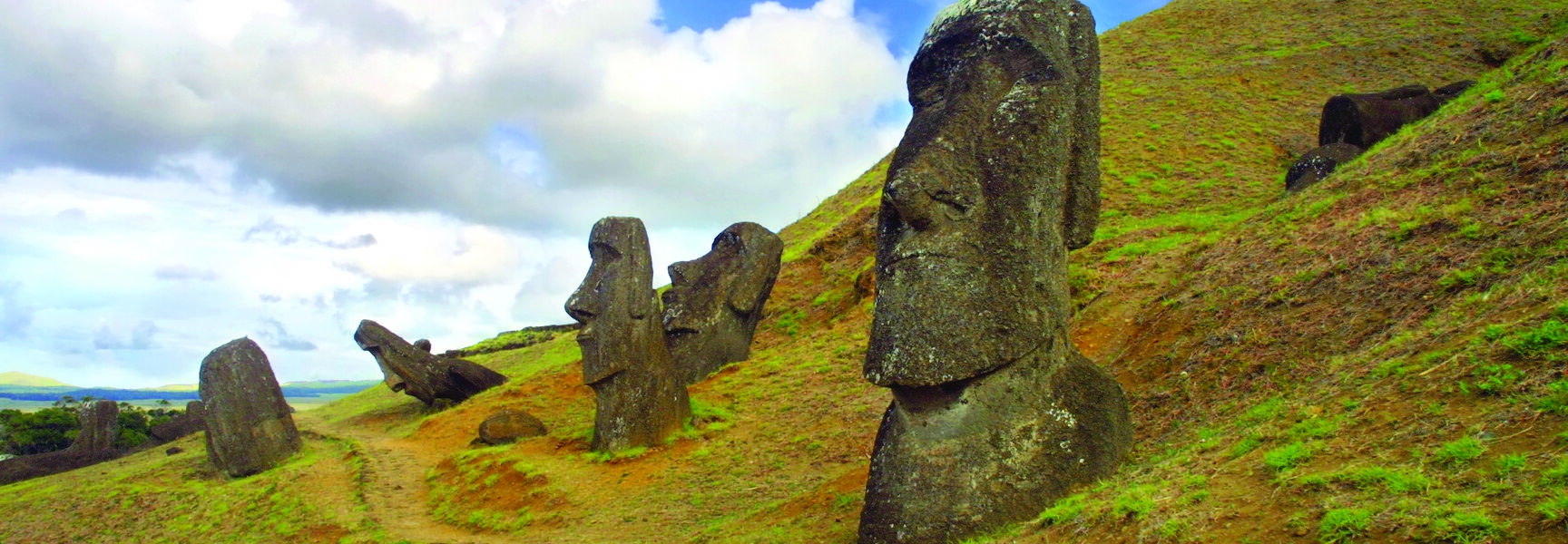
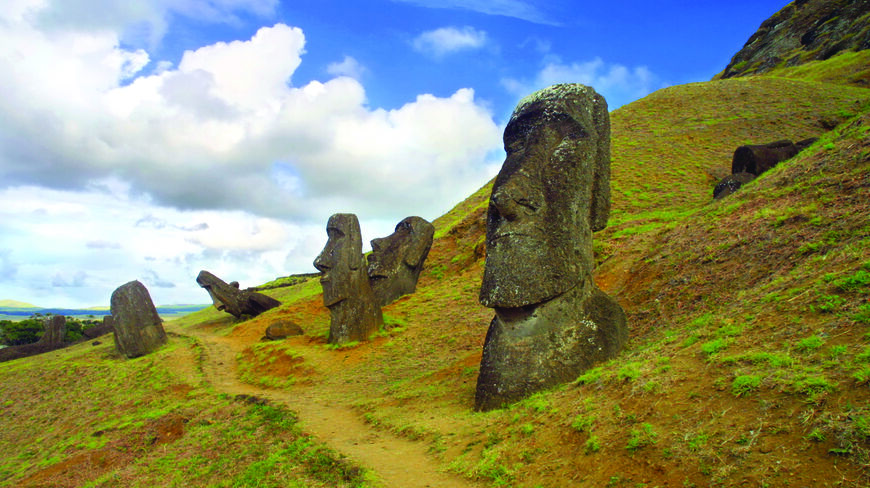
We’ll be joined at the hotel by a local expert who will give us a presentation on Rapa Nui, the indigenous name of Easter Island. The Rapanui people called it Te Pito O Te Henua, roughly translated as "Navel of the World." The island, covering only 66 square miles, is a speck in the ocean 2,500 miles from Chile and 2,000 miles from Tahiti. The greatest mystery is why and how the people made and moved nearly 900 gigantic figures — moai — some weighing more than 80 tons.
Rapa Nui National Park that covers much of the island is a designated UNESCO World Heritage Site. From the UNESCO inscription: “A society of Polynesian origin that settled there c. A.D. 300 established a powerful, imaginative and original tradition of monumental sculpture and architecture, free from any external influence. From the 10th to the 16th century this society built shrines and erected enormous stone figures known as moai, which created an unrivalled cultural landscape that continues to fascinate people throughout the world.” The fact that Easter Island is the most remote inhabited island on earth makes these achievements even more astonishing. We'll then board a bus and head to Tahai to see and learn more about the world famous monolithic figures, the moai themselves. The fact that Easter Island is the most remote inhabited island on earth makes these achievements even more astonishing. There are three ceremonial platforms, called ahu, that support moai figures. The site and its figures were restored by an American anthropologist, William Mulloy, beginning in 1968.
Rapa Nui National Park that covers much of the island is a designated UNESCO World Heritage Site. From the UNESCO inscription: “A society of Polynesian origin that settled there c. A.D. 300 established a powerful, imaginative and original tradition of monumental sculpture and architecture, free from any external influence. From the 10th to the 16th century this society built shrines and erected enormous stone figures known as moai, which created an unrivalled cultural landscape that continues to fascinate people throughout the world.” The fact that Easter Island is the most remote inhabited island on earth makes these achievements even more astonishing. We'll then board a bus and head to Tahai to see and learn more about the world famous monolithic figures, the moai themselves. The fact that Easter Island is the most remote inhabited island on earth makes these achievements even more astonishing. There are three ceremonial platforms, called ahu, that support moai figures. The site and its figures were restored by an American anthropologist, William Mulloy, beginning in 1968.
Lunch:
At the hotel.
Afternoon:
After lunch, we'll board a bus for a field trip to the Padre Sebastian Englert Archaeological Museum, named for a Bavarian priest who came to the island in 1935 and spent his life studying Rapa Nui’s cultural, historical, linguistic, and archaeological heritage. Padre Englert left his collection of artifacts to Chile and many more have been discovered since. We will see some of the museum’s highlights including a moai eye made of white coral and red scoria (volcanic rock) as well as displays of local geology, flora and fauna; maps; illustrations of house types; and many other elements of Rapa Nui culture.
Please note - There have been ongoing disputes over ownership of the museum's land which can sometimes lead to closures of the museum and an unpredictable schedule. If the museum is not available, we will head to an alternative archeological site. Return to the hotel.
Please note - There have been ongoing disputes over ownership of the museum's land which can sometimes lead to closures of the museum and an unpredictable schedule. If the museum is not available, we will head to an alternative archeological site. Return to the hotel.
Dinner:
At a local restaurant.
Evening:
At leisure
Day
15
Ahu Vaihu, Rano Raraku & Tongariki, Cultural Event
Location:
Easter Island
Meals:
B,L,D
Stay:
Hotel O'tai
Activity Note
Getting on/off a bus. Walking 1.5 miles on dirt paths at moai quarry; optional path includes 100 stairs up without handrails; uneven ground.
Breakfast:
At the hotel
Morning:
We’ll set out for a field trip to the archaeological site of Ahu Vaihu. Constructed of finely crafted stones, Ahu Vaihu is located at the small bay of Hanga Te`e. The ahu has 11 toppled moai whose pukao (top knots) are lying where they fell, and a circle of rocks on the ground, used for Paina ceremonies to honor the dead. As we continue down the South Coast along the wind- and wave-carved shoreline, we will pass many collapsed ahu, toppled moai, and fallen stone fences to Rano Raraku, the volcanic crater that served as a quarry for carving moai.
Lunch:
Picnic-style lunch in the National Park
Afternoon:
We will climb the mountainside path on Rano Raraku to view the quarry where the massive moai were carved out of hard basalt. Moai, in all stages of production, cover its southern flank.
We’ll then move on to Tongariki, the largest ahu on the island. Demolished by a tsunami in 1960, it has been restored by Chilean archaeologist Claudio Cristino and Sergio Rapu, a scholar and former island governor, with the help of Japanese archaeologists, financial benefactors, and the Rapa Nui people. It once again supports its 15 moai. From Rano Raraku, we drive down the South Coast past many collapsed ahu, toppled moai, and fallen stone fences built by the sheep company. Our goal is Tongariki, the largest ahu (temple platform) on the island. Demolished in 1960 by the tremendous force of a Pacific tsunami (tidal wave) generated by an earthquake in Valdivia (southern Chile), Tongariki was restored by Chilean archaeologists Claudio Cristino & Sergio Rapu, with the help of Japanese archaeologists and the Rapa Nui people, so it once again supports its 15 moai. Return to the hotel.
We’ll then move on to Tongariki, the largest ahu on the island. Demolished by a tsunami in 1960, it has been restored by Chilean archaeologist Claudio Cristino and Sergio Rapu, a scholar and former island governor, with the help of Japanese archaeologists, financial benefactors, and the Rapa Nui people. It once again supports its 15 moai. From Rano Raraku, we drive down the South Coast past many collapsed ahu, toppled moai, and fallen stone fences built by the sheep company. Our goal is Tongariki, the largest ahu (temple platform) on the island. Demolished in 1960 by the tremendous force of a Pacific tsunami (tidal wave) generated by an earthquake in Valdivia (southern Chile), Tongariki was restored by Chilean archaeologists Claudio Cristino & Sergio Rapu, with the help of Japanese archaeologists and the Rapa Nui people, so it once again supports its 15 moai. Return to the hotel.
Dinner:
At a local restaurant.
Evening:
A short walk from the restaurant, we’ll enjoy a Rapa Nui folkloric traditional dance, featuring island dancers accompanied by musicians playing traditional instruments.
Day
16
Class, Ahu Vinapu, Anakena, Ahu Nau Nau, Family Dinner
Location:
Easter Island
Meals:
B,L,D
Stay:
Hotel O'tai
Activity Note
Getting on/off a bus. Walking approximately 1.5 miles and standing 45 minutes during field trip; uneven ground. Elective swimming at Anakena Beach.
Breakfast:
At the hotel.
Morning:
We’ll be joined by a local expert who will give us a presentation Rapa Nui and Chilean Sovereignty.
Later in the morning, we’ll head out on a field trip to explore archaeological sites beginning at Ahu Vinapu. Because the stone construction here is unlike anything else in Polynesia and is similar to Inca stonework, it has raised questions about possible origins of the Rapa Nui people.
Later in the morning, we’ll head out on a field trip to explore archaeological sites beginning at Ahu Vinapu. Because the stone construction here is unlike anything else in Polynesia and is similar to Inca stonework, it has raised questions about possible origins of the Rapa Nui people.
Lunch:
At Anakena Beach, we’ll have a barbecue lunch.
Afternoon:
Anakena, the largest beach in Rapa Nui, is a beautiful, sheltered, white sand beach surrounded by swaying palm trees, This is where Hotu Matu`a — the legendary first king-chief and settler — is said to have beached his canoe and lived in a cave while waiting for his boat-shaped house to be completed. You are welcome to take a swim in the ocean or stroll along the beach.
We’ll walk up the hill to Ahu Nau Nau, a complex archaeological site where in 1978 Sergio Rapu, in reconstructing the ahu, first recognized that the coral fragments unearthed in the sand were the inlaid coral eyes of the moai. With this discovery and subsequent investigations of other moai came the realization that all Rapa Nui's moai, once they were placed on the ahu, had been given eyes.
We’ll walk up the hill to Ahu Nau Nau, a complex archaeological site where in 1978 Sergio Rapu, in reconstructing the ahu, first recognized that the coral fragments unearthed in the sand were the inlaid coral eyes of the moai. With this discovery and subsequent investigations of other moai came the realization that all Rapa Nui's moai, once they were placed on the ahu, had been given eyes.
Dinner:
In the home of a Rapa Nui family, we’ll share a meal of favorite local dishes and dine as local people do.
Evening:
Meet and get to know a local family. A great opportunity to learn about life in Rapa Nui!
Day
17
Optional Church, Rano Kao & Orongo Village
Location:
Easter Island
Meals:
B,L,D
Stay:
Hotel O'tai
Activity Note
Getting on/off a bus. Walking 1.5 miles and standing 30-45 minutes during field trip; uneven terrain, climbing steps.
Breakfast:
At the hotel
Morning:
You might like to attend Sunday mass at the historic Rapa Nui Roman Catholic church, where hymns are sung in the Rapa Nui language. The hand-carved wooden statues and designs used on the vestments are wonderful examples of the use of culturally-related symbolism in liturgical art.
Lunch:
At the hotel
Afternoon:
We will drive to Parque Nacional Rapa Nui. Located on the southwestern point of the triangle, the park provides spectacular views of the whole island. During our field trip, we’ll explore two great sights: the Rano Kao volcanic crater that surrounds a fresh water lake, and Orongo Ceremonial Village where, until 1853, the peculiar Birdman Festival was held in the spring of each year. The eruption of Rano Kao some 2.5 million years ago helped create the island. In another Rapa Nui mystery, cattail plants growing in the lake are the same species as those in the floating islands of Lake Titicaca in Peru. The Birdman competition involved tribal champions who had to swim to a small island off the coast, find an egg of the sooty tern — waiting as long as necessary until the birds arrived to lay — and bring it back unbroken. The winner’s tribe was awarded special privileges for a year. Please note - In inclement weather the Orongo site may be closed for safety concerns. Return to the hotel for Free Time before dinner.
Dinner:
At the hotel, we’ll enjoy a Rapa Nui umikai prepared in underground ovens. Share favorite experiences with new Road Scholar friends during our farewell dinner.
Day
18
Free Time, Fly to Santiago
Location:
Santiago
Meals:
B,L,D
Stay:
Solace Santiago
Activity Note
Transfer via bus to the airport for the non-stop flight back to Santiago that takes approximately 5 hours; you will regain two hours. Food is typically served during the flight. There is no jet-bridge at the airport in Rapa Nui so you will need to walk up a flight of stairs while carrying your carry-on bags to board the plane. Please note that we are unable to confirm your seat assignment for this flight until arrival at the airport.
Breakfast:
At the hotel.
Morning:
Free morning to prepare for departure and transfer to airport. Flight to Santiago.
Lunch:
At the hotel.
Dinner:
Served in-flight.
Evening:
Late evening arrival in Santiago. Transfer to hotel and check in.
Day
19
Program Wrap-Up, Craftmaker Artisan Village, Departure
Location:
In Flight
Meals:
B,L
Activity Note
Note: Getting on/off a bus. Walking up to 1 hour during field trip, seating available.
Breakfast:
At the hotel.
Morning:
Program summary, suggested optional activities, check out
Lunch:
At the hotel.
Afternoon:
After checking out of the hotel, we will load the bus with our luggage. We will visit the Los Domenicos Artisan Market, a charming outdoor handicraft market featuring Chilean artists. Then transfer to Santiago airport (SCL) to catch return flights to the US or on-going flights to other destinations. All participants are welcome to join the transfer to the airport, regardless of how they booked their airfare.
Evening:
This concludes our program. If you are returning home, safe travels. If you are staying on independently, have a wonderful time. If you are transferring to another Road Scholar program, detailed instructions are included in your Information Packet for that program. We hope you enjoy Road Scholar learning adventures and look forward to having you on rewarding programs in the future. Don’t forget to join our Facebook page and follow us on Instagram. Best wishes for all your journeys!
Day
20
In Transit From Program, Arrive back in US
Location:
In Flight
Please select a day to update the map
Map details are not available for this location.