
Galápagos Islands, Ecuador
Natural & Cultural Wonders: A Galápagos Voyage for Women
Program No. 23941RJ
See More Photos
Natural & Cultural Wonders: A Galápagos Voyage for Women
Natural & Cultural Wonders: A Galápagos Voyage for Women
1 of 20
Itinerary
While we make every effort to ensure the accuracy of our published materials, programs are typically advertised more than a year prior to their start date.
Read More.
All itineraries and excursions are subject to change. Weather and water conditions may affect the progress of the ship, and we may miss ports if it is not safe to dock. The operators reserve the right to change the content and duration of excursions without prior notice and so the cruise itinerary should always be regarded as provisional. Whenever possible, Road Scholar’s published daily schedule will indicate port arrival and departure times. Prior to departure, if there is a major change, we will make every effort to alert you. For less significant changes, we will update you during orientation. Thank you for your understanding.
Duration
11 days
10 nights
What's Included
27 meals (
10B, 8L, 9D
)
3 expert-led lectures
16 expert-led field trips
2 flights during the program
An experienced Group Leader
10 nights of accommodations
Taxes and customary gratuity
Road Scholar Assurance Plan
Day
1
In Transit to Program, Arrive to Quito
Location:
Quito
Stay:
Sheraton Quito Hotel
Activity Note
Quito Elevation: 9,223 ft - 9,883 ft. To minimize your chances of experiencing altitude sickness while in Quito, try to get plenty of rest before you travel, stay hydrated, avoid alcohol and fatty foods, consume high carbohydrate foods, and avoid strenuous exercise at high elevations. Remember to bring your nametag (sent previously). Hotel check in from 3:00 p.m.
Evening:
At leisure. Settle in and get a good night’s rest for the day ahead.
Day
2
Orientation to Quito, UNESCO World Heritage Site
Location:
Quito
Meals:
B,L,D
Stay:
Sheraton Quito Hotel
Activity Note
Getting on/off a bus; driving about 15 miles, approximately 1.5 riding time. Walking approximately 1.5 miles; mostly flat terrain, some steps. Layered clothing and comfortable walking shoes suggested for today's activities. This leisurely-paced day in Quito is very important as it will give the group time to acclimate to highland elevations.
Breakfast:
At the hotel.
Morning:
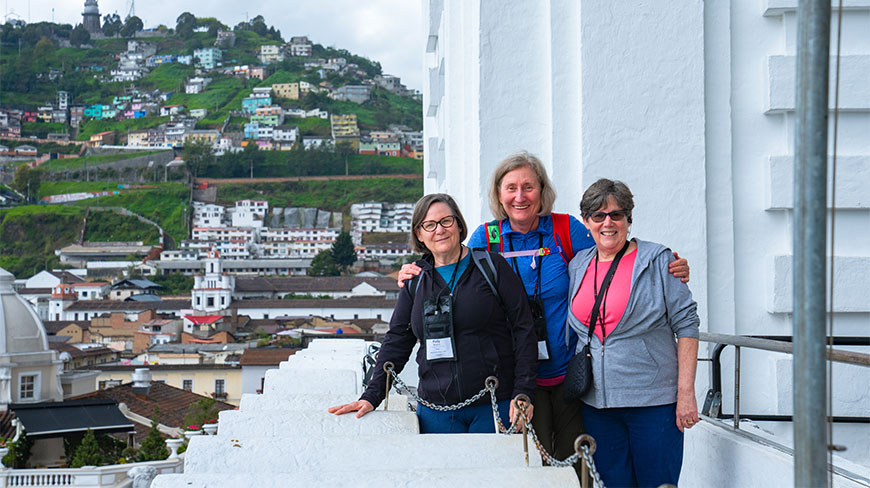
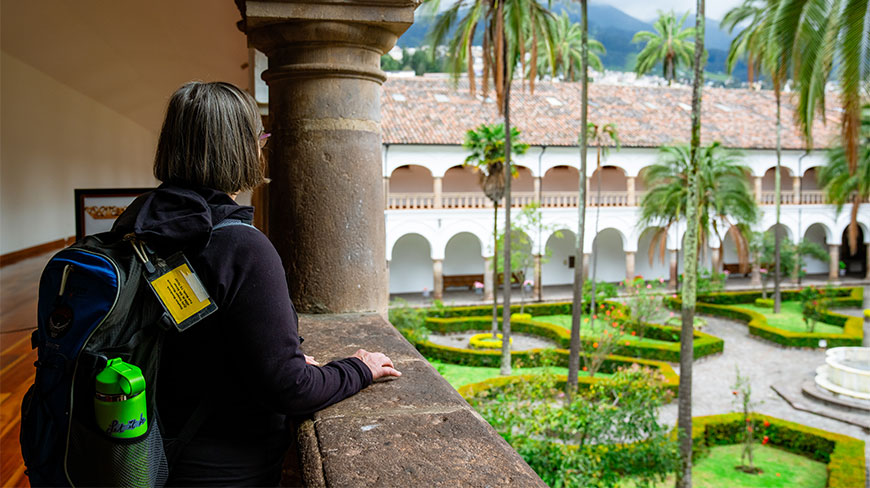
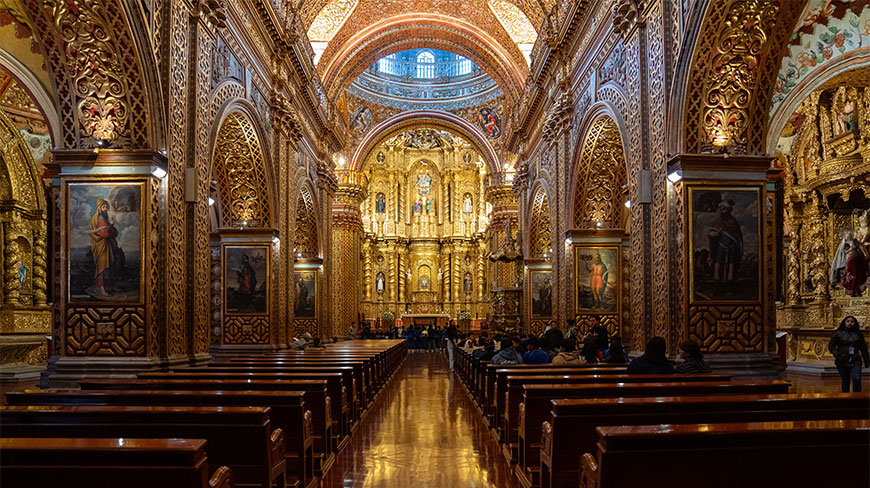
Orientation: 8:00 a.m. The Group Leader will greet everyone and lead introductions. We'll review the up-to-date program schedule and any changes, discuss roles and responsibilities, logistics, safety guidelines, emergency procedures, and answer questions. Periods labeled “Free Time” and “At Leisure” offer opportunities to make the program more meaningful and memorable while going out to explore on your own, engaging in available activities independently, making new friends among fellow Road Scholars, or simply relaxing. The Group Leader will always be happy to offer suggestions. Meals on our program feature local cuisine. Program activities, schedules, personnel, and indicated distances or times may change due to local circumstances/conditions. In the event of changes, we will alert you as quickly as possible. Thank you for your understanding. We will start our day with a visit to the Iñaquito Market, where we will see first-hand the abundant natural resources Ecuador has, including the great variety of fruits, vegetables, and fish plus many more natural products used in traditional medicine in the Andes. Afterwards we'll ride to the center of the city for an orientation to Ecuador’s capital. We'll accompany the Group Leader in a walking exploration of the historic UNESCO World Heritage Site, learning about Quito's history from pre-Hispanic times, through the Colonial Period, to the Republican Era. The architecture found in Quito’s historical center is a great example of the Baroque style which is a fusion of Spanish, Moorish, Flemish and Indigenous art. Our field trip will include visits to the San Francisco Church and Convent and the Plaza Grande.
Lunch:
At a local restaurant including an introduction to typical Ecuadorian food products and cuisine.
Afternoon:
After lunch we will ride to La Carolina Park in preparation for a visit to Quito's internationally-acclaimed Botanical Garden. Ecuador is among the world’s top 20 most biodiverse nations in both plant and animal species. We’ll learn about the country’s unique flora and the regions in which they grow as we accompany our Group Leader on a walking exploration of the gardens. Although a few collections feature exotics from other countries, the primary focus of the exhibits is on native flora—including an extensive orchidarium and an ethnobotanical garden—that are representative of the country’s various regions. Before we return to our hotel for dinner, we'll enjoy an expert presentation on the ecosystems of Ecuador.
Dinner:
At the hotel.
Evening:
At leisure. Prepare luggage for early check out and flights to the Galápagos. This is a Road Scholar Adventures Afloat program. All routes, field trips, and excursions are subject to change as weather and sea conditions may affect the itinerary. Sea conditions could affect the progress of the ship, making it run late and sometimes miss sites because it is not safe to dock. Because of this, the cruise itinerary should always be regarded as provisional. The operators reserve the right to change the content of field trips and excursions without prior notice.
Day
3
Flight to Baltra, Mosquera Island
Location:
Galápagos Islands
Meals:
B,L,D
Stay:
Tip Top IV
Activity Note
The flight to/from the Galapagos makes a stop in Guayaquil; passengers remain on board. This flight allows each person to bring a 50 lb checked bag/suitcase, plus a carry on. Actual cruise itinerary and islands visited are determined by the Galápagos National Park. The park reserves the right to change cruise itineraries without prior notice. Mosquera Island: Wet landing and easy walking on beach and swimming and snorkeling activities.
Breakfast:
Early, at the hotel.
Morning:
Hotel check out. After boarding the bus we will transfer to the airport in preparation for our flight to the Galapagos Islands. Our Quito Group Leader will assist us with check-in procedures and bid us farewell as we proceed through security and get ready to embark on our flight. Upon arrival to the Galápagos Islands we'll deplane and walk across the tarmac to the airport building and follow the arrival signs to Immigration. With passport in hand we will stop at the Immigration counter for an inspection of our travel documents before we can proceed to the baggage claim area. After collecting our luggage, we will meet our naturalist Galápagos Group Leader and board a bus that will drive us as far as the Itabaca Channel. After a short ferry ride to Santa Cruz Island, we will get on another bus and drive to a farm in the highlands for lunch.
Lunch:
At a local ranch in the highlands.
Afternoon:
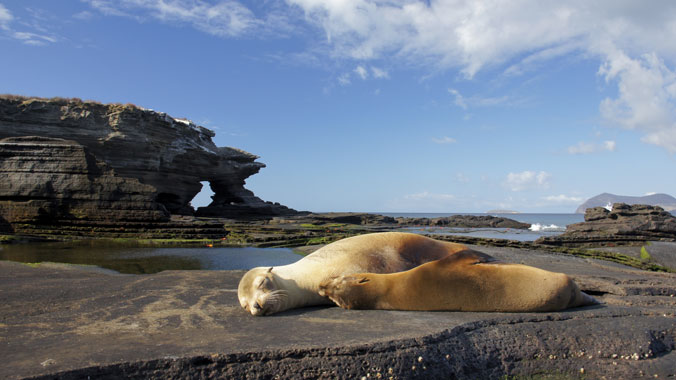
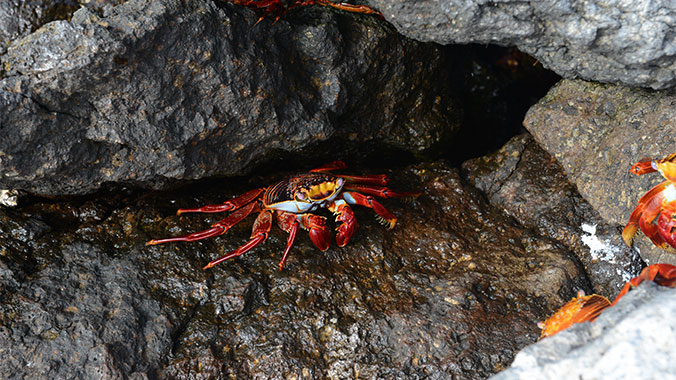
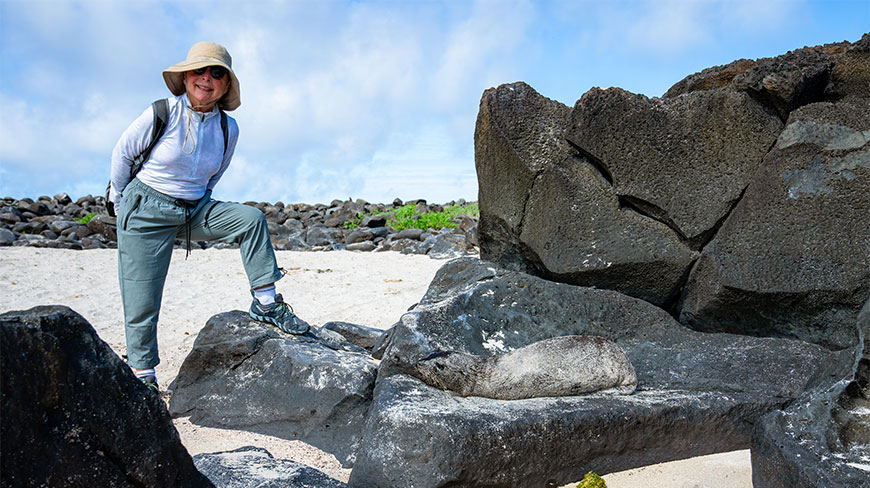
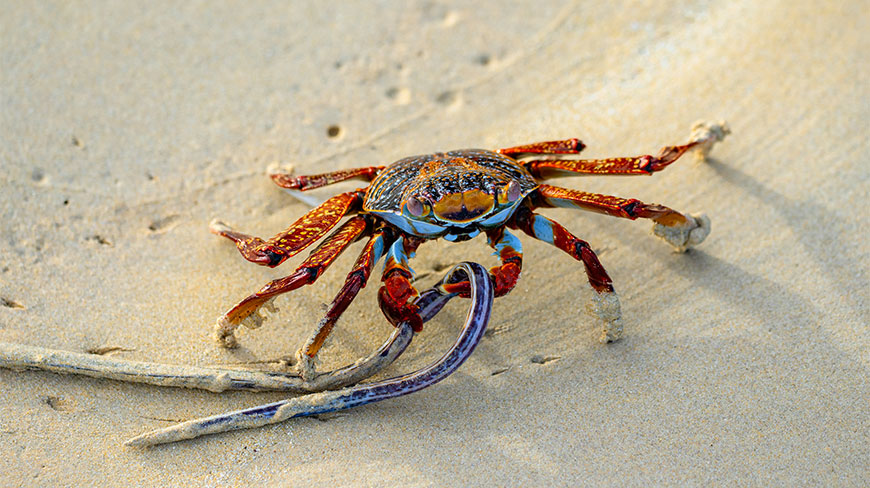
We will navigate a short distance to Mosquera Islet, located between Baltra and North Seymour. A wet landing will deliver us to a white sand beach in preparation for our walking explorations. From there, we’ll walk along the beach to observe resident sea lions, colorful sally lightfoot crabs and coastal birds. There will be an opportunity for snorkeling and/or swimming before we return in time for dinner.
Dinner:
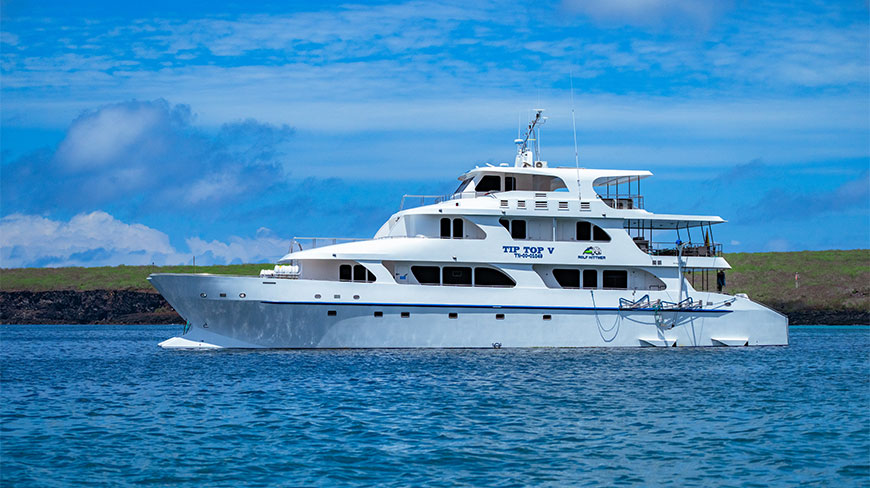
Aboard the yacht, after enjoying a welcome cocktail with the crew.
Evening:
Orientation to the next day's activities.
Day
4
Española, Punta Suarez, Gardner Bay, Osborn & Gardner Islets
Location:
Galápagos Islands
Meals:
B,L,D
Stay:
Tip Top IV
Activity Note
Punta Suarez: dry landing and difficult trail conditions due to rocky, uneven terrain. Gardner Bay: wet landing and easy, sandy trail conditions. Osborn and Gardner Islets: panga ride.
Breakfast:
Aboard the yacht.
Morning:
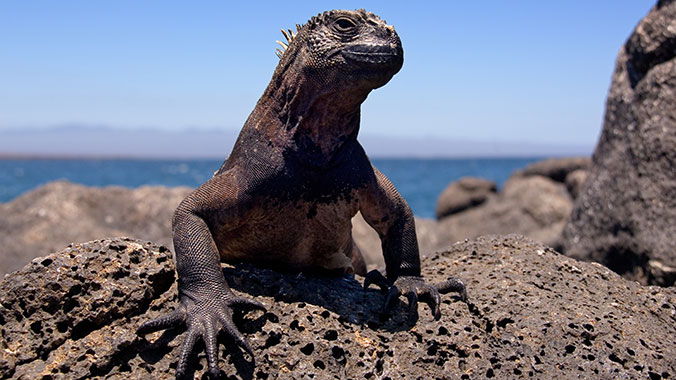
We'll make a dry landing at Punta Suarez this morning in preparation for our approximately 2 hour hike. Our walking exploration will take us over loose boulders and challenging rocky ground as we make our way to view nesting boobies and the famous blowhole. Punta Suarez is home to the Galápagos Hawk and the red form of the marine iguana. In January, the iguanas change color, adopting bright hues that are attractive to potential mates. Visitors have a good chance of seeing Blue-footed Booby chicks around October. Española is also the breeding site of most of the archipelago's Waved Albatrosses, so be on the lookout for these large and graceful flyers! Albatrosses display courtship behavior in April, nest and lay eggs in May, and by December the young fledge and leave for a few months before returning in March. A panga will take us back to the yacht in time for lunch.
Lunch:
Aboard the yacht.
Afternoon:
Following a panga ride to Española we will make a wet landing at the white sand beach in Gardner Bay. A short walk and swimming/snorkeling activities off the beach will give us the opportunity to relax in one of the islands' most beautiful locations. Gardner Bay's white beach is usually dotted with large quantities of sunbathing sea lions, especially during breeding season which takes place from May through January. This is also an important nesting site for sea turtles! In January, green sea turtles steal ashore under cover of night to dig pits and lay eggs before making their way back to sea. Eggs hatch from April to May. After our visit to Gardner Bay we will enjoy a panga ride around Osborn and Gardner Islets before returning to the yacht.
Dinner:
Aboard the yacht.
Evening:
Enjoy an expert presentation by our naturalist Group Leader, followed by an orientation to the next day's activities. (Please note that the day/time of lectures is subject to change).
Day
5
San Cristobal, Punta Pitt, Kicker Rock, Cerro Brujo
Location:
Galápagos Islands
Meals:
B,L,D
Stay:
Tip Top IV
Activity Note
Punta Pitt: Wet landing on a beach frequented by sea lions (young males and retired adults). Keep your distance to avoid disturbing them. Parts of the trail are challenging as it requires climbing a steep ravine on slippery terrain. Kicker Rock/Leon Dormido: No landing. Cerro Brujo: Wet landing and walking on and around the beach.
Breakfast:
Aboard the yacht.
Morning:
Wet landing at the northeast end of San Cristóbal Island. Next, we’ll join our naturalist Group Leader on a walking exploration in search of local flora and fauna at Punta Pitt. This is the only site in the islands where visitors can watch all three species of boobies and two species of frigates nesting in the same area. The abundant supply of food in the area makes it unnecessary for the birds to compete, leading to a peaceful coexistence among the species. Blue-footed Boobies generally nest in the interior areas of the island, while Red-footed boobies nest on bushes, and Masked Boobies nest along the cliffs. The wind-carved landscape of this seemingly barren island is quite breathtaking. A closer look reveals a surprising array of plant life that, against all odds, continues to thrive here. We’ll also look for Palo Santo trees, small cacti, saltbush, and red Vesuvius. Return to the yacht.
Lunch:
Aboard the yacht.
Afternoon:
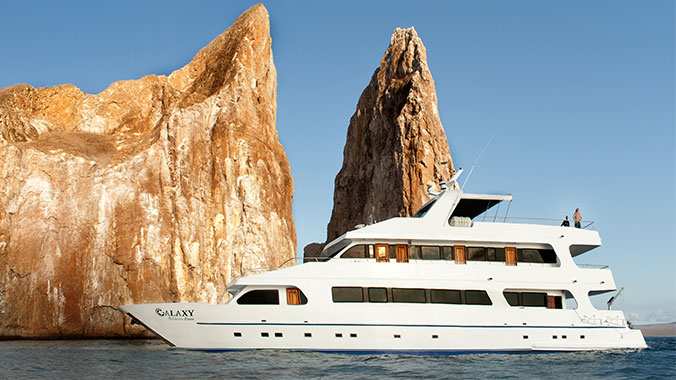
We'll navigate around Leon Dormido (a.k.a. Kicker Rock) to get a closer look at the iconic stone formation and search for nesting sea birds. The tuff-rock, which rises almost 500 feet from the ocean, has eroded to give it the shape seen as a shoe or sleeping lion. We will be on the lookout for Blue-footed Boobies, Masked Boobies, and frigatebirds dotting its cliffs. Then we will make a wet landing at Cerro Brujo and begin walking on a white sand beach that is often frequented by lively sea lions. Return to the yacht.
Dinner:
Aboard the yacht.
Evening:
Orientation to the next day's activities.
Day
6
Santa Cruz Highlands,Wild Tortoises, Charles Darwin Station
Location:
Galápagos Islands
Meals:
B,L,D
Stay:
Tip Top IV
Activity Note
Highlands: Walking on trails and forested areas with irregular terrain and small incline. Potentially muddy conditions.
Breakfast:
Aboard the yacht.
Morning:
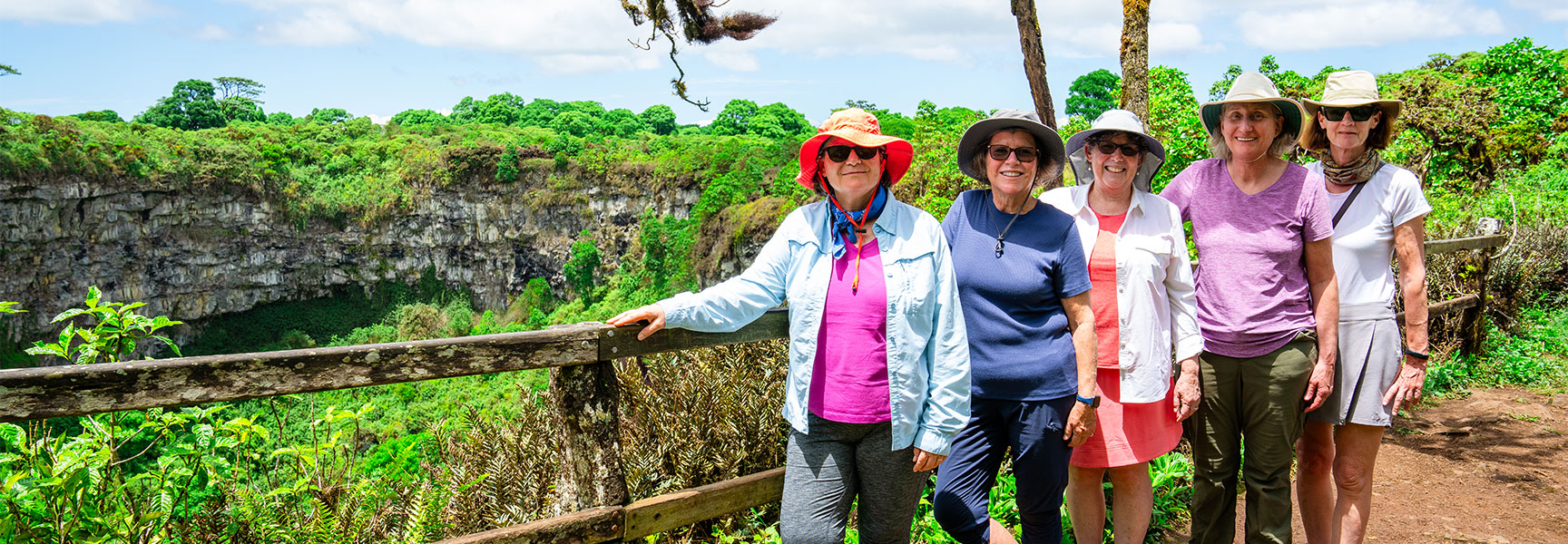
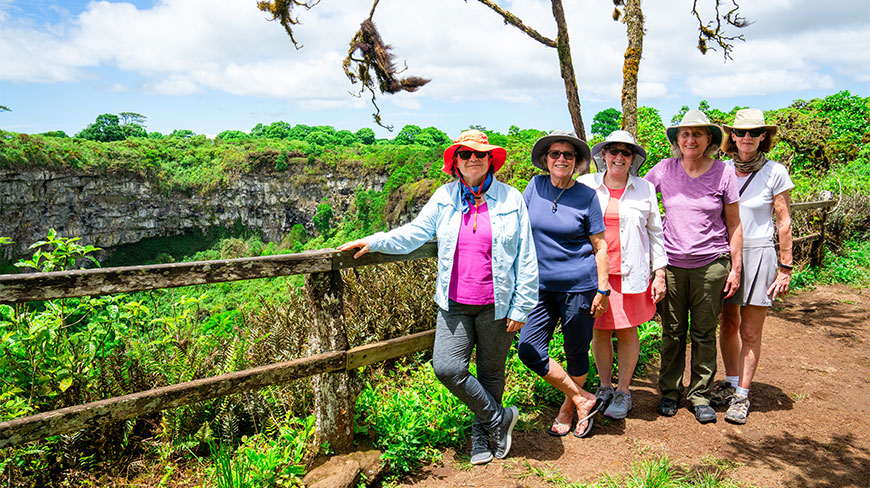
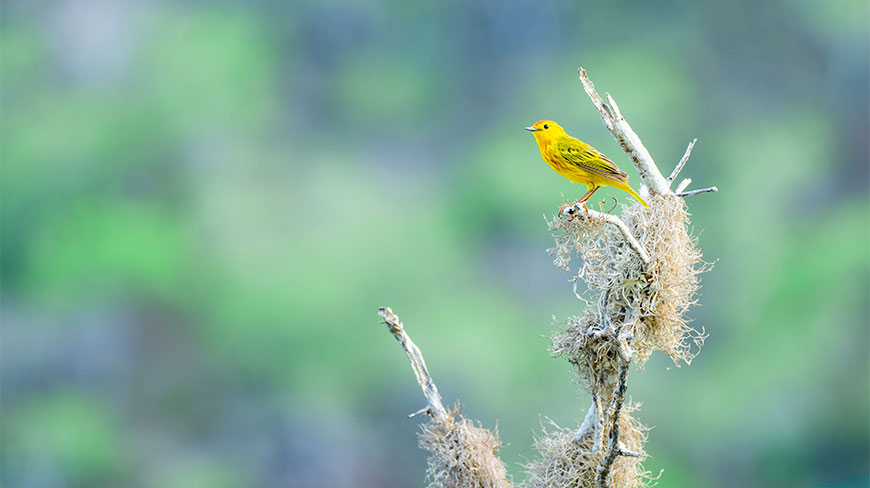
We will tender ashore to Puerto Ayora on Santa Cruz Island then, board a bus that will take us into the highlands. Our naturalist will lead us on a walking field trip on local trails and lightly wooded areas to view Los Gemelos (The Twins) pit craters and the surrounding Scalesia forest. Then we’ll drive to a nearby location to walk on grassy trails in search of giant tortoises living in the wild. We'll learn more about their diet, breeding habits and overall biology as we observe them in their natural habitat. In addition to giant tortoises, Santa Cruz is home to several species of Darwin's finches as well as Yellow Warblers, Galápagos Rails and Paint-billed Crakes. A dramatic change in vegetation zones can be seen as one travels into the highland region of the island.
Lunch:
At a local ranch in the highlands
Afternoon:
Our bus will deliver us back to Puerto Ayora in preparation for our field trip to the Fausto Llerena Center inside the Charles Darwin Research Station. Our naturalist will lead us on foot through the facility and introduce us to the station's mission and its tortoise breeding projects. The Charles Darwin Research Station (CDRS) is a biological research station based on Santa Cruz Island and operated by the Charles Darwin Foundation. The organization plays an important role in scientific research, environmental education, and conservation efforts in the islands. The station conducts its projects with the help of a large team of scientists, educators, volunteers, research students and support staff from all over the world. Late afternoon return to the yacht.
Dinner:
Aboard the yacht.
Evening:
Enjoy an expert presentation by our naturalist Group Leader, followed by an orientation to the next day's activities. (Please note that the day/time of lectures is subject to change).
Day
7
Santa Fe Island, South Plaza
Location:
Galápagos Islands
Meals:
B,L,D
Stay:
Tip Top IV
Activity Note
Santa Fe: wet landing and moderate difficulty due to rocky, uneven trail conditions. South Plaza: dry landing and moderate difficulty due to slippery rocks and uneven trail conditions.
Breakfast:
Aboard the yacht.
Morning:
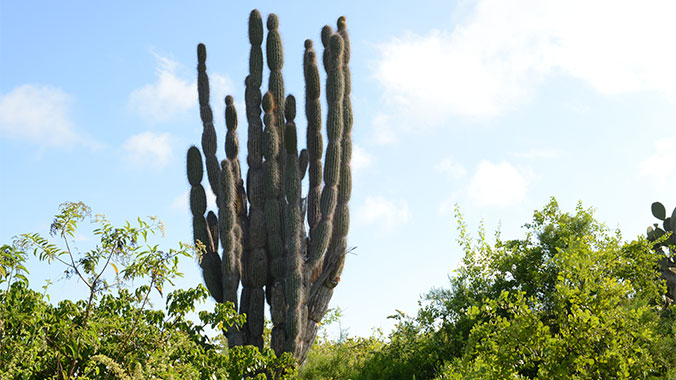
Wet landing on a small beach on Santa Fe Island; a favorite sea lion hangout. We'll walk along a short looping trail that runs close to the beach. On the trail we will have the opportunity to get close-up views of the large Santa Fe Opuntia cactus while we look for Santa Fe land iguanas and Galapagos hawks. We’ll have the opportunity to swim or snorkel before going back to the yacht
Lunch:
Aboard the yacht.
Afternoon:
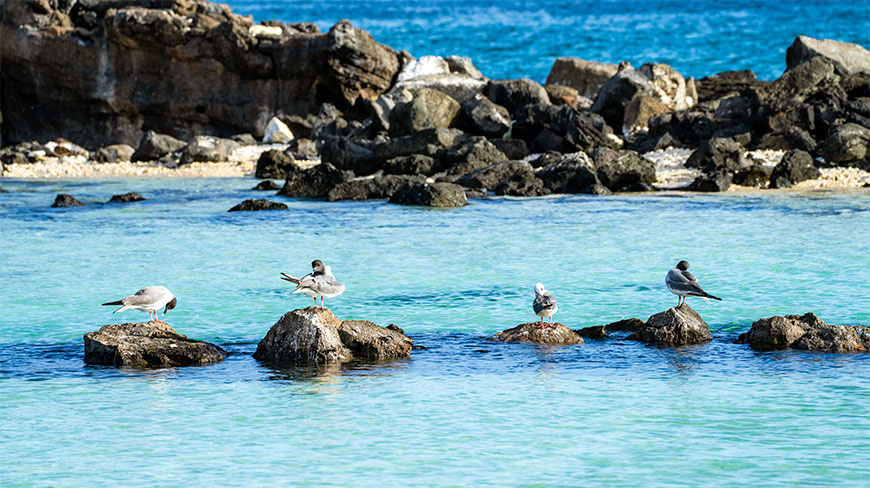
Following our dry landing on Plaza Sur (South Plaza) Island we will embark on a walking field trip on rocky trails in search of local flora and fauna. As we follow the trail to a cactus forest, we hope to get a closer look at land iguanas and their habitat before moving on in search of local sea lion colonies. Sea lions usually give birth from August - November and females begin mating within weeks of having their young. South Plaza is also a great place for viewing seabirds in flight including Red-billed Tropicbirds, frigatebirds, pelicans, Swallow-tailed Gulls, and other pelagic species.
Dinner:
Aboard the yacht.
Evening:
Orientation to the next day's activities.
Day
8
Bartolome Island, Santiago Island, Sullivan Bay
Location:
Galápagos Islands
Meals:
B,L,D
Stay:
Tip Top IV
Activity Note
Bartolome Island: dry and wet landings, moderate to difficult trail conditions due to a long walkway of 375 wooden steps rising 374 ft. (114 meters) up to the lookout point. Sullivan Bay: Wet landing and moderate difficulty due to rocky, volcanic terrain. The looping visitor trail is approximately 1 mile in length. Wear comfortable tennis shoes with good ankle support.
Breakfast:
Aboard the yacht.
Morning:
Dry landing at Bartolomé Island. After disembarkation we will accompany our naturalist leader on a hike up Escalera Hill to reach the lookout point at its peak. On Bartolomé Island we will be able to view volcanic formations such as lava bombs, spatter, and cinder cones. From the summit it is possible to see surrounding islands as well as Pinnacle Rock's eroded tuff cone. On the way to the summit, watch for colonies of marine iguanas, lava lizards, tiquilla and various cacti. Bartolomé is one of the best places to find Galápagos penguins.
Lunch:
Aboard the yacht.
Afternoon:
After a wet landing at Sullivan Bay, we’ll follow on foot to examine lava formations and hardy plant specimens. A volcanic eruption that took place in the early 1900’s formed huge lava flows in the area that is now Sullivan Bay. As the lava cooled off, it solidified into a black sheet of interesting shapes and textures that made their way to the sea. The rope-like lava seen on this island is called pahoehoe lava. Other interesting formations include lava bubbles and tree shapes; ghosts of Santiago’s past. Few plant species have been able to root in this harsh environment. Opportunity to swim or snorkel before returning to the yacht and freshening up for dinner.
Dinner:
Aboard the yacht.
Evening:
Orientation to the next day's activities.
Day
9
Rabida Island, Flamingo Lagoon, Chinese Hat
Location:
Galápagos Islands
Meals:
B,L,D
Stay:
Tip Top IV
Activity Note
Rabida Island: Wet landing and walking approximately 2.5 hours; easy to moderate trail conditions due to hills and sandy terrain. Sombrero Chino: wet/ dry landing (depending on local weather conditions).
Breakfast:
Aboard the yacht.
Morning:
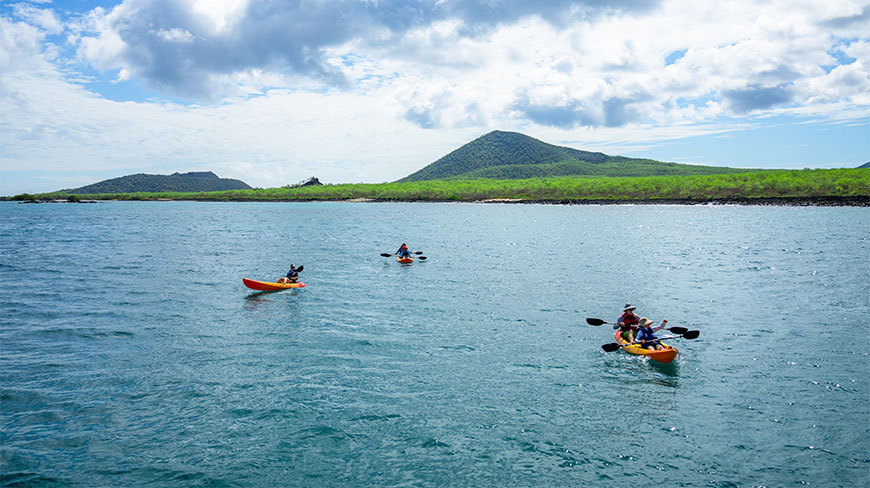
Following a wet landing at Rabida Island, our naturalist leader will point out the island's unique flora and fauna during a walking exploration of the beach and local trails. Rabida (Jervis) has a dark red beach favored by sea lions and nesting pelicans. A saltwater lagoon located a small distance from the beach is home to flamingoes and the occasional White-cheeked Pintail. Palo Santo trees cover the island's volcanic peak, which can be seen from a short trail (approximately a 1/2 mile walk). Some of the Galápagos' rarest bird species are here in abundance, including Large-billed Flycatchers, Galápagos Hawks and nine varieties of finches.
Lunch:
Aboard the yacht.
Afternoon:
We'll navigate around Sombrero Chino to observe its resident wildlife and lava formations. Depending on the weather conditions, we may also make a wet or dry landing and undertake a short hike around the island. This small island can be seen a short distance from Santiago Island’s southeastern tip. The name, meaning Chinese hat, describes the volcanic cone’s unique shape. A cove on the northern side of the island offers good conditions for swimming and snorkeling; it is also a favored sea lion hangout. Other species frequently seen in and around the island include American Oystercatchers, Brown Noddys, Galápagos Hawks, Sally Lightfoot crabs, spotted eagle rays, whitetip reef sharks, Galápagos Penguins, marine iguanas, Lava Herons, lava lizards, and Brown Pelicans. We’ll have the opportunity to swim and snorkel before returning to the yacht and readying ourselves for dinner.
Dinner:
Aboard the yacht.
Evening:
Orientation of next day's activities. Prepare luggage for final disembarkation.
Day
10
Bachas Beach, Flight to Quito
Location:
Quito
Meals:
B,D
Stay:
San Jose de Puembo - Quito Airport
Activity Note
Participants with international flights departing very late this evening/before dawn next morning will check out of the hotel after dinner, then transfer to the international airport in preparation for airline check in. Due to limited flight times from the Galápagos to Quito, the timing between the farewell dinner and the transfer afterwards to the airport can be diminutive. See notes section for more details regarding departure options.
Breakfast:
Aboard the yacht.
Morning:
Early this morning we will make a Wet landing at Playa las Bachas for a field trip to a flamingo lagoon. Apart from being an important nesting site for sea turtles (Chelonia mydas), Playa las Bachas is also a great location for viewing migratory and aquatic birds. The name of this location dates back to WWII, when the U.S. army abandoned two barges on the beach. Locals found it hard to pronounce the word "barges" in English; over time, the common mispronunciation of the word became the norm, resulting in the name Playa las Bachas. Opportunity for snorkeling and/or swimming before returning to our vessel. Return to the yacht and gather your personal belongings in preparation for final disembarkation. Bid farewell to your Galapagos Group Leader and transfer to the airport. The flight to Quito makes a stop in Guayaquil; passengers remain on board.
Lunch:
On your own, at the airport. Sandwiches, empanadas and snacks are available for purchase after going through security.
Afternoon:
Late afternoon arrival in Quito. We'll board a bus to our hotel and check in, followed by free time to finish packing or relax before joining the rest of the group for dinner.
Dinner:
At the hotel. During a farewell dinner, share your favorite experiences with new Road Scholar friends.
Evening:
At leisure. Prepare for check out and international flights to North America. Participants with international flights departing very late this evening/before dawn next morning will check out of the hotel and transfer to the Mariscal Sucre International Airport (UIO) in preparation for airline check in.
Day
11
Program Concludes, In Transit from Program
Location:
In Flight
Meals:
B
Activity Note
Hotel check out by 11:00 a.m. See your program's preparatory information regarding transfers.
Breakfast:
At the hotel (dependent on flight times). This concludes the program.
Morning:
If you are returning home, safe travels. If you are staying on independently, have a wonderful time. If you are transferring to another Road Scholar program, detailed instructions are included in your Information Packet for that program. We hope you enjoy Road Scholar learning adventures and look forward to having you on another rewarding program in the future. Don’t forget to like our Facebook page and follow us on Instagram. Best wishes for all your journeys!
Please Note:
This program has itinerary variations on certain dates.
Jun 9 - Jun 19, 2027 Itinerary Differences:
This program date sails on the Tip Top IV. Cruise Itinerary varies by date. Actual cruise itinerary and islands visited are assigned by the Galapágos National Park and can be changed without prior notice.