
Mexico
Mexico’s Baja Tip to Toe: Landscape, Heritage, People & Whales
Program No. 12157RJ
See More Photos
Mexico’s Baja Tip to Toe: Landscape, Heritage, People & Whales
Mexico’s Baja Tip to Toe: Landscape, Heritage, People & Whales
1 of 6
Itinerary
While we make every effort to ensure the accuracy of our published materials, programs are typically advertised more than a year prior to their start date.
Read More.
While we make every effort to ensure the accuracy of our published materials, programs are typically advertised more than a year prior to their start date. As a result, some program activities, schedules, accommodations, personnel, and other logistics occasionally change due to local conditions or circumstances. Should a major change occur, we will make every effort to alert you. For less significant changes, we will update you during orientation. Thank you for your understanding.
Duration
13 days
12 nights
What's Included
Included
33 meals (
12B, 11L, 10D
)
9 expert-led lectures
22 expert-led field trips
3 hands-on experiences
1 performance
An experienced Group Leader
Taxes and customary gratuity
Road Scholar Assurance Plan
San Diego, California
Mexico’s Baja Tip to Toe: Landscape, Heritage, People & Whales
Mar 18 - Mar 30, 2027
Program Number
12157
Day
1
Check-in, Orientation, Welcome Dinner, Lecture
Location:
San Diego, California
Meals:
D
Stay:
Courtyard by Marriott San Diego Mission Valley/Hotel Circle
Activity Note
Independent arrivals in San Diego. Hotel check-in from 3:00 p.m. Please be aware that this is a moving program which involves long drives on the bus for some of the days. However, that time/space serves as a classroom on wheels, with lectures and entertainment. while enjoying the scenic desert, the coast, and the wonderful feeling of peaceful isolation. In addition, you should be prepared to pack up and depart early to the next destination on some of the days.
Afternoon:
After you check in and have your room assignment, confirm with the front desk the name and location of our Road Scholar private meeting room where the Orientation session will take place. 5:00 p.m. Register with the program staff and get your welcome packet containing the up-to-date schedule that reflects any changes, and other important information. If you arrive late, please ask for your packet at the hotel front desk when you check in. The Group Leader will greet everyone and lead introductions. We will review the up-to-date program schedule, discuss roles and responsibilities, logistics, safety guidelines, emergency procedures, and answer questions. Our knowledgeable Group Leader will also serve as our Study Leader for most field trips and deliver educational content unless specified otherwise. Transportation will be via private motorcoach. For meals that offer a choice of dishes, we will circulate a form in advance to note each person’s preferences and save time ordering. While in Mexico, purified water will always be available on the motorcoach, at the hotels, and in restaurants. Periods in the schedule designated as “Free time” and “At leisure” offer opportunities to do what you like and make your experience even more meaningful and memorable according to your personal preferences. The Group Leader will be happy to offer suggestions. Program activities, schedules, personnel, and indicated distances or times may change due to local circumstances / conditions. In the event of changes, we will alert you as quickly as possible. Thank you for your understanding.
Dinner:
In the hotel’s private meeting room.
Evening:
We will be joined in the meeting room by a local expert who will present an informative lecture providing an introduction to Baja California and our unfolding educational adventure. Prepare for check-out and transfer in the morning. Note: Both a valid passport and a personal permit are required for entry into Mexico. The permit will be issued by the Immigration Bureau upon entering Mexico. Keep this permit with you; it must be returned when leaving Mexico.The Group Leader will be on hand to assist as needed. You must carry all your belongings across the border when entering Mexico and again when re-entering the United States. When going through Customs into Mexico and returning to the US, as a general rule, no fruits, vegetables, cheese, meats nor plants are allowed.
Day
2
Lecture, Transfer to Ensenada, Market, Coastline
Location:
Ensenada, Baja California
Meals:
B,L
Stay:
Holiday Inn Express & Suites Ensenada Centro
Activity Note
Getting on/off a motorcoach; driving about 90 miles, approximately 2 hours. Walking approximately 1 mile throughout the day. Standing and walking at a slow pace for up to 1 hour per activity. Must carry all belongings across the border and walk 200 feet. Keep passports on hand for border crossing. No fruits, vegetables, cheese, meats nor plants are permitted into Mexico.
Breakfast:
In the hotel’s private meeting room.
Morning:
After checking out of the hotel, we’ll board our motorcoach and begin the journey south, crossing at San Ysidro—the busiest land border crossing in the world between the United States and Mexico. Together with the Group Leader, we must get off the bus and walk across the border (approximately 200 feet) carrying all our belongings as we go through Mexican immigration and customs. You will need to present your passport and complete a form on site to receive the required personal permit. The Group Leader will be on hand to assist as needed. Keep this permit with you; it must be returned when leaving Mexico. Tijuana is a city of contrasts, shaped by constant cross-border activity and a spirit of rapid growth and adaptation. Bordering the dynamic region of Southern California, it reflects the deep cultural and economic connections between the United States and Mexico. We’ll visit a local market with our Group Leader for an experience that is both educational and sensory-rich. As we walk through the colorful and lively stalls, we’ll have the opportunity to see, smell, touch, and sample a variety of local delights. Our next stop is a migrant shelter, where we’ll gain insight into the complex realities of migration. Through conversations with directors and volunteers, we’ll learn about the important and demanding work they carry out in support of migrants.
Lunch:
At Caesar’s Restaurant, we’ll have lunch featuring the renowned Caesar Salad. The story goes that the original salad recipe was concocted in the 1920s with what was on hand for a group of pilots from Rockwell Field outside San Diego. The dish, originally dubbed Aviator Salad, became popular and was soon called Caesar Salad for the restaurant. Part of the appeal was and is having it prepared tableside.
Afternoon:
Next, we’ll ride along the U.S.–Mexico border and stop at Parque de la Amistad (Friendship Park), a binational park divided by the border fence. For generations, people on both sides have gathered here to connect with friends and family- communicating through the fence, touching fingertips, and even sharing tacos through the bars. We’ll then continue south along Mexican Federal Highway 1, which stretches the length of Baja California from Tijuana to Cabo San Lucas, toward the coastal city of Ensenada. Along the way, enjoy scenic views of the Pacific coastline and ocean. First sighted by Portuguese explorers in 1542 and later settled by British colonists in 1882, Ensenada is now Baja California’s third-largest city and the first major port south of the border, while still retaining a relaxed and contemporary atmosphere that makes it a popular Mexican vacation destination. After checking in to our hotel, the remainder of the day is free. You may wish to stroll along the lively streets lined with cafés and boutiques and select a restaurant for dinner on your own.
Dinner:
On your own to enjoy what you like.
Evening:
At leisure. Ensenada has an active nightlife. If you choose to go out, the Group Leader will be happy to offer suggestions
Day
3
Riviera Ex Casino, Fish Market, Wineries, Mexican Event
Location:
Ensenada, Baja California
Meals:
B,L,D
Stay:
Holiday Inn Express & Suites Ensenada Centro
Activity Note
Getting on/off a motorcoach; driving about 40 miles, approximately 1 hour. Walking up to 1.5 miles and standing up to 1 hour during field trips; climb one flight of stairs.
Breakfast:
At the hotel.
Morning:
We’ll set out with our Group Leader on a visit to the Riviera del Pacífico. Once an extravagant casino and glamorous resort during the years of U.S. Prohibition, it now serves as a social and convention center. We’ll then make a brief stop at the folkloric fish market, commonly known as the Black Market because of its origins in fish smuggling. As we stroll past stalls displaying carefully arranged piles of fresh fish and seafood, we’ll also see the simple eateries famous for serving fish tacos—said to have originated right here in the Black Market. Mexico’s wine country is located on the outskirts of Ensenada. Bestowed with a Mediterranean climate, perfect elevation and ideal soil composition for wine production, the region boasts dozens of wineries producing world renowned wines. A newly created Baja California cuisine based on the combination of fresh products from the sea and from organic farms accompanies the wine experience. As we drive through rolling hills and granite boulders to reach Guadalupe Valley, the heart of the wine country, we will learn about the history and peculiarities of the region. Rows of grapevines surround wineries ranging from simple artisan establishments to state-of-the-art industries, often displaying innovative architecture. We will visit two wineries to compare flavors.
Lunch:
At a restaurant in the wine country.
Afternoon:
Returning to Ensenada, we’ll have some down time before heading out for a personalized Mexican fiesta created exclusively for Road Scholar participants. Together with our Group Leader, we’ll discuss the many uses of cacao, one of Mexico’s most important culinary gifts to the world. We’ll then take part in a chocolate-focused cooking class led by an expert local cook, learning to prepare traditional recipes featuring chocolate, such as mole (MOH-leh) and chocolate patties. Mexican folk dancers will add to the festive atmosphere during dinner.
Dinner:
At the cooking class, featuring the traditional thick mole sauce.
Evening:
While enjoying the hot chocolate, we’ll be entertained with colorful lively Mexican folk dances performed by local dancers. Return to the hotel. Prepare for check-out and transfer in the morning.
Day
4
Local Museum, San Quintín Bay, Desert Flora, Cataviña
Location:
Cataviña, Baja California
Meals:
B,L,D
Stay:
Mision Cataviña
Activity Note
Getting on/off a motorcoach; driving about 240 miles, approximately 5.5 hours. Short desert walks on uneven, gravelly paths up to 0.5 mile.
Breakfast:
At the hotel.
Morning:
After checking out of the hotel, we’ll board the motorcoach and continue the journey south crossing one of the peninsula’s most important agricultural regions, often referred to as the “vegetable garden” of Baja California. Along the way, we may see migrant workers from Indigenous communities of southern Mexico laboring in the fields. In San Vicente, one of the small towns that line the highway, we’ll stop to visit a small local museum maintained by an enthusiastic resident who proudly welcomes visitors and shares the area’s history and traditions. We’ll then continue to San Quintín for lunch at a historic bayside restaurant.
Lunch:
At a restaurant facing San Quintín Bay
Afternoon:
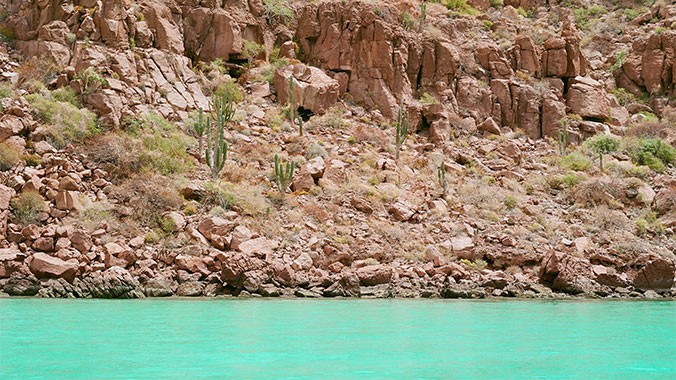
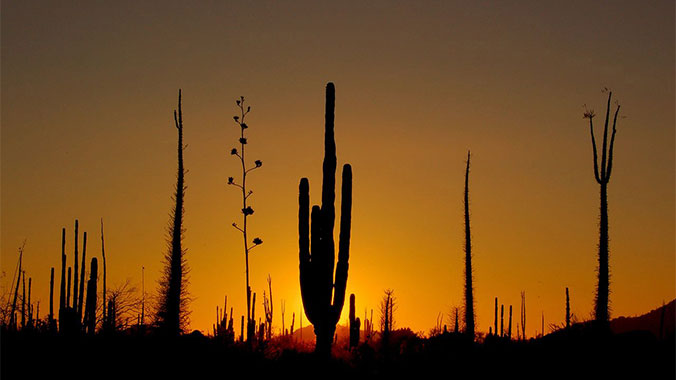
We’ll encounter ruggedly beautiful landscapes as we travel deeper into the desert while beginning to explore the region’s remarkable natural diversity. The mountainous Baja peninsula is home to countless plant species, many of them endemic. Among the most distinctive is the cirio, or boojum tree, considered a signature plant of Baja California. Along the drive, our Group Leader will provide expert commentary on the desert ecosystems and native flora, helping us recognize and better understand the distinctive vegetation we’ll encounter during our nature walks through these extraordinary landscapes. Upon arrival in Cataviña, we’ll check in to our hotel and have time to freshen up and relax before dinner. Located in the heart of the Valle de los Cirios Nature Reserve, the area is defined by abundant sunshine, vast granite boulders, and dramatic combinations of boojums, cardón cacti, and elephant trees that create one of Baja’s most impressive desert gardens. Gather in the hotel’s cozy bar, reserved exclusively for our group. We’ll begin with a tasting of tequila, Mexico’s national spirit, while learning about its origins, production process, and the qualities that distinguish a fine tequila. Then, raise a traditional Mexican toast: salt, tequila, lime… ¡salud! We’ll also have the opportunity to break open a piñata the Mexican way, as our Group Leader explains its important role in Mexican traditions and celebrations. The evening continues with a festive finger-food-style fiesta dinner.
Dinner:
At the hotel
Evening:
We’ll continue to enjoy the merriment and further immerse in Mexican traditions. Prepare for check-out and transfer in the morning.
Day
5
Desert Walks, Rock Art, Vizcaino World Biosphere
Location:
Guerrero Negro, Baja California Sur
Meals:
B,L,D
Stay:
Halfway Inn
Activity Note
Morning walking excursions. Getting on/off a motorcoach; driving about 120 miles, approximately 3 hours. Walks up to 1.5 miles, slight uphills, uneven gravely paths. Short steep hike approximately 0.3 mile to visit cave; gravelly terrain with steps, no handrails.
Breakfast:
At the hotel.
Morning:
After breakfast, we’ll explore the desert wonderland surrounding Cataviña. We begin with a walk behind the hotel to experience the striking beauty of the thorny desert illuminated by the early morning sun. We’ll then take a short drive to a nearby cave featuring simple rock paintings. Once believed to be around 2,000 years old, some of the oldest images have more recently been dated to nearly 7,500 years ago. The scenic hike to the cave offers exceptional views both from the base of the hill and from the uphill cave site. We will be joined by local schoolchildren who will lend a helping hand where the terrain is most challenging. The kids speak minimal English, so use your Spanish — no matter how rudimentary — or communicate in the universal language of gestures. As we interact with these youngsters, we’ll get a sense of what life is like in such a remote place! We’ll return to the hotel after our field trip.
Lunch:
At the Cataviña hotel restaurant, we’ll have Caldo Tlalpeño, a traditional soup meal.
Afternoon:
After checking out of the hotel, we’ll relax aboard the motorcoach as we continue toward Guerrero Negro. Along the way, we’ll stop for a walk among especially tall cardón cacti and elephant trees. During the drive, our Group Leader will provide expert commentary on gray whales in preparation for the whale-watching adventures ahead. Guerrero Negro—meaning “Black Warrior”—lies just south of the 28th parallel, near the border with Baja California Sur. It also marks the gateway to the El Vizcaíno Biosphere Reserve, a UNESCO World Heritage Site known for its whale sanctuaries, migratory birds, endemic vegetation, gigantic rock art caves, and the world’s largest saltworks. Upon arrival in Guerrero Negro, we’ll check in to the hotel and have time to freshen up before gathering for a margarita toast and chat with fellow Road Scholars before dinner.
Dinner:
At the hotel.
Evening:
At leisure. Tonight or any night when appropriate, enjoy the “sobremesa” — lingering at the table to chat after dinner — as is customary in Mexico.
Prepare for check-out and transfer in the morning.
Prepare for check-out and transfer in the morning.
Day
6
Nature Reserve, Gray Whales I, Transfer to San Ignacio
Location:
San Ignacio, Baja California Sur
Meals:
B,L,D
Stay:
Hotel Desert Inn
Activity Note
Getting on/off a motorcoach; driving about 90 miles, approximately 2 hours. Getting in/out of minibuses, on/off a small panga boat (10-16 passengers) from an inclining pier with a knee-high step; panga riding approximately 3 hours. Dress in layers with waterproof jacket or windbreaker for boat ride, waterproof pants recommended, likelihood of getting wet. Boat rides can be bumpy and cold if windy and cloudy, but warm if sunny. Walking short distances; mostly flat, gravely, uneven terrain.
Breakfast:
At the hotel.
Morning:
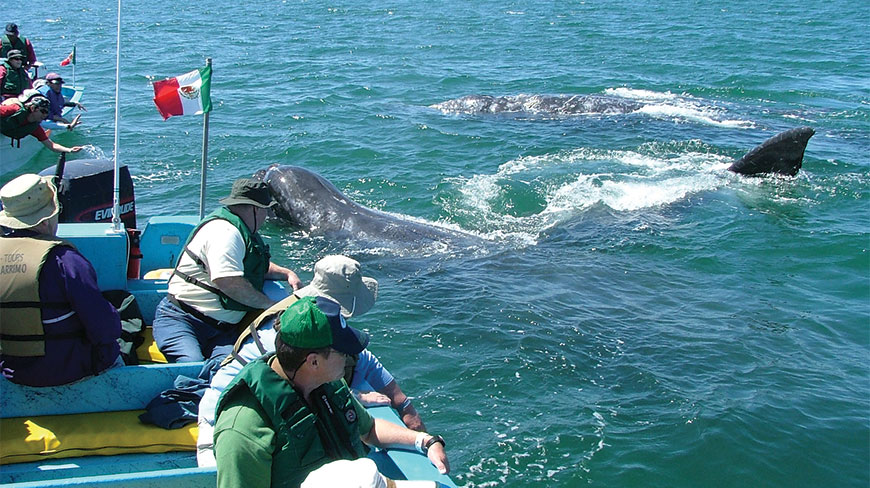
We’ll check out of the hotel early and board our motorcoach to begin our gray whale adventure. Access to the whale sanctuaries is limited to a select number of authorized eco-operators. We’ll drive to the office of one such operator, then transfer to their minibuses for the journey across part of Exportadora de Sal, one of the world’s largest saltworks. Along the way, we’ll learn about the history and solar-evaporation process behind Baja’s salt production. Ospreys are especially common here, often nesting on telephone poles and even on the ground. Upon reaching the pier on Scammon’s Lagoon, we’ll embark on the first of two unforgettable outings to encounter gray whales. Dividing into smaller groups, we’ll board traditional panga boats with experienced local captains who will guide us through the lagoon. From these small boats, we’ll venture among the whales for close-up views of these remarkable marine mammals—sometimes at arm’s length. Each year, gray whales migrate roughly 5,000 miles from the Bering and Chukchi Seas to the sheltered lagoons of Baja California, where they court, mate, give birth, and nurture their calves. After returning to the pier, we’ll transfer back to the minibuses and return to the eco-operator’s base, where there will be time to freshen up.
Lunch:
In a local food truck.
Afternoon:
We’ll continue on to San Ignacio. Along the way, the Sierra de San Francisco Mountain chain rises parallel to the highway, while rolling hills of red volcanic rock gradually transform the landscape. Palms begin to fill the canyon as we approach San Ignacio, nestled in a lush oasis. This charming and peaceful town grew around an imposing 18th-century mission, still in use today, at the heart of the palm-filled valley. After checking in at the hotel, you’ll have free time to relax or explore the town at your own pace. Before dinner, we’ll gather at the bar to sample a local beverage.
Dinner:
At the hotel
Evening:
At leisure. You might like to relax in the pleasant patio or at the bar.
Day
7
Gray Whales II, Palm Oasis
Location:
San Ignacio, Baja California Sur
Meals:
B,L,D
Stay:
Hotel Desert Inn
Activity Note
Getting in/out of vans, driving about 65 miles, approximately 2 hours round-trip; partly graded road. In San Ignacio Lagoon, getting in/out of small panga boats from the beach, possibility of wading into shallow water up to knee high. Riding in panga approximately 2.5 hours. Bring water shoes, waterproof gear, wear roll-up pants. Boat ride can be bumpy and cold if windy and cloudy, but warm on a sunny day.
Breakfast:
At the hotel.
Morning:
With our Group Leader, we will hop into vans and drive to the secluded San Ignacio Lagoon for another adventuresome ride among whales. Each outing is different, offering new experiences. The drive is partly on a graded road, crossing a vast desert region with open landscapes. We will see small fishing settlements along the shore of the lagoon and some eco-camps authorized to service the whale excursions. Arriving at a designated eco-camp, we’ll prepare for a second memorable outing preceded by a short presentation by camp personnel on the whales, the lagoon, and the whale-counting process. We’ll then divide into small groups and board the panga boats with their captains and look for those blows, humps, and fins!
Lunch:
In a restaurant at the eco-camp.
Afternoon:
We’ll continue at the lagoon with some independent time to look for migrating birds, observe the ospreys caring for their chicks in nearby nests or simply find a spot to relax. Midafternoon, we will return to the hotel by vans and freshen up before setting out again on a walking field trip with our Group Leader into the tree-filled plaza. We’ll explore the well-preserved mission and observe life on the plaza where local people gather and children play soccer.
Dinner:
In a restaurant facing the plaza
Evening:
At leisure. You might like to stroll on the plaza or enjoy the warm evening air in the hotel garden. Prepare for check-out and transfer in the morning.
Day
8
Mining Town, Lush River, Scenic Mission, Sea of Cortes
Location:
Loreto, Baja California Sur
Meals:
B,L,D
Stay:
Hotel La Misión Loreto
Activity Note
Getting on/off a motorcoach; driving about 140 miles, approximately 3.5 hours. Walking up to 1.5 miles on city sidewalk with uphills and steps without handrails, gravelly path and sandy shore, brief stretch of rocky path with high steps.
Breakfast:
At the hotel.
Morning:
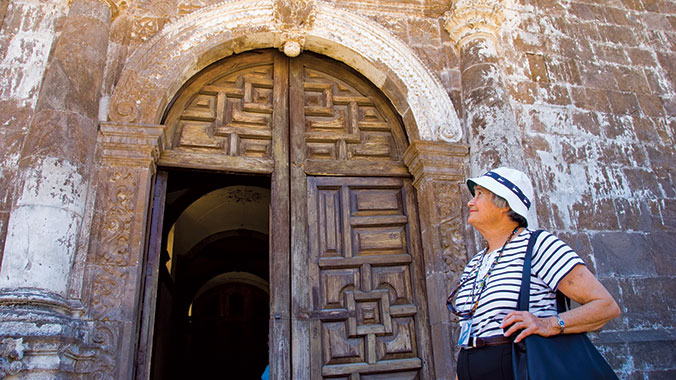
After checking out of the hotel, we’ll walk through the oasis to a natural spring, a scenic spot ideal for photographs, before boarding the motorcoach and continuing along Highway 1 toward Loreto. The changing landscapes make this stretch of road particularly interesting. Along the way, we’ll pass the Tres Vírgenes volcanoes, cones of red lava rock dotted with white elephant trees, and stop briefly to take in the scenery. The highway then descends along one of the steepest grades on the peninsula, eventually reaching the blue waters of the Sea of Cortez. A series of small towns lines the coast, beginning with Santa Rosalía, a former copper-mining town that remained a major producer of copper for more than 70 years. With our Group Leader, we’ll stroll through the Old French Quarter and visit the Museo El Boleo to learn how French investors established this mining community in the 1880s in what was then a remote and rugged region. We’ll observe the French influence reflected in the town’s architecture and see the prefabricated iron church attributed to Gustave Eiffel. We’ll continue to Mulegé, a mission town set along a river oasis shaded by palms. Here, we’ll visit the beautiful stone mission perched on a hillside and enjoy impressive views of the lush palm-filled landscape and surrounding mountain peaks.
Lunch:
At a local restaurant in Mulege.
Afternoon:
One of the highlights of the Sea of Cortez region is beautiful Bahía Concepción, often described as a bay within a bay. We’ll travel alongside its crystal-clear blue waters, dotted with islands and bordered by unspoiled beaches. We’ll stop at one of these beaches for a walk along the shore, where you may even encounter some of the “snowbirds” who spend the season living in RVs or palm-thatched shelters by the water. On the final stretch to Loreto, giant cardón cacti dominate the landscape, framed by the rugged peaks of the Sierra de la Giganta. Sandwiched between the mountains and the Sea of Cortez, the charming town of Loreto is home to the first mission and the oldest permanent settlement in the Californias, having served as the territory’s capital for more than a century. Upon arrival, we’ll check in to our hotel overlooking the Sea of Cortez and have time to freshen up before dinner.
Dinner:
At the hotel.
Evening:
At leisure. You might like to make it an early evening in order to get up and see the magnificent sky at dawn.
Day
9
Coronado Island. Loreto Historical Town
Location:
Loreto, Baja California Sur
Meals:
B,L
Stay:
Hotel La Misión Loreto
Activity Note
Getting on/off small 6-8 passenger panga boats from a pier and from the beach for a one-hour round trip in generally calm water; brief walk on a mostly flat sandy path. Walking and standing in town for approximately one hour on paved sidewalks.
Breakfast:
At the hotel.
Morning:
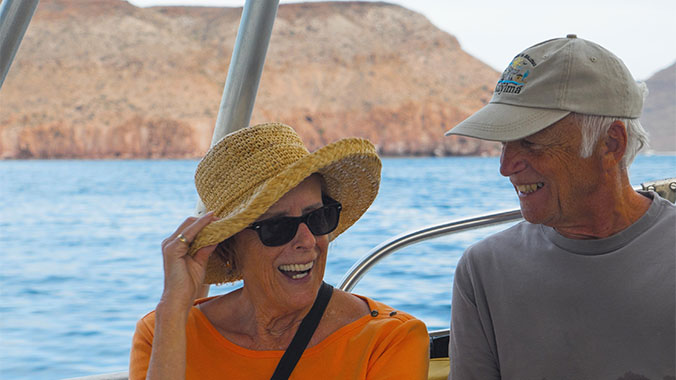
Jacques Cousteau (1910–1997)—scientist, explorer, and inventor—was a pioneering figure in the environmental movement. He famously described the Sea of Cortez as “the aquarium of the world” because of its extraordinary marine biodiversity. Just offshore from Loreto lies Coronado Island, part of the Loreto Bay National Marine Park and the larger UNESCO-designated biosphere reserve that encompasses more than 200 islands, islets, and coastal areas throughout the Sea of Cortez, also known as the Gulf of California. We’ll walk to Loreto’s small harbor to board panga-style boats for our excursion to Coronado Island. Circumnavigating the volcanic island, we’ll admire its striking geology and dramatic black cliffs, where herons, pelicans, ospreys, and blue-footed boobies perch. An amusing colony of sea lions inhabits one of the rocky outcrops. Along the way, we may also spot dolphins, breaching whales, jumping rays, or sea turtles. We’ll then arrive at a sheltered bay with a white sandy beach, where we can relax and take in the crystal-clear turquoise waters. You may wish to swim or join the Group Leader for a walk along a sandy trail to observe desert vegetation thriving among lava rock and sandy soils. We’ll return to the hotel for lunch.
Lunch:
At the hotel pool-side restaurant.
Afternoon:
We’ll have time to freshen up before setting out with our Group Leader to explore the lovely town of Loreto. We’ll stroll along its pedestrian streets, spend time in the lively plaza, and visit the mission church Nuestra Señora de Loreto, named in honor of the Italian Loreto Virgin whose statue dominates the altarpiece. The inscription “the mother of the missions” written at the entrance of the church reminds us that this was the first mission established in the Baja California peninsula. With a bit of luck, we may even witness a wedding or a quinceañera celebration. The remainder of the afternoon and evening is at leisure. You may wish to linger in the plaza for some people-watching, browse the local shops, choose a restaurant for dinner, or return to the hotel to enjoy its facilities.
Dinner:
On your own to enjoy what you like.
Evening:
At leisure. The romantic boardwalk offers a perfect opportunity for a stroll. Prepare for check-out and transfer in the morning.
Day
10
San Javier, Goat Ranch, Making Tortillas, Sunset Dinner
Location:
La Paz, Baja California Sur
Meals:
B,L,D
Stay:
Courtyard by Marriott La Paz
Activity Note
San Javier excursion: getting in/out vans; driving about 80 miles, approximately 1.5 hours round trip on paved mountain road. Walking approximately 0.5 hour on mostly flat cobblestones and some gravely paths. La Paz transfer: getting on/off a motorcoach; driving about 225 miles, approximately 4.5 hours including rest stops.
Breakfast:
At the hotel.
Morning:
We’ll check out of the hotel, board the motorcoach, and continue toward La Paz, with a scenic detour into the mountains. The rugged peaks of the Sierra de la Giganta form the backdrop for one of the peninsula’s most beautiful excursions off Highway 1. We’ll transfer into vans for a steep drive through a reddish-rock canyon, climbing to a plateau where subtropical vegetation blends with desert flora. Along the way, we’ll stop at a traditional goat ranch. Scattered across the mountains and deserts of Baja, these remote ranches were originally settled by adventurers seeking either fortune or solitude, and many ranching families still live much as they did generations ago. During our visit, we’ll have a glimpse into daily life on the ranch, learn about the cheese-making process, and, under the guidance of our host, make flour tortillas by hand to enjoy with the fresh cheese. We’ll then follow a riverbed into the village of San Javier. As we approach, the bell tower of the San Javier Mission comes into view, reached by a picturesque cobblestone road lined with fruit trees and thatched-roof homes. Founded in 1699 and officially known as Misión San Francisco Xavier de Viggé-Biaundó, San Javier is often called “the jewel of the missions” and is among the best-preserved of the Baja California missions. Established by Spanish missionaries, it still retains its historic orchard and original irrigation system. We’ll explore the mission grounds, walk to an olive tree more than 300 years old, and learn about the mission’s enduring legacy.
Lunch:
At a local restaurant in the mountains
Afternoon:
Returning to Highway 1, we’ll transfer back to our motorcoach and continue to La Paz. The drive takes us along scenic shorelines, through the southern tip of the Sierra de la Giganta, across fertile agricultural lands, and over broad plateaus dotted with colorful roadside chapels. Along the way, our Group Leader will share commentary, songs, and games as we travel toward La Paz. Upon arrival, we’ll check in to our hotel, located just outside the city beside the Costa Baja Marina complex. As the capital and largest city of Baja California Sur, La Paz is known for its tree-lined streets, calm turquoise waters, and relaxed atmosphere. After a brief time to freshen up, we’ll board the motorcoach again for a short ride to the city’s famous malecón, a three-mile waterfront promenade adorned with sculptures, plazas, and benches overlooking the sea. You’ll have free time to join the locals for a stroll and to soak in the atmosphere before we regroup for dinner at a favorite restaurant along the boardwalk.
Dinner:
In a restaurant on the waterfront
Evening:
Returning to the hotel, the remainder of the evening is at leisure.
Day
11
The City of Peace
Location:
La Paz, Baja California Sur
Meals:
B,L,D
Stay:
Courtyard by Marriott La Paz
Activity Note
Getting on/off a motorcoach driving approximately 1 hour; Walking up to 3 miles on city sidewalks.
Breakfast:
At the hotel.
Morning:
In a private room at the hotel, we’ll be joined by a university professor for a lecture on the fascinating formation and geology of the Baja California peninsula. We’ll then board the motorcoach with our Group Leader and transfer to the Museo de la Ballena (Whale Museum) to deepen our understanding of these remarkable cetaceans and explore any remaining questions. Afterward, we’ll continue to a taqueria for a traditional Mexican taco lunch.
Lunch:
In a taquería, a tacos restaurant
Afternoon:
Together with our Group Leader, we’ll walk to a local ice cream parlor for dessert, where you can choose from a wide variety of exotic flavors. After a short period of free time to enjoy the boardwalk in daylight, we’ll return to the hotel to freshen up and relax. In the late afternoon, we’ll head to the beaches north of La Paz, stopping at one of the protected bays for dinner at a palapa - a traditional thatched-roof restaurant set directly on the beach – an authentic La Paz experience. Facing the setting sun, we’ll enjoy a glass of Baja California wine and toast to the beauty of nature.
Dinner:
At a beach restaurant
Evening:
Returning to the hotel, prepare for check-out and transfer in the morning.
Day
12
Colonial Mining Village and Los Cabos Arch
Location:
San José del Cabo, Los Cabos, Baja California Sur
Meals:
B,L,D
Stay:
Tropicana Los Cabos, Tapestry Collection by Hilton
Activity Note
Getting on/off a motorcoach; driving about 100 miles, approximately 2.5 hours. Getting on/off a flat boat from a pier; boat excursion is approximately 45 minutes with possibility of swells. Walking up to 1 mile; sidewalks and smooth paths.
Breakfast:
At the hotel.
Morning:
After checking out, we’ll board the motorcoach and continue along the final stretch of the peninsula toward Finisterra—Land’s End. Along the way, we’ll enter the Sierra de la Laguna, the southernmost mountain range of Baja California. Silver and gold discoveries in these mountains during the mid-1800s attracted miners and adventurers from around the world. At its height, El Triunfo was the largest town in Baja California Sur, home to more than 10,000 miners. It also became an unexpected cultural center, with pianos and other instruments imported from abroad. Dominating the landscape is a 100-foot smokestack attributed to Gustave Eiffel. When the mines closed in 1926, most residents departed, and El Triunfo gradually became a near ghost town. In recent years, however, tourism has brought renewed life to the community, with restored buildings, cafés, and small museums now sharing the story of the town and its mining heritage. With our Group Leader, we’ll take a walking tour through present-day El Triunfo, followed by free time to explore the small self-guided museums at your own pace.
Lunch:
In a restaurant in El Triunfo
Afternoon:
The Transpeninsular Highway comes to an end in Los Cabos, at the southern tip of Baja California Sur. We’ll arrive at the lively resort city of Cabo San Lucas for a boating excursion to El Arco—the iconic rock arch just offshore. Boarding a small boat, we’ll cruise around this dramatic limestone formation as well as nearby Lovers Beach, often described as the place “where land ends and heaven begins.” The final stretch of the highway, known as the Los Cabos Corridor follows a scenic coastline lined with beautiful beaches and luxury resorts, connecting Cabo San Lucas with San José del Cabo – the two Capes. Recognized as one of Mexico’s Pueblos Mágicos (“Magical Towns”), San José del Cabo has preserved its historic character, distinctive architecture, and relaxed charm. Founded around a mission church established in 1730, the town today features narrow winding streets, a traditional plaza, and a vibrant collection of restaurants, boutiques, and art galleries. After settling into the hotel—just steps from the historic center—you may wish to relax by the pool or stroll to the plaza. Later, we’ll gather in the dining room for our farewell dinner, sharing favorite memories with our new Road Scholar friends and toasting our memorable educational adventure together – until we meet again.
Dinner:
In the hotel
Evening:
At leisure. Relax and enjoy the setting, take a night stroll on the historic plaza. Prepare for check-out and departure in the morning.
Day
13
Program Concludes
Location:
San José del Cabo, Los Cabos, Baja California Sur
Meals:
B
Activity Note
Hotel check-out 12:00 p.m. Los Cabos International Airport (SJD) is located about 10 miles away, approximately a 20 min. ride; taxis are available outside the hotel. Keep passport and permit accessible. Personal travel permits must be returned upon departure from Mexico and are collected by the airline during check-in. No fruits, vegetables, cheese, meat nor plants are permitted into the United States.
Breakfast:
At the hotel’s restaurant. This concludes our program.
Morning:
If you are returning home, safe travels. If you are staying on independently, have a wonderful time. If you are transferring to another Road Scholar program, detailed instructions are included in your Information Packet for that program. We hope you enjoy Road Scholar learning adventures and look forward to having you on rewarding programs in the future. Don’t forget to join our Facebook page and follow us on Instagram. Best wishes for all your journeys!
Please select a day to update the map
Map details are not available for this location.