The Women of the French Revolution: More Than a Footnote to 1789

- Road Scholar expert Caroline Buizza shines a light on the women of the French Revolution and explores the incompatibility of the ideals of freedom and the reality of women being excluded from universal rights during this time.
- Many women played influential roles in the Revolution, including Olympe de Gouges, Parisian writer and political thinker, and Marie Antoinette, infamous Queen Consort of France.
- Caroline explains the struggles for equality women underwent during the French Revolution, and how they offer a new lens through which to explore this period.
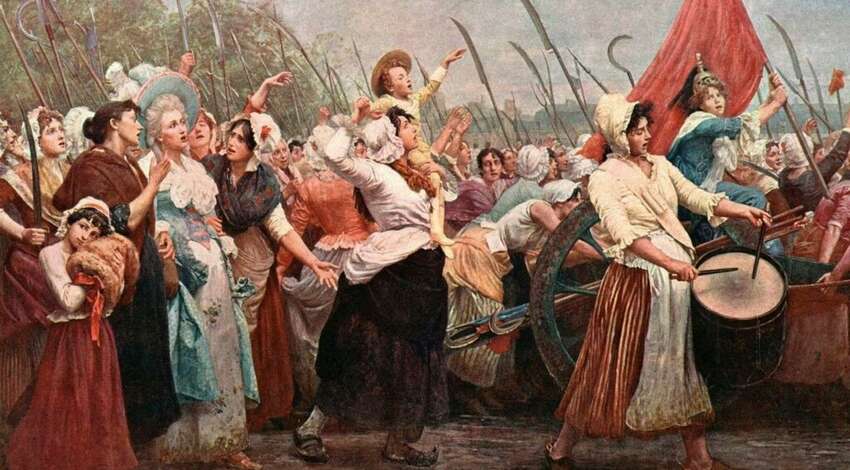
The French Revolution is usually told as a story of men: kings, lawyers, journalists and politicians arguing about liberty while France falls apart around them. That version is not exactly wrong. It is simply incomplete.
Women were everywhere in the Revolution. They marched, protested, wrote, organized and helped drive events forward. Some acted out of political conviction. Others were responding to something more immediate: hunger, rising prices and the struggle to keep a household going. What makes their history so interesting is that they did not all want the same thing. There was no single female revolutionary agenda. Some demanded bread. Some defended religion or local stability. Some pushed the Revolution to face a question it preferred to avoid: If rights were universal, why were women excluded?
The Sparks of the Revolution
For many women, politics began not with theory but with bread. Women were often responsible for buying food and managing daily survival, so they were the ones who felt shortages and rising prices first. That helps explain why the Women's March on Versailles in October 1789 mattered so much. Thousands of women from Paris marched to Versailles to demand bread and confront the king. This was not symbolic background noise. Their action helped force Louis XVI and the royal family back to Paris. Women without formal political rights had directly shaped the course of the Revolution.
But taking part in the Revolution did not automatically mean arguing for equality between men and women. Many women wanted relief, order and justice, not necessarily a complete rethinking of gender roles. That point matters. It keeps us from turning them into simplified heroines marching towards modern feminism. The reality was more diverse, and therefore more human.
The Emergence of Olympe de Gouges
One woman, however, did force the Revolution to confront its own contradictions head-on: Olympe de Gouges. Born Marie Gouze, she became a writer and political thinker in Paris. In 1791, she published the Declaration of the Rights of Woman and of the Female Citizen, directly answering the Declaration of the Rights of Man and of the Citizen. Her argument was sharp and disarmingly simple: If women were expected to obey the law, why should they not help make it? If rights were universal, why did they forget half of the population?
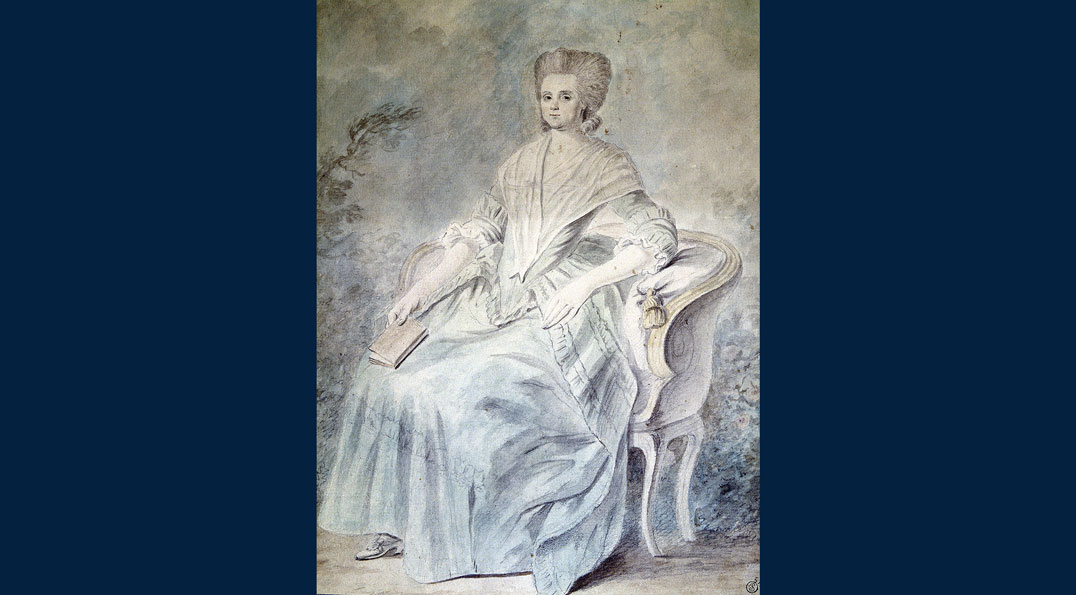
Olympe de Gouges
The Role of Women in the Revolution
Women also tried to build political spaces of their own. The Society of Revolutionary Republican Women, associated with Pauline Leon and Claire Lacombe, is one of the clearest examples. These women did not want to be praised for patriotic enthusiasm and then sent back into silence. They wanted to speak, organize and be recognized as political actors in their own right.
That is also where the limits of revolutionary equality became impossible to ignore. Women could march, petition and influence events, but full political citizenship remained male. In 1793, women's political clubs were banned. The Revolution opened space for women, but only briefly and only on terms set by men.
Revolutionary Women Outside of Paris
There is another complication worth keeping in mind: Most of the women we remember are tied to Paris. That makes sense. Paris was where newspapers, crowds, clubs and political drama were concentrated. But Paris was not the whole of France. A market woman in Paris, a provincial bourgeoise, a peasant and a devout Catholic in a small town were not living the same Revolution. Their priorities, risks and loyalties could lie in different places. Some welcomed revolutionary changes. Others resisted it. Many were simply trying to survive a period of enormous instability. So, there was no single model of “the revolutionary woman.” There were many women, living many versions of the same upheaval.
Even Marie Antoinette belongs in this story, though from the opposite side. She was not a champion of women's rights; she represented monarchy and privilege. But the way revolutionaries attacked her is revealing. She was criticized not only as queen, but as a woman. Her body, morality, motherhood and sexuality became political weapons in public debate. She shows that women could be highly visible in revolutionary politics without being treated as political equals.
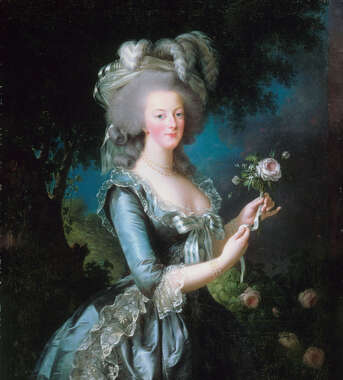
Marie Antoinette
That may be the central contradiction of the French Revolution. It transformed the language of rights, citizenship and equality, yet it stopped short of including women fully within those categories. Women were present from the beginning. They acted, argued and mattered. But when the Revolution defined who counted as a citizen, women were still largely left outside the frame.
That is why their history matters. It does not simply add a missing chapter to the story of 1789. It changes the meaning of the story itself. Once women come back into view, the French Revolution looks less like a clean march towards universal liberty and more like a struggle over who gets included when equality is declared in universal terms.
Caroline Buizza was born and raised in Lyon. After completing her master's degree in Canada, she became a teacher and worked in Finland, England and France. She later decided to go back to school to become a Road Scholar Group Leader. She has always been in love with French history, art and culture, and she takes pride in sharing her country's heritage with groups. When not working, Caroline can be found hiking or snowboarding in the Alps, baking or traveling the world.