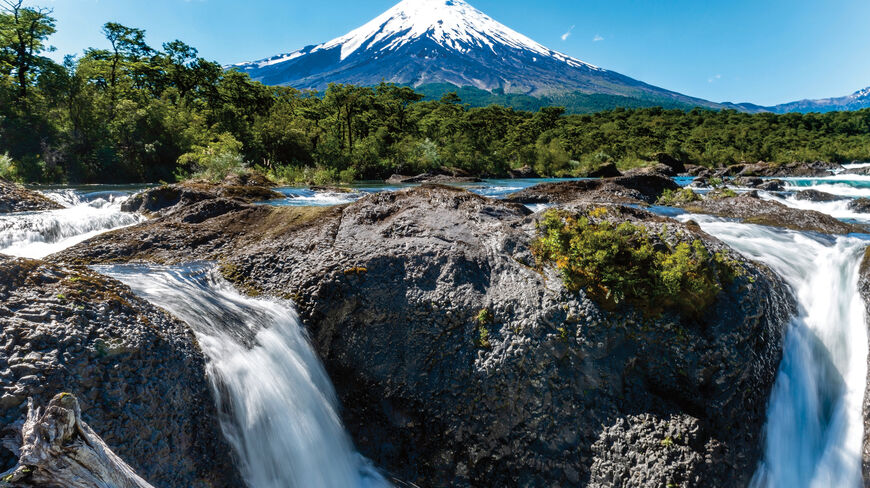
Exploring Chile & Argentina’s Wonders: A Road Scholar’s Story

- Argentina was high on Amy and Dave’s must-see list. After space opened up on a Road Scholar program, they enrolled, eager to explore both nature and cities.
- While Iguazu Falls and Buenos Aires were expected highlights, Amy and Dave were pleased to also experience local connections, like expert insight into daily life and a meal shared in an Argentine home.
- These experiences, combined with the relationships Amy and Dave made with their leaders and fellow Road Scholars, resulted in memories and lessons that will last a lifetime.
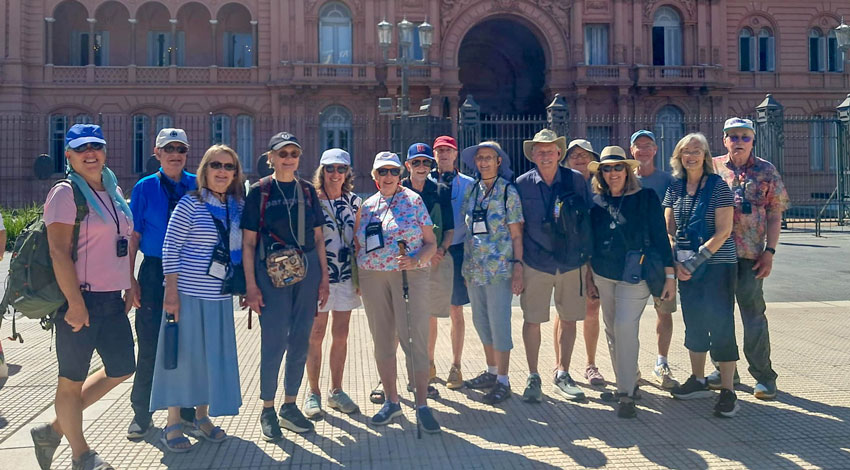
The steam rose from our homemade empanadas as our host, Natalia, poured the Malbec and shared stories of her family’s life in Argentina. In that moment, the bustle of Buenos Aires vanished — we weren’t just visitors, but friends at a family table. This experience was the centerpiece of our South American journey, and it serves as the foundation of our first Road Scholar adventure.
Choosing the Adventure
Argentina had been on Dave's must-see list ever since our daughter's honeymoon there. It took travel serendipity — two spaces opening as another trip fell through — to finally get us there. We were excited to experience what the Road Scholar educational model would offer.
The itinerary checked every box on our South American wish list. Not only would we explore Buenos Aires and Santiago, but we'd also explore the UNESCO-listed Iguazu Falls and Northern Patagonia's Lake District. Between lectures on regional history and intimate meetings with locals, it was a curious traveler's dream. As the dedicated nature lover in the family, I had looked forward to Bariloche and Iguazu Falls — and they did not disappoint. Dave, meanwhile, thoroughly enjoyed the music and culture of the big cities.
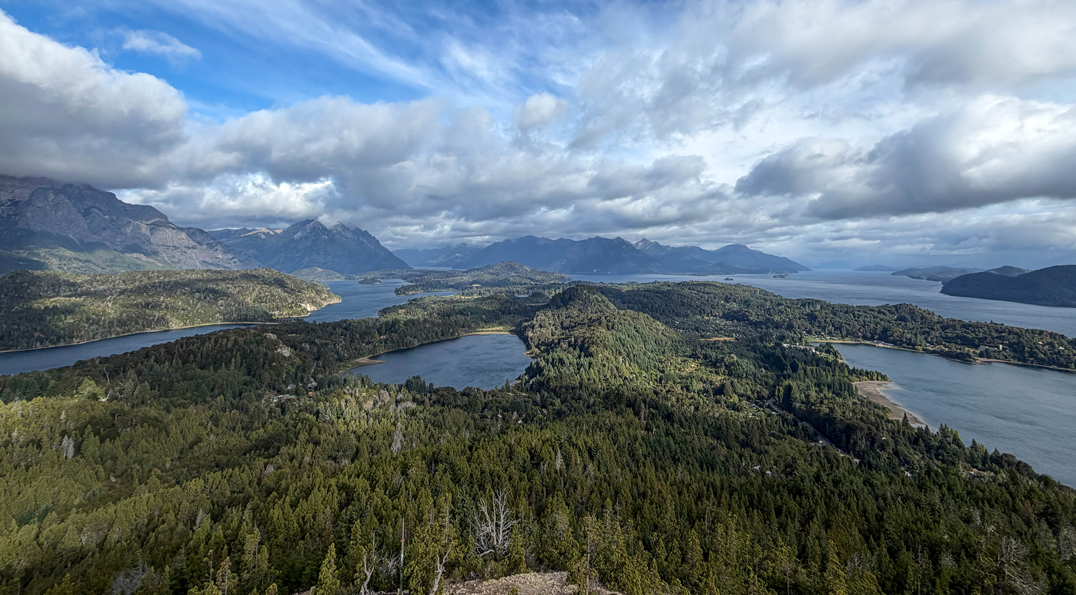
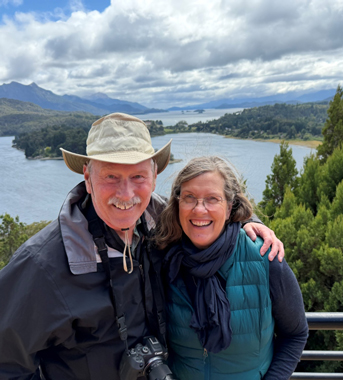
View from Cerro Campanario, considered one of the most beautiful panoramic views in the world.
Nature in Argentina and Chile: Bariloche to Iguazu
While South America's cities are vibrant, its wild spaces are where the continent's true character is revealed. In these regions, wildlife isn't a backdrop — it's an experience.
In Bariloche, we spent a spectacular day immersed in Andean landscapes. A ski and hiking destination with a not-so-subtle nod to the Swiss Alps — think chalets and chocolate — sits within one of the world's most ecologically distinctive regions.
Chile and Argentine Patagonia function as a kind of biogeographical island, hemmed in by the Atacama Desert, the Andes and the Pacific. Species here have evolved in near-isolation for millions of years. The ancient Valdivian forests we walked — home to Alerce and Monkey Puzzle trees found nowhere else on Earth — are a living testament to that isolation. Our Group Leader identified birds and trees, but our favorite moment was when she had us each find a quiet spot to simply be in nature. Months later, I'm still reflecting on those minutes — the sound of wind through the trees, the profound beauty and the peace.
Our final destination before finishing in Buenos Aires was Iguazu Falls. Like most, I expected the thundering cascades of the world's largest waterfall system — 275 individual drops along the Argentina-Brazil border. What I hadn't fully realized was that those falls are tucked within a vibrant, protected subtropical rainforest.
Walking Iguazu's trails, we were immersed in a living ecosystem. Brilliant butterflies and beautiful birds surrounded us, and raccoon-like coatis startled us when they descended en masse to share the walkways. We were fortunate to spend the day with Nieves Aquino, a trained naturalist and veteran of the park's Jaguar project — exactly the kind of expert presence that transforms a visit into a true wildlife experience.
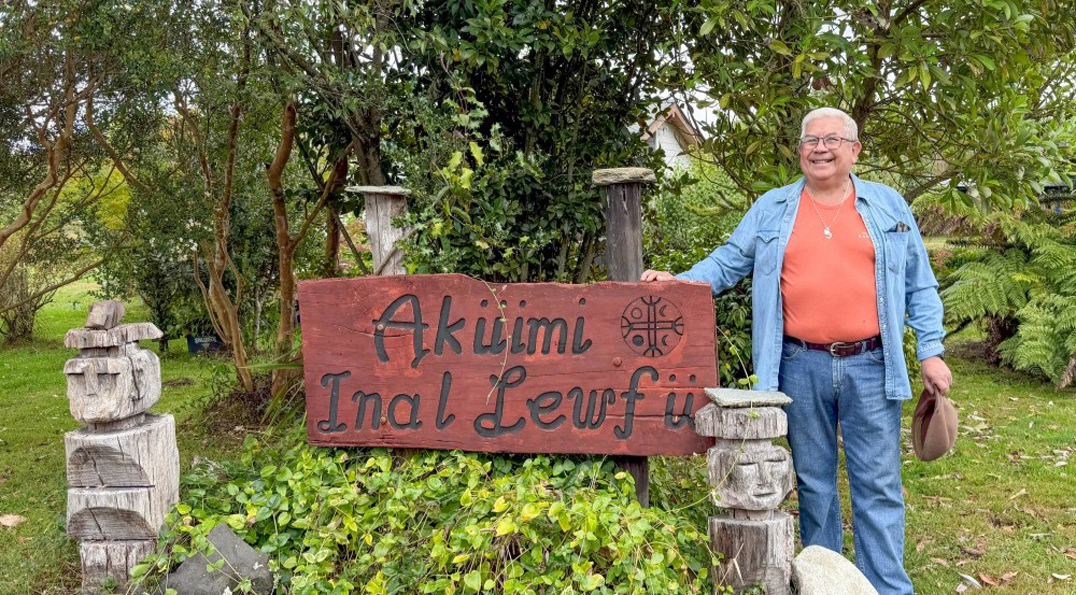
Nacho welcomes us to his home. The sign translates to “You have arrived beside the river.”
Beyond the Tourist Track: Cities & Culture
While the landscapes were breathtaking, Road Scholar truly found its stride in the "people" side of the journey. Most organizations provide a window into a culture. Road Scholar's educational model opened the door and invited us inside.
The heart of this approach was social sustainability — genuine connections that enrich travelers while giving back to the community. This was beautifully exemplified during our visit to Natalia Bertoni's home in Buenos Aires. Making empanadas and alfajores with Natalia's family wasn't just a meal — it was our bridge to understanding Argentine life. Her daughters showed us around their home, shared music they were learning and humorously awarded a prize for the best of our amateurish empanadas.
We experienced this same immersion through our afternoon with José Ignacio Huaiquipan (Nacho), a Mapuche descendant in Chile's Patagonia. In his home, we shared a traditional Curanto — seafood, meats and vegetables prepared in an earthen pit, steamed under large leaves — while Nacho shared his family's history and the story of the region. These were invitations into the Indigenous history and modern character of the region.
The Gift of a Local Group Leader
Our Group Leader, Georgina, did far more than manage logistics — she acted as our cultural translator. Whether helping us appreciate the graffiti on the walls of Valparaíso or explaining why many locals carry stacks of cash due to a deep-seated distrust of banks, she provided the "why" behind the daily rhythm. What she shared about the staggering reality of Argentina's inflation wasn't just an offhand topic — for many of us, it was the most impactful takeaway of the journey. She also steered us toward gems we might have missed, like the historic Confitería La Ideal and the iconic Café Tortoni, both of which became highlights of our time in Buenos Aires.
Final Thoughts: The Road Scholar Dividend
What sets Road Scholar apart from a standard organization are its formal lectures. Over 12 days, we had seven hour-long sessions led by experts in history, politics and economics. We came away with a much deeper understanding of the region’s complexities than a standard itinerary would have offered.
Additionally, with only 14 participants, the group dynamic became a genuine strength. These well-traveled, intellectually curious individuals didn't just follow along — they added perspectives and asked probing questions. The atmosphere was cheery and fun throughout. By the time we left, we weren't just a travel group — we were friends.
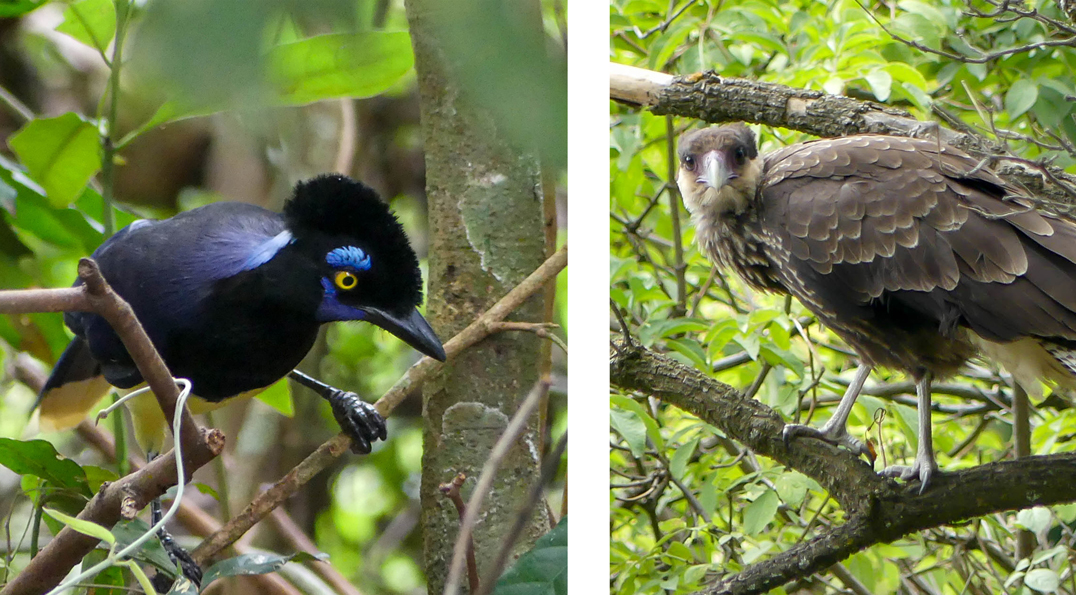
Plush-crested Jay (left), Crested Caracara (right).
Would we travel with Road Scholar again?
Absolutely. For Argentina and Chile, it was the perfect choice.
South America is a place that stays with you. While the schedule kept us moving, the connections we made — with Natalia, Georgina and our fellow travelers — made every mile worthwhile. The empanadas and Malbec are long gone. What remains is a sense that we didn't just visit Argentina and Chile — we briefly belonged to them.