
Juneteenth and the Meaning of African American Celebrations

- Professor Anthony Brown, online lecturer and professor in the Department of African and African Diaspora Studies at the University of Texas at Austin, explains the significance of Juneteenth as both a celebration and avenue for education.
- Juneteenth commemorates the day in 1865 when enslaved people in Galveston, Texas, learned they were free, more than two years after the Emancipation Proclamation.
- Juneteenth serves as a time to celebrate freedom, including freedom from society's rigid racial boundaries and the freedom to honor African American history and culture.
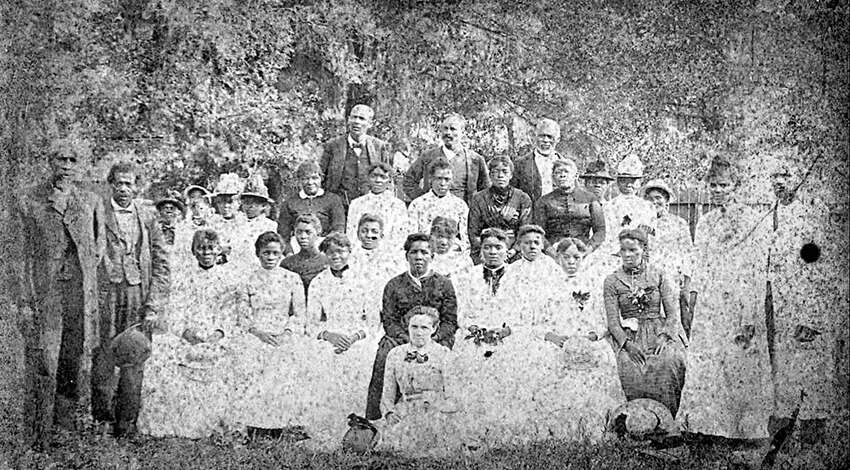
June 19th, 1865, marked the day when Major General Gordon Granger announced the order of General Order No. 3 in Galveston, Texas. This announcement proclaimed that enslaved people of Texas and all other states were now effectively free. This announcement came at a time when there was slow and inconsistent enforcement of President Abraham Lincoln's Executive Order to abolish slavery.
There is more to be told about the legal history of this order and subsequent General Order No. 3. However, we will focus on the significance of Juneteenth and African American celebration as a profound socio-cultural and social-historical event. In this sense, celebration is not merely an outward expression of public engagement; it also helps to commemorate, memorialize and remember the past.
Juneteenth, also known as Freedom Day, is considered by many to be the longest-running celebration in African American history. Historians note that African Americans in Texas cried, sang and prayed to express their joy at hearing the news of freedom in Galveston. Over time, Freedom Day celebrations used the space to mark the historical contributions of African Americans as depicted through speeches, parades and plays. And while Freedom Day celebrations waned throughout the twentieth century, Black Texans continued to keep this tradition alive until Juneteenth became a national holiday in 2021.
A quick glance at the imagery of these events would show standard fare, celebratory gatherings: food, parades and processions. However, a closer examination reveals that the intent behind Freedom Day and Juneteenth provides a socio-historical context for these celebrations. At the time of the earliest Freedom Day celebrations, depictions of African American life were stereotypical and histories of African Americans were nonexistent. Common textbook depictions portray enslaved African Americans as happy in their circumstances. In some instances, these depictions made slavery a benign and necessary institution solely rooted in states’ rights. So, in the context of African American history, celebrations of this kind not only allowed African Americans to celebrate with food, parades and pageantry but also enabled them to learn and commemorate a history that likely would not have been learned in schools.

The Symbolism of Celebrations
Such celebrations provide deeper insight into the meaning of freedom. One aspect of these celebrations is rooted in the idea of living in a world where one is free to be oneself. Historically, the idea of congregating publicly has taken different forms. In the late nineteenth and early twentieth centuries, being able to come together in public space, free of society's rigid racial boundaries, was rare.
Another significant feature of celebration is a space to foreground and express diverse, regionally specific cultural modes from the African Diaspora. Older celebrations show people singing hymns, praying and walking in parades. Recent African American celebrations, including Juneteenth, might feature cultural expressions through song, dance and hip-hop.
The other key features of celebration are the dissemination and commemoration of African American history through varied oral histories, including speeches, sermons, poetry, songs and lectures. Taken together, Juneteenth means a lot more than parades, music and food; it accounts for the existential context of being Black in America, free to laugh, play and engage the past, present and future without censorship.
Reflections and Continued Observances
If you, as a Road Scholar, attend a Juneteenth celebration this June, I hope you can approach it through a new conceptual lens. Of course, get a plate of great Black American cuisine, and partake in the events that commemorate the legacy of enslavement and liberation. While you do, recognize that there is a public syllabus at work; it’s history, curriculum and memory-making infused into a single celebratory space.
Anthony L. Brown is a professor of Curriculum & Instruction and affiliated faculty in the Department of African and African Diaspora Studies and the John Warfield Center for African and African American Studies at the University of Texas at Austin. His research focuses on how the history of ideas found in academia, textbooks and popular culture inform current policies and practices for African American students.