Greek Islands You May Not Know: Less Traveled, Equally Fascinating
- Lesser-known Greek islands offer rich cultural experiences and historic landmarks with fewer crowds than the more popular islands.
- These hidden gems feature such fascinating echoes of ancient history at the early Christian catacombs of Milos, the ruins of Delos and the Temple of Apollo on Naxos.
- Unique local traditions thrive on these shores, from the master marble crafts of Tinos to the harvesting of mastic resin on Chios.
- These idyllic islands serve as classrooms on several Road Scholar programs in Greece, our 2026 Campus of the Year.
The Greek Isles are justifiably popular, especially the better-known ones like history-rich Crete and Rhodes, and sun-soaked Santorini and Mykonos. You can enjoy exploring all of those on Road Scholar programs to Greece. But we also journey to lesser-known Greek islands that offer endless rewards of their own. What follows is a brief review of some more lightly traveled islands that make great classrooms — with slightly smaller “class sizes”!
Here are three that you can explore on with us on the Road Scholar program Jewels of the Aegean: Discover the History of the Greek Islands.
Patmos.
Patmos
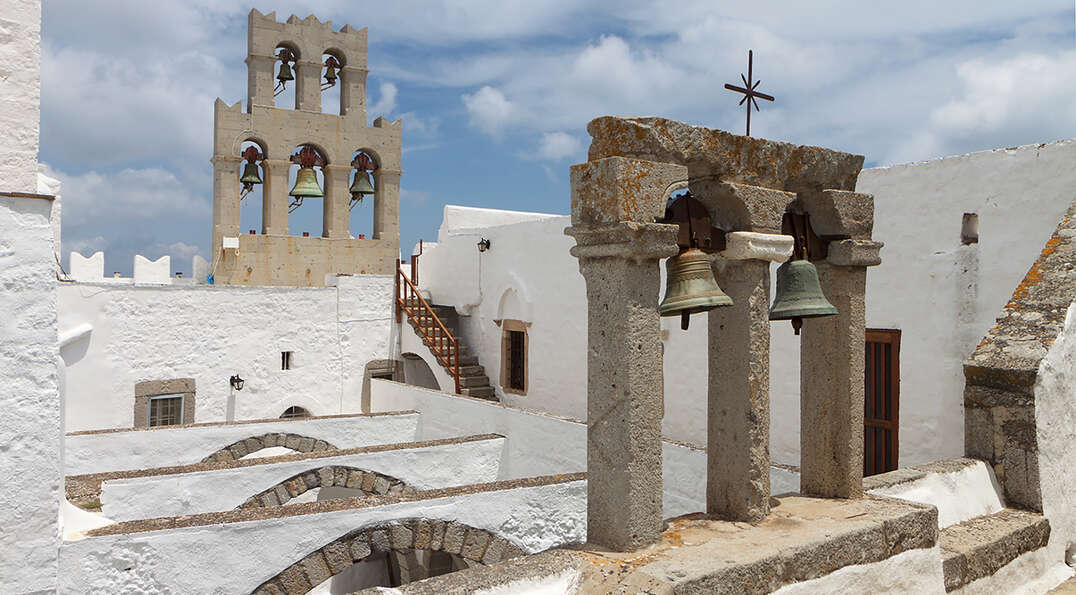
Above the winding streets, quaint shops and whitewashed houses of the island’s capital city of Chora stands the monumental castle-monastery of St. John the Theologian, a breathtaking 11th-century structure. Nearby is the Cave of the Apocalypse, where John is said to have experienced the visions recounted in the Book of Revelation.
Delos
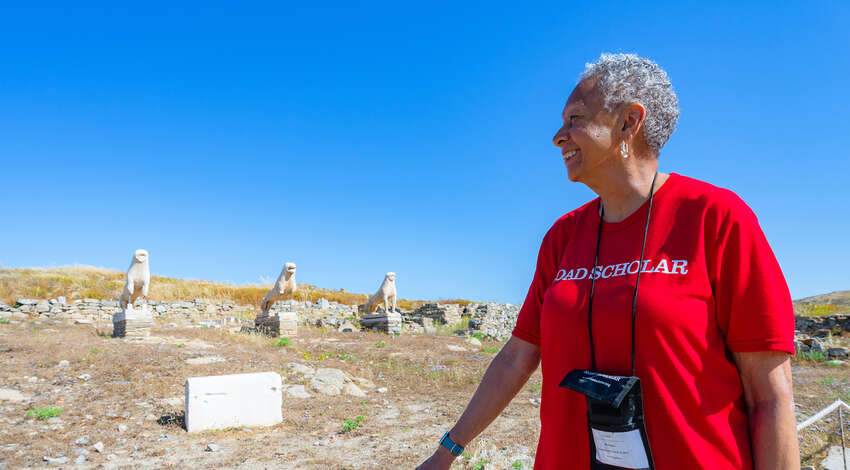
The mythological home of Apollo and Artemis, Delos is a treasure trove of ruins showcasing the architecture of ancient Greece, including the Sanctuary of Apollo and the nearby Terrace of the Lions.
Tinos
This island has more than 60 traditional villages, many of them home to master marble craftspeople. One of the villages, Pirgos, is also the site of the Museum of Marble Crafts. Granite is the geological co-star on the island, with an enormous boulder field near the village of Volax resembling a Martian landscape.
Here’s another trio of islands you can explore with Road Scholar, in this case on The Greek Isles & Istanbul: A Voyage Through History & Culture.
Chios.
Chios
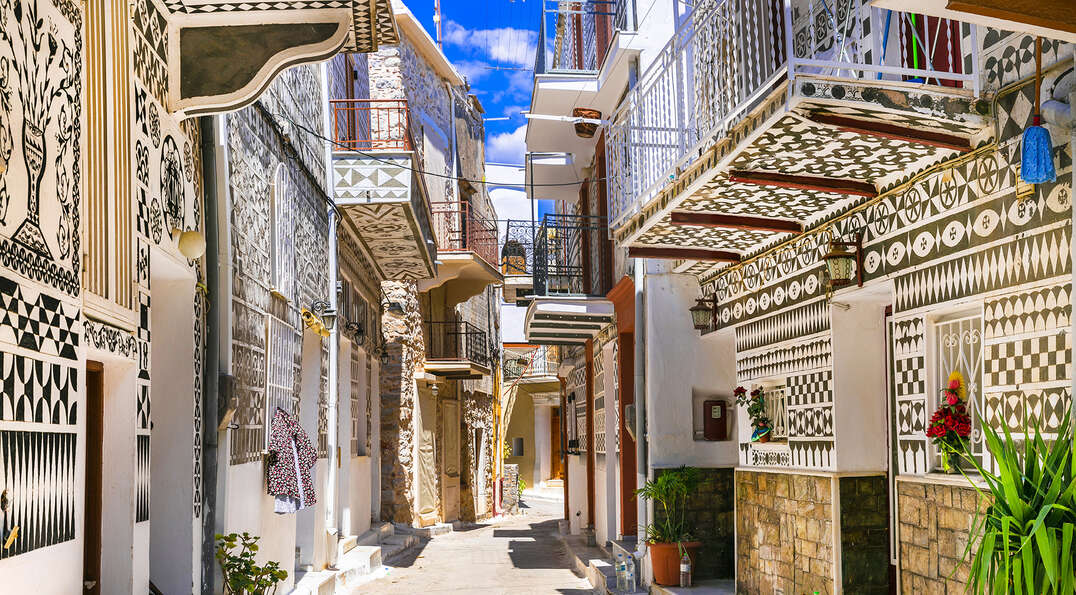
“Tears of Chios” are droplets of resin harvested from mastic trees, which grow in various areas around the Mediterranean but produce significant amounts of resin only on this island. Hippocrates recommended mastic to ward off digestive problems and to freshen breath, the Romans dissolved it in spiced wine, and it was so prized in Ottoman times that high walls were built around the villages that produced it. Today, mastic is used throughout the Mediterranean in various foods and beverages, valued for its distinctive piney, herbal flavor.
Samos
The ruins of the Temple of Hera on Samos are a UNESCO World Heritage Site. The nearby Tunnel of Eupalinos is an engineering marvel nearly a mile long, built in the 6th century B.C.E. It was the first tunnel to use a geometry-based approach — an interesting note in light of the island’s most famous native son, the philosopher Pythagoras, supposed (but unlikely) author of the famous geometric theorem that bears his name.
Syros
Syros has a reputation for excellent food, and is particularly renowned for its loukoumi, addictive sugar-dusted nougat treats in flavors including the above-mentioned Chios mastic. The island is also home to delightful villages, where you can admire a number of striking 19th-century churches, both Catholic and Greek Orthodox.
Join us for The Greek Isles & Ephesus — A Small Ship Voyage and you can sail to these next two fascinating islands:

Participants in Syros.
Naxos
The largest of the Cyclades, Naxos is where you’ll find the Temple of Apollo with its famous Portara, an enormous doorway facing the sea. Mount Zas, the highest point in the island chain, is a place to take in stunning panoramic views of the island and surrounding sea. Panagia Drosiani Church dates back to the 6th century CE. And you shouldn’t leave the island without sampling kitron, the lemony local liqueur!
Milos
Rising from the sea on Milos are dramatic, volcanic rock formations, many with carved-out sea caves. For humanmade marvels, you can explore the intriguing Catacombs of Milos, considered the most important early Christian site in Greece, dating as far back as the 1st century, as well as the island’s well-preserved ancient theater, overlooking the Aegean and within which the iconic Venus de Milo statue was uncovered.
Last but not least, two more islands you can explore on Road Scholar programs:
Kythera
Found in the waters just off this island in 1900 was the Antikythera Mechanism, a bronze navigational calculator which seemingly far exceeds the technological capabilities of the time. Similarly complex mechanisms did not appear for another 1,500 years. The mysterious device itself rests in the National Archaeological Museum in Athens, but a working replica can be seen at an interpretive center in the island town of Potamos. Experience Kythera, along with Crete, Santorini, Mykonos and other islands, on Classical Greece: Islands of the Aegean.
Paros
On Paros, Panagia Ekatontapiliani, the “Church of 100 Doors,” was built in the 4th century and is one of Greece’s most impressive Byzantine monuments. (There’s a legend that 99 doors have been found there and that the 100th will be discovered when the Hagia Sophia in Istanbul becomes an Orthodox church again.) In addition, Paros boasts many fine examples of the whitewashed villages and pristine beaches that are ubiquitous in the Cyclades. Encounter them on The Best of Greece: Island Hopping in the Aegean.
The islands of Greece reward visitors with unparalleled opportunities to study ancient history and immerse themselves in the Greek culture of today, all amidst idyllic settings. Whether you choose to explore the most popular islands, these somewhat less-traveled ones, or — our recommendation — a combination of both, you’ll have an exceptional learning adventure in the country we chose as our 2026 Campus of the Year!
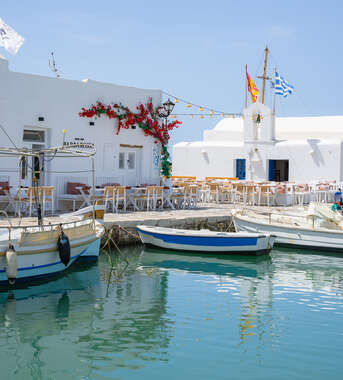
Paros.