
Road Scholar President James Moses’ Caregiving Story

- For about five years, Road Scholar president James Moses served as caregiver for his mother. James shares his caregiving journey, from when he and his family first noticed that his mother needed support through the pandemic and the changes it brought.
- The caregiving process brought new people into their lives, like Brian, a younger neighbor who became James’ mother’s best friend.
- The pandemic meant a big move and ongoing transitions, but also joyful moments as James’ mother was able to connect with Brian and her family members until her passing.
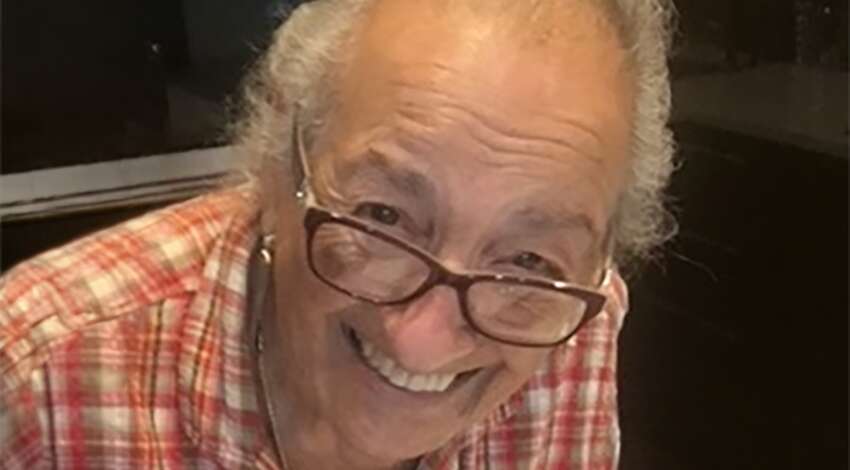
Becoming a caregiver is a shared experience for many Road Scholars, including Road Scholar president James Moses, who shares his caregiving journey in his own words.
Does anyone actually plan to become a caregiver to a family member? I think most of us just step into the role unexpectedly when a loved one “suddenly” needs help. I use quotations around suddenly because it’s hard for any of us to think we or our loved ones are ever going to be different from the active, vital, independent people we are for most of our lives. But I’ve learned even the most independent people will, at some point, become less able to manage the complexities of life if they live long enough. And, because many of us don’t see our aging friends and family every day, it often takes some unexpected “situation” for us to realize what was likely a gradual change occurring over months or years — but not readily visible to us until something happened — to make us realize our loved one was no longer as independent and capable as they had always been.
That’s how it went in my family. My mother was vibrant, active, independent and engaged throughout her life. She lived in the same small town she’d grown up in. All of her friends and family were close by. Mom lived alone, but her social life was a whirl of lunches, dinners, card games and performances. On her 92nd birthday, Mom bought a new car because she was the one all her aging friends depended on to drive them to and from every community, church or social event they attended. Even Mom’s much younger friends in their early 80s depended on her because she was so capable. We, her children, were proud of how active she was and delighted by how independently she lived. If there were signs of decline, we certainly didn’t see them.
And then one day, when Mom was 93, her neighbor, a retired fireman, heard Mom’s smoke alarms going off and rushed over to find the house filled with smoke, a fire on the stove and my mother opening windows to let the smoke out as the lunch she’d forgotten she was cooking went up in flames. Without letting Mom know, that kind neighbor called my sister to tell her what had happened, and my sisters and I had our first glimpse of what might be coming. But Mom promised she would never leave the kitchen again if she had something on the stove, and we all went back to living our own independent lives.
About a year later, one of Mom’s friends stopped by for an unexpected visit. When Mom reluctantly opened the door, the friend was shocked to see she had a black eye, and the side of her face was purple with bruising. It turned out she had tripped one night, slammed her face into the metal frame of her bed and had been hiding out waiting for her bruises to heal so no one would know what had happened. Even though she’d sworn her friend to secrecy, the friend, thankfully, filled us in. At 94, Mom was still extremely capable and vital, but most of her friends had died or were no longer able to go out on their own. Mom’s world was shrinking and things were starting to go wrong living by herself. We, her kids, determined we had to find an alternative to keep her safe.
My mother had always told us she “would know” when it was time for her to stop living alone. But it was clear to everyone except her that the time had come, and we were having a lot of conversations to help her recognize that. First, we spent time talking with staff at the continuing care retirement communities in her town, which seemed to us to offer the most comprehensive solutions for Mom — safety, activity, company — all in the town she knew so well. The problem was, Mom was at such a late stage in life, it was daunting for her to even think about altering her living situation so significantly. She recognized the benefits of community living, but not knowing anyone who lived in one, she was unexpectedly intimidated.
We then found someone who would come and visit with her several days a week, but she hated the idea of being “babysat.” The only other solution we could come up with was for Mom to live with one of us, and, after spending two years with my sister, who lived in the same town, it was my turn to become Mom’s full-time caregiver.
And so, at 96, my mother arrived in Boston, where I lived with my spouse in a high-rise apartment downtown, to start a whole new life. As president of Road Scholar, I had heard many stories from participants about the challenges and rewards of caring for a loved one. Through our caregiver grants, we try to support those individuals who rarely have time for themselves. But until that moment, I hadn’t fully understood what it meant to step into the role. I learned quickly.
“But until that moment, I hadn’t fully understood what it meant to step into the caregiving role. I learned quickly.”
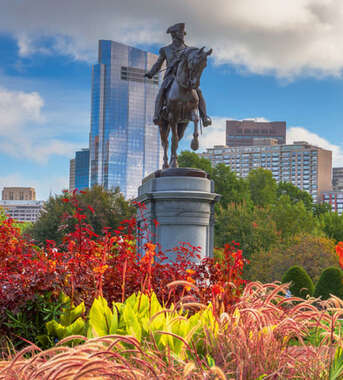
Mom had her own bedroom and bathroom, and we organized her things in the closet and set about making her feel at home. I bought a small table for jigsaw puzzles and placed it in the living room where Mom could sit and look out across the city. The puzzles, the view and the afternoon sun shining in the living room windows made this Mom’s favorite place to relax and enjoy her surroundings. She loved following the rhythms of the city from her perch above. She’d watch construction projects and observe how busy the rooftop parking garages around the neighborhood were each day. She’d also read constantly, and we’d supply her with novels every week. I’d make her breakfast before heading to work and I’d leave a sandwich in the refrigerator for her lunch with a big note on the counter reminding her to eat it. We’d frequently invite friends over for drinks or dinner, and Mom loved socializing with everyone she met. Life was going pretty well, and Mom was enjoying “being on vacation in Boston.” But, after that first year, when I’d come home from work at the end of the day, I started finding her lunch uneaten. Mom was so involved in her puzzles and neighborhood watch, she’d inevitably forget to eat, and she’d neglect to read or ignored the reminders I left for her. Even when I’d call to remind her to have lunch, I’d find the sandwich uneaten in the fridge when I’d come home.
So, I started running home at lunchtime to make sure she’d eat, which was difficult to squeeze into my workday. And I became concerned that the solitude she was experiencing every day while I was at work was becoming too much for her to endure. I determined I had to find a way to stimulate Mom and keep her engaged in the world.
Miraculously, around this time, when Mom was 98, I met a young neighbor in his mid-twenties who was between jobs and I asked if he’d be willing to spend some time with Mom and eat lunch with her every day. She knew and liked him, and he her, so it seemed natural for him to start stopping by, and she welcomed his company.
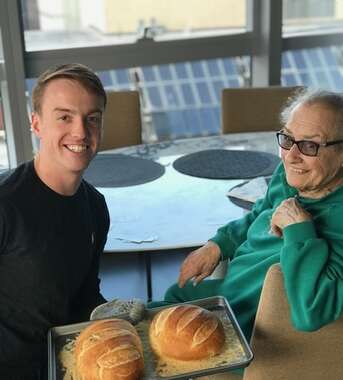
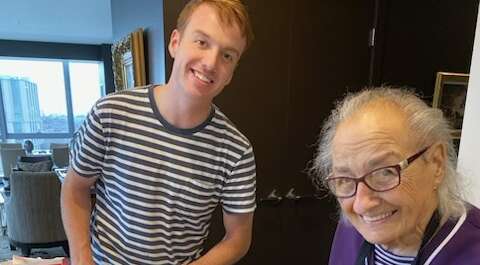
Soon, Brian took to the “job” so fully, he began to plan outings for Mom — taking her to lunch, to play bingo, to the casino, to the waterfront, to get manicures together. They’d talk all day long. He’d play her favorite big band music and she’d regale him with stories of her youth taking the train to New York with her siblings to see Tommy Dorsey, Count Basie, Sinatra and all the greats from her era. She’d try to teach him how to dance the fox trot, her walker be damned. They played cards and talked and laughed and listened to music together. Brian had the brilliant idea to create projects for them to do together. They’d bake bread on Mondays, cookies on Wednesdays, lasagna on Fridays — and between the cooking and the outings, Mom’s life became hugely enriched. She was happier, livelier and more engaged than she’d been in years. With all her friends and siblings gone, Brian had become her best friend in the world, and they adored each other. The year they spent together had a huge impact on both their lives.
And then the pandemic happened and everything changed again.
While Brian stayed in Boston during the pandemic, we moved to a very rural house in New Hampshire. Mom, my spouse and I were now together every day, 24 hours a day. We got a dog. We cooked every meal at home. We baked bread. Mom insisted on washing the dishes to keep active. In many ways, it was the best of times during the worst of times. Brian called every week. Once we were all vaccinated, he’d come and spend occasional weekends with us, and Mom continued to thrive. We all celebrated her 100th birthday together. We danced and laughed and played cards, joyfully celebrating Mom’s health and happiness and the remarkable milestone she’d reached. Life continued to be good for all of us.
Then, just a few months before her 101st birthday, we took Mom back to her hometown to visit with her daughters and grandchildren. Even though she seemed happy to be back home, within a few weeks, my mother, who had a huge appetite, stopped eating. After a few days, my sister called, concerned, and Brian and I drove right down to see what was happening. “Mom,” I asked. “What’s going on, how are you feeling?” She looked in my eyes and said she was just tired, and then she asked if it was okay if she just let herself be tired. Brian and I were both there with her, and we each gave her a hug and told her she had, of course, earned the right to be tired. Brian held her hand and they whispered together as best friends do. I slept on a cot next to her that night. And, within 24 hours, while Brian and I sat by her side playing her favorite Sinatra songs, Mom left this world. The sun was shining through the windows, a sunbeam lit her face and just like that, Mom passed, as Sinatra crooned a love song.
If you are also a caregiver, our Caregiver Grants offer the chance to step away and recharge with a supportive and welcoming community of Road Scholar learners.