
Two Caregivers. Two Husbands. One Invisible Weight: How Caregiver Grants Rewrote Their Hardest Chapter
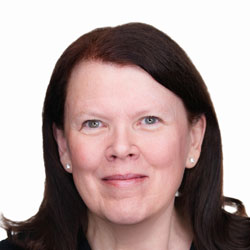
- This November, we honor the 63 million family caregivers in America who form the invisible backbone of our care system.
- Caregivers Theresa F. and Liz B. met when their husbands moved into the same memory care unit in Connecticut.
- Discover inspiring stories of personal renewal on our blog this month as we highlight the personal journeys of five Caregiver Grant recipients.
- We invite caregivers to connect, share stories and find support in our new, dedicated Family Caregivers Discussion Group on Facebook.
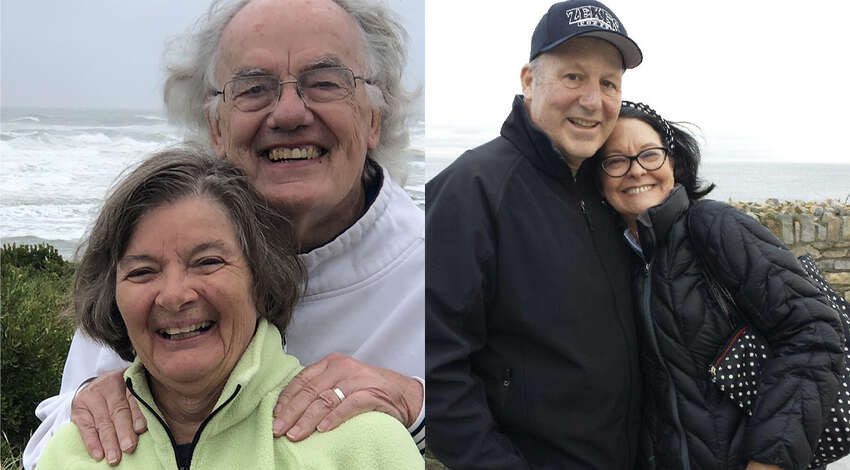
For years, Theresa F. and Liz B. lived parallel lives — carrying out the same quiet, exhausting, deeply loving work in separate homes just minutes apart in the same Connecticut town. They shopped in the same stores, drove along the same roads and, unbeknownst to each other, spent their days caring for husbands who were living with dementia and experiencing the same heartache.
Theresa for John, who was diagnosed with Alzheimer’s disease in 2016. And Liz for Wally, who was diagnosed with vascular dementia in 2013. Each of them learned the same unwritten curriculum — how to carefully bathe and dress their loved ones, how to cut each bite of food into smaller pieces before serving and how to survive the long nights. Both learned these steps, one day at a time.
Had it not been for the hardest chapter of their lives, Theresa and Liz may never have met. In the fall of 2022, within weeks of each other, John and Wally moved into the same memory care unit. Two women who had been carrying the very same invisible weight finally looked up and found someone who understood without needing to be told. A nod in the hallway became a conversation. The conversation became a friendship and the friendship became a lifeline.
And last February, thanks to Road Scholar Caregiver Grants, they shared something neither could have imagined at this point in their lives: a flight to California where they attended a week-long Road Scholar learning adventure in the sunshine. With restored energy, they returned home to Connecticut ready to keep going. This is their story.
Theresa and John
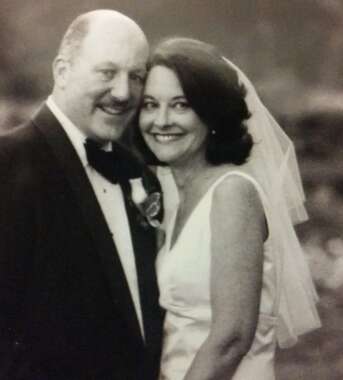
Theresa and John met in 2004 at a conference in San Diego — the kind of chance encounter that sounds like the opening of a novel. She was a bank attorney building a life in Baltimore; he lived in Massachusetts. “We got along great, fell in love and he got me into biking,” says Theresa. Their second date was a charity ride on Martha’s Vineyard. For three years, Southwest Airlines kept them connected until they married in 2007.
“What struck me first about John was what a nice guy he was,” says Theresa. “And that was always John — always worried about other people.”
Neither of them had been married before and Theresa says that changes the whole thing. “You don’t take a single day of it for granted.”
The Slow Goodbye
“Alzheimer’s happens very slowly. It’s the slow goodbye,” Theresa says.
“The change came slowly — a vacant look in his eyes, a question asked twice. On a visit to see John’s family in St. Louis after a year’s time, Theresa started getting questions from relatives. “What’s wrong with John?” they asked me. At a routine physical in January 2016, 59-year-old John was diagnosed with Alzheimer’s disease. Theresa finally had the words to describe what she’d been quietly discounting as tiredness for months.
“She retired that December at age 60 and walked away from a 31-year legal career, gave up her law license, packed up their Massachusetts house and moved them to Connecticut to be closer to John’s family.
“That’s the thing about those with Alzheimer’s — they don’t get better,” she says. “It’s all phases. You go through a certain phase and then you move on to another. It’s like climbing a mountain. The mountain doesn’t move. You have to adapt.” Some mornings, Theresa woke before dawn to help John find the words for what he needed. Aphasia — the inability to find the right words — came early, cruel for a man who loved to chat with everyone.
“By August 2022, she was helping him bathe, dress, eat and use the bathroom. “It was demanding for me, and emasculating for him,” she says.
Liz and Wally: Living in the Moment
A few miles away in the same town, Liz B. was learning the same lessons on a different timeline.
Liz grew up on Long Island and spent 40 years in ministry as an ordained United Methodist elder, much of it working with older adults. She met Wally in 2007 and they married in 2009. A pastor himself before changing careers, Liz describes Wally as “an extremely loving and creative man with a passion for storytelling.”
Wally’s diagnosis came in March 2013, three months before Liz retired from full-time pastoral ministry. He held onto his independence through 2017. Theater and movies grew too hard to follow, the plots slipping away before the second act. But music never left them. “Music was something that was immediate. It gave us great pleasure,” explains Liz. “We never knew what the next stages might be, so awareness and abilities changed from day to day.”
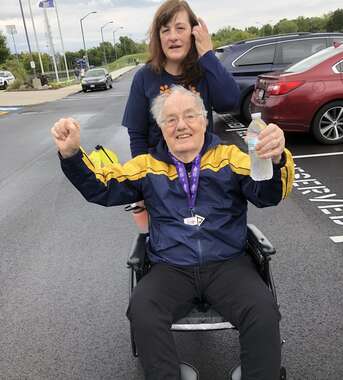
But major back surgery followed by the isolation of the pandemic, accelerated his condition. “As he progressed, Wally didn’t want anyone else in the house doing the caregiving, and he hated the daycare settings we tried. One by one, the options fell away,” says Liz. “So, I was pretty much it.” A fall in October 2022 sent Wally to the hospital, then to rehabilitation, and finally to the skilled nursing facility where he lives now.
“When I visit him, it’s all about what he’s able to do or express in that day or hour,” says Liz. “I take the moment for the moment. I can’t look back or ahead. As long as I stay in the moment, I’m okay.”
“Wally responds to music, and to the word ‘love’,” explains Liz. “I don’t know if he knows me or not — but he responds to 'love,’ and that’s what I’m there for.”
A Serendipitous Meeting
Their husbands arrived at the same memory care unit about a month apart — a coincidence of timing that neither woman thought much about at first. But Theresa and Liz kept crossing paths in the hallways and at the dining tables.
“I visit John daily to feed him lunch or dinner,” says Theresa. “He’s in a wheelchair now, non-communicative and needs help with everything.” Those visits are the anchor of her days. But in all those hours, she also got to know the other residents down the hall, around the corner — many of whom have few visitors, or none.
Theresa started helping with the Sunday worship service led by Liz, who after four decades in ministry, saw a need and began holding services for the residents living with dementia.
As it turned out, the two women had far more in common than the obvious. Both married later in life. Both know exactly what that does to a person’s gratitude — and, eventually, to their grief.
“When you marry later in life, you really appreciate marriage,” Theresa says. “It’s not a burden. It’s wonderful. You’re so glad to have this wonderful person in your life who cares so deeply for you. It’s hard to lose that spouse and become almost like a singleton again.”
Together, they watch other families arrive, settle in and eventually stop coming. Over three years, residents have passed away. It’s a reality and it’s sad, and none of it gets easier — but it is lighter when someone standing beside you knows precisely what you mean, without you having to explain a single word of it.
“Did You Know Road Scholar Offers Grants for Caregivers?”
Liz first learned about Road Scholar’s Caregiver Grants in a Facebook support group for caregivers. She went to the website, read about Road Scholar Caregiver Grants — financial assistance that allows family caregivers to step away for a learning adventure of their own — and thought it was one of the best ideas she’d heard in years.
She already knew the organization well. Her brother and sister-in-law are Road Scholar Ambassadors, and in October 2019 she and Wally traveled with Road Scholar to Canyon de Chelly, learning about Navajo culture and history from the people who carry it. She still talks about that experience — the way the canyon walls hold centuries of story, the way learning something new alongside the person you love changes both of you a little.
So, one afternoon that fall, sitting in the place where the two of them spend nearly every day, she turned to Theresa and asked if she’d want to apply, too. “I was surprised and really impressed that Road Scholar was doing that.”
Completing the application, Theresa found herself writing down, for the first time in one place, everything caregiving actually involves: the daily visits to feed John lunch or dinner, the years of care at home before that, the worship services and the singalongs, the informal caregivers’ group she facilitates once a month, the individual caregivers she mentors, the monthly support group she attends at Yale. Seeing it all on the page at once was its own kind of revelation.
Liz’s application was characteristically direct about why she chose the program she did. “I love the educational mission of Road Scholar that elevates travel to an experience beyond tourism,” she wrote. “This year is the first that I have given myself permission to be away occasionally for longer periods of time.”
Permission. After four decades of ministry and years of caring for Wally, that was the thing she’d been withholding from herself.
Word came back quickly. Both women received grants.
“I was astounded,” Theresa says. “It’s so wonderful — like somebody gave me a huge hug.”
The Best of California in the Middle of a Connecticut Winter
Theresa and Liz chose The Best of California: The Reagan Library to the Channel Islands for their learning adventure. “It was wonderful and had everything,” Theresa says. “History, nature and art.”
Liz and Theresa spent a full day on Santa Cruz Island, part of Channel Islands National Park, with expert naturalists, boots on the trail and sun on their shoulders. Theresa was captivated by how animals evolve into smaller sizes on islands — and all the fascinating reasons why. Liz, a history major by training, came away understanding how the islands themselves were formed and how their endemic wildlife exists here and nowhere else on earth.
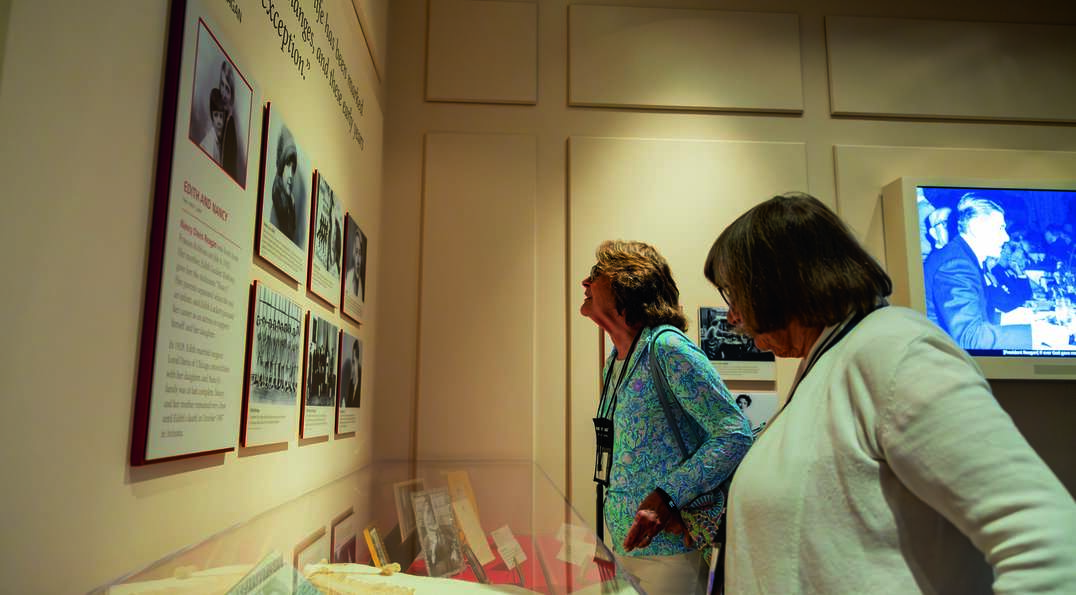
“The Ronald Reagan Presidential Library really knocked my socks off,” says Theresa. It also landed closer to home than she expected. She followed Reagan’s life from birth through his California years — the Screen Actors Guild, radio, television, the campaigns, the presidency. And then came the part that stopped her: Reagan’s own Alzheimer’s diagnosis, which he chose to make public, and Nancy Reagan’s determined push for research funding in the years that followed.
There are moments on a learning adventure when the history on the wall meets the life you’re living. This was one of them.
And then there were their fellow participants. “They’re all adventuresome — no sticks in the mud,” Theresa laughs.
Returning Home Recharged
Theresa and Liz flew home to a couple of feet of fresh snow on the ground in Connecticut. They didn’t mind.
“This experience has revived me, energized me, given me a very positive outlook. I’m recharged,” says Theresa. “It made it seeing John at the nursing home easier.”
Liz felt the same shift. Wally didn’t understand that she was away or for how long it was, but she shared the adventure with him in the ways she could. “I returned with a new energy level,” she says. “The problem with caregiving is it starts taking over your entire life. And even though other people say, ‘let me know what I can do to help,’ it’s hard to ask for help,” explains Theresa.
“I Would Do It All Again”
Theresa visits John nearly every day. She still cuts his food up into tiny pieces and feeds him lunch or dinner. She still stops to talk with the residents down the hall and she still helps Liz with the Sunday service. And she still tells John the same thing. “John, I love you so much, and I would do it all again. Because I just love you.”
“He’s the best thing that’s ever happened to me,” Theresa says. “My sweet husband.”
Filled With Gratitude
“To the generous donors — thank you so much,” Theresa says. “It’s like a big warm hug to know that people care and understand what we’re going through, and that we need a break. You can really make a difference in a caregiver’s life. It is so easy to burn out. It really is.”
Liz’s message is brief and pointed: “There are so many people out there who could use this kind of break,” she says. “For me, it’s been refreshing and given me new energy and new insights.”
Join Our Conversation
We welcome all caregivers in search of a supportive online community to join the conversation on our new Family Caregivers Discussion Group on Facebook! Connect with other caregivers, share stories, offer recommendations and ask questions. We’ve created this group just for caregivers!