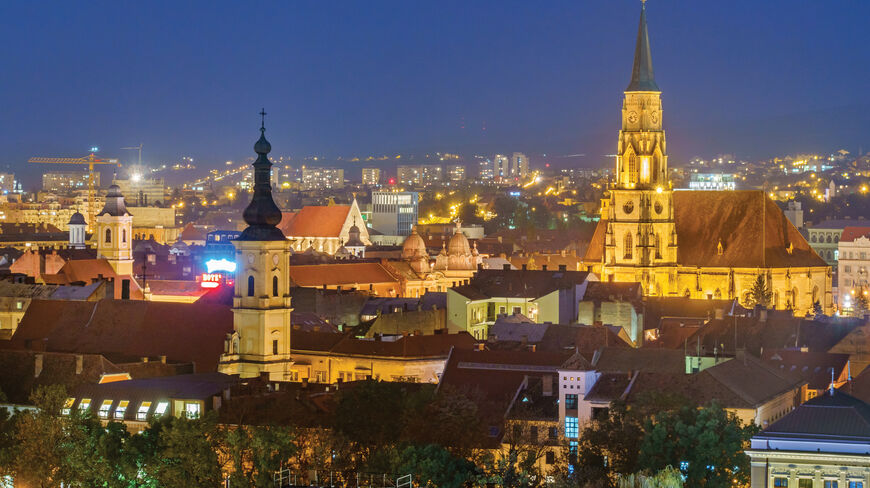
Romania Uncovered: Castles, Legends & Unexpected Friendships

- Initially, Road Scholar Rose wasn’t sure what to expect when visiting Romania. But after discovering a learning adventure that brought her to Bran Castle, linked to the legend of Dracula, she was hooked!
- Rose quickly found camaraderie with her fellow Road Scholars and their Group Leader, who was able to offer personal stories to illustrate the different sites they visited across Romania.
- By the end of her program, Rose was left inspired by the historic towns and sites, dramatic Carpathian Mountains, painted monasteries and — of course — Bran Castle!
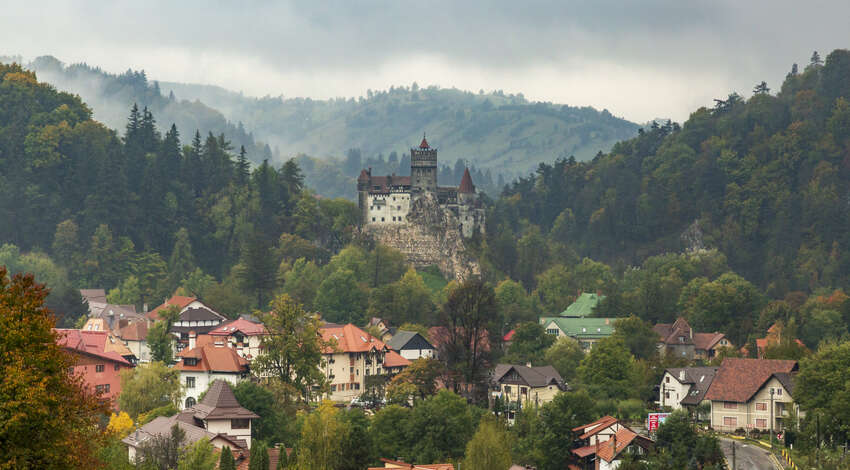
Forget everything you think you know about Eastern Europe. Romania is a land of fairytale castles, layers of communist history and the kind of unexpected charm that rewards curious explorers.
My adventure to this remarkable country began with a simple text from my close friend Bob: “Would you go to Romania?” My immediate response was honest and uninformed: “Romania? What’s in Romania?” As it turns out, that was a wonderfully open-ended question.
Finding the Perfect Program
Bob sent me the link to the Road Scholar program Treasures of Romania: Enchanting Castles and Painted Monasteries. Once I started reading the itinerary, I was hooked. The sites sounded fascinating, but one city immediately caught my attention — Brasov, home to Bran Castle, often linked to the legend of Dracula. Truthfully, that single stop was all it took for me to say an enthusiastic “YES!” — Romania was officially on my list.
Our excitement grew and soon we invited another friend, Madra, to join us. Before we knew it, the three of us were preparing to share an adventure in Romania together. That’s one of the things I love most about experiencing the world with Road Scholar. You can travel solo, or you can bring good friends along, all while knowing the details and logistics are thoughtfully handled for you.
Planning Our Travel
Because we were all departing from different parts of the East Coast, we decided to book our own airfare. Road Scholar does help with flights and transfers, but as experienced travelers, we felt comfortable managing it ourselves. After a flurry of texts, emails and phone calls, we coordinated flights that landed in Bucharest around the same time. Mission accomplished!
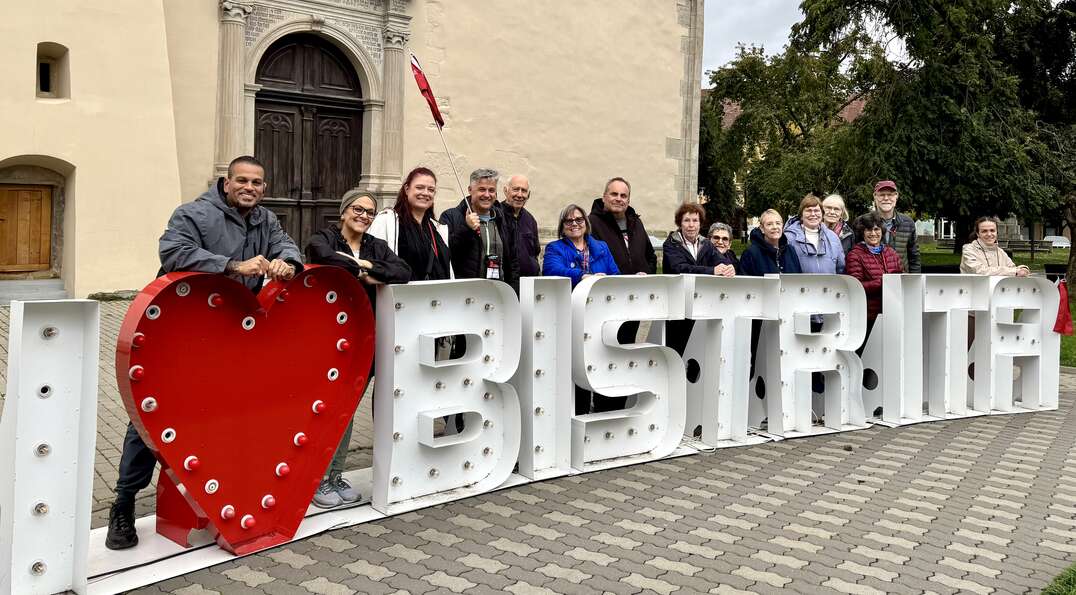
Our group.
Doing your homework before experiencing another country is always important, and Romania was no exception. Before leaving the U.S., we familiarized ourselves with the currency and local taxi system and learned that Uber was readily available from the airport. We also reviewed the hotel information provided in our Road Scholar information packet, another area where Road Scholar truly shines.
Arrival and First Impressions
When we arrived, all three of us landed at nearly the same time and met the Road Scholar representative at the airport, who was also picking up two participants, Jackie and Joe, arriving from California. It was a happy coincidence that allowed us to connect before our official “meet and greet” later that evening. They were first-time Road Scholars, and since we had participated before, we were able to help answer questions alongside the representative. It felt good to pay that experience forward.
Our orientation and welcome dinner exceeded my expectations. There were 13 participants in our group, representing different corners of the U.S., and many, like us were seasoned Road Scholar alumni. Our new friends from California shared an unforgettable detail — they had won this program on the television game show “Wheel of Fortune”! Even more amazing, it was their first time traveling outside the country. Listening to their excitement and curiosity reminded me just how special travel can be, especially when shared with others.
Meeting Our Group Leader
Our Group Leader, Árpád Furu, set the tone immediately. Warm, welcoming and deeply knowledgeable, Árpád has led more than 60 Road Scholar programs since 1997 throughout Romania, Hungary and Slovakia. He shared that working with Road Scholar has given him a fresh perspective on his own country by seeing it through the eyes of those discovering it for the first time. From the very beginning, it was clear we were in excellent hands, and the adventure was just getting started.
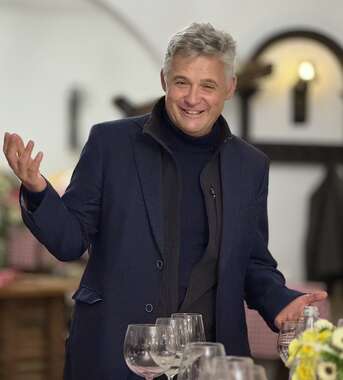
Group Leader, Árpád Furu.
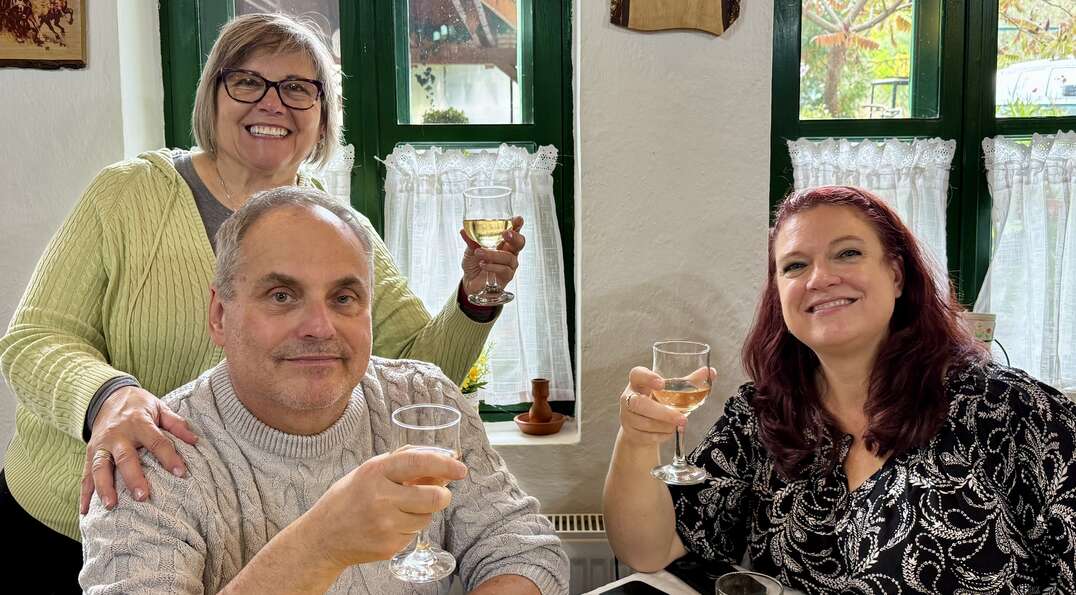
Rose, Bob and Madra.
Exploring Bucharest
That first evening set the tone for everything that followed. Shared stories, new friendships and the thrill of discovering a country few of us truly knew brought the group together quickly. The next morning, we began our walking exploration of Bucharest. The weather was cold and rainy, but it was easy to spot our group thanks to Jackie’s “Wheel of Fortune” umbrella.
The weather did not dampen our sense of adventure as we learned about Romanian history. We explored the Parliament and the Royal Palace area, but the most moving site we visited was Revolution Square. It’s not just a physical space, but rather a powerful testament to Romania’s turbulent past and transformation. This iconic square witnessed some of the most significant moments in the country’s history, particularly the dramatic events of the 1989 Revolution, which marked the fall of the communist regime and the beginning of a new era. Standing there, we learned that Árpád and his family had lived through both the communist regime and its fall. He was open to all questions and shared what it was like to stand in long lines for food and to live in a struggling economy during those years. That personal connection brought history to life in a way no textbook ever could.
Across Romania to Brasov
Our travels through the country brought us to Sinaia, Moldavia, Rădăuți, Cluj and Bran Castle, a journey that winds through the Carpathian Mountains to Brașov. This castle and the lore of Dracula were the sparks that ignited my interest in this program. Both Bob and I prepared ourselves by reading Bram Stoker’s “Dracula,” written in 1897. For its time, the novel was terrifying, and some thought it contained too much horror.
Stoker took the name Dracula from William Wilkinson’s Romanian history of Wallachia and Moldavia, published in 1820, which he probably found at Whitby’s public library near London while holidaying there in 1890. He copied a footnote from the book that explained that Dracula means “devil” and that Wallachians often used it as a surname for someone known for courage, cruel actions or cunning.
There were many vampire fiction novels available to Stoker to help with his writing. During the 1700s, long before “Dracula” was published, Europe experienced a period of vampire obsession, and many countries had longstanding superstitions about them. The literary works that emerged during this time show that the concept of Dracula was not unique to Stoker. Stoker died in 1912 without knowing how popular his fictional count would become. It was his wife who later sold the rights to the Dracula story. The best-known film adaptation, a classic horror romance, was released in 1931 and starred Bela Lugosi as the undead master of his castle. His long dark cape and formal white attire became the image that shaped how generations would imagine a vampire. The rooms upstairs in the castle are dedicated to preserving the legend of Count Dracula and the folklore of vampires — and the cape is on display.
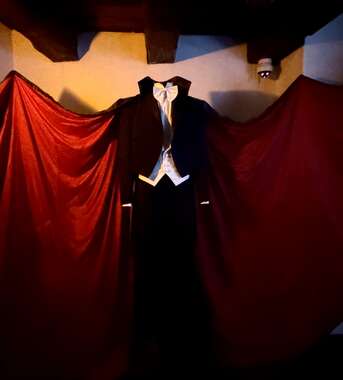
Dracula's cape.
Reflections on Romania
Romania surprised me at every turn. From the lively streets of Cluj to the timeless charm of Bistrița, the UNESCO World Heritage painted monasteries and the misty Carpathian Mountains leading to Bran Castle, the country is rich with history, beauty and unexpected moments. Along the way, friendships formed easily through shared meals, meaningful conversations and stories exchanged across cultures. Travel is more than sightseeing; it’s about connection, curiosity and adventure. Romania left me inspired, deeply grateful for the friendships made and already dreaming of my next adventure.
Guest Author
After 20 rewarding years in development for nonprofits, Rose V. is now embracing the joys of retirement and travel. As a Road Scholar Ambassador, she enthusiastically shares Road Scholars’ mission of inspiring adults to learn, discover and travel!
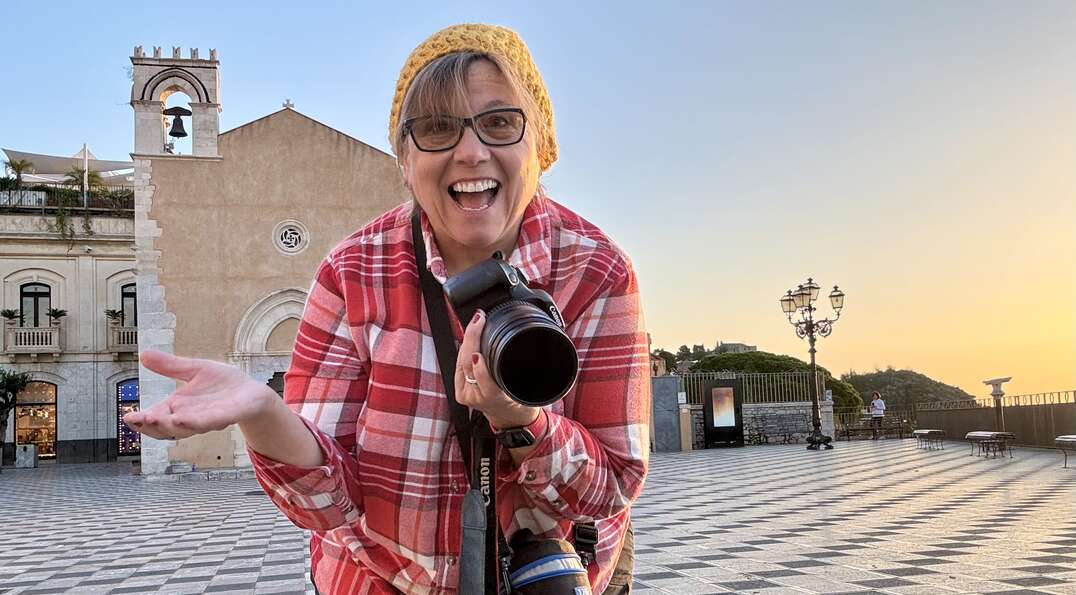
Rose Vigda.