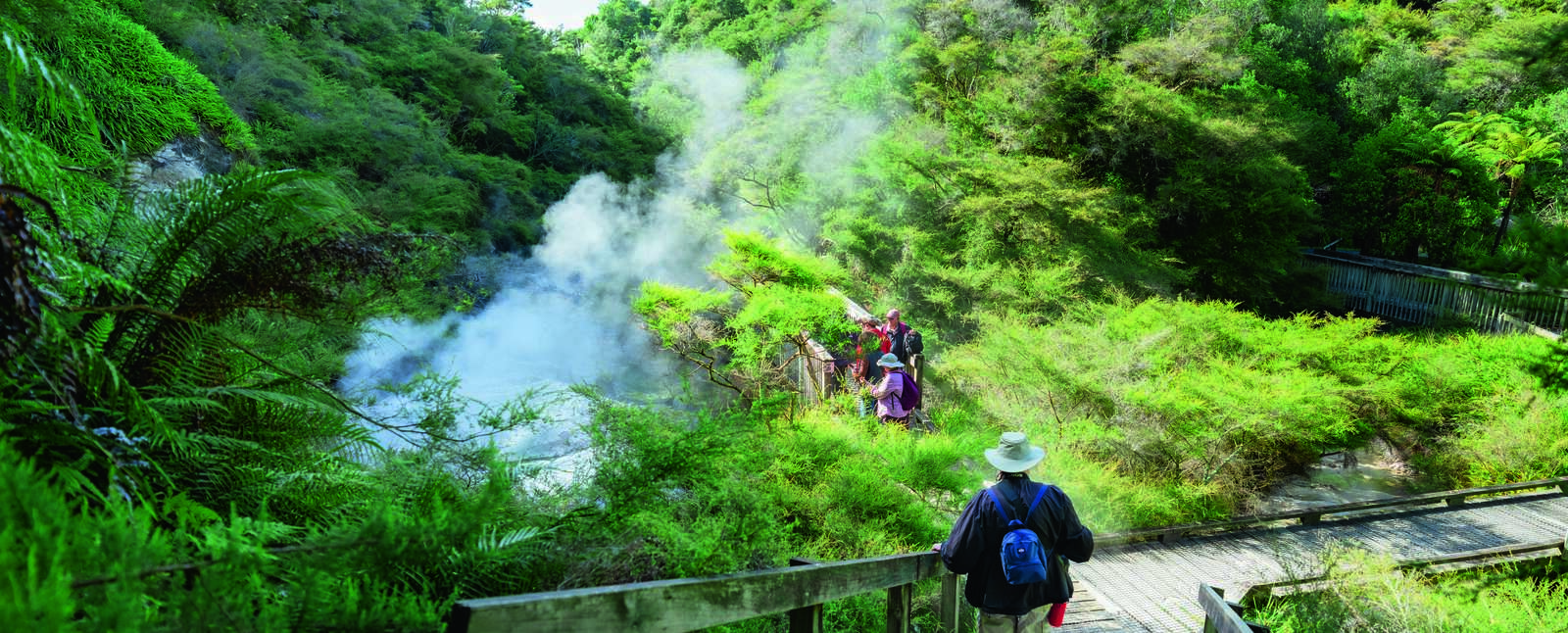
Experiencing Welcome in New Zealand

- When Road Scholar Priscilla D. arrived at the airport in New Zealand, she was struck by the values of hospitality and welcome exhibited to travelers from around the world.
- These values extended throughout Priscilla’s exploration of New Zealand and stood out to her as she experienced traditional greetings and ways of life across the country.
- Priscilla even noticed the details of a scoop of ice cream or a cup of coffee that connected with local New Zealand pride and regional customs, making hospitality a thing to be experienced, not just felt.
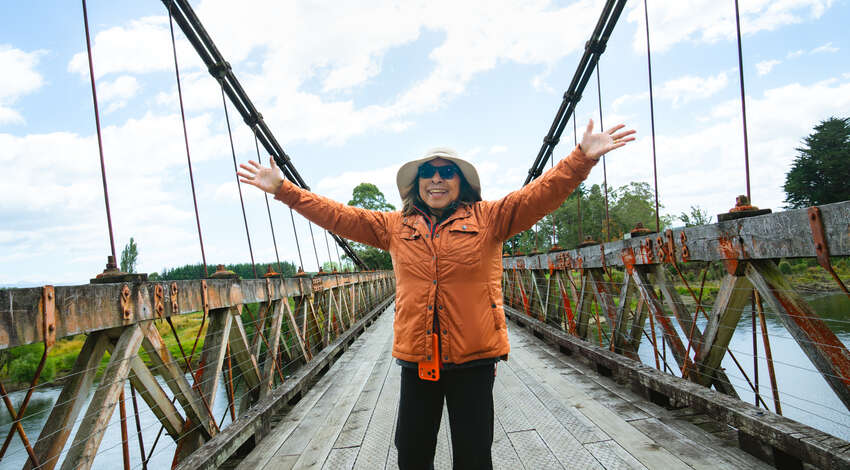
The welcome begins before you ever leave the airport. Carved in wood and framed by Māori symbolism, a sign greets arriving visitors: Nau mai. Haere mai.
Welcome. Welcome. Welcome.
The inscription explains that the Tainui people join with the people of Aotearoa in welcoming visitors and offering a prayer that enjoyment, enlightenment, friendships and a safe journey accompany them. It is not marketing language — it is a statement of values.
The Value of Hospitality
The seriousness of those values becomes clear immediately. Visitors are reminded that the land matters here. Bring fruit, seeds, plants or soil into the country — even unintentionally — and the fine is $400. Biosecurity is taken seriously on islands where fragile ecosystems have evolved over centuries.
Another instruction arrives before the adventure even begins: no tipping. Service is not something to be coaxed or purchased. It is simply part of the culture.
And then our Road Scholar Group Leader taught us Kia ora. It is usually translated as hello, but the meaning is deeper: be well, have life. You hear it in cafés, on buses, in shops and on walking trails. The greeting carries warmth and relationship — a small moment of recognition between strangers.

The Value of Greetings
In Māori culture, there is also the hongi, a greeting in which two people gently touch foreheads and noses, sharing breath. In Wellington, I copied a photograph of leaders greeting a visiting head of state this way — an embodied gesture of recognition before any formal business begins. The practice reminded me of other cultures I visited where greetings carry deeper meaning.
- In South Africa, the Zulu greeting Sawubona means I see you. The response, Ngikhona, means I am here.
- In Hawaii, Aloha is often translated simply as hello or goodbye, but the word carries the idea of sharing the breath of life.
- In Tahiti, people say Ia ora na, another Polynesian phrase centered on life itself: may you live, may you have life.
These greetings are not casual words. They are lived expressions — embodied meanings that create relationship. Recognition comes first. Relationship follows. Trust must be earned.
As I began thinking about these greetings, I wondered about our own. What does hello actually mean? The answer surprised me: The word did not originally carry warmth or recognition at all. It was simply an exclamation used to get someone’s attention — the equivalent of saying, Hey, are you there? When the telephone was invented in the nineteenth century, Thomas Edison promoted “hello” as the way people should answer the phone, and the habit stuck. Compared with Kia ora, Aloha or Sawubona, the word suddenly felt thin.
The Value of Details
That realization stayed with me as I traveled through New Zealand. The feeling of welcome was not just in language. It appeared in small details everywhere.
Even in the ice cream: Dairy reigns in New Zealand, and the ice cream shops treat the craft with pride. A scoop of fresh ice cream is placed into a metal cup, and then fresh fruit — strawberries, raspberries, blueberries — are folded directly into the ice cream before the mixture is lifted and placed onto a freshly baked sugar or waffle cone. No candy is rolled in.
I know what you might be thinking: We have great ice cream in the United States, too. I agree. But here’s the difference: At home you often have to go searching for it. In New Zealand, it seems to be everywhere — simple, fresh and made with obvious pride. Standing there with a cone in hand, I remembered the slogan on the ice cream truck that used to come through my local park: “You are always happy eating ice cream.” I would add something else. You can’t rush it either. One lick after another, you are suddenly present and happy.
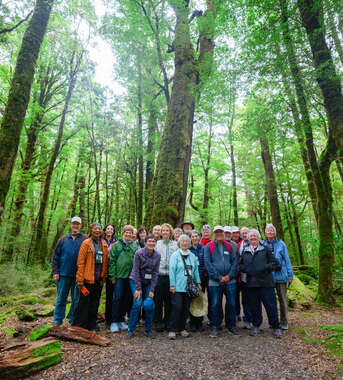
The same quiet thoughtfulness appears in another place travelers quickly learn to appreciate. Public restrooms are abundant in New Zealand — clean, clearly marked and easy to find. I know what you may be thinking: Toilets? Exactly. In many places, the search begins the moment you need one. In New Zealand, the question rarely arises because someone has already thought about it for you. Clear signs point the way.
And then there’s the coffee. Coffee is taken seriously in New Zealand. Beans are ground fresh, and each cup is prepared individually — a careful pour, never rushed. There’s also a cultural detail visitors quickly learn: Coffee with milk is considered a morning drink. Ordering a cappuccino after dinner risks a gentle but unmistakable raised eyebrow.
But if you would like dairy and coffee together, New Zealand has a delightful solution: an affogato — a scoop of ice cream “drowned” in a hot shot of espresso poured over the top.
The Value of Experience
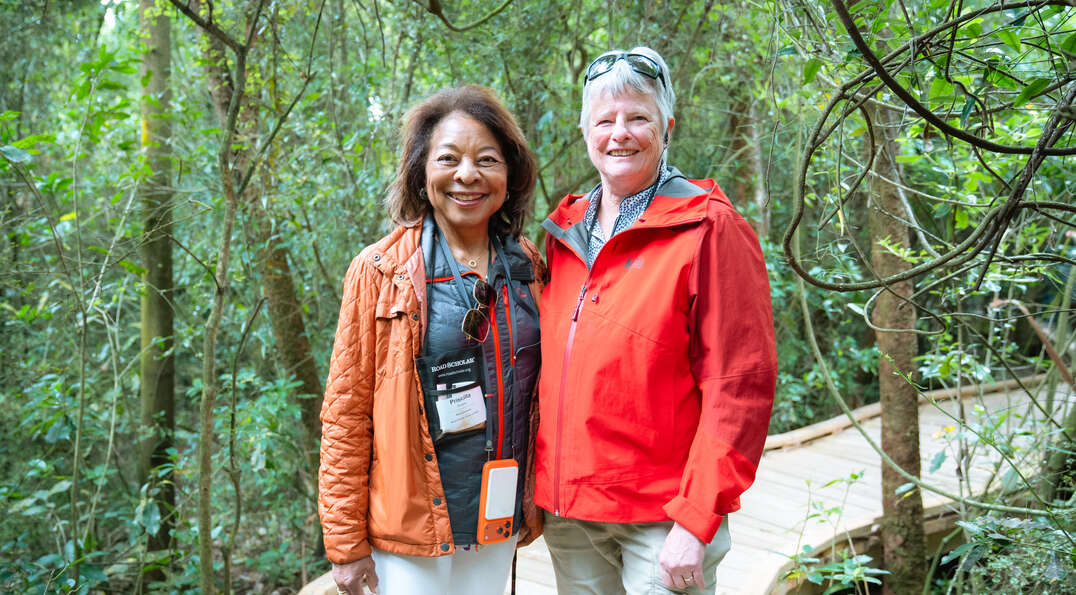
The deeper I thought about it, the more I realized that the welcome I felt in New Zealand was not confined to words. Greetings like Kia ora begin with life — be well, have life. That recognition seems to ripple outward into everyday decisions. The land is protected with care. Public toilets are easy to find and thoughtfully maintained. Ice cream is made with fresh fruit folded into the scoop before it reaches the cone. Coffee is prepared one cup at a time.
None of these details are dramatic on their own. But together, they reveal something important. When I first saw the carved Māori welcome at the airport, it promoted enjoyment, friendships, enlightenment and a safe journey. At the time, I took the words as a gracious greeting. Only later did I realize the enlightenment had already begun.
Feeling welcome is a lived experience.
Dr. Priscilla H. Douglas is an executive coach, speaker, author and lifelong learner who has traveled with Road Scholar from Alaska to Bhutan to Costa Rica and many places in between. Recognized by Boston magazine as one of the city's Most Influential Bostonians, she serves on the boards of leading arts, cultural, educational and science institutions. When friends ask if she is traveling alone, she smiles and replies, “No, I'm going with Road Scholar.” Through her Substack, PHD2025, she reflects on experiences around the world that invite deeper attention, generous listening and discovery at every age.