
Florida
Signature City St. Augustine
Program No. 6642RJ
See More Photos
Signature City St. Augustine
Signature City St. Augustine
1 of 8
Itinerary
While we make every effort to ensure the accuracy of our published materials, programs are typically advertised more than a year prior to their start date.
Read More.
While we make every effort to ensure the accuracy of our published materials, programs are typically advertised more than a year prior to their start date. As a result, some program activities, schedules, accommodations, personnel, and other logistics occasionally change due to local conditions or circumstances. Should a major change occur, we will make every effort to alert you. For less significant changes, we will update you during orientation. Thank you for your understanding.
Duration
6 days
5 nights
What's Included
Included
11 meals (
5B, 3L, 3D
)
6 expert-led lectures
11 expert-led field trips
An experienced Group Leader
Taxes and customary gratuity
Road Scholar Assurance Plan
St. Augustine, Florida
Signature City St. Augustine
Feb 14 - Feb 19, 2027
Program Number
6642
Day
1
Check-in, Registration, Orientation, Welcome Dinner
Location:
St. Augustine, Florida
Meals:
D
Stay:
Renaissance St. Augustine Historic Downtown
Activity Note
Hotel check-in from 4:00 p.m. Remember to bring your nametag (sent previously).
Afternoon:
Program Registration will take place from 4:00-5:00 p.m. in the conference room. At this time you will register with the program staff and get your welcome packet and up-to-date schedule that reflects any last-minute changes, other important information, and to confirm when and where the Orientation session will take place. If you arrive late, please ask for your packet when you check in.
Orientation. The Group Leader will greet everyone and lead introductions. We will review the up-to-date program schedule, discuss roles and responsibilities, logistics, safety guidelines, emergency procedures, and answer questions.
Periods in the daily schedule designated as “Free time” and “At leisure” offer opportunities to do what you like and make your experience even more meaningful and memorable according to your personal preferences. The Group Leader will be happy to offer suggestions.
Program activities, schedules, personnel, and indicated distances or times may change due to local circumstances/conditions. In the event of changes, we will alert you as quickly as possible. Thank you for your understanding.
Orientation. The Group Leader will greet everyone and lead introductions. We will review the up-to-date program schedule, discuss roles and responsibilities, logistics, safety guidelines, emergency procedures, and answer questions.
Periods in the daily schedule designated as “Free time” and “At leisure” offer opportunities to do what you like and make your experience even more meaningful and memorable according to your personal preferences. The Group Leader will be happy to offer suggestions.
Program activities, schedules, personnel, and indicated distances or times may change due to local circumstances/conditions. In the event of changes, we will alert you as quickly as possible. Thank you for your understanding.
Dinner:
In the hotel meeting room.
Evening:
At leisure. Continue getting to know your fellow Road Scholars, settle in, and get a good night’s rest for the day ahead.
Day
2
Before the Europeans, Historic District
Location:
St. Augustine, Florida
Meals:
B,L
Stay:
Renaissance St. Augustine Historic Downtown
Activity Note
Boarding/disembarking a trolley. Walking up to 2 miles, sometimes on uneven terrain; stairs (no elevator) at the Oldest House.
Breakfast:
At the hotel.
Morning:
Following breakfast, we'll hear a presentation about the first settlers to the area, the Timucuas, who called Northeast and North Central Florida and Southeast Georgia their home. It is believed that the Timucuas may have been the first Native Americans to see the Spanish explorers when they landed in Florida. At the time of the European contact it is believed this was home to a thriving community of 200,000+ Timucuas. From 1649-1656, the population began to diminish. War with the English and other Indians decreased their numbers and a series of epidemics further diminished their population, the major one being smallpox. In fewer than 250 years the Timucuas completely disappeared.
Following this lecture by a local historian, you will take a guided orientation walk through the historic district.
Following this lecture by a local historian, you will take a guided orientation walk through the historic district.
Lunch:
At a local restaurant in the historic district.
Afternoon:
After lunch, an open-sided trolley will take us for a non-stop narrated exploration of the Historic District. In this city occupied since the 1600s, we’ll see evidence of the Spanish, British and American occupations of St. Augustine and gain insight as to how people from each period may have lived.
The guided trolley ride ends at the González–Alvarez House, also known as The Oldest House, where a docent will lead a guided tour. The González–Alvarez House, is now an historic museum. With a construction history dating to about 1723, it is believed to be the oldest surviving home in St. Augustine. It is also an important example of St. Augustine's Spanish colonial architectural style, with later modifications by English owners. It was designated a U.S. National Historic Landmark in 1970 and is now owned by the St. Augustine Historical Society.
The guided trolley ride ends at the González–Alvarez House, also known as The Oldest House, where a docent will lead a guided tour. The González–Alvarez House, is now an historic museum. With a construction history dating to about 1723, it is believed to be the oldest surviving home in St. Augustine. It is also an important example of St. Augustine's Spanish colonial architectural style, with later modifications by English owners. It was designated a U.S. National Historic Landmark in 1970 and is now owned by the St. Augustine Historical Society.
Dinner:
This meal has been excluded from the program cost and is on your own to have what you like. The Group Leader will be happy to offer suggestions within easy walking distance of our hotel.
Evening:
At leisure.
Day
3
History, Castillo Fort, Spanish Hospital, Lincolnville
Location:
St. Augustine, Florida
Meals:
B,L,D
Stay:
Renaissance St. Augustine Historic Downtown
Activity Note
Walking up to 2 miles; some stairs, uneven terrain, especially at the Fort. Standing in museums can be up to an hour.
Breakfast:
At the hotel.
Morning:
We’ll begin the morning in our meeting room for an historical overview of St. Augustine’s European era and the Castillo (Fort). Our presenter is a former Interpretive Park Ranger at the Castillo.
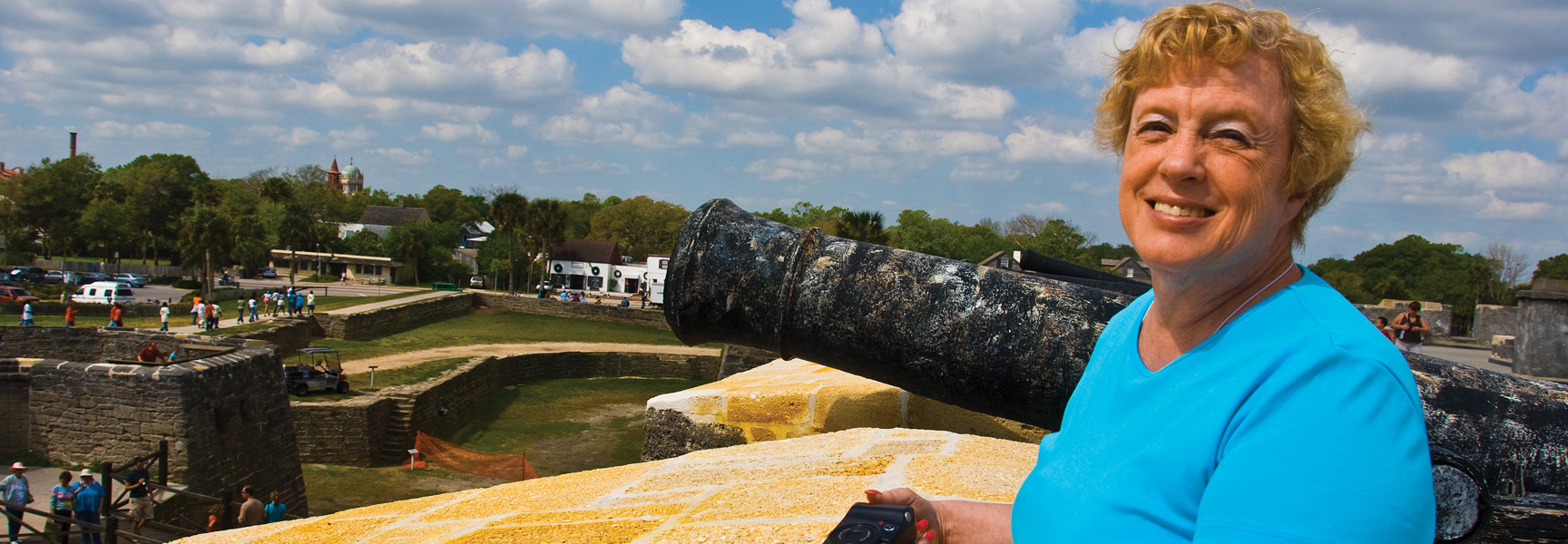
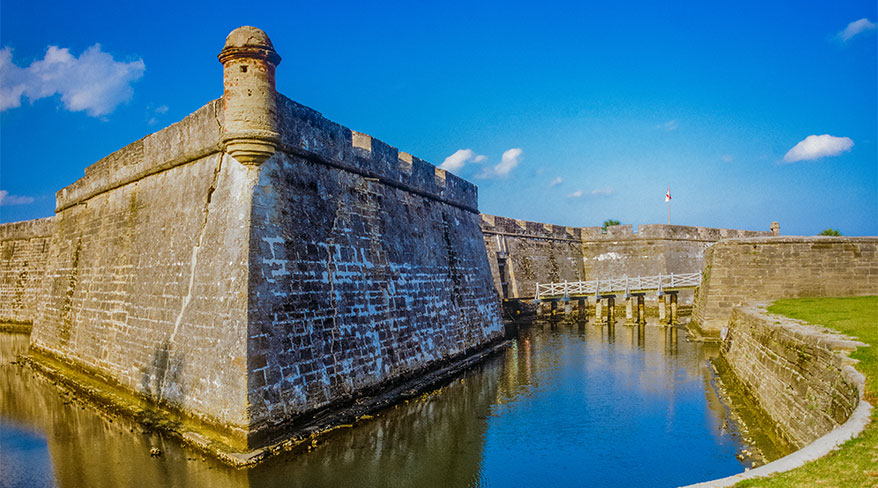
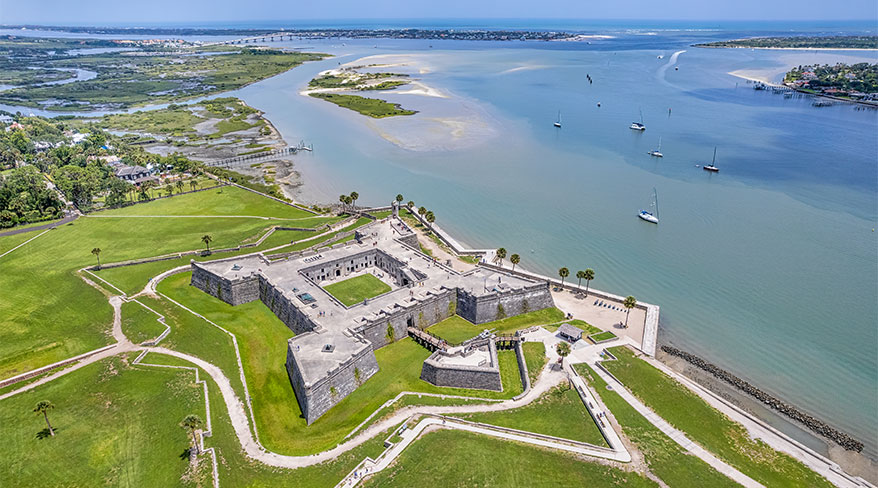
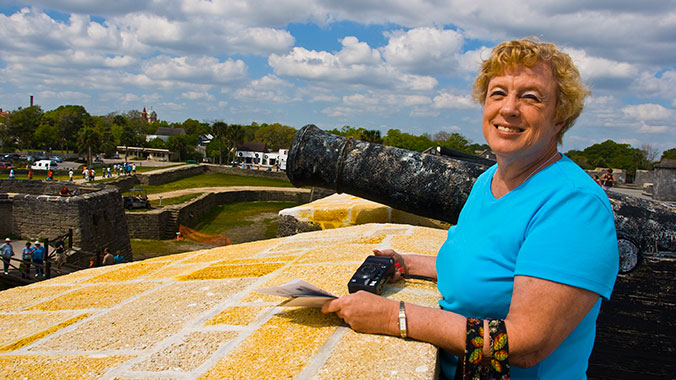
At the conclusion of the lecture, we’ll walk to the Historic District and Castillo de San Marcos. The Castillo is a monument not only of stone and mortar but of human determination and endurance. It symbolizes the clash of cultures which ultimately resulted in our uniquely unified nation. Still resonant with the struggle of an earlier time, these walls provide tangible evidence of America’s remarkable history. After visiing the Castillo, we will take a short ride to the Lincolnville Museum. There, you will learn about St Augustine's 450 year African American story.
At the conclusion of the lecture, we’ll walk to the Historic District and Castillo de San Marcos. The Castillo is a monument not only of stone and mortar but of human determination and endurance. It symbolizes the clash of cultures which ultimately resulted in our uniquely unified nation. Still resonant with the struggle of an earlier time, these walls provide tangible evidence of America’s remarkable history. After visiing the Castillo, we will take a short ride to the Lincolnville Museum. There, you will learn about St Augustine's 450 year African American story.
Lunch:
At a local restaurant.
Afternoon:
After lunch, we’ll head to the Spanish Military Hospital Museum, where we’ll watch live demonstrations of 18th-century surgical techniques and traditional apothecary methods. We’ll explore how licensed physicians and apothecaries used early scientific knowledge, herbal remedies, and period surgical tools to care for patients during Florida’s Second Spanish Period.
Dinner:
At a local restaurant.
Evening:
At leisure.
Day
4
Menorcan History, Maritime Museum, Free Time
Location:
St. Augustine, Florida
Meals:
B
Stay:
Renaissance St. Augustine Historic Downtown
Activity Note
Boarding/disembarking an enclosed bus multiple times during field trips. Walking up to 2 miles; some stairs, uneven terrain.
Breakfast:
At the hotel.
Morning:
We’ll be joined this morning by a local expert who will give a presentation on Menorcan history and culture. Menorca (or Minorca) is one of the Balearic Islands off the coast of Spain. During the 1760s, some influential Europeans believed Florida’s climate would be suitable for crops such as grapes, olives, and oranges. They began recruiting colonists from among those they felt would be suited to both the climate and the crops, primarily Greeks and Italians. More than 1,400 people including Corsicans, French, and Menorcans, left the Mediterranean in 1768 and sailed for Florida. We’ll hear their story. After a short break, we'll ride to the historic St. Augustine Lighthouse and Maritime Museum. Here we will enjoy a lecture by a nationally- renowned maritime archeologist and explore the museum.
Lunch:
This meal has been excluded from the program cost and is on your own to enjoy what you like. The Group Leader is happy to offer suggestions.
Afternoon:
Free time. This period of time has been set aside for your personal independent exploration to see and do what interests you most. Please refer to the list of Free Time Opportunities. The Group Leader will be happy to offer suggestions. Please note that the period scheduled for free time is subject to change depending on local circumstances and opportunities for independent exploration.
Dinner:
On your own.
Evening:
At leisure.
Day
5
Flagler College, Lightner Museum, Evening Cruise
Location:
St. Augustine, Florida
Meals:
B,L,D
Stay:
Renaissance St. Augustine Historic Downtown
Activity Note
Walking up to 2 miles; some stairs (elevator may not be available at all sites), uneven terrain. Getting on/off a cruise pontoon style boat. Some up/down steps.
Breakfast:
At the hotel.
Morning:
Henry M. Flagler's legacy as railroad tycoon, hotelier, and "Father of Tourism" is deeply appreciated and acknowledged in St. Augustine and the State of Florida. We will meet in the lobby and walk to the grounds of the Lightner Museum and be joined in the historic chapel by one of the first individuals to realize the potential of this titan of industry, the love of his life and first wife, Mary Harkness, in the person of our noted professional actor.
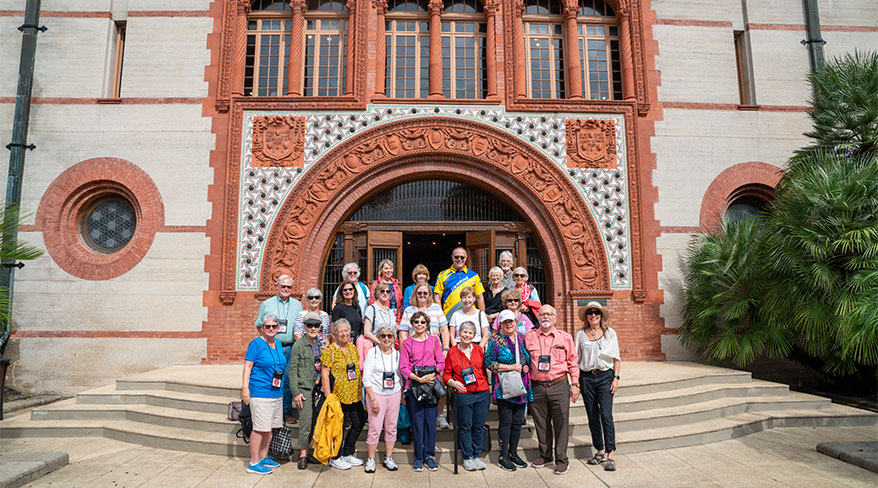
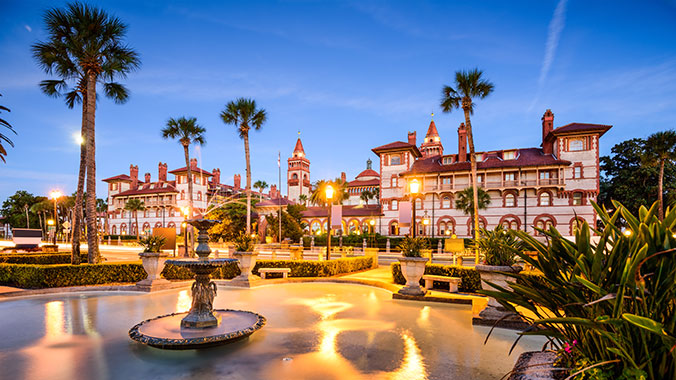
Following that presentation, we will take a short one block walk to Flagler College where we will be treated to an expert-led field trip. We will learn about the history of the buildings and the stunning Spanish Renaissance architecture and manicured gardens of the campus.
Following that presentation, we will take a short one block walk to Flagler College where we will be treated to an expert-led field trip. We will learn about the history of the buildings and the stunning Spanish Renaissance architecture and manicured gardens of the campus.
Lunch:
We will walk a few blocks to lunch at a local restaurant.
Afternoon:
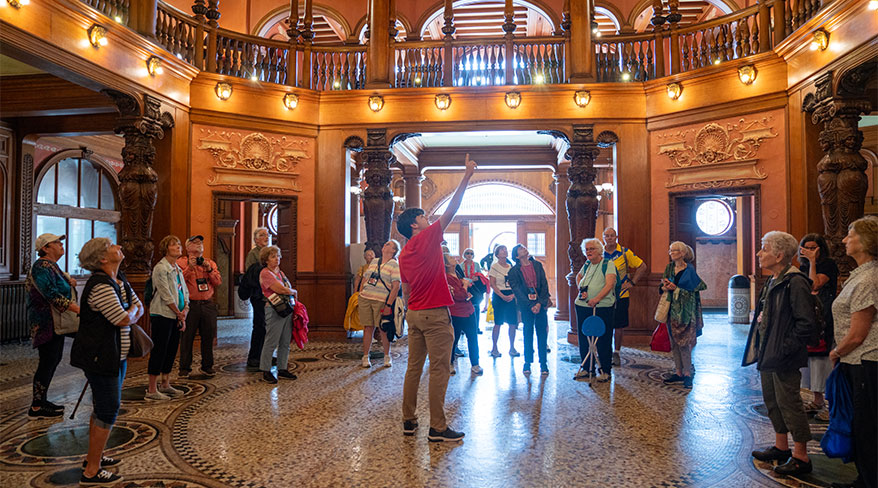
We will spend the afternoon at The Lightner Museum, where our docent guides will share with you the museum's rich past and lead you through select galleries. The Lightner Museum is housed in the former Alcazar Hotel built in 1888 by Henry Flagler. Today it is home to one of the best collections of fine and decorative 19th century art in the country.
At 4:30 pm, we’ll enjoy a relaxed, scenic, sightseeing experience on an afternoon cruise on the Matanzas River.
At 4:30 pm, we’ll enjoy a relaxed, scenic, sightseeing experience on an afternoon cruise on the Matanzas River.
Dinner:
At a local restaurant.
Evening:
At leisure. Prepare for check-out and departure in the morning.
Day
6
Wrap-Up, Program Concludes
Location:
St. Augustine, Florida
Meals:
B
Activity Note
Hotel check-out by 11:00 a.m.
Breakfast:
At the hotel.
Morning:
If you are returning home, safe travels. If you are staying on independently, have a wonderful time. If you are transferring to another Road Scholar program, detailed instructions are included in your Information Packet for that program. We hope you enjoy Road Scholar learning adventures and look forward to having you on rewarding programs in the future. Don’t forget to like our Facebook page and follow us on Instagram. Best wishes for all your journeys!
Please select a day to update the map
Map details are not available for this location.