
Egypt
Egypt by Sun & Shadow: A Solar Eclipse Voyage on the Nile
Program No. 25626RJ
See More Photos
Egypt by Sun & Shadow: A Solar Eclipse Voyage on the Nile
Egypt by Sun & Shadow: A Solar Eclipse Voyage on the Nile

1 of 9
Itinerary
While we make every effort to ensure the accuracy of our published materials, programs are typically advertised more than a year prior to their start date.
Read More.
All itineraries and excursions are subject to change. Weather and water conditions may affect the progress of the ship, and we may miss ports if it is not safe to dock. The operators reserve the right to change the content and duration of excursions without prior notice and so the cruise itinerary should always be regarded as provisional. Whenever possible, Road Scholar’s published daily schedule will indicate port arrival and departure times. Prior to departure, if there is a major change, we will make every effort to alert you. For less significant changes, we will update you during orientation. Thank you for your understanding.
Duration
13 days
12 nights
What's Included
31 meals (
11B, 10L, 10D
)
2 expert-led lectures
15 expert-led field trips
5 flights during the program
An experienced Group Leader
11 nights of accommodations
Taxes and customary gratuity
Road Scholar Assurance Plan
Day
1
In Transit to Program
Location:
In Flight
Day
2
Arrive Cairo, Check-in
Location:
Cairo
Meals:
D
Stay:
InterContinental Semiramis Hotel
Activity Note
Hotel check-in from 2:00 p.m. Remember to bring your nametag (sent previously). This program is not suitable for participants using wheelchairs, scooters, walkers, or other mobility assistance devices. The group will be split between two hotels; plaese note that we have to take groups and bed configuration into consideration, when assigning hotels; once your hotel is assigned, it cannot be changed.
Afternoon:
Check in at the hotel, take some time to relax and settle into your room.
Dinner:
On your own.
Evening:
At leisure. Continue getting to know your fellow Road Scholars, settle in, and get a good night’s rest for the day ahead.
Day
3
Orientation,Sakkara Pyramid, Citadel, Local market
Location:
Cairo
Meals:
B,L,D
Stay:
InterContinental Semiramis Hotel
Activity Note
Getting on/off a bus. Walking up to 3 miles, approximately 2 hours, standing up to 2 hours at a time; uneven stone blocks, steps, and slope to climb. It could take up to 30 minutes standing at each site in hot conditions under the sun with no shade.
Breakfast:
At the hotel.
Morning:
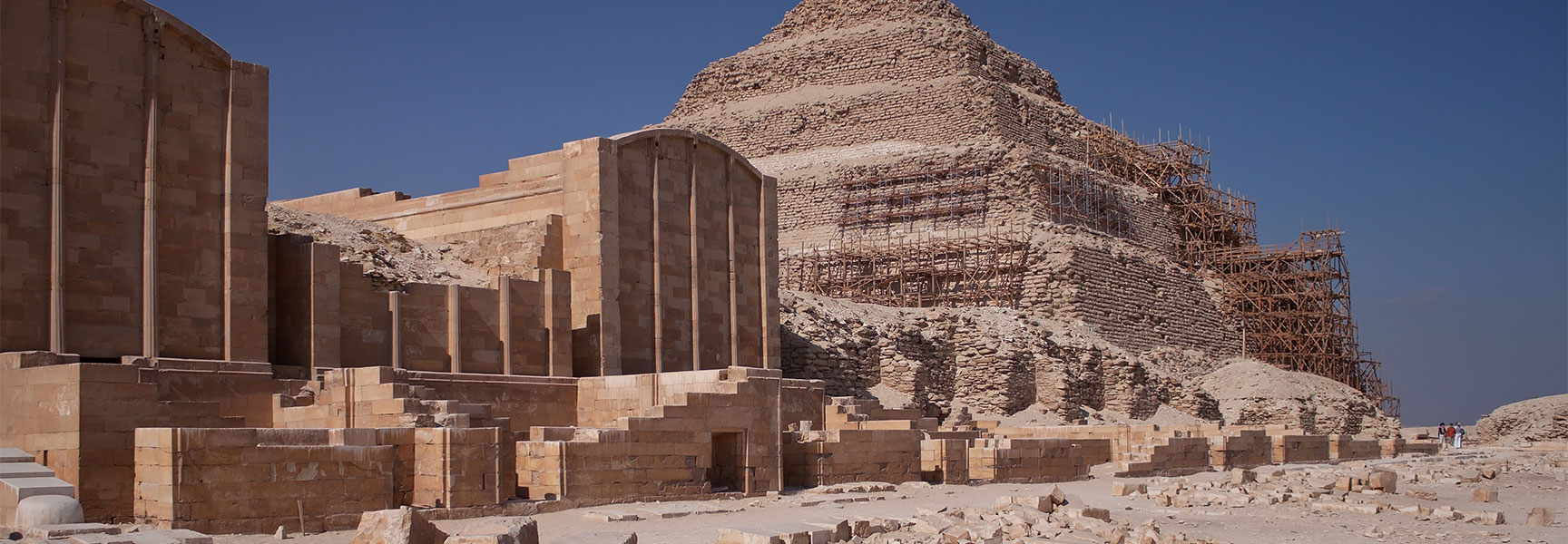
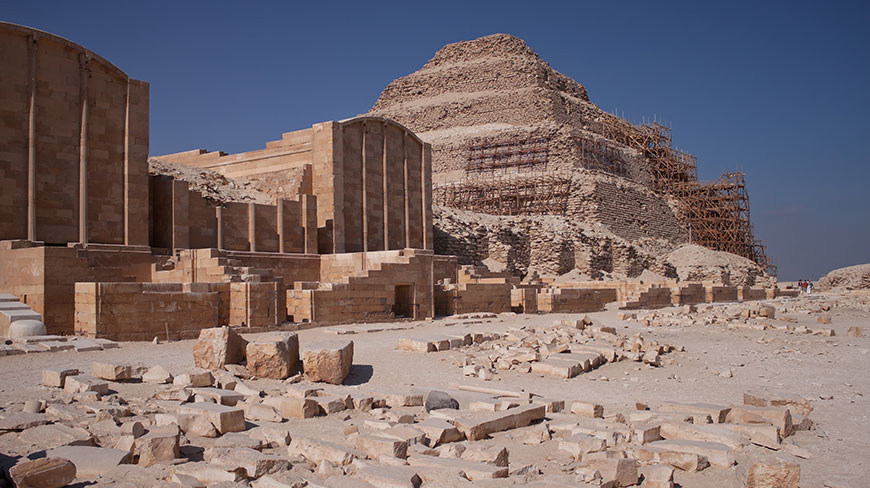
Orientation. The Group Leader will greet everyone and lead introductions. We will review the up-to-date program schedule, discuss roles and responsibilities, logistics, safety guidelines, emergency procedures, and answer questions. Our experienced and knowledgeable Group Leader will also serve as our Study Leader, presenting lectures and conducting field trips along with local experts. Periods in the schedule designated as “Free time” and “At leisure” offer opportunities to do what you like and make your experience even more meaningful and memorable according to your personal preferences. The Group Leader will be happy to offer suggestions. Program activities, schedules, personnel, and indicated distances or times may change due to local circumstances/current conditions. In the event of changes, we will alert you as quickly as possible. Thank you for your understanding. Later, we will set out to explore Saqqara, the necropolis for the ancient Egyptian capital of Memphis. Here we will see the Step Pyramid complex of King Djoser, built more than 4700 years ago and considered the oldest stone structure on Earth. This pyramid was built for the burial of Pharaoh Djoser and was designed and commissioned by his vizier and high priest of the god Ra, Imhotep. .
Lunch:
At a local restaurant.
Afternoon:
In the afternoon we will explore the Citadel of Mohamed Ali, perched on the Mokattam hillside at the heart of Cairo. The citadel was initially constructed by the Ayyubid ruler Salah al-Din between 1176 and 1183 CE to defend against Crusaders. Today, it is home to several mosques and numerous museums, including the famous Mohamed Ali Mosque, also known as the Alabaster Mosque, which dominates the skyline with its stunning Ottoman-style architecture and impressive domes and minarets. Here, one can admire its grandeur, intricate decorations, and sweeping views of Cairo below.
Dinner:
At the hotel.
Evening:
At leisure.
Day
4
Great Pyramids of Giza, Sphinx & Grand Egyptian Museum
Location:
Cairo
Meals:
B,L
Stay:
InterContinental Semiramis Hotel
Activity Note
Getting on/off a bus; driving 20 miles each way, under 1.5 hours total riding time. Walking up to 3 miles on uneven and rough terrain; standing for up to 1/2 hour in hot conditions with no shade at each site.
Breakfast:
At the hotel.
Morning:
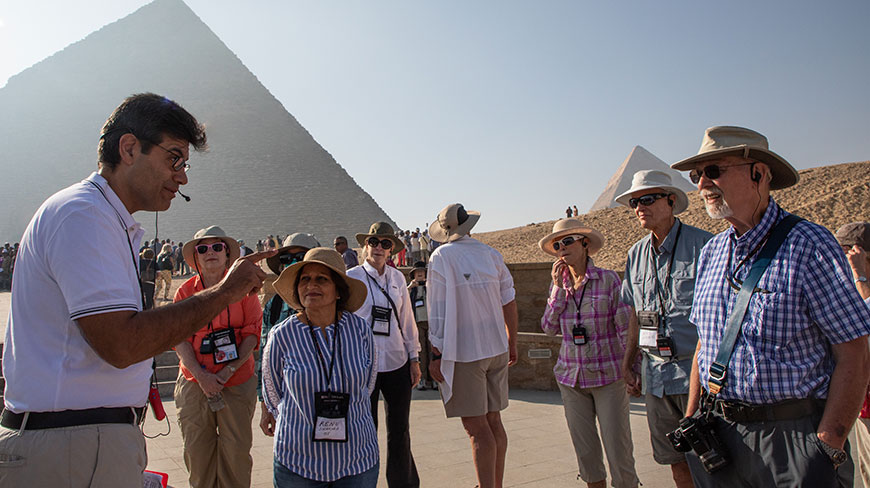
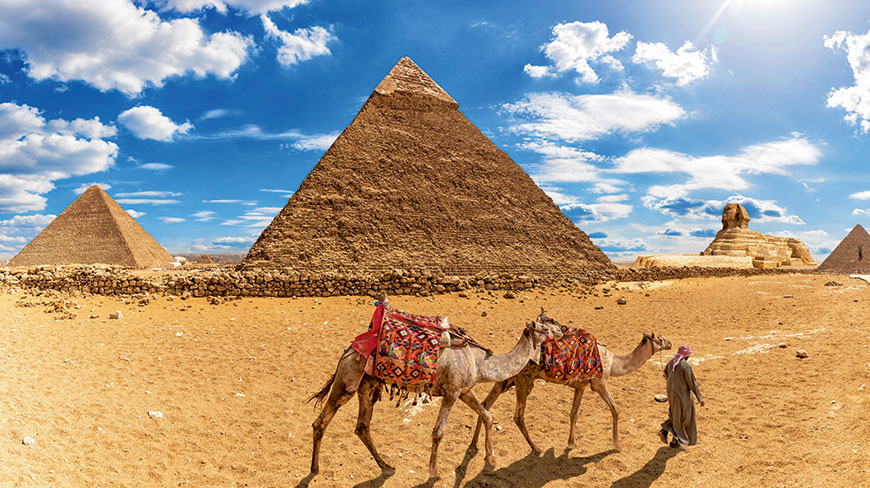
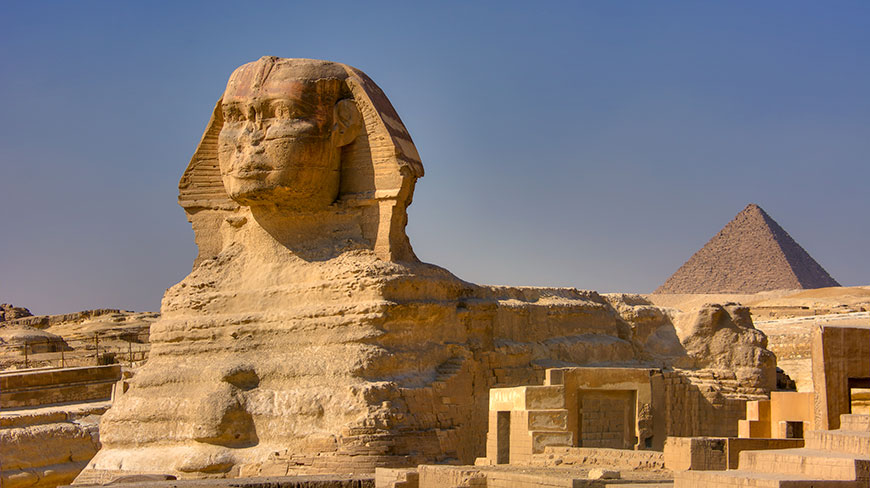
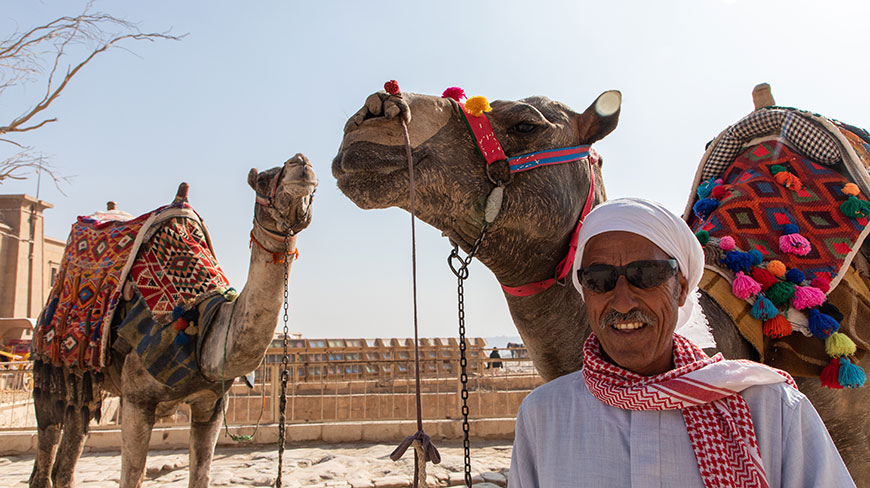
Led by our Egyptologist, we will set out by bus to explore the most renowned sites of Egypt: the Great Pyramids of Giza and the Sphinx. We’ll start with an exploration of the Valley of Giza, a marvel of architectural prowess. The three largest pyramids in the valley consists of the Great Pyramid of Khufu, the Pyramid of Kafhre, and the Pyramid of Menkaura – all tombs dedicated to different Egyptian kings. We will then head to the Sphinx of the Giza Plateau, the most famous sphinx in the world. This iconic statue has been guarding the necropolis for centuries and is believed to depict the face of Pharaoh Khafre. We’ll enjoy a wonderful opportunity to see the sites from a panoramic viewpoint and experience a unique short camel ride.
Lunch:
At a local restaurant.
Afternoon:
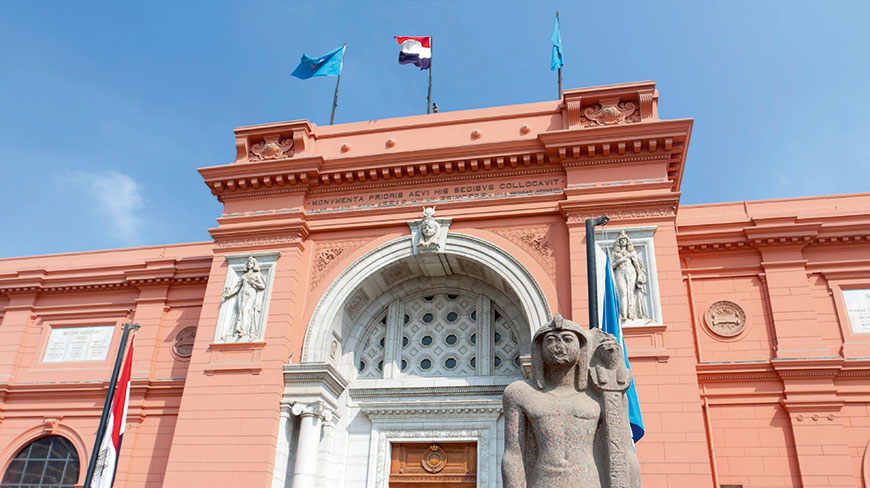
With the Group Leader, we will enjoy a visit to the Grand Egyptian Museum, which houses the largest collection of pharaonic antiquities in the world. The museum displays an extensive collection spanning from the Predynastic Period to the Greco-Roman era. The museum also houses the splendid statues of the great kings Khufu, Khafre, and Menkaure, whose tombs lie in the pyramids of the Giza plateau. An extensive collection of papyri, sarcophagi, and jewelry—among other objects—completes this uniquely expansive museum. After our visit, we will return to the hotel.
Dinner:
Included.
Evening:
At leisure.
Day
5
National Museum of Egyptian civilization , Flight to Luxor
Location:
Luxor
Meals:
B,L,D
Stay:
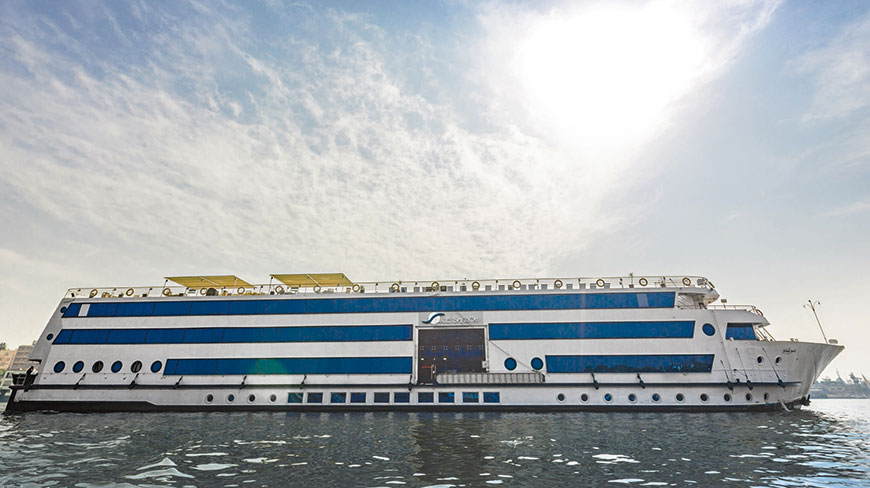
MS Blue Shadow I
Activity Note
Getting on/off a bus; driving total around 18 miles, total ride last an hour, first to the museum and then proceed to the airport. Getting on/off an aircraft; the flight from Cairo to Luxor is 1 hour long. Walking up to 3 miles on uneven and rough terrain; standing for up to 1 hour in hot conditions with no shade at each site. At Karnak, there are a few steps without railings. Embarking the ship.
Breakfast:
At the hotel.
Morning:
After breakfast, we will visit the National Museum of Egyptian Civilization (NMEC), one of Egypt’s most remarkable modern museums. The museum presents a comprehensive overview of Egypt’s history, spanning from prehistoric times through the Pharaonic, Greco-Roman, Coptic, and Islamic periods, up to the present day. A highlight of our visit will be the Royal Mummies Exhibition Hall, where we will have the exceptional opportunity to see the preserved remains of Egypt’s most celebrated pharaohs and queens, including Ramses II and Hatshepsut. The exhibition is arranged with great care and reverence, offering a profound glimpse into the lives and legacies of the ancient rulers who shaped Egypt’s civilization. Following the field trip, we will proceed to Cairo International Airport for our flight to Luxor.
Lunch:
In the local restaurant.
Afternoon:
Upon arrival, we will depart to explore the temple complex of Karnak. Also known as “ipet-isut” or “the most sacred of places,” it is the largest temple complex ever built and represents the combined achievements of 13 centuries of builders. Among the gods venerated at this site were Amun-Re, his wife Mut, and their son Montu. Our field trip continues with vist toLuxor Temple. Also known as “ipet-resyt” or “the southern sanctuary,” it was the center of one of the most important religious festivals in ancient Egypt—the Opet Festival—during which the statues of Amun-Re, Mut, and Khonsu were carried from Karnak to Luxor. Some scholars have also proposed that Luxor Temple differs from other temples in the region, as they argue it was centered not on the cult of a deity or deceased pharaoh, but on the cult of the current king on Earth. Academics even argue that Luxor Temple may have been the site where many of the pharaohs of Egypt were crowned kings. Next we will by bus to board the ship for check-in and dinner.
Dinner:
On board.
Evening:
At leisure. Prepare for check-out and our flight to Luxor in the morning.
Day
6
Sailing to Qena, Dandara Temple
Location:
Luxor
Meals:
B,L,D
Stay:
MS Blue Shadow I
Activity Note
Getting on/off a bus; driving 25 miles, over 1/2 hour riding time. Walking up to 3 miles on uneven and rough terrain; standing for up to 1 hour in hot conditions with no shade at each site.
Breakfast:
On board.
Morning:
Morning is reserved for a scenic sail to Qena in Upper Egypt. Before lunch the field trip of Dandara temple is on schedule. We will head out by bus to visit one of the major archaeological sites in Egypt, the Temple of Dendera. Dating to the Ptolemaic Period, it is dedicated to the one of the most popular goddesses in ancient Egypt, Hathor, who was associated with music, dance, joy, and motherhood. The Temple is decorated with six massive columns ornate with the head of Hathor at the entrance. The ceilings were decorated with different astrological and astronomy scenes, which is major evidence of Egyptians’ knowledge of astronomy.
Lunch:
On board.
Afternoon:
Following the field trip, we’ll return to the ship for lunch and scenic sailing back to Luxor. Relax and settle into your cabin.
Dinner:
On board.
Evening:
At leisure.
Day
7
Solar Eclipse, Esna Lock
Location:
Edfu
Meals:
B,L,D
Stay:
MS Blue Shadow I
Activity Note
Early morning outdoor activity for solar eclipse observation. The Group Leader will provide information and guidance about the event, including safe viewing practices. Expect high temperatures and limited shade—participants are advised to bring sun protection, hats, and water, and to use approved eclipse glasses. Minimal walking involved. Later, is sailing on the Nile to Edfu
Breakfast:
On board.
Morning:
On the morning of August 2, 2027, Luxor will experience a rare solar eclipse, when the Moon passes directly between the Sun and the Earth, temporarily obscuring the Sun. This celestial event is special in Luxor due to its visibility along the path of totality, offering participants a rare opportunity to witness the Sun’s corona, a breathtaking phenomenon that occurs only during total eclipses. Our Group Leader will provide guidance on safe viewing and explain the science and cultural significance of this extraordinary event.
Lunch:
On board.
Afternoon:
In the afternoon, we will enjoy a scenic sailing journey along the Nile to Edfu. The Nile, the world’s longest river, has been the lifeblood of Egypt for millennia, supporting agriculture, trade, and settlements along its banks. Participants will pass through the Esna Lock, an impressive engineering structure that raises and lowers vessels along the river, offering a glimpse into the practical workings of Nile navigation. The cruise also provides beautiful views of the riverbanks and local villages along the way. The Group Leader will give a lecture on a locally relevant topic, providing context and insights into the region’s history, culture, and daily life.
Dinner:
On board.
Evening:
At leisure.
Day
8
Temple of Horus in Edfu
Location:
Aswan
Meals:
B,L,D
Stay:
MS Blue Shadow I
Activity Note
Today’s activities include walking up to two miles on uneven ground and rough terrain. It could take up to two hours of standing at each site in hot conditions under the sun with no shade. There are up to 50 steps without railings at historic site. This day may include rides on horse-drawn carriages, but could be substituted by a bus ride depending on availability.
Breakfast:
On board.
Morning:
We will begin our day with a visit to Edfu, a prominent Ptolemaic period temple. Dedicated to falcon god Horus, the Temple of Edfu is one of the largest and best preserved temples in all of Egypt. The inscriptions on the walls of the temple have provided meaningful insight to the language and religion of the Hellenistic period of Egypt, as well as some of the construction techniques used by architects at the time.
Lunch:
On board.
Afternoon:
In the afternoon, we will continue our scenic sailing along the Nile from Edfu to Aswan. Edfu is a historic town on the west bank of the Nile, known for its agricultural importance and as a regional center in Upper Egypt. Aswan, located near the first cataract of the Nile, has long been a key city for trade, culture, and administration in southern Egypt. Along the way, participants will enjoy views of fertile riverbanks, traditional villages, and stretches of desert rising sharply from the water, highlighting the contrast between the Nile’s life-giving presence and the surrounding arid landscape. The cruise provides a unique perspective on daily life along the river, including small-scale farming, river transport, and local fishing practices. This afternoon, we’ll gather with the Group Leader to learn more about current life in Egypt and local topics. The Group Leader will be more than happy to share information and answer questions.
Dinner:
On board.
Evening:
At leisure.
Day
9
Abu Simbel, High Dam, Felucca ride
Location:
Aswan
Meals:
B,L,D
Stay:
MS Blue Shadow I
Activity Note
Today’s activities include up to two miles of walking on uneven and rough terrain. It could take up to one hour of standing at each site in hot conditions under the sun with no shade. There are 20 steps at the dock to board the felucca ride. The flight from Aswan to Abu Simbel is 45 minutes, and the same back from Abu Simbel back to Aswan.
Breakfast:
On board.
Morning:
We will depart by coach for the Aswan Airport to board our flight to Abu Simbel, on the way the stop for High Dam is planned. Also known as the Aswan Dam, this world famous dam was an engineering miracle when it was built in the 1960s. It contains eighteen times more material used to build the Great Pyramid, and provides electricity and irrigation for the whole of Egypt. The old Aswan Dam, built six kilometers down the river by the British in 1898 provides a wonderful view for visitors, from which you can gaze across Lake Nasser, the huge reservoir created when the dam was built. Led you your Study Leader, spend the rest of the morning exploring this iconic piece of ancient architecture many argue should be the “Eighth Wonder of the World”. Abu Simbel was built in the thirteenth century BC and comprises two massive rock temples, one of Pharaoh Ramesses II primarily dedicated to Re-Harakhte, and another of his wife Nefertari dedicated to Hathor. The site was forgotten until 1813, when Swiss researcher J.L. Burckhardt accidentally found the frieze of the main temple buried in the sand. The temples were a sensation across Europe, and became a must-see for all Victorians visiting Egypt at the time even although it required a long trip up the Nile. After our visit, we will fly back to Aswan and to our ship.
Lunch:
On board.
Afternoon:
We will conclude our day with a unique sailing experience onboard a felucca. Feluccas are wooden sailboats that have been used on the Nile for decades. Their traditional design, with no motor, makes the craft dependent on wind power and provides a steady, calm sailing experience. During our ride, we will sail around Kitchener Island, a small botanical gem in the Nile near Aswan. The island, originally developed by Lord Kitchener in the late 19th century, is home to a variety of exotic plants and trees, creating a peaceful oasis on the river. From the deck of the felucca, participants can admire the lush greenery, watch local fishermen at work, and enjoy panoramic views of the Nile and the surrounding riverbanks.
Dinner:
On board.
Evening:
At leisure.
Day
10
Philae Temples & Nubian Museum
Location:
Komb Ombo
Meals:
B,L,D
Stay:
MS Blue Shadow I
Activity Note
Walking up to 1. mile on uneven and rough terrain; standing for up to 1 hour in hot conditions with no shade. There are approximately 40 steps at historic sites without railings.
Breakfast:
On board.
Morning:
We will begin our day with a visit to Philae Temple. “Philae” is a Greek approximation of what is described in hieroglyphic texts as “Pilak” and refers to the “island of the time of Re,” i.e., the time of creation. However, what we refer to today as Philae is the main temple complex relocated from that ancient island to the island of Agilika in the 1960s as a conservationist move to avoid the site’s loss due to flooding by the High Dam. This temple was the center of the cult of goddess Isis and her connection with Osiris, Horus, and the Kingship during the Ptolemaic period of Egyptian history. We will finish with a visit to the Nubian Museum, where the local traditions, crafts, and folklore will be introduced to us by the Group Leader, as well as many of precious artifacts witnessing historical development of Egyptian and Nubian civilizations. We will then return to the ship for lunch.
Lunch:
On board.
Afternoon:
In the afternoon, we will sail from Aswan to Kom Ombo, a town famous for its unique double temple dedicated to the gods Sobek and Haroeris. As we approach Kom Ombo along the Nile, participants can enjoy views of the fertile riverbanks and small local settlements, as well as the striking cliffs and desert hills that rise sharply from the water. This section of the Nile offers a sense of how the river has shaped settlement patterns, agriculture, and trade in Upper Egypt for thousands of years.
Dinner:
On board.
Evening:
At leisure.
Day
11
Kom Ombo Temple
Location:
Luxor
Meals:
B,L,D
Stay:
MS Blue Shadow I
Activity Note
Getting on/off a bus; less the 1 hour riding time. Walking up to 1.5 miles on uneven and rough terrain; standing for up to 1 hour in hot conditions with no shade at each site. There are approximately 40 steps at historic site without railings.
Breakfast:
On board.
Morning:
We will head out on the bus for Kom Ombo Temple. Built during the Ptolemaic dynasty in the 2nd century BCE, this temple is highly unusual because of its symmetrical “double” design. All the rooms of the temple are duplicated, mirrored among the building’s main axis. The southern half of the building was dedicated to the crocodile god Sobek, while the northern part of the building was dedicated to falcon god Horus. During initial excavations, more than 300 crocodile mummies were discovered at this site. Returning to the ship, we will set sail once again, this time back to Luxor.
Lunch:
On board.
Afternoon:
In the afternoon, we will sail from Kom Ombo to Luxor, enjoying the peaceful stretches of the Nile as it winds through Upper Egypt. This section of the river passes several small islands and cataracts, natural rocky features that historically shaped navigation and settlement along the Nile. Along the way, participants can observe local agriculture, including fields of sugarcane, wheat, and date palms, nourished by the river’s annual flooding. The changing landscapes provide a striking contrast between the fertile riverbanks and the surrounding desert hills
Dinner:
On board.
Evening:
At leisure. Prepare for disembarkation and transfer in the morning.
Day
12
Valley of the Kings & Hatshepsut Temple, Fly to Cairo
Location:
Cairo
Meals:
B,L,D
Stay:
InterContinental Citystars Hotel
Activity Note
Getting on/off a bus; driving 30 miles, over 1.5 hours total riding time. Walking up to 2 miles on uneven and rough terrain; standing for up to 2 hours in hot conditions with no shade at each site. Getting on/off an aircraft; flight from Luxor to Cairo is around hour long.
Breakfast:
On board.
Morning:
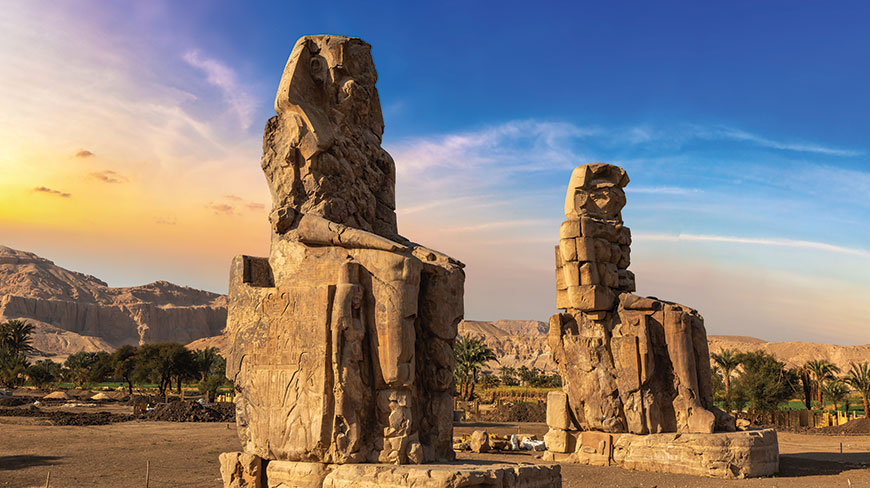
Led by our Group Leader, we will discover the Valley of the Kings, including the world-famous tomb of King Tut. This area of the west bank had been home to royal burials since 2100 BCE, but it was the pharaohs of the New Kingdom period (1550-1069 BCE) who began to construct elaborate tombs to reflect their newfound power and prosperity after the reunification of Egypt under Theban rule. The Valley of the Kings is home to 63 magnificent royal tombs, each unique in their own way. Before we depart the Valley of the Kings, we will enjoy a short visit to the famous Colossi of Memnon. These massive twin statues depict Pharaoh Amenhotep III and stand in what was once the entrance to the Mortuary Temple of Amenhotep III. Unfortunately, the temple was destroyed by an earthquake shortly after its construction in 1200 BCE, leaving only the famous statues behind. Stories claim that another earthquake in 27 BCE damaged the foundation of the northern colossus, causing it to “sing” on various occasions – usually heard by travelers around dawn. Greek scholars and travelers quickly took to calling the statue the “colossus of Memnon” since the mythological hero of Memnon was a king in the region and said to be the son of Eos, the goddess of dawn. After our visit to the valley, we will venture nearby to the iconic Temple of Queen Hatshepsut. A marvel of ancient architecture, this mortuary temple was built by Pharaoh Hatshepsut and dedicated to herself and the god Amun.
Lunch:
At the local restaurant.
Afternoon:
After lunch we will head to the Luxor airport, for our flight back to Cairo.
Dinner:
At the hotel. Share favorite experiences and enjoy camaraderie with new Road Scholar friends during our farewell dinner.
Evening:
At leisure. Prepare for check-out and departure in the morning.
Day
13
Program Concludes, In Transit From Program
Location:
In Flight
Meals:
B
Activity Note
Hotel check-out by 12:00 Noon. See your program’s “Getting There” information regarding transfers.
Breakfast:
At the hotel; breakfast boxes are available to take away if departing early.
Morning:
Early morning transfer to the Cairo International Airport for return flights. This concludes our program. If you are returning home, safe travels. If you are staying on independently, have a wonderful time. If you are transferring to another Road Scholar program, detailed instructions are included in your Information Packet for that program. We hope you enjoy Road Scholar learning adventures and look forward to having you on rewarding programs in the future. Don’t forget to like our Facebook page and follow us on Instagram. Best wishes for all your journeys!