
87-Year-Old Civil Rights Activist Attends Road Scholar Civil Rights Program: “There’s Always More to Learn”
87-year-old Sylvia M. from Philadelphia, Penn., has been a civil rights activist for over 60 years. She has been arrested more times than she can count, as recently as 2024, and has spent time in jail and even federal prison for civil disobedience. She began her activism journey in the 1960s after the assassination of Martin Luther King, Jr.
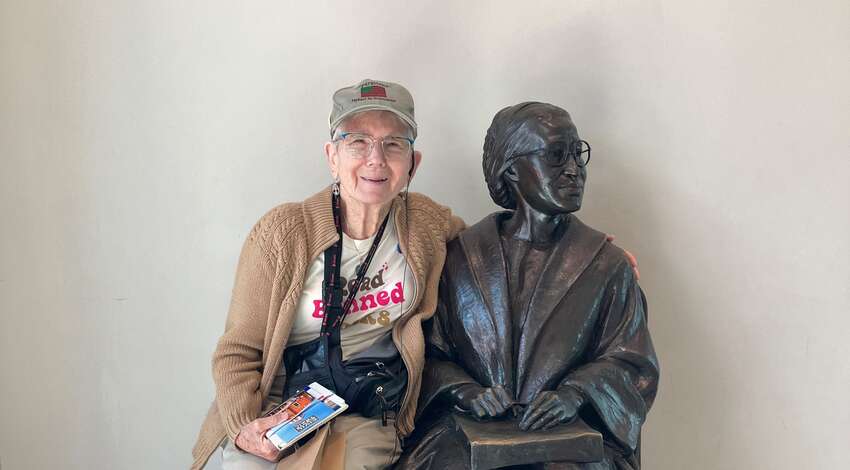
“Before that, I was pretty much absorbed in being a young housewife and mother and not paying attention to the news,” she said. She was at a Parent Teacher Association meeting the day of MLK’s assassination and noticed that nobody at the PTA meeting had said a word about it. “It was an all-white group — white parents, white teachers. It hit me like a thunderbolt: something’s wrong here. And I knew I needed to be more educated and involved.”
Sylvia soon joined a biracial study group through a Quaker group and got involved with Delaware Valley Fair Housing, collecting evidence of rental discrimination against people of color. “One thing led to another, and I have been an anti-racist activist ever since in all kinds of ways, learning about my own prejudices, which is painful, and to accept and realize not to do a guilt trip,” she says. “That’s not the point at all. We have to see where we are impediments to justice and what we can do to change it, especially in societal and institutional areas.”
Today she co-chairs a group at the Ethical Society called the “Ending Racism Task Force” and works in her congregation doing anti-racism work. She belongs to a group called the “Diversity, Equity, Inclusion, Belonging Group,” which meets monthly. Her job is to bring to the meeting an action that members can take with them.
She was recently honored with an activism award through the Women’s International League for Peace and Freedom.
“We can’t do everything. We have to prioritize,” she says. “And I know I can’t be a lone wolf. It’s important to have groups and people we work with. And also know that we can’t be so driven that we hurt our own health. I have to take breaks, and I need to take care of myself.”
Sylvia says that, at 87, she’s learned a lot, but, “there’s always more to learn.”
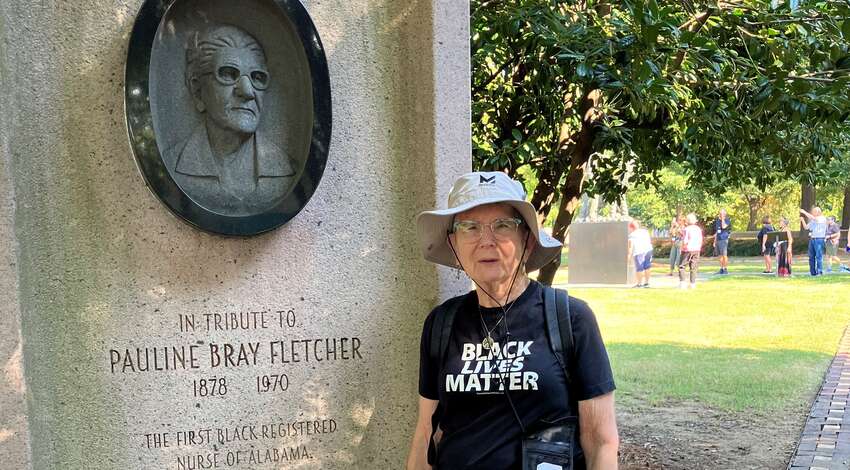
In September 2024, Sylvia joined Road Scholar’s educational program The Civil Rights Movement: Atlanta, Montgomery, Selma, Birmingham. Several of her friends were taking trips to the civil rights trail, and she decided that was something she wanted to do as well. “I started researching, and I really liked what Road Scholar had to offer.” She said she appreciated the educational component and liked that the instructors on the Road Scholar program actually had lived experiences in the ‘60s.
“It’s so different from reading about something — hearing a first-person account,” she said. “It was deeply moving and enlightening.”
Sylvia was especially impacted by her introduction to Dianne Harris, an instructor on the program’s visit to Selma, Alabama, and an activist from a very young age. “She was fifteen at the time and was so knowledgeable and taking risks. I was a young housewife with little kids, totally oblivious to what was going on. The contrast was so powerful. It was humbling.”
She said that the program brought to light stories of women who were involved in civil rights, who are often overlooked. “You hear so much about the men who were active in the Civil Rights Movement, but the Road Scholar program really opened my eyes to what the women did, and that was very important to me.”
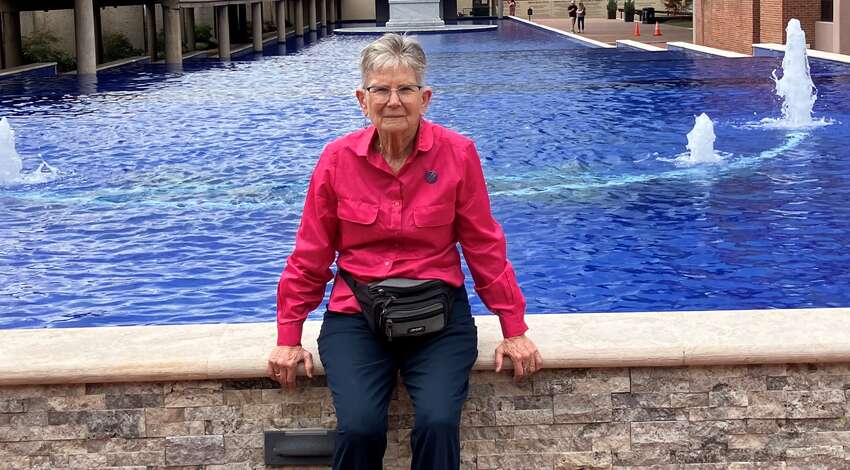
She also found it particularly impactful to walk across the Edmund Pettus Bridge. “You know the history and you see the photos and then you walk across it and imagine, as you’re standing at the top, what John Lewis saw and felt and heard, looking down at the police on horseback. It does something that just reading about it doesn’t do for you.”
Although Sylvia has studied the Civil Rights Movement and was a part of it herself, she still learned a lot on the Road Scholar program. “There were just so many details that I didn’t know about that made it richer and deeper and made me want to share it with more people.”
She said that she enjoyed being with a cohort with other older adults who were all concerned about civil rights and was able to have some really interesting open discussions with participants, some of whom she disagreed with. But they were able to take part in discourse respectfully. She even wrote a note at the end of the trip and made copies for her fellow group members to take with them, encouraging them to take what they’d learned with them into the world to continue inspiring change. “I asked everyone to make a pledge to find ways to share this — what we learned — with other people. Let’s not let it end here. Let’s use what we learned.”
Sylvia has given several presentations in her local community about her Road Scholar program — including her retirement community, the Philadelphia Ethical Society and the Women’s International League for Peace and Freedom she belongs to and a youth group of teenagers — because she believes how important it is to spread the word about civil rights history wherever she can.
“Let’s not let it end here. Let’s use what we learned.”
Sylvia has traveled to Nicaragua, the USSR and many other places around the world through her activism and work as a nurse, but she has yet to visit Europe. She hopes to travel to Italy with Road Scholar next year.