
The Story of Road Scholar as Told by Its First Employee

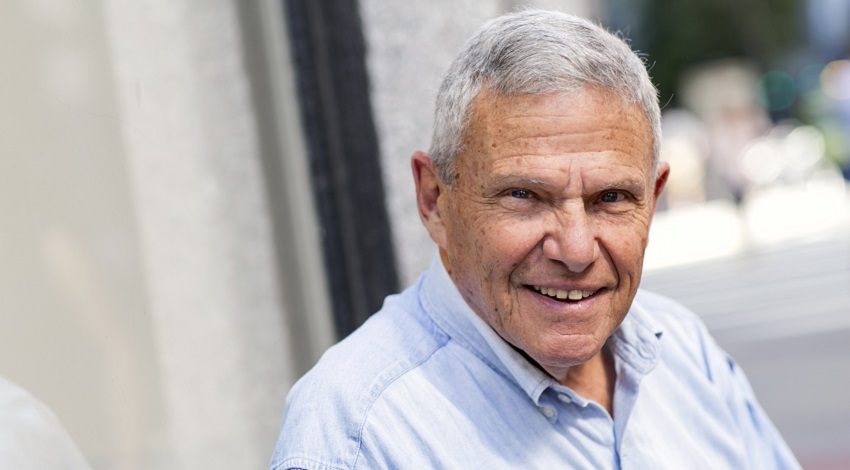
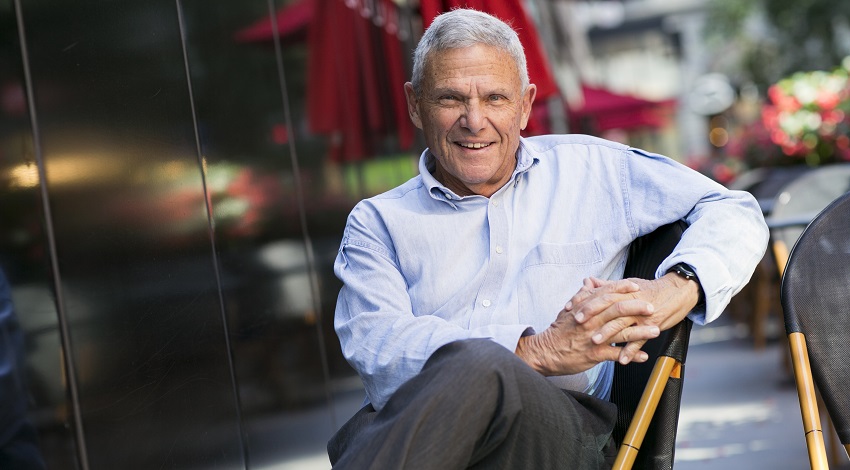
Mike Zoob is often described as Road Scholar’s “first employee.” This beloved, longtime staff member — who turns 90 in 2025 as Road Scholar turns 50 — played a part in many of the pivotal moments that have made our organization what it is today. And among those who call him a mentor, advisor, colleague and friend, is President and CEO of Road Scholar, James Moses.
These two gentlemen sat down to reflect upon the one great idea that led to the creation of Road Scholar, and the unexpected growth that followed.
In the Beginning
To take you back, the concept for Road Scholar (then Elderhostel) came at a time in the mid-1970s when respect toward the older adult population was lacking. Many of those facing retirement from longtime careers felt there weren’t many opportunities “at their age” to uplift and support them in their quest to continue learning, growing and experiencing the world. The older you got, it seemed, the less your identity mattered to society, leaving an entire generation struggling to hang onto its sense of self.
This cultural attitude led two friends, Marty Knowlton and David Bianco, to create the idea of Elderhostel — known today as Road Scholar — as a way adults could stay active and engaged in retirement. The original premise provided opportunities for adults to visit colleges and attend curated week-long classes with members of the school’s faculty during the summer months when the campuses weren’t catering to undergrads. Little did the co-founders realize that this concept would go on to change the lives of more than 6 million older adults.
When this compelling new opportunity was first made available in New England in the summer of 1975, retired adults found they could suddenly go “back to college” and continue to expand their minds! As Zoob puts it, “It was quintessentially the correct idea at the right time, and no one had thought of it prior to that. It was like an explosion had gone off.”
“Elderhostel 1975” was a resounding success. The courses were intellectually rigorous. “Hostelers” — as participants were called back then — enjoyed the program regardless of their educational background, and the elders embraced the spartan dorms on campus — their hostel accommodations.
Turning an Idea Into a National Organization
With many colleges throughout the nation joining Elderhostel to begin offering programs, Knowlton and Bianco soon found themselves unable to keep up with the surprising demand. In fact, Knowlton wanted only to remain an “idea man.” So, he began to actively search for someone to take Elderhostel to the next level. That man was Bill Berkeley who, in 1978, took on the challenge of turning Elderhostel into an official organization. Berkeley, in turn, immediately called on a friend and colleague, Mike Zoob — a fellow graduate of Harvard Law School with nonprofit experience. When presented with the concept of Elderhostel and asked to come on board, Zoob’s initial thought was that someone would have to be “absolutely nuts to seriously consider a move to a nonexistent organization to take on a nonexistent job at a nonexistent salary.”
Nevertheless, after sampling one of the programs, Zoob found himself compelled by the Elderhostel mission. As the senior administrators, Berkeley and Zoob put their careers on the line based entirely on what their instincts told them about the potential of this great idea.
Zoob handled legal affairs and helped raise the grant money necessary to launch the organization. But his vision was to wean off that support and make Elderhostel self-funding. So, a plan was put in place to eventually rely on voluntary contributions from Elderhostel alumni, freeing up time spent on grant applications to concentrate on the organization’s educational priorities.
The Early Days
One of Zoob’s initial goals was to organize programming from around the country into one national catalog of Elderhostel offerings. “At the time I joined the organization,” Zoob says, “each state or region published its own catalog. So, if you lived in Washington, D.C., and you wanted to go to programs in Virginia, Pennsylvania and New England, you had to write to three different offices and register three different forms in three different places. We realized that we had to create one-stop shopping where there was one national catalog, one address and one place where you could enroll.”
On top of that, the demand was so frenzied that those registering had to indicate their first, second and third choices. Even then, there was no guarantee they’d get in.
Zoob reads an amusing example of the chaotic early days from one such letter. “Enclosed is my registration form. If the second choice we have made is improper, because it is for the same week as our first choice, please eliminate our second choice. If our first choice is not available, please place us on the waiting list for our first choice in the event that our second choice is eliminated. If neither our first choice nor our second choice is available, please place us on the waiting list for our first choice only.”
In the midst of the growing demand for Elderhostel programs, in 1979 a young man named James Moses answered an ad and came to work for Elderhostel. Little did he know he’d spend his entire career there and go on to become Road Scholar’s current president and CEO. Among Moses’ early responsibilities was helping to increase the seasonal staff.
As Zoob recalls, “One of the local debts of gratitude we owe is from back in the days when we were still just a summer program. We were able to develop a relationship with Northeastern University.”
Moses says, “I would go to Northeastern every three months and hire interns because we couldn’t afford to hire people as full-time employees yet. And so that’s how we got by, for about the first five years.” Adds Zoob, “Some of those people stayed with our organization and took over leadership positions, so we owe Northeastern University recognition and thanks. It was our lifeblood for staff.”
In the years that followed, Elderhostel began offering programs year-round. In addition, Zoob says, “We wanted to plant the Elderhostel flag in every state [a goal that was achieved by 1980] and bring on international programs.”
Zoob also reminisces about an emergency that led to a breakthrough for Elderhostel. “In one of our programs taking place at a college campus, the dormitory suddenly had some repair issues, so our group couldn’t be accommodated. We had to put them up in a hotel and bus them to the campus. And a lightbulb went off and we suddenly realized, ‘Oh my gosh, this idea can take place anywhere. We can bring the professors to the people!’ So that breakthrough was really instrumental in the growth of the organization.”
From college campuses to art museums to presidential libraries, Elderhostel was now expanding to offer educational programs in all types of spaces, whether on an aircraft carrier, in a monastery or inside a yurt. Zoob says, “The educational menu became much broader than it had previously been. We were open to new, innovative ideas. We could host diverse programs as long as they had an educational focus.”
The Continually Growing Popularity
Says Zoob of the popularity, “We were trying to encourage the colleges and universities to offer more programs, so we demonstrated our need visually by creating a stack of champagne glasses in the shape of a pyramid, and we took water and poured it. It flowed over all the champagne glasses and spilled over onto the floor. We wanted to show them, ‘Look, this is what’s happening!’ Because we were saying no to our participants more than we were saying yes.”
The Early Registration System
In 1979, when Elderhostel published its first national catalog, the registration system was quite primitive, consisting of panels on the office walls with hooks that represented each program date, where tags would be hung for each program participant.
As for navigating that antiquated hook-and-tag system, Zoob says, “If you walked by it, sneezed or accidentally brushed against it, the tags would fall off and the system would go kaput, and then we’d have to put it back together again!” (Of course, that wall of paper tags would one day give way to a computer-based registration system.)
An Unexpected Hit
When asked if they realized back then that Elderhostel was going to become such a phenomenon, Moses says, “No, nobody knew that. As soon as the registration cycle would begin, the participants were so excited. There was nothing like this offered anywhere before. And the way they began to perceive themselves changed dramatically. They took it as such a badge of pride and honor that they were going back to college and sleeping in a dorm!
“The mentality then was, ‘We are young at heart, we’re out here.’ And suddenly they had a persona socially that they’d never had before. It was really like going from ‘Oh, I have to go play bridge now because there’s nothing else to do,’ to suddenly having this array of opportunities around the country. People went nuts for it and that’s when we realized we had something special!”
Zoob adds, “And the faculty at the institutions that were hosting and teaching the programs — they loved the participants. They had been used to sophomores and freshmen sitting in their classes duly taking their notes. But with the Elderhostelers, our people knew something and brought that knowledge to the classroom. There were no labels on the people who were there. You didn’t know who was in your classroom. You could be teaching a course on the history of early China and be lecturing to the former chairman of a university who’s a Chinese history expert. But neither the instructors nor the fellow participants knew that!”
Moses chimes in, “Sometimes you’d wind up with the guy who wrote the textbook, right there in the classroom. It was that incredible!”
Zoob continues, “One time while I was on a program about the Civil Rights Movement, a fellow participant suddenly spoke up and offered this incredible insight. It turned out he was a justice of that state’s Supreme Court. That type of thing happened from the beginning and continues to happen.”
The Name Change From Elderhostel to Road Scholar
In planning thoughtfully for the future, Moses knew there was one area of growth that needed an adjustment, and that was to change the name from Elderhostel to Road Scholar. Zoob says, “The change in name was something that made absolute sense for the organization, and I very much believed in changing it. It was one of the most remarkable things that has happened in the evolution of the organization. And that’s what Jim Moses did.”
So, how’d the decision to change the name from Elderhostel to Road Scholar come about?
Moses says, “It became clear to us that the baby boom generation, as it was coming up, was not going to go on something called ‘Elderhostel.’ It was that simple. They would talk about this great experience, but they wouldn’t tell anyone the name of the organization they were traveling with. Boomers didn’t think of themselves as ‘old,’ and they certainly didn’t think of themselves as needing to rough it, which is what ‘hostel’ conveyed. And so, focus groups throughout the country made it clear — we’re going to lose a whole generation unless we figure out what to do. So, it was imperative to change the name. And we really went all out explaining why we were doing it, and how we couldn’t afford to lose an entire generation to the experience. We put our values right out in front and were as honest as we could be.”
Speaking about other ways Road Scholar continued to grow, Moses explains, “New generations meant evolving, proving that we were adaptable to meet the needs of different generations who grew up having different life experiences. Travel patterns had changed, the needs of adults had changed. We had to address the intellectual, academic and travel needs and also their needs for comfort.”
Adds Moses, “From 1975 until probably around 1985, we were exclusively in college dormitories. To the point where at some colleges the programs were so successful that they built hotels on campus to house Elderhostel. But by the mid-1990s, we were pretty much out of any ‘bathroom down the hall’ dorm situation.”
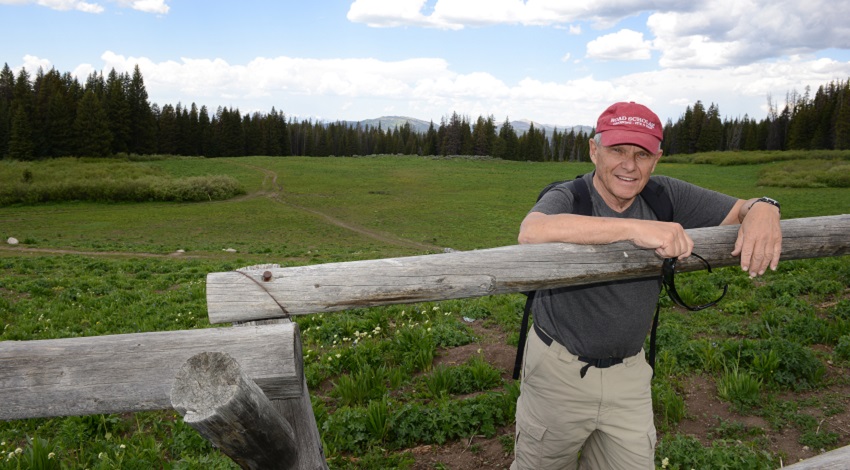
Zoob points out another way Road Scholar implemented changes. “We have lots of physically active programs now. Biking and hiking — those didn’t exist at the beginning. But we found, with a new generation of older adults, they wanted to get out and do more physically active things, so we came up with those.” (Zoob, by the way, is still an avid bike rider.)
Zoob Sees Moses Grow From Employee to President
Witnessing James Moses grow from the organization’s first registrar in 1979 into the role of president and CEO, Zoob says he’s proud of Moses and remembers his early days well. “Jim started out when we created our first national catalog — which was the first great hill we had to conquer. He dealt with challenges and difficulties and understood the changes in who was coming to our programs, what their needs were and what our needs and capabilities were. And there came a point when he stepped in and took over bigger responsibilities. That was the first step. He branched out into international programs, and the rest is history. But the stuff runs in Jim’s blood, because he’d been there from the get-go.”
A Few of Zoob’s Favorite Things
Zoob loves that he’s been able to share the Road Scholar experience with his grandchildren. “I believe one of the best things the organization ever did was create grandparent and family programs.” In fact, Zoob has taken each of his grandchildren on Grandparent Adventures through the years. “These programs provide memories of a lifetime for grandchildren and for older people like me, providing me with the gift of special time with my grandchildren — memories that are extraordinarily fulfilling,” he says. “These programs mean a great deal to me.”
Zoob is also proud of Road Scholar’s continuing commitment to economic diversity among participants through scholarships. “The commitment to provide funds for people who don’t have the economic resources to attend programs has been around since the organization began. And there are other interesting things that we do today, like Caregiver Grants, which didn’t exist back then but obviously meet a real need today. Providing scholarships is an important part of what we do.”
Surprise Recognition for Zoob
To recognize Zoob’s nearly 50 years of dedication to the organization, Moses wanted to find a special way to honor him. “We were planning a big staff event in December of 2023 of all Road Scholar employees from around the world. And so,” says Moses, “I thought, ‘We’ve been through a pandemic, we have all these new people, we need to connect them with who Road Scholar is — our mission, our history.’ And I thought to myself, ‘I don’t know if I’m ever going to have another chance for people to know who Mike Zoob is.’ And so that was the impetus behind creating an award to acknowledge Mike.”
Zoob was shocked to receive “The Mike Zoob Award for Extraordinary Service,” from Moses, and there was hardly a dry eye in the house when Zoob came on stage to accept the award for his impact and legacy at Road Scholar.
When Zoob is asked if he understands the magnitude of what he’s meant to Road Scholar, he’s modest to a fault. “It was extraordinarily personally rewarding to receive that award. That I’ll say. But I know a lot of people who have contributed to the organization and who have made a difference,” he says. “I think of all the people that I’ve worked with over the years. Some of the employees have been here a long time. Talk about spirit! I think of a guy like Jim Foley, who’s in charge of our facilities and started out as a teenager carrying mail in the old building, whose mom worked for us as our first bookkeeper. My kids and mother-in-law even used to help out in the mailroom when we were short-staffed. I’ve had the opportunity to work with an enormous amount of wonderful people and I have great memories in my life that are very fulfilling.”
Thoughts About Road Scholar’s Continued Evolution
Zoob, in thinking back through the years, says “The fact that Road Scholar is 50 years old and it’s still here and thriving and there’s a demand, and we’re going to figure out how to respond and adapt and meet the needs of future generations — the mission will always be education, and we just have to figure out how to keep feeding and nurturing that. But 50 years is a long time! We’ve served about 6 million people. We started out with 200!”
When asked where he sees Road Scholar going in the next decade, Moses replies, “I really think our initiative to reach out to people who can no longer physically travel is so important. And I think it could make a huge difference in the world. Our participants love us, love what we do … but then there comes a point where they can’t do it anymore. And so, they wind up in a very different place in their lives. I think there is a real imperative for us to connect people with each other — keep them mentally stimulated — in the programming that we’re delivering now online. And we’re trying to find a way to really reach out even beyond the people who are currently taking these online programs.
“I remember in the very early days of the virtual experience there were people who never could go on a Road Scholar program. And someone saying to me, ‘I’m in a wheelchair. But suddenly, I have a world opened up to me that was never open to me before.’ Really, it was so moving to hear that. So, I think there’s a lot more of that coming for us.”
When asked how it feels to be such a vital part of the Road Scholar movement, Zoob answers, “I believe there’s no question that Road Scholar has moved the needle on how society views older adults who, back in 1975, were relegated to the margins of society. Now that’s turned completely around.”
Zoob’s Continued Connection and Love for Road Scholar
Zoob shares a story about one of his recent adventures. “Just the other day, my lady friend and I were on our own, biking in the Vineyard for three days. And we went to a little breakfast joint, and there were people sitting around the tables. I didn’t pay much attention. I sat down and ordered some scrambled eggs and bacon, and the waitress said, ‘Are you with Road Scholar?’ I did a double-take. I said to myself, ‘How the heck does she know I’m with Road Scholar?’ And I suddenly realized that all the other people in the restaurant were people on a Road Scholar program! And so, I went around and spoke to the people, and it was a very heartwarming moment for me to just be out on my own and see people enjoying a Road Scholar program and having a wonderful time.
“For 50 years, we have provided opportunities for people to enjoy themselves, to go on educational adventures, to connect with people who have common interests or quite different interests. And that’s always energizing. So, I really feel that what we do makes a difference and that it’s something socially worthwhile, educationally worthwhile and just a whole lot of fun.”
Well said, Mr. Zoob. And thank you for your service!