
Don’t Even Go There: Places We Couldn’t Explore in 1975 — But Can Now

Since Road Scholar’s founding 50 years ago, we’ve introduced our participants to wondrous experiences all over the world. But there were some things we couldn’t share in 1975 — for a variety of reasons — that you can enjoy now. Here are a handful of them.
Strictly Off Limits
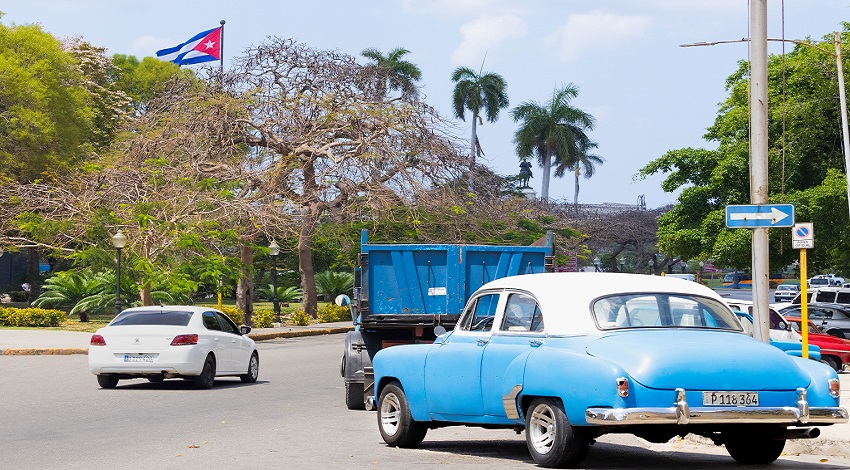
In 1975, travel to Cuba from the U.S. was prohibited — a policy that took effect in 1963. That constraint began to ease in the 1990s. Today, Road Scholar is among the few organizations able to conduct programs to Cuba through the “Support for the Cuban People” license granted by the Office of Foreign Assets Control, and they’ve been among our most popular since we began them 25 years ago. The complexities of Cuba’s past and present, combined with its vibrant culture and the irrepressible spirit of its people, make it a fascinating, no-longer-forbidden destination for Americans to connect with the Cuban people.
The year 1975 also marked the end of the Vietnam War, and for 16 years thereafter, Americans were not permitted to travel directly to Vietnam from the U.S. When the restrictions were lifted in 1991, it ushered in a new era of reconciliation — and with it, increasing interest in exploring a unified Vietnam. Today, Road Scholar programs bring participants to discover the ancient cultures of the Mekong, take in the hustle and bustle of Ho Chi Minh City (formerly Saigon) and explore the capital city of Hanoi — something that once seemed unimaginable.
Technical Difficulties
There were other countries we couldn’t visit in 1975, not because it was prohibited but because — technically, at least — they didn’t exist.
For example, the Balkan states of today have long existed as distinct regions, but they weren’t independent countries in 1975. Croatia, Serbia, Slovenia, Montenegro, North Macedonia, Bosnia and Herzegovina — they were all part of Yugoslavia until the early 1990s. Likewise, Czechia and Slovakia were part of Czechoslovakia until about the same time. Now they’re all destinations for Road Scholar programs in Europe!
One of the most popular destinations for Road Scholar learning adventures, Zimbabwe, was also impossible to visit (again, technically) in 1975 — because until 1980, it was known as Rhodesia.
Look What We Found!
There are some things we couldn’t experience in 1975 simply because no one knew they were there. For instance, the Staffordshire Hoard — the largest hoard of Anglo-Saxon silver and gold metalworks ever found — was discovered by a metal detecting enthusiast in the summer of 2009. Today the incredible collection is housed at Britain’s Birmingham Museum, although parts of the collection have been put on display at various times in the British Museum of London, the National Geographic Museum in Washington, D.C., and other venues that appear on Road Scholar itineraries.
Likewise, until Chinese farmers digging a well near Xi’an in 1974 made a staggering discovery, no one knew there was a 2,200-year-old army of life-sized terra cotta warriors lying beneath the surface. Following years of work, the site was eventually opened for public viewing and today is among the most popular destinations for travelers to China. Several Road Scholar programs include Xi’an on their itinerary.
The warriors are popular elsewhere, as well: When some were sent to the British Museum in London for an exhibition, the 400,000 advance tickets sold out so fast the museum had to extend its hours until midnight each day.
If You Build It, They Will Come
Important buildings that didn’t exist in 1975 are now central to some Road Scholar programs. The National Museum of African American History and Culture — the newest museum at the Smithsonian — was opened in Washington, D.C. in 2016. An extraordinary building housing extraordinary contents, the museum was long overdue — efforts to create it date back to 1915. You can experience it on the Road Scholar program Monumental D.C.
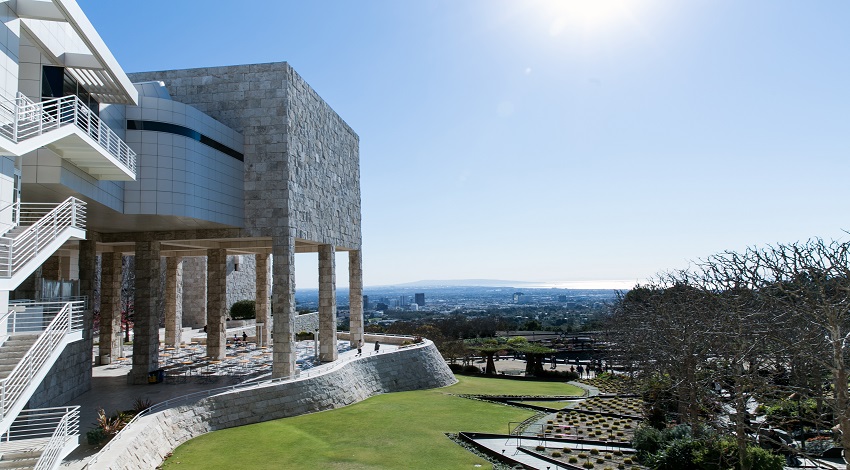
On the opposite coast sits the Getty Museum, opened in Los Angeles in 1997 and housing an awe-inspiring collection of masterpieces from Rubens, Titian, Rembrandt, Renoir, Van Gogh and others. The Getty is a stop on several Road Scholar programs.
Another art museum — arguably the world’s greatest — is the Louvre in Paris, which added an architectural gem in 1989 in the form of its I.M. Pei-designed pyramid entrance.
In the Sky & Under the Water
Other structures have appeared on our radar during our first 50 years. We’ve been able to see London in a whole new way since 2000, when the London Eye opened (pun intended). At the time, the Ferris wheel was the world’s tallest, at 443 feet.
The Georgia Aquarium opened in 2005, the largest in the world at the time and the first outside of Asia to host whale sharks, while California’s Monterey Bay Aquarium — which you can explore on the Road Scholar program Magical Monterey — opened in 1984 and houses some 35,000 marine creatures.
Another New World …
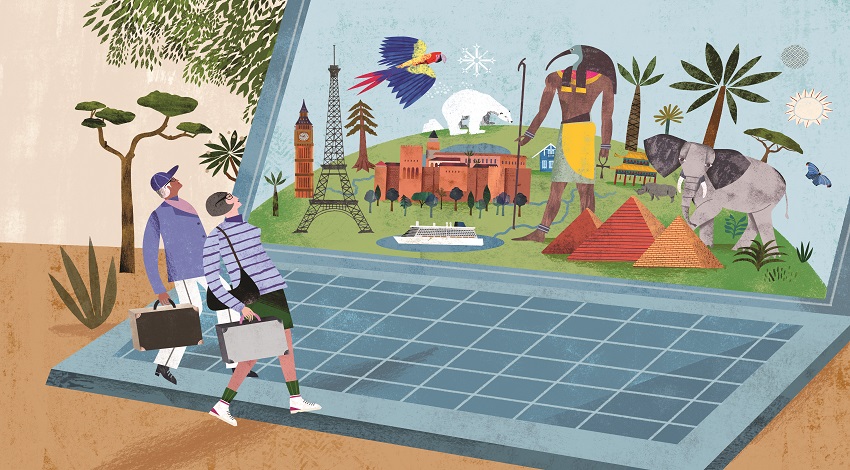
Another place we couldn’t go in 1975 — online. People were predicting the internet as early as 1962, but the World Wide Web didn’t become a reality until the mid-1990s. Among the innumerable doors it has opened is the one that enables Road Scholars to travel nearly anywhere in the world without leaving home. Road Scholar at Home now offers scores of programs taking participants on learning adventures everywhere from the Arctic to Easter Island and from the rolling hills of Provence to Machu Picchu.
Then, Yes. Now, No.
For all the experiences we couldn’t enjoy in 1975 but can enjoy now, sadly there are others that have been lost to us over that time.
In 1990, masterpieces by Vermeer, Rembrandt and others were stolen from Boston’s Gardner Museum and have yet to be recovered. New Hampshire’s Old Man in the Mountain crumbled into rubble in 2003. We came within a whisker of losing Notre Dame Cathedral to fire in 2019. Large areas of rainforest have been lost to development. And of course, there are societies mired in conflicts that currently preclude safe travel.
Those are reminders that we must preserve the achievements of human history, protect our natural environment, embrace innovation and value the blessings of free peoples living in peace. But they also reinforce for us what a precious gift it is to explore and learn about our world. We never know what tomorrow will bring — so travel where you can, when you can, and learn all you can, while you can! We’ll be here to help.