
Anne Maida: Employee #10 Looks Back

Road Scholar’s public relations director, Kelsey Knoedler Perri, sat down recently with Anne Maida, the organization’s first-ever executive assistant. Anne joined Road Scholar in 1980, five years after its founding. Now nearing 90, and happily retired since 1998, she reminisced about the early days of the organization and the people who built it.

Tell me about your start at what was then Elderhostel.
I was the executive assistant to Bill Berkeley, the first president of Elderhostel. I worked in Boston with him for 18 years. I think I was the 10th employee when I was hired, and when I left, I think there were over 200.
Previously, I worked for the New England Board of Higher Education, so I was always in education, administration and so on. One day, one of my colleagues showed me a tiny article in the Boston Globe about how a company called Elderhostel was going to start offering educational travel for older adults.
I just kept that in the back of my mind. A few years later, my organization decided to relocate well north of Boston, and I lived south, so I thought, I'm not going to the North Shore! Then I saw in the Globe a little ad that Elderhostel was looking for an executive assistant. Ta-da! So, I sent my résumé in. I remember it was January, and I never heard from them.
Then in September, I got a call from a gentleman named Mike Zoob, and he said they had transitioned an in-house employee to that position, but it didn't work out for her, so now they were interviewing.
At that time, women were dressing in corporate suits — I was always in suits. So, I went in wearing my corporate suit, and I told the receptionist who I was, and this gentleman came out, and he had on khakis and a shirt, and no shoes. And he said “Hi!”, and I said “Hi!” I thought he was … I don’t know what I thought he was. He said, “Come on into my office,” and then he said, “I’m Mike Zoob.”
Mike was always youthful looking, but he looked like a teeny-bopper at the time. So I went in, and he started interviewing me, and it came to the point that he felt he had to explain why he had no shoes on. They had a catalog closet, and there was a leak, so he was moving boxes and his shoes got wet. So that’s why he had no shoes on, and I’m glad he told me, because I thought, “This is a crazy place, I don't want to work here.” We had a good interview, and then he said that Bill, the president, was traveling and would like to speak with me at another time. So, I went in another time to interview with Bill, and he was this polished, sweet professional, he had shoes on, and we had a good interview. Then they called me back and offered me the job.
What did you do as the executive assistant?
Everything! I did everything. I was the executive assistant, but I was the also secretary. I did all the typing. If the receptionist had to go to the bathroom, I sat at the reception desk. I helped with registrations and correspondence. It was so small then that there were only a few programs going on, but as things grew and got to be too much, I’d go to Bill and say we needed another person. We’d hire one, I would transition some of my duties, and we kept hiring. There was a woman, Sylvia Evans, who worked part-time in the mail department, and she was great. I knew she was very capable of everything. I told Bill I needed some support, so we hired Sylvia as our administrative assistant, so then she took over the typing, the charts and so on.
Then we started to incorporate some technology — first IBM Selectric self-correcting typewriters, which were a big deal. Gradually we moved into computers. Initially we rented time from a bank on their computers! Eventually, we started our own computer department.
But we were still a tiny group. Mike lived in a nearby town that had a great bakery. He used to bring in a dozen donuts. They were the best donuts ever, but you know what? There were always some left over, so that's how small we were in the beginning.
Tell us more about the evolution, from not even enough people to eat a dozen donuts to 200 people when you retired.
In the beginning, I knew the founders, Marty Knowlton and David Bianco, very well. They were another pair of dear, off-the-wall, amazing friends. At first, they were just going to do a couple of weeks of programming, but it generated so much interest, they realized they were on the cusp of something much bigger, and they thought, “How are we going to do this?”
Demand was coming from everywhere, and they had to build networks of program coordinators and directors in every state who would develop the curricula and make arrangements with schools and museums to host programs. Then they had to get the word out about all the programs, so we established a catalog department. And then we had to mail those efficiently, and maintain mailing lists, so we contracted with a company for that, initially.
It was crazy, and we were patching things together in ways that put us into some funny situations sometimes. We had a policy called “random selection.” If there was a program in, say, Hawaii, with only 30 spots, and 200 people wanted to go, the president, the vice president and I would stay late, close our eyes and pick out winners, and they would be the ones who could go to the program.
So, there was this dentist in Boston who used to come into the office, because he had attended some other program. One day he came in with a great big box of the highest-quality chocolates ever, and he said, “Oh, I applied for the Hawaii program with my girlfriend, and we hope we get in,” and he gave us the chocolate. I said we couldn't guarantee anything. (I also said if the chocolate made our teeth fall out, we’d give him our dental business!) But Bill made us promise that we would never, ever let a friend or a family member in through a random selection, so that was that.
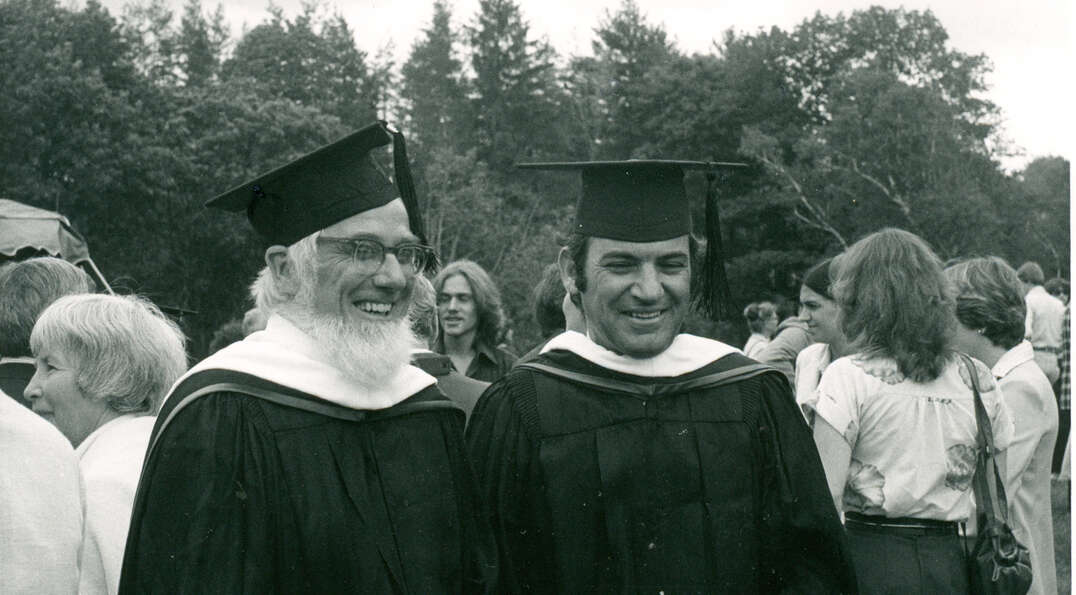
Can you talk about some of the individuals here in the beginning? Let's start with Marty Knowlton.
When you ask anybody that, they will laugh. Marty was a free spirit. We found out that when he graduated high school, he was going to go to college, and his dad had the money for him to do it. But then he told his dad he didn't want to go right away, he was going to do a two-year walking tour of Europe. His dad said, “Well, I’m going to give your tuition to your friend, who has no money,” and Marty said, “Fine.” So, he did. And I think when Marty came home, he paid for his own college.
He didn't have a home per se. He lived where he wanted to work. So, he went to a kibbutz in Israel for half a year or so. Then he went to Thompson Island in Boston and worked there for Outward Bound. He went to Hawaii, because he wanted to spend a couple of years there, and he worked for someone running an Elderhostel program. So, that’s what he would do. He didn't have a house, he just bopped around. He was a character.
What was his greatest influence on Elderhostel as an organization?
I think just the fact that he had walked Europe for two years and had lived in the kind of dorms they had over there. He knew Elderhostel could happen, and he was passionate about it. He said he didn't believe that retirement should be for sitting on the porch and rocking.
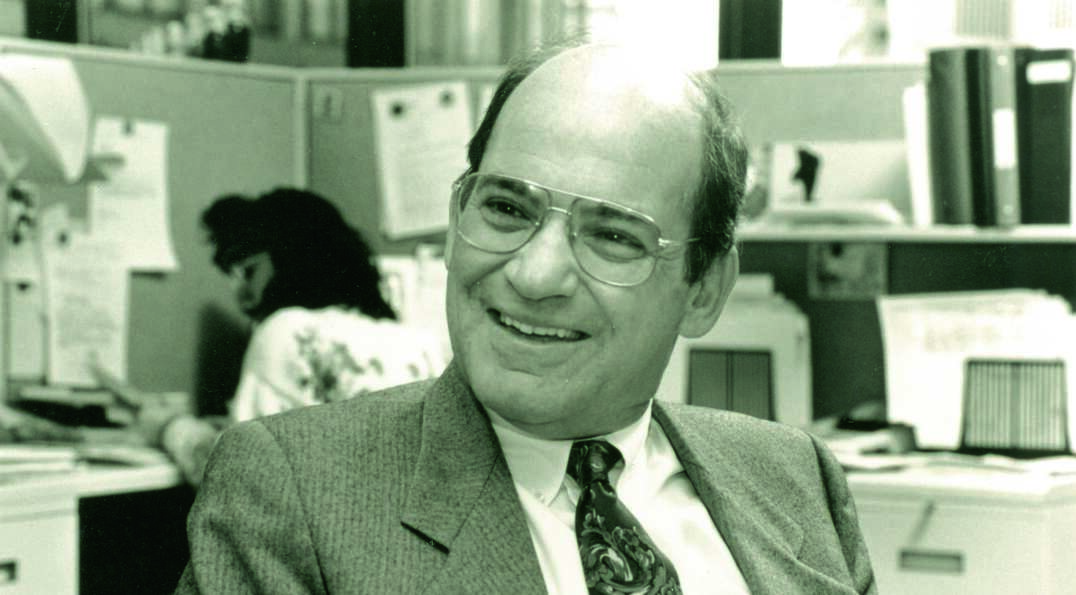
And David?
David Bianco was a little bit more – well, anybody was a little more organized than Marty, but David was sort of the operational guy, and they put it together and made a good cake.
David was a good soul. We all adored him. He was kind of in the background all the time, contributing in his own efficient, quiet way.
What do you think his lasting impact was on Elderhostel as an organization?
(Laughs) Keeping Marty organized! I’m serious. Because they both had the brains, but Marty was a dreamer. David took the whole package, and he put it together, and I think that contributed enormously to the ultimate success of Elderhostel.
But the two of them, together they were really the odd couple. It would have made a great sitcom!
We haven’t talked much about Elderhostel’s first president. Tell me about Bill Berkeley!
Bill always encouraged me to have balance in the office staff when hiring. He wanted me to keep a balance of men and women and be inclusive of all races. He was so fair, and so calm. He just got everything done. He took such joy in Elderhostel, and he created so much success there. I think his joy came in building something from the ground up.
I don’t know anybody that didn’t have a sweet word to say about him. He was just simply a good guy, through and through. And he meant so much to the organization. He engineered it to be what it is. He was passionate about making it a success, and contributing to the lives of older adults, just like Marty and David were.
You also know our current president, Jim Moses, well. What do you remember about him from the beginning?
Okay, it’s my first day. I’m in my office, his is two doors down. The office is upstairs over a Brigham’s ice cream store. It’s 10:30 in the morning, and I’m studying paperwork and reading and everything, and I hear this guy out in front of my office:
“We need ice cream, anybody wanna go down to Brigham’s?”
It was Jim. And I thought, “I am going to love working here!” So, we went down and got ice cream. He was so bright, and his mind was so creative. I think he had so much in his mind that he knew down the road, hopefully, he was going to put into effect. He was the first registrar, and then he was the first director of international programs, and he just kept creating more and more facets of the organization. It was amazing to me what he did —and continues to do. With Bill at the beginning, everything was simpler. But with Jim, it just kept improving, expanding, opening up other facets of success. It’s become so much more far-reaching, and he has managed it brilliantly.
Any other key players that we haven’t talked about from those early days?
Well, certainly all the state directors who built the programs were a big part of the story. And some of them were real characters! Early on, we used to have an annual meeting, so I would plan a conference in a nice place. I remember a funny story from one of them.
When Bill Berkeley was president, he always wore khakis, every day, with a light blue shirt and, if it was cold, a yellow sweater draped over his shoulders. hen Wwe had one of the annual meetings, every state director at the celebration dinner wore khakis, a blue shirt and a yellow sweater! Bill came down from his room wearing something different, looked around, ran back to his room and changed into his “uniform!”
Shortly after Bill retired as president in 1998, you decided to retire, too. What have you been doing since?
Well, I only “sort of” retired in 1998. Shortly after, I got a call from Dan Dowd, the New York state director. They had just started the Adventures Afloat programs on ships. He asked if I’d like to lead some groups on the coast of Maine, or going up the Hudson. I jumped at the chance and led those groups for maybe three years or so. And then, at a certain point I eased off.
Since then, I’ve kept quite busy. I’ve always done service work. I’m very active in the local food pantry and the library, and I play bridge a couple of days a week.
Plus, I have children, grandchildren, great-grandchildren and a granddog all close by. And I still travel — on Road Scholar programs, of course! My focus is on New England right now. I’ve had so many wonderful experiences on programs. I love Signature City programs! They’re my favorite. It’s like an hors d’oeuvre tray of the complexity and the interest and the various things that go on in a city. Each time I go, it opens up more pages in the environment there, the history, the people. It just opens up my mind and my heart.
What does it mean to you to be a part of the legacy of Elderhostel and Road Scholar?
It made my career so positive, and the people made such a difference in my life. It felt like we were family, and it still does. I feel like I was blessed to find that little ad all those years ago.
When Mike Zoob had his retirement party recently, I attended and there were 10 people there that I knew. I love every one of them. I know some of their history. I knew them when their babies were born, I knew them when they were getting engaged, and on and on and on. And I brought the little ad with me to the party and showed it to Mike and everyone, and we just laughed and laughed. So, it’s … Road Scholar is just within our soul.