
What I Remember Most About September 11
Twenty-five years later, I can still remember the sky that morning.
It was a beautiful, clear September day in Boston, and I was meeting with colleagues in our downtown headquarters when someone came into the room and turned on the television. A plane had struck the World Trade Center.
Like so many people watching those first images, we struggled to understand what we were seeing. We wondered if a small aircraft had somehow veered off course. Then, 17 minutes after the first impact, we watched a second passenger jet strike the South Tower. In that instant, everything changed. This wasn’t an accident. We were under attack.
We were stunned, unable to fully comprehend what we had just witnessed or what might happen next. But in that moment of fear and uncertainty, another realization instantly set in: Thousands of Road Scholar participants were away from home, learning with us in communities across the United States and around the world. We needed to know they were safe, and we needed to be ready to care for them through whatever came next.

We had 8,731 participants on programs on September 11, 2001. Of those, 283 were learning aboard ships, 5,637 were on programs across the United States — including 40 staying in a hotel just two blocks from the World Trade Center — and 2,811 were on international programs.
Our organization immediately shifted into emergency-response mode. We established a command center in our largest conference room and assembled a team of colleagues to coordinate with staff members leading groups around the world. The work continued around the clock as we reached program after program, making sure our participants and staff were safe.
Within 10 hours, we had confirmed that every Road Scholar group and participant was safe. But knowing everyone was safe was only the beginning.
Commercial aviation across the United States had come to a halt. Participants who could return home by road or rail began making their way back. Those who needed to fly could not. Our teams across the country arranged for meals and accommodations for every single participant. We provided information, support and comfort as best we could. And we assured everyone they would be cared for and looked after for as long as it took before they could return home. We did the same for the thousands of participants around the globe who were unable to return from international destinations.
For days, our colleagues worked around the clock. And what I remember most vividly from that time, beyond the fear and uncertainty, is how this tragedy united people the world over.
Recently, I saw the musical “Come From Away,” which tells the remarkable story of Gander, Newfoundland, where thousands of airline passengers were suddenly stranded when their flights were diverted on September 11. The people of Gander opened their community and their homes to strangers, providing food, shelter and comfort during four extraordinary days.
As I watched, the emotions of September 2001 came rushing back. I remembered the horror of watching a world we knew change before our eyes. But I also remembered the extraordinary humanity we witnessed in the hours and days that followed. In Gander, people welcomed strangers. In communities around the world, people cared for travelers who suddenly had nowhere to go and no way to leave. And throughout Road Scholar, colleagues did whatever was needed to make sure the people entrusted to us were safe and cared for.

Twenty-five years later, that is one of the things I choose to hold onto. September 11 showed us humanity at its worst and at its best. In the aftermath of unfathomable evil, we witnessed extraordinary courage, generosity and compassion. People opened their hearts and their homes. They cared for strangers. They held their loved ones closer.
A quarter century later, the world has changed in ways none of us could have imagined that morning. But our capacity to care for one another continues. And the most meaningful way to honor those we lost is to remember to see the humanity in strangers, to give of ourselves as we would hope others would give to us or to our loved ones, to be kind to each other, to help when others are in need, and to hold our loved ones close.

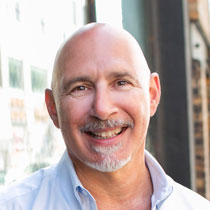
Jim Moses is President and CEO of Road Scholar, the not-for-profit world leader in educational travel for older adults. A passionate advocate for lifelong learning, Jim has dedicated his career to creating opportunities for people to explore the world, discover new ideas and connect with others. As President and CEO, he leads Road Scholar in its mission to inspire adults to learn, discover and travel.