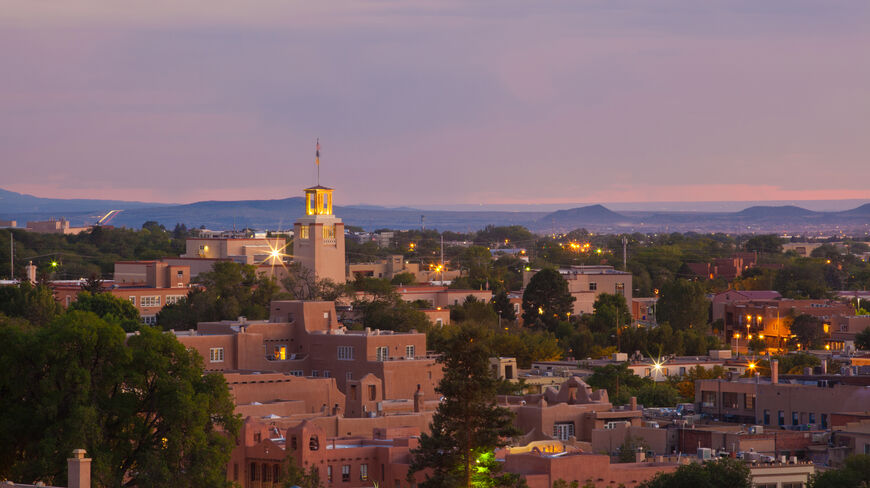
Deep Within Our Souls: The Story of the Conversos & Crypto-Jews of New Mexico
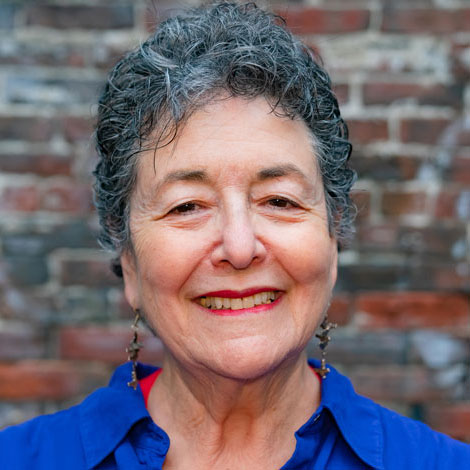
- Road Scholar Barbara Winard’s learning adventure brought her to New Mexico to study its Jewish history.
- After the Alhambra Decree was announced in 1492, many Jews fled to the edge of the Spanish empire in present-day New Mexico to protect themselves from religious prosecution. Their traditions are still evident in the region today.
- Barbara also learned about the area’s Hispanic and Indigenous cultures, and how they come together to form New Mexico’s unique cultural identity.
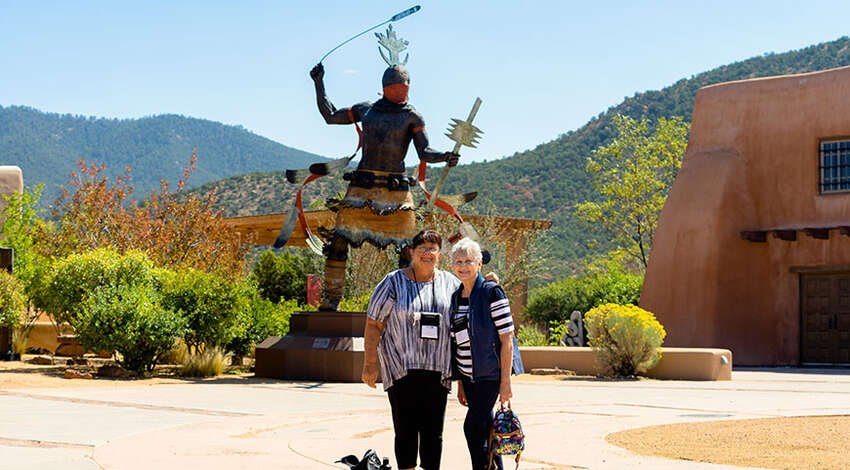
“We exist. We survive. We prevail.”
Maria Apodaca, a Crypto-Jew who spoke to our Road Scholar group
We gathered in our hotel meeting room in Albuquerque one hot evening. Our Group Leader, Sheryl, led us on our journey through hundreds of years of world and New Mexico history. We learned about culture and religion, about how the present contains the seeds of the past and about genealogy, DNA, science and anthropology. And we shared information about ourselves — both our diverse lives and our common feelings.
By the end of our program, we were all singing lively songs in Ladino (the language of the Sephardic Jews who left Spain beginning in the 15th century) and talking about our own stories and the journeys of our families to the United States.
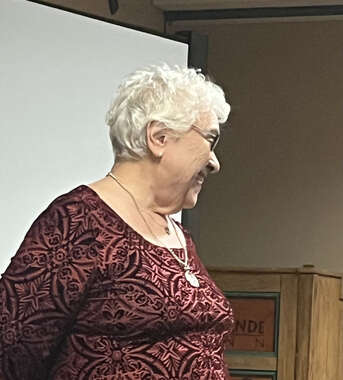
Maria Apodaca
We Learned History: The Past in the Present
The starting point for our group was a lecture about Spain in the 15th century and the beginnings of the Spanish Inquisition. In 1492, the Alhambra Decree, announced by King Ferdinand and Queen Isabella, forced all Jews to convert to Catholicism. The Jews fled Spain, some to the Ottoman Empire and some to North Africa, the Middle East, to Europe or to the Americas.
Conversos, or converts, are the Jews from Spain who converted to Catholicism either voluntarily or by force during the Spanish Inquisition. Crypto-Jews are the descendants of Jews who secretly maintained Jewish tradition while living outwardly as Christians. Though many did not know what these traditions signified as the years passed, they knew that they must be kept hidden on pain of death.
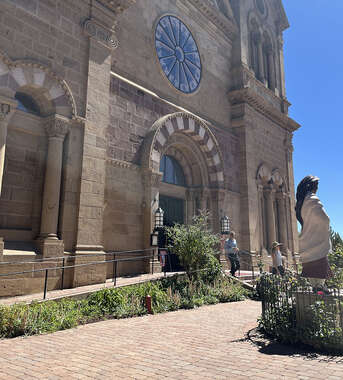
Many of the Jews fleeing the Inquisition traveled to Mexico and then north to what became New Mexico, where they sought refuge on the edge of the Spanish empire. Today, after 500 years of living in the New World, descendants of those who made the journey are researching and sharing their roots.
“These people survived for some 500 years hidden inside Christianity. There are as many stories as there are families and people.”
— Deborah Brin, Reconstructionist Rabbi
We Learned From Our Lecturers and Performers
Besides our Group Leader Sheryl, we loved hearing from speakers who could combine academics with real-life experience.
Our lectures included:
- Outsiders, Outliers and Religion in New Spain by Kris Herbst, a writer who focused on the Southwest’s cultures and natural history.
- A History of Sephardic Judaism from Spain to New Mexico by Rabbi Deborah Brin, who served as rabbi for Congregation Nahalat Shalom in Albuquerque.
- Converso/Crypto‐Jewish Heritage by Maria Apodaca, whose personal account of discovering her family’s story touched us all.
- Sephardic Music Traditions with Cantor Beth Cohen, music educator and Sephardic and Klezmer musician, and her husband Randy Edmunds, who provided a moving and sometimes rollicking sing-along of old and new Sephardic songs from all over the world.
“Programs like this one can offer the possibility of knowing and understanding more about what unites us.”
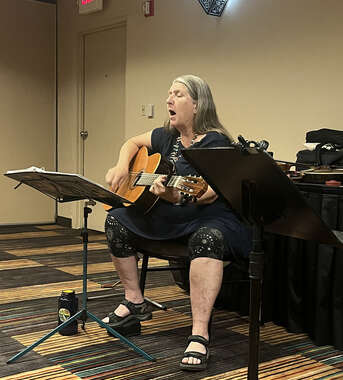
Beth Cohen
We Learned About Ourselves and Each Other
“This was the first time in my life that I had an opportunity to socialize with Jewish people and others who have Jewish family. I grew up in a strict Catholic household and lived in a neighborhood where almost everybody was Catholic. But I found that, even though our rituals vary, the people in this program shared many similarities.”
— Ruth
One of our first tasks when we initially met was to share something about ourselves and our lives, including why we signed up for this program.
“I found our New Mexico adventure exhilarating. I had little knowledge about the Southwest other than what was covered in history class. However, what truly attracted me was the opportunity to learn more about conversos and Crypto-Jews. My beloved son-in-law Brian is an Ashkenazi Jew. For over 30 years, our family has celebrated Rosh Hashanah and Passover together.”
— Carol
I was also interested in how much the participants in the program learned from each other and found common ground in lively discussions. And we all found that, while history seems to sometimes be monolithic, interpretations and perceptions change with time.
“I learned very little in school about the Spanish Inquisition (and nothing about Jews). In fact, most of the history that I learned is now obsolete. We need to continue to evolve our understanding as new facts are uncovered.”
— Cindy
Although everyone had their own reasons for attending the program, Jewish participants often expressed some especially personal motivations for signing up.
“I chose this program because my synagogue in California has many conversos. I had learned the history of the Diaspora and about the Spanish Inquisition in school, but I did not know the personal stories of these hidden peoples and about how they discovered their ancestry and the fact that some returned to practice Judaism openly. This made me very emotional.”
— Teresa
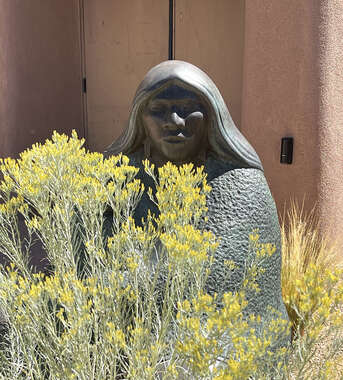
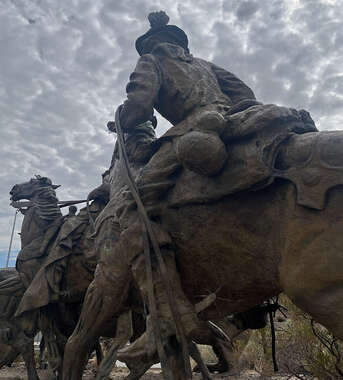
We Learned Stories of the People of New Mexico
“This program was as much a story of the general history of New Mexico and the American Southwest as it was about the conversos.”
— Roxanne
Besides learning about the conversos and Crypto-Jews of New Mexico, we explored the Mexican, Puebloan, Navajo and Apache history of the area.
In Albuquerque, we visited the Indian Pueblo Cultural Center, the National Hispanic Cultural Center and the New Mexico Holocaust and Intolerance Museum, whose mission is to “combat hate and intolerance through education.” In addition to the horrors of the Holocaust, the exhibits included the Armenian and Greek genocides, the inhumane treatment of Native Americans and slavery in the United States.
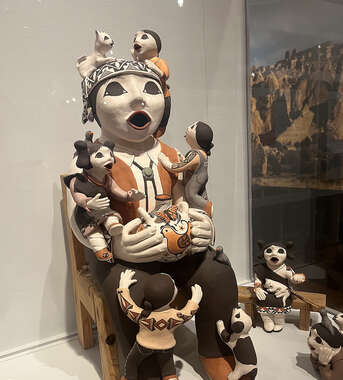
In Santa Fe, we visited the Museum of International Folk Art (my favorite!), as well as the Museum of Indian Arts and Culture. Many of us also went to the Georgia O’Keefe Museum, as well as several other smaller museums in town.
The Enduring Feeling of Hope
Our journey culminated with a visit, led by instructor Christopher Gibson, to the Torreón, a 45-foot cylindrical tower at the National Hispanic Cultural Center in Albuquerque. There, a giant fresco painted by Frederico Vigil forms a “visual encyclopedia” with powerful images of some 3,000 years of Hispanic history, showing the complexities and diversity of the peoples of New Mexico.
In the end, we were left with a feeling of hope — that, although the news nowadays often reflects the lack of understanding and empathy between groups, programs like this one can offer the possibility of knowing and understanding more about what unites us.
As Iris, one of our participants, put it:
“This program was almost a pilgrimage. It’s been hard to come to terms with the many parallels between the experiences of the Jews, the Pueblo, Navajo and Apache nations and our global histories and current actions. It often seems that we have not learned anything about human rights and tolerance, much less compassion and understanding. Our program was the energizer I needed to really look beyond myself and see a way forward.”
Barbara Winard has earned degrees in English literature, journalism and, later in life, gerontology. For the past 25 years she was a senior editor and writer of online encyclopedia articles for children. Prior to that, after returning from a long trip to Asia, Barbara was hired by the Asia Society in New York City to produce films and print materials about Asian culture. She was also a producer and writer for New York City’s public television station, WNET/13.