
A Taste of the Southwest: Three Cultures Create a Unique Cuisine

- Road Scholar Barbara Winard explores some of her favorite foods of the American Southwest, with input from local expert Christopher Gibson.
- Barbara explains what the “Three Sisters” are in Indigenous traditions: corn, squash and beans.
- Barbara also discusses the debate between red and green chiles in New Mexican meals and the significance of chiles in traditional cooking.
East Coast folks like me often find the vistas of the Southwest dramatic, from the snow-covered mountains to serene deserts. The vivid history of this land is also compelling — and it contributes to the region’s unique cuisine.
Influences From Three Cultures
Indigenous and Hispanic Peoples have lived in the Southwest way before American statehood. What was essential to the diet of Indigenous People became known as the “Three Sisters”: corn, squash and beans. These crops — planted together in a shared space — were born of the need for sustenance in a dry land. They have continued to provide a balanced source of energy, nutrients and protein for the people living in these areas.
Spain sent their explorers and soldiers to colonize the Americas beginning in the 16th century. Their presence would forcibly change those who were living on the land, including what they ate. The Spanish introduced their own foods, including animals like cows, sheep, goats and chickens, as well as dairy products and wheat flour.
These crops, cultures and stories helped to form that blend of flavors, smells and colorful dishes that’s uniquely Southwestern. Here, Road Scholar lecturer and self-professed foodie Christopher Gibson helps me to explain the history and usage of some of my favorite foods of the Southwest. Gibson is an artist, anthropologist and educator who credits his roots — including his Navajo and Hispanic families — for his love of Southwest food and its storied past.
Corn: The Mother of Society
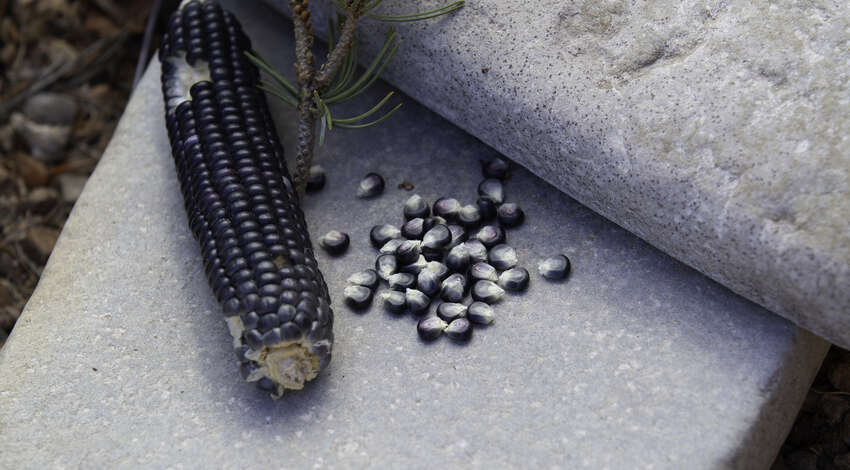
Maíz (or corn) was first brought to the area about 4,000 years ago from southern Mexico. It became known as the “mother” of Pueblo society and inspired ceremonial dances and celebrations.
Unlike the sweet yellow and white varieties of corn found in farms and markets of the East Coast, the corn grown by the Pueblo people is white, yellow, red and blue, colors associated with the four directions.
One of Christopher Gibson’s favorite dishes is blue corn enchiladas. “The blue Pueblo corn is used to make tortillas that have a richer, nuttier taste. I prefer to eat them with red chile, although I also like the green chile I make at home, which is chopped with garlic, salt and black pepper.”
Pozole
Pozole is a traditional soup or stew made with nixtamal (or hominy), which is corn soaked in an alkaline solution like lime or lye to remove the indigestible outer husk. It’s often served on Saint’s Days, Christmas and New Year’s at the pueblos.
Masa is the dough made from nixtamal and is used to make corn tortillas and tamales. The tortillas are thin, round flatbreads that are the base for tacos, enchiladas and tostadas. Tamales are masa dough stuffed with meat, chiles or cheese, wrapped in corn husks and steamed.
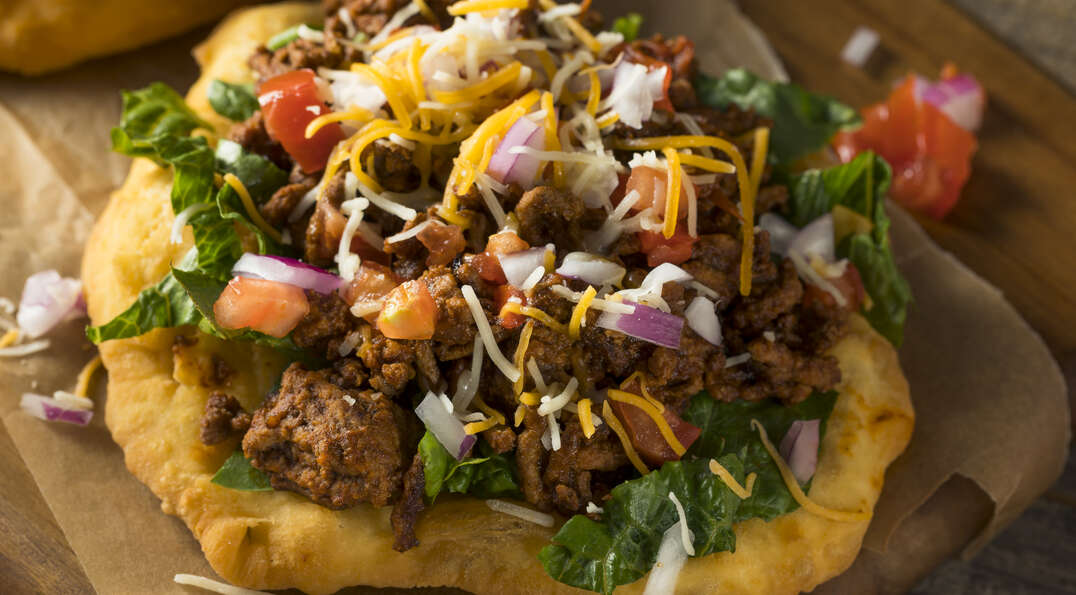
Fried bread taco.
Fry Bread: Born of a Painful Chapter in History
I tried fry bread for the first time at a Navajo restaurant in Monument Valley, Utah. You can find fry bread in most restaurants and homes in the Southwest, although shapes and forms may vary according to location.
In 1864, the United States forced the Indigenous Peoples living in Arizona to leave their homes and embark on a 300-mile journey called “The Long Walk” to an internment camp in Bosque Redondo, New Mexico. They had no access to their traditional foods, and the only government rations they received were white flour, processed sugar and lard. These ingredients became the foundation of fry bread.
Now, fry bread has been adopted by many Indigenous groups, and it’s often topped with ground beef, pinto beans, lettuce, tomatoes, cheese, onions, sour cream and chile.
Chiles: A Staple and a Way of Life
“In 1996, the New Mexico State Legislature passed a House Joint Memorial declaring “Red or Green?” as the official state question. This refers to the frequent question of whether one prefers red or green chile when ordering New Mexican cuisine.”
— New Mexico Secretary of State
Chile forms the basis of most meals in many Southwestern states. And in New Mexico and Arizona, that means Hatch chiles. Hatch chiles are grown in the Hatch Valley of southern New Mexico, at an altitude of about 4,000 feet, and are harvested at different stages of ripeness than other chiles. Unlike those peppers that just bring the heat, Hatch chiles balance a more earthy taste, along with a smoky flavor when fire roasted. Many chile lovers welcome a “Christmas” mix of both red and green with their food.
Chile aficionados point out that the major difference between Mexican and New Mexican food is the spices and kinds of chiles used. It’s obvious from a first taste that New Mexican chiles are not as hot as the Mexican ones. Still, if you are a chile neophyte, it’s advisable to ask about the level of heat before diving into a plate of tacos.
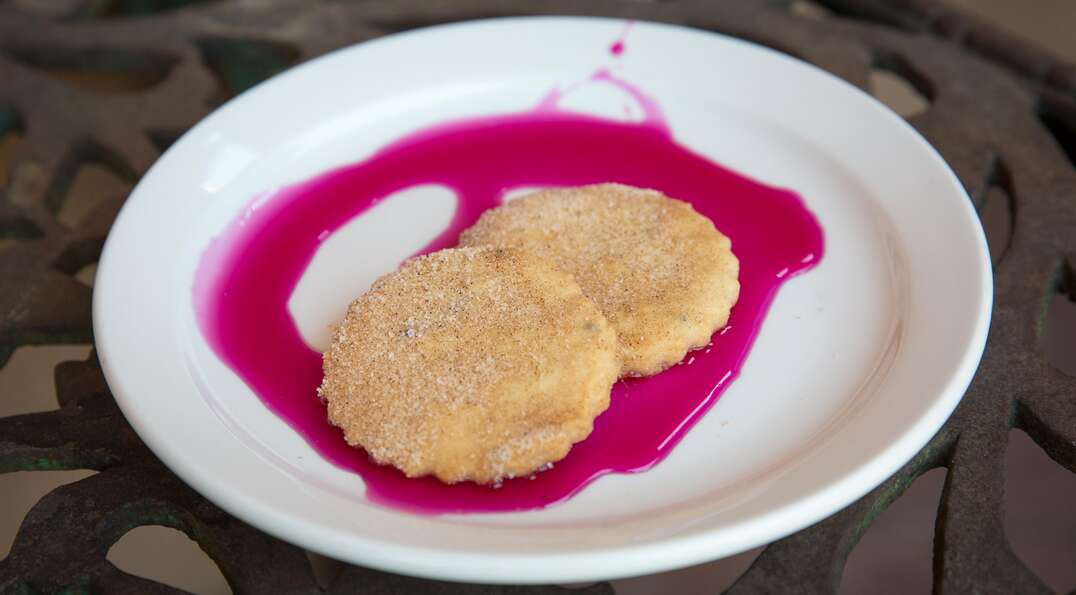
Biscochito, the official state cookie of New Mexico.
Desserts: New Mexico’s State Cookie
Only four states in the United States have a state cookie, and New Mexico is one of them with the biscochito. Biscochitos are shortbread cookies flavored with anise and cinnamon that originated in Spanish colonial traditions. The cookies are often cut into cross or fleur-de-lis shapes before baking.
Empanadas are also a typical dessert. Usually filled with fruit, they can also be made savory around the holidays. Some people fill them with ground meat and dried fruit or even pumpkin.
Other popular desserts in the Southwest include flan (egg custard with caramel sauce) or natillas (milk and egg custard, often flavored with cinnamon).
The Diverse Peoples of the Southwest: Food is a Story
These foods are the tip of the culinary iceberg of the region. While traditional foods are the staples of Southwestern cuisine, there are always small pockets of fusion. For example, Christopher Gibson points out the existence of green chile cheeseburgers and even wonton potstickers stuffed with green chile and cream cheese.
Culinary styles here are tied to the land and its people. From the traditional cuisines of the Navajo, Hopi and Pueblo Peoples to the flavors and spices of Mexico and the dairy and meats contributed by Spain, Southwestern cuisine is as varied as it is delicious.
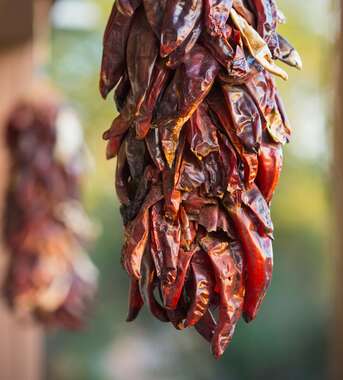
Ristra, a traditional arrangement of tied, sun-dried red chili pepper pods.
Barbara Winard has earned degrees in English literature, journalism and, later in life, gerontology. For the past 25 years she was a senior editor and writer of online encyclopedia articles for children. Prior to that, after returning from a long trip to Asia, Barbara was hired by the Asia Society in New York City to produce films and print materials about Asian culture. She was also a producer and writer for New York City’s public television station, WNET/13.