Food & Culture in the Southwest: A Conversation With Norma Naranjo
- Road Scholar local expert Norma Naranjo has been raising her own crops in the traditions of her ancestors for over 30 years. As an instructor, she shares these traditions and meals with Road Scholar participants in New Mexico.
- Norma’s favorite foods have links to generations of her family, including chicos, which are grown from seeds from her grandparents, and green chili stew that her grandmother made.
- Norma hopes that Road Scholars depart with a greater understanding and respect for the history and Indigenous culture behind New Mexican cuisine.
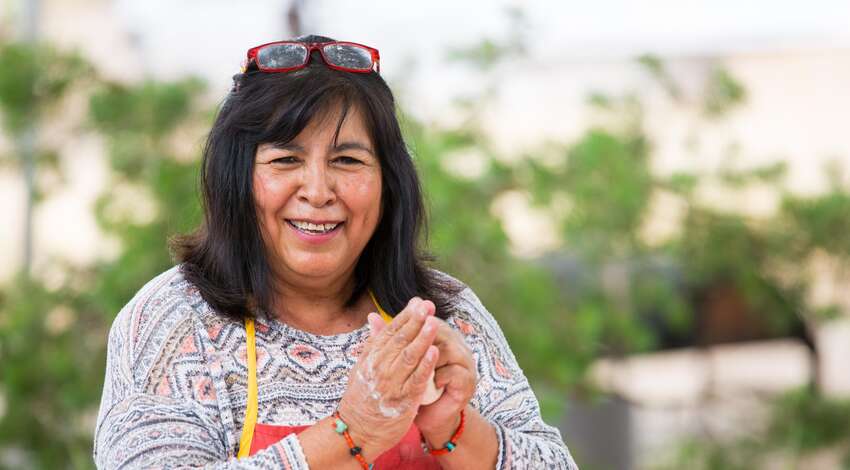
“I teach this to all the Road Scholars that come through. I tell them they’re going to be cooking and baking like our ancestors did 600 years ago.”
This is how Norma Naranjo introduces herself on Finding Your Bliss in the Land of Enchantment for Women. This New Mexico adventure brings Road Scholar women together to delve into Santa Fe’s history and art and explore healing practices with Indigenous and Mexican roots. As an instructor on this program, Norma helps participants experience local cuisine and how it connects to Indigenous heritage — a topic that is close to her heart.
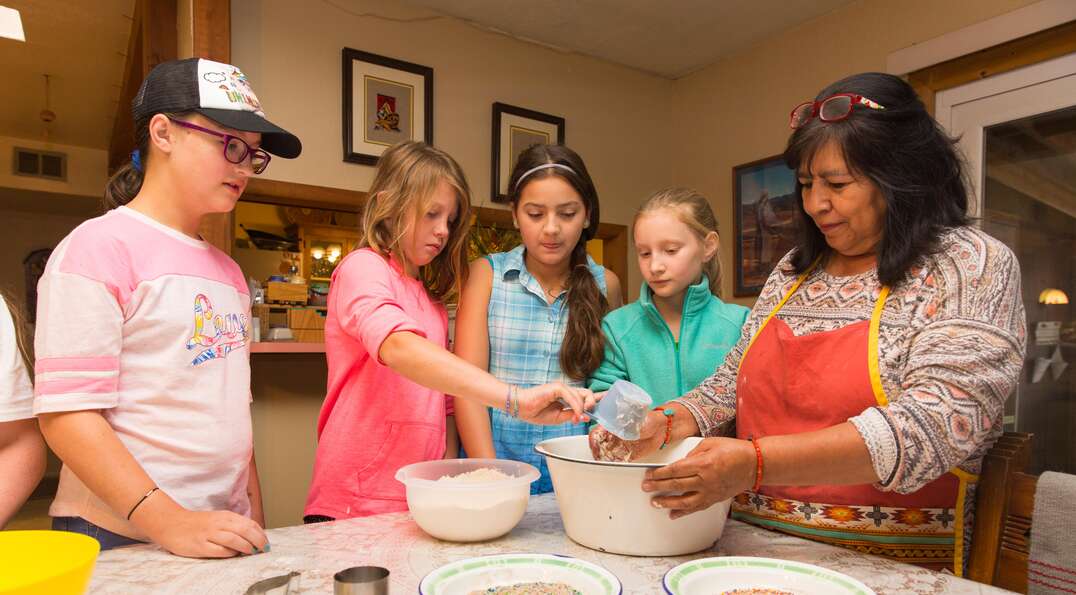
Norma Naranjo guiding children in an intergenerational program on cooking.
One Passion, Many Favorites
“I grew up farming with my family,” Norma said. “My mother was a single mom, and in order for our family to sustain ourselves, we all had to pitch in, and farming was part of that. I was fortunate enough to marry a farmer, and we carry on that legacy of our ancestors. That’s why I continue to teach others how we farm and live as Pueblo people.”
That connection to farming and family traditions also shapes the foods Norma shares with Road Scholars. “One of the dishes that sticks out in my mind is chicos. It’s dried corn that has a smoky yet sweet flavor. We grow ours from the seed that my grandparents gave to my mom, and my mom passed on to us. You can cook it in the horno (an outdoor oven).”
“Another favorite is the vegetarian green chili stew that my grandmother would make. And, of course, we have our red chili stew. It’s a staple — if you go to any of the different pueblos, they’ll serve you a red chili stew. Some people make it with beef, but here we make it with pork and potatoes. We’ll grow, dry and roast the chili pods, which we grind into a powder to make the stew.”
For Norma, these dishes have an ancestral link. “As a people, we dance here for a purpose, and that’s to honor,” she said. “We have the buffalo dance and the deer dance, and that’s to honor these animals and the meat they’ve provided us with. We have a corn dance as well. The food is part of honoring the spirits and honoring our ancestors that have kept us going.”
A Fusion of Cultures
One of Norma’s other favorite dishes has a different cultural influence. “We also have garbanzo stew, and that was brought by the Spaniards,” she explained. “When the conquistadores came, they brought Catholicism and missionaries and they gave our pueblo a saint name. Prior to the Spaniards coming, our name was Ohkay Owingeh, which means ‘the place of strong people.’ Then they changed it to San Juan Pueblo, in honor of St. John the Baptist. But it was changed back to the original name about 15 years ago.”
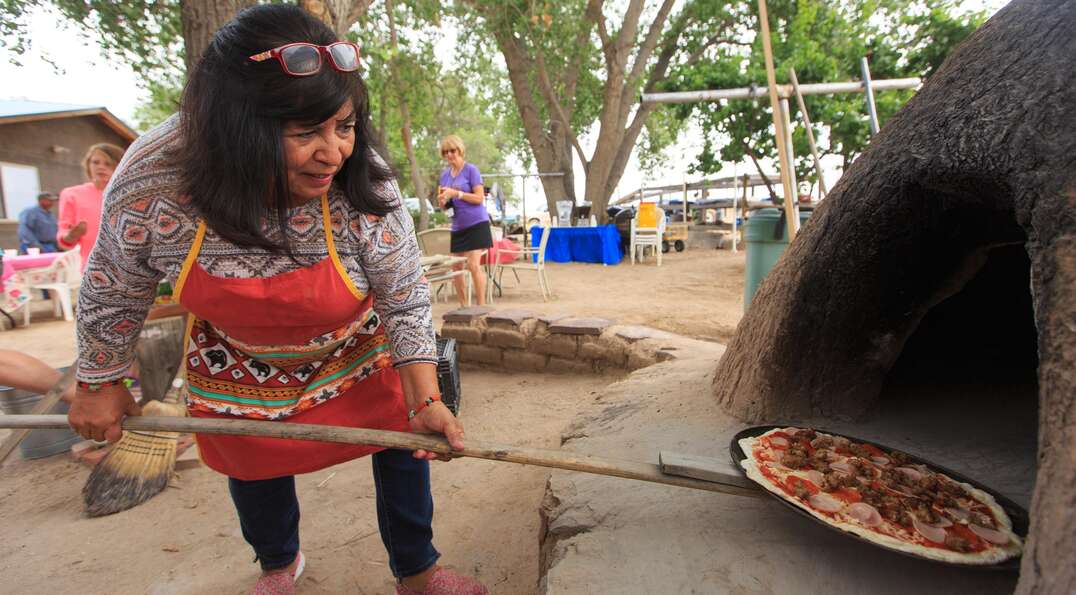
“The Spaniards gave all the pueblos saint names, and they wanted us to celebrate that particular saint,” Norma continued. “In order for us to bake and do all these things to celebrate, the Spaniards taught the women how to build the hornos. It was the Spaniards who brought the hornos to the pueblos, it’s not an Indigenous thing. And they taught the women how to maintain them and how to cook and bake in them, and we still do to this day.”
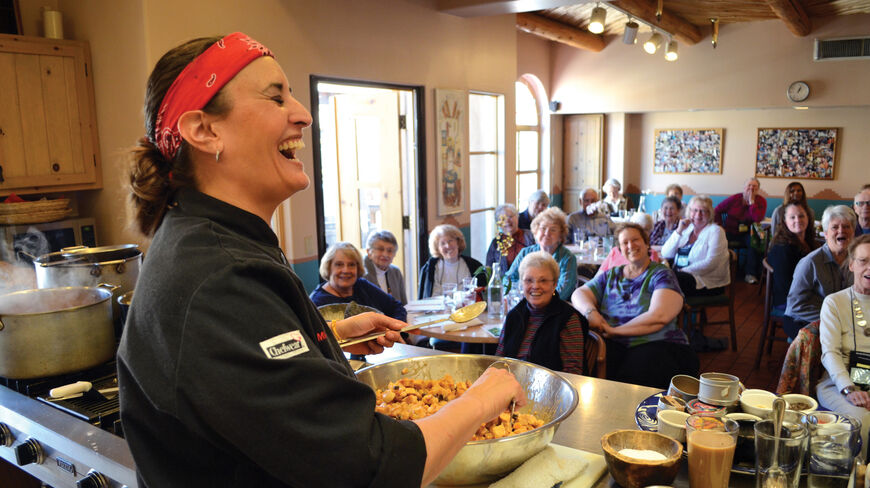
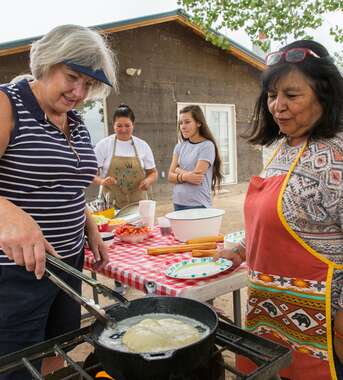
It’s this blend of cuisines that Norma shares with Road Scholars through hands-on cooking classes. “They enjoy it — I teach them how to make empanadas from my own recipe. Sometimes we’ll make pizza — I call it Pizza Rez-Style. Or we make bison meatballs. I want Road Scholars to experience different things. During our time together, we talk about the history of the area and how the diet of people here changed when the Spaniards came.”
With this fusion comes new opportunities for connection. “We have different cultures that mix, and that’s the beauty of it.”
Bringing New Traditions and Knowledge Home
“When Road Scholars depart, I hope they will have learned a little more about our Pueblo people and our type of cuisine,” Norma says. “I hope they take away a little bit of the history of where we live and how things came to be. I hope they leave with respect for us, and that they give us respect in return.”
Interested in meeting Norma and learning more about New Mexican cuisine? Join us on Finding Your Bliss in the Land of Enchantment for Women.