Reflections off a "Dark Continent" Part 1

- The idea of Africa as a “dark continent” grew from limited European knowledge rather than absence of history or innovation.
- Early explorers reported sophisticated cities, governance systems and intellectual traditions across West Africa.
- Civilizations such as Benin, Ile-Ife and Oyo demonstrated advanced political organization, artistry and urban planning.
- Reexamining early travel accounts reveals how misunderstanding and limited perspective shaped global narratives about Africa.

Origins of the “Dark Continent” myth + early European encounters
Instructor Tunde Adegbola has shared his expertise with Road Scholar participants through online lectures exploring African history, language and technology. We’re honored to share this three-part article drawn from his research and teaching, offering deeper insight into the history and science behind the talking drum.
Estimated reading time:
Part 1: ~8–9 minutes
Introduction
An object manifests as dark if it does not reflect light. This occurs either when no light falls on the object, or when it absorbs most or all of the light that falls on it. In the 19th century, Europeans perceived Africa, metaphorically, as a dark continent. This may imply that no light was shed on Africa for its reflection to be noticeable, or that Africa absorbed all the light shed on it by European curiosity.
Considering light basically as a form of energy from the sun, Africa, by virtue of its tropical location, is relatively more open to receiving sunshine than many continents. It is therefore bound to experience much greater intensity of incident light than other landmasses. If Africa appeared dark, it probably absorbed rather than reflected the sunlight. This metaphor from the physics of light provides a basis for understanding the circumstances under which Africa was misperceived as a dark continent.
The misperception of Africa as dark was popularized by Henry Morton Stanley, a Welsh-American explorer, in his highly influential 1878 book, Through the Dark Continent. Until about 1750, in the middle of the 18th century, the African interior was largely unexplored and was therefore essentially opaque to Europeans. Most European interaction with Africa before the mid-18th century was limited to trade in gold, ivory, spices and enslaved people. This took place mainly along the coast. For various reasons — including both imagined and real epidemiological hostility of the African interior — European traders did not venture inland. Most of what Europe knew of Africa came through trade reports of Arab and Berber traders. Hence, owing to inadequate knowledge with which Africa was engaged and because of its perceived opacity, Stanley saw in Africa an unknown and mysterious phenomenon to be approached with utmost apprehension. He recognized the need to be mindful of the geography and ecology of Africa's dense interior. His fellow explorer, David Livingstone, had been long gone into the interior and it was uncertain whether he was still alive.
As a consequence of relatively profuse insolation, the dreaded African interior brimmed with life of all sorts — exotic plants, unfamiliar animals and disease-inducing microorganisms in particular. Even though many of these diseases posed great threats to outsiders, local populations had developed the necessary immunity offered by local ecological balance. This made travel difficult for outsiders. In addition, foreigners were deliberately restricted from certain regions — sometimes for reasons of established local customs and at other times owing to suspicion of explorers' intentions. These were the contexts that produced the trepidation resulting from the ignorance with which much of Europe misperceived Africa as a “Dark Continent.”
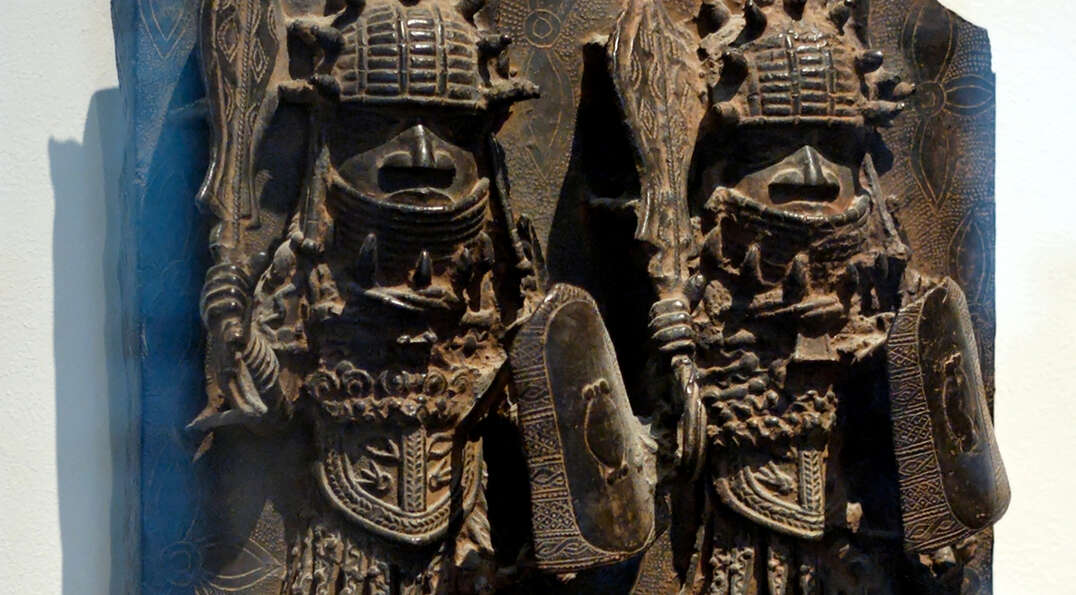
Benin bronze sculpture.
Into the Dark Continent
When European explorers finally ventured into the dreaded interior, however, apprehension turned into wonder and trepidation into awe. The explorers were surprised by the level of civilization and sophistication they encountered. Mungo Park, the European explorer who was later to "discover" the eastward flow of River Niger (piloted by local guides), reported glowingly on the moral order, compassion and communal ethics he encountered and experienced. He recorded in his own words: "I was oppressed by sickness, disappointed of my hopes and worn down by fatigue; yet I was everywhere treated with kindness and hospitality." His account of a woman who sheltered him, singing as she ground grain: "Let us pity the white man; no mother has he" resonates with a Yoruba mantra I grew up with as a child: “ẹ ṣàánú ọmọ tí kò ní ìyá” — be kind to a motherless child.
Leo Africanus, in his 1526 book, Description of Africa, gave one of the earliest accounts of Africa to Europe. He was awed by the book trade, intellectual life and economic sophistication of Timbuktu. He reported: “Here are many doctors, judges, priests and other learned men, that are bountifully maintained at the king's cost.” David Livingstone, exploring Africa between 1841 and 1873, reported on well-governed, commercially active and peaceful communities he encountered in Central and Southern Africa. Even Henry Morton Stanley, who propagated the "Dark Continent" narrative, wondered at the dense populations, extensive farming and well-organized communities. He spoke of many communities in proximity, each surrounded by large parcels of cultivated land. Richard Burton and John Hanning Speke, though bitter rivals, were unanimous in their glowing reports of the royal courts, administrative systems and the protocols and etiquette of the Buganda kingdoms. Overall, these explorers agreed on the scale and geography of the African interior. They were amazed at the organization of trade and the population of large cities. They expressed respect for moral systems and intelligence, and gratitude for generosity and hospitality.

Modern-day village Ganvie in Benin.
West African Cities: Benin, Ile-Ife and Oyo
In West Africa in particular, cities like Benin, Ile-Ife, and Oyo produced some of the most striking expressions of awe and wonder. Portuguese and Dutch explorers and writers of the 15th to 17th centuries were astonished at the scale and layout of Benin City, which to their surprise compared in size and organization to European cities of the time. Olfert Dapper, in his 1668 book Accurate Description of the Regions of Africa, reported it to be larger than Lisbon. Its straight wide streets and their streetlights of palm oil-soaked cotton wicks extended as far as the eye could see at night. The artistic sophistication of bronze and brass castings testified not only to a deep artistic tradition but also to advanced metallurgical technology. The yawning knowledge gap in the explorers' understanding of this advanced metalwork seeped through their writings.
Ile-Ife, reputed to be the cradle of the Yoruba — a major ethnic group of West Africa — was a lesson in Yoruba history for explorers. The antiquity, artistry and sacral order presented by Ile-Ife offered explorers evidence that what they saw in Benin was far more than skin deep. Even though the glass industrial complex of Ile-Ife had receded and the city was no longer a major commercial center by the time European explorers penetrated the African interior, archaeological artifacts pointed clearly to the antiquity of an advanced civilization and sophistication steeped in excellence. The naturalistic artworks preserving the memory of their forbears featured a high level of anatomical realism, technical precision and artistic restraint. European visitors, in denial of the implications of the empirical evidence before them, posited that the artistic works must have been done by Ancient Greeks, Egyptians or a lost civilization. German explorer Leo Frobenius postulated that he had discovered the lost city of Atlantis. But the anatomical realism of the figures gave testimony to the source of the works, pointing directly to natural features — broad noses, thick lips and kinky hair — easily identifiable in the explorers' Yoruba contemporaries. A street discovered to have been elaborately paved with clay shards challenged the visitors' curiosity.
If early European visitors found Benin and Ile-Ife astonishing, Oyo, the capital of a Yoruba empire, presented a glowing testimony of political and military sophistication. At the peak of its glory around 1680, Oyo covered a landmass of about 150,000 km², including a major part of present Western Nigeria, extending all the way to Atakpame in present-day Republic of Togo, with significant portions of present-day Benin Republic included. The Oyo empire was and remains a glowing testimony of an advanced civilization in the dreaded African interior. Hugh Clapperton, traveling around Yorubaland up to Ilorin and environs between 1825 and 1827, commented that Oyo was "one of the most populous [cities] I have seen in Africa," taking note of many large towns and extensive cultivation. He saw in Oyo not a loose aggregation of villages but a state with history. The Lander brothers, Richard and John, who came after Clapperton, traveled extensively around Oyo between 1830 and 1831. Aware that the empire was in decline by the time they visited, they still marveled at the enduring institutions they observed. They reported urban life, stable agriculture and economic organization.
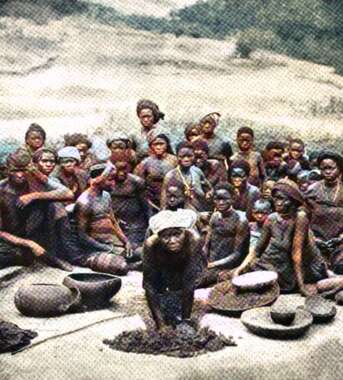
Yoruba people of Mount Ado
European explorers, traders and missionaries who came to Oyo after these early visitors reported astonishment. They encountered the complexity of an imperial governance system in which the conceivable excesses of an Alaafin — the overlord of the empire — were curtailed by constitutional constraints. The Oyo Mesi, a powerful council of seven chiefs, took political and legislative responsibilities, while the Ogboni, another distinct council of elders, took spiritual, religious and judicial responsibilities. The Alaafin, the Oyo Mesi, and the Ogboni therefore constituted a tripartite governance system. Though the Alaafin was at the apex of the system, the Oyo Mesi had powers to check the Alaafin and the Ogboni had powers to check the Oyo Mesi — all in a balanced, powerful system of checks and balances on royal power, long before the notion of democracy was conceived.
Interested in these sources?
Browse the full reading list in our Bookshop.
Continue reading:
Part 2 explores how European observers misunderstood African technologies, focusing on the science and sophistication of the talking drum.
Tunde Adegbola is a research scientist, consulting engineer, and culture activist. As the executive director of the African Languages Technology Initiative (Alt-i), he leads a team of researchers in appropriating modern information communication technologies (ICTs) for African languages. Tunde’s research interests lie at the intersection of information science, telecommunications and linguistics, including the exploitation of speech surrogacy and other features of African tone languages in speech technologies and modern telecommunications.

Tunde Adegbola