
Preparing for Your Outdoor Adventure: 13 Tips from a Road Scholar

- Part of the fun of any learning adventure is preparing to depart! Road Scholar Marsi O’Malley-Riley has embarked on many programs in the great outdoors and she shares her tips for preparing for your active adventure.
- These tips include bringing water shoes for programs including kayaking or canoeing, using a head strap if you wear glasses and packing your walking sticks in your checked luggage.
- Marsi also offered some tips on key items to pack, including a windbreaker, gloves, any necessary medications and a lightweight duffel bag.
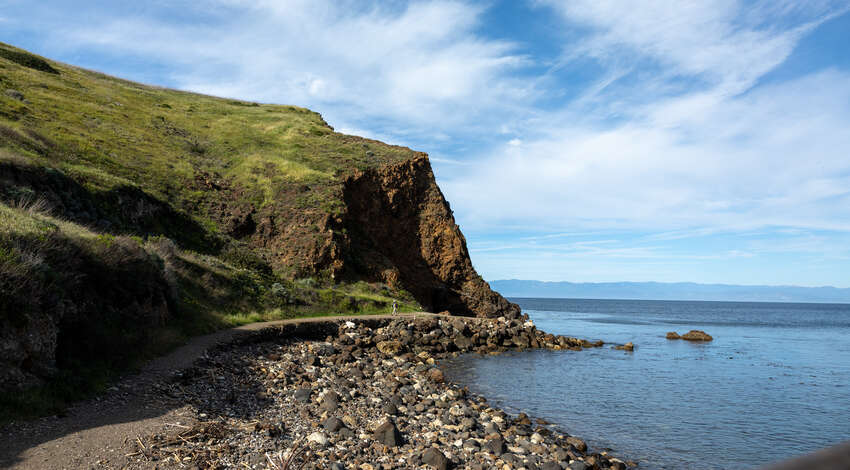
What does an outdoor adventure mean to you? Do you like to be active and participate in several different sports such as kayaking, swimming and hiking? Does walking through woods appeal to you? Perhaps you enjoy the smell of the ocean and sand on your toes. Outdoor activities can provide physical exercise, keep you healthy and fill you with awe. Wherever you picture yourself, your Road Scholar outdoor adventure awaits!
To help you prepare for your own outdoor adventure, here are a few suggestions to consider before you go:
1. Bring two pairs of shoes for hiking.
While on a multi-day hiking adventure with Road Scholar to Glacier National Park, the sole on my husband’s shoe fell off! Fortunately, he had a backup pair. Ever since, when hiking, we consider two pairs of shoes a must. They should be broken-in, have arch support, have non-slip tread and be easy to get on and off.
2. Keep moleskin or blister pads handy
Use them at the first sign of rubbing. Moleskin works like magic to prevent blisters!
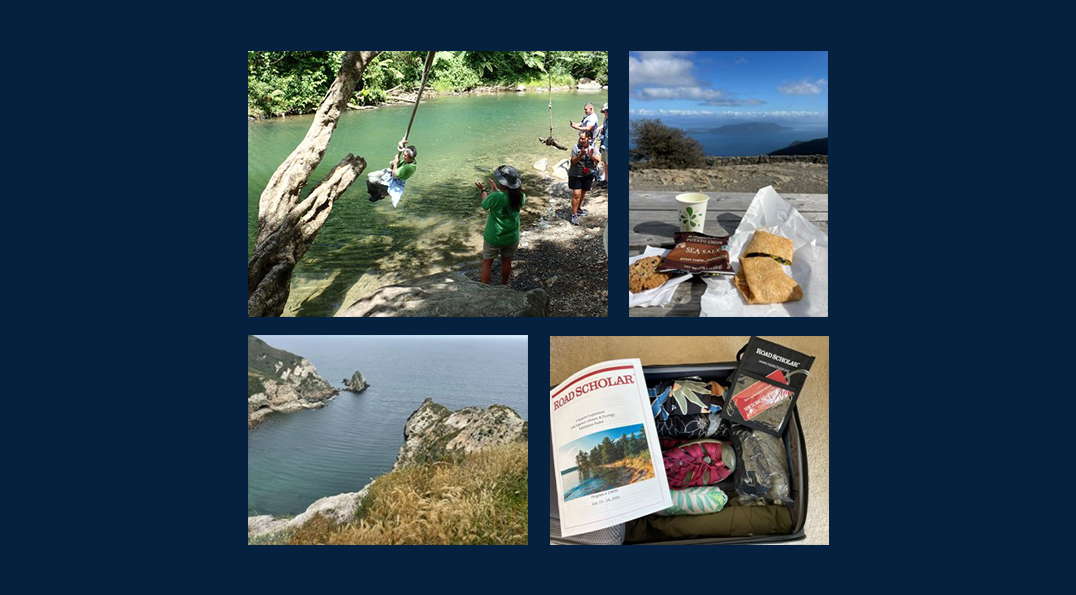
Top left to right: Marsi rope swinging in Puerto Rico. Lunch at Mt. Constitution in Washington.
Bottom left to right: Santa Cruz Island, California. Marsi's suitcase.
3. For water adventures, bring one pair of regular shoes and one pair of water shoes.
During a Road Scholar adventure to Lake Superior, we went kayaking, and I failed to bring a pair of water shoes. As the kayaks were launched in the water, I wore just my socks to protect my feet from the rocks in the river. It was slippery, but I didn’t want to get my only pair of shoes wet. Proper footwear would have been helpful, and now I always pack water shoes.
4. Wear a strap to keep your glasses on during rafting, kayaking, horseback riding, windy conditions or other activities that might jostle you.
During the same kayaking program, a couple had a mishap when they ran into branches of a tree. They weren’t hurt, but the woman’s glasses fell off. A simple strap can help keep your glasses secure during unexpected bumps and jostles.
5. Check the rules for traveling with walking sticks before you fly.
When our Road Scholar adventure departed Rapa Nui (Easter Island), one of our companions learned at security that her walking sticks couldn’t be carried onto the plane. Since then, I always check the requirements for walking sticks when deciding whether to check a bag.
6. Bring a container to put your hearing aids in if you will be at the beach or swimming.
One person in our party lost a hearing aid at the beach on a Road Scholar adventure to Puerto Rico, which sparked this tip. These small containers are also a good idea for jewelry or other small, personal items you might be taking on and off during an active adventure.
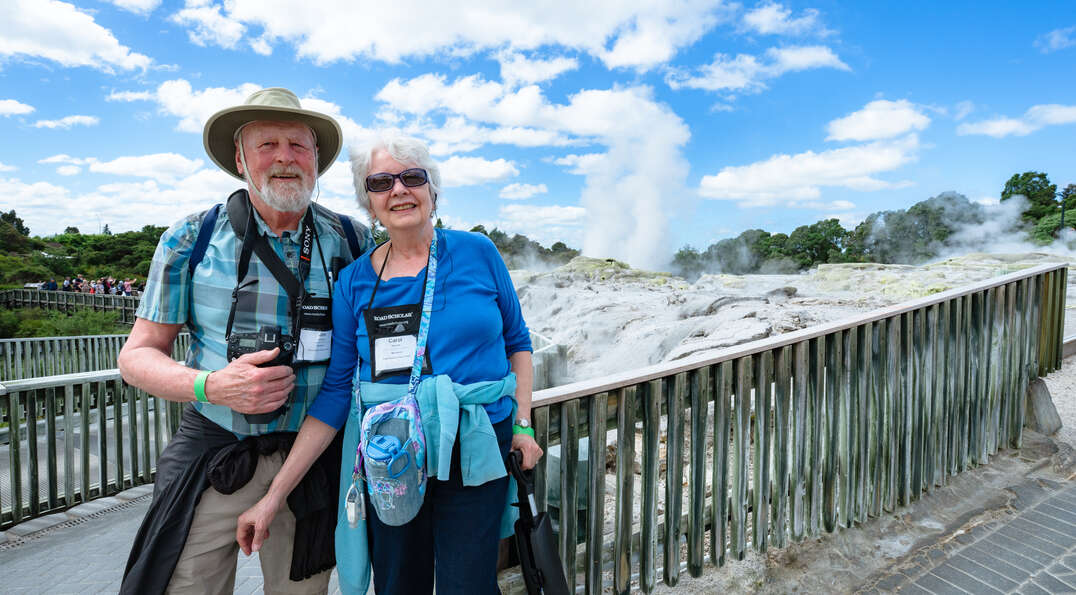
Road Scholar participants geared up.
7. Review information about luggage size and weight limits for flights.
Road Scholar provides this information in your initial registration materials. For our South Africa adventure with Road Scholar, there was a short flight from Cape Town to Johannesburg. Not only were there limitations on size and weight on carry-on bags, there were restrictions on checked luggage as well. Also, consider if there are any limits on flights on small planes you are taking to get to your Road Scholar program. I flew on a small plane from Chicago to Duluth in which the overhead compartment was only six inches high.
8. Bring a plastic bag with toilet paper for long hikes.
Road Scholar Group Leaders are very good at stopping frequently for restroom breaks. However, some of the longer hikes, like those in Glacier National Park, don’t have outhouses available. Bring a bio-bag, which is a plastic bag with toilet paper for your stop in the woods. Carry out your used tissue, and do not leave it behind or bury it — this is part of the “leave no trace” principles.
9. If you have a specific requirement, such as requiring distilled water for a CPAP machine, note it under “Indicate Your Preference” for your Road Scholar program.
Just log in to your account, select your upcoming program and click on “Indicate Your Preference.” Under “Additional Comments,” state your need. Road Scholar Group Leaders are very helpful getting what you need if they can.
10. Consider purchasing Road Scholar’s Trip Protection Plan when you book your adventure.
This travel insurance reimburses you for cancellations as well as air travel adjustments whether or not Road Scholar booked your air transportation. If an airline cancels your flight and does not have another flight until the next day, the extra hotel fee or the price to catch up to your Road Scholar program can be costly.
11. Roll clothing rather than folding flat for fewer wrinkles and for a better fit in your suitcase.
Some people use compression bags to remove excess air and flatten their clothing. Gallon-sized plastic bags work as well. Just squeeze the plastic bag to eliminate the extra air. This can also help when sorting hiking outfits vs. casual wear, and keeping things organized in your suitcase.
12. During short hikes and field trips, only bring a few essentials such as water and a hat.
I use a water bottle holder that crosses over my body. This holder doesn’t weigh much and keeps my hands free. There’s enough room for my water bottle and phone. Keep a backpack in the bus with extras such as a jacket, layers of clothes, sunscreen, bug spray, extra water and a snack.
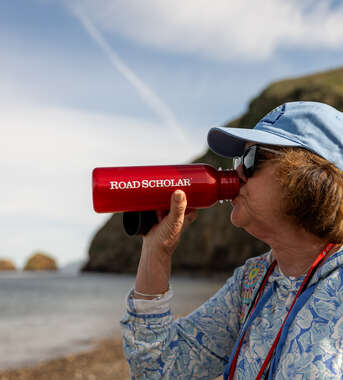
Road Scholar participant taking a sip while on a hike.
13. Consider packing:
- A windbreaker with a hood.
Windbreakers help keep the rain and wind off you and make hiking in the rain fun! - A hat with a chin strap for windy weather.
Or, a beanie hat may help keep your head warm on boat rides. - A neck scarf.
Neck scarves can provide warmth, protect your neck from the sun or cover your hair. - Gloves.
Even in summer months, your hands might get cold during early morning activities at high elevations. - A lightweight duffle bag inside your suitcase.
Use it for dirty laundry or as an extra bag when you need one. - Over the counter medications you may need for allergies, asthma or motion sickness.
Also, take a photo on your phone of all your medicine bottles. This may make emergency replacements easier.
Where is your next outdoor adventure going to be? Road Scholar offers hundreds of choices. With a little thoughtful planning before you go, you can be prepared to make the most of your time in the great outdoors.
Lauren Briggs first discovered Road Scholar at the age of ten, when she embarked on a Grandparent Adventure with her grandfather. In 2022, she reconnected with the
organization and began writing for Road Scholar full-time. Lauren is especially passionate about sharing participant stories, including her own Road Scholar experiences in South Dakota and Grand Teton National Park. She lives in Massachusetts and enjoys spending summers exploring New England in her campervan.