
Learning Through Generations: The Nucci Family Keeps Sharing Its Love of Italy with Road Scholar

- The Nucci family has led Road Scholar and Elderhostel programs in Italy for nearly 40 years, spanning two generations.
- Barbara Nucci began as a lecturer with Elderhostel in 1986 and passed her passion for cultural exchange to her sons, Enrico and Domenico.
- Enrico and Domenico Nucci continue to lead learning adventures in Italy, bridging cultures through their bicultural upbringing.
- The family’s story reflects Road Scholar’s evolution from Elderhostel to a modern learning adventure organization rooted in curiosity and connection.
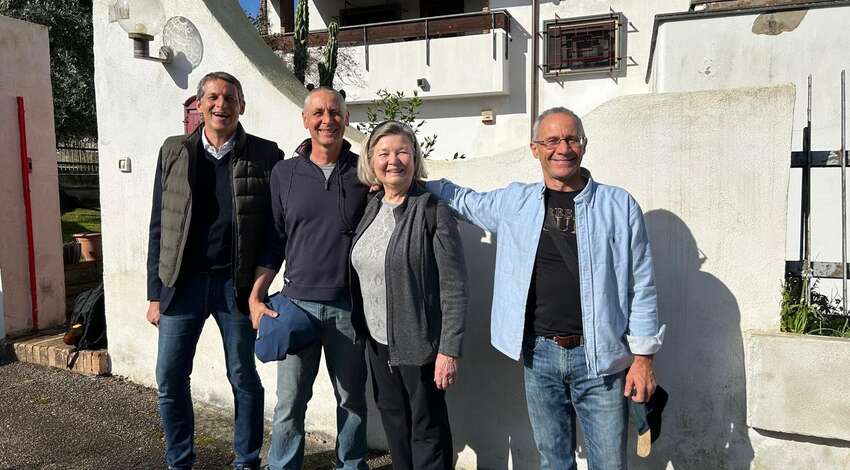
Road Scholar is well-known for the quality of its group leaders and instructors, but few adventures could match the depth of expertise enjoyed by participants on a family and friends Treasures of Sicily program in October 2019.
For starters, the Group Leader was Enrico Nucci, who has led Italy learning adventures for nearly three decades, beginning when what is now Road Scholar was Elderhostel. Then, for part of the program, Enrico was able to share the leader baton (or Whisper microphone) with his older brother Domenico, who also goes back to Elderhostel days. But the deepest Road Scholar roots belonged to yet another Nucci — the brothers’ mother, Barbara. She could have easily led the program herself. In fact, guiding visitors and offering lectures on a wide range of Italian and other topics for Elderhostel and Road Scholar is just what Barbara Nucci did for decades.
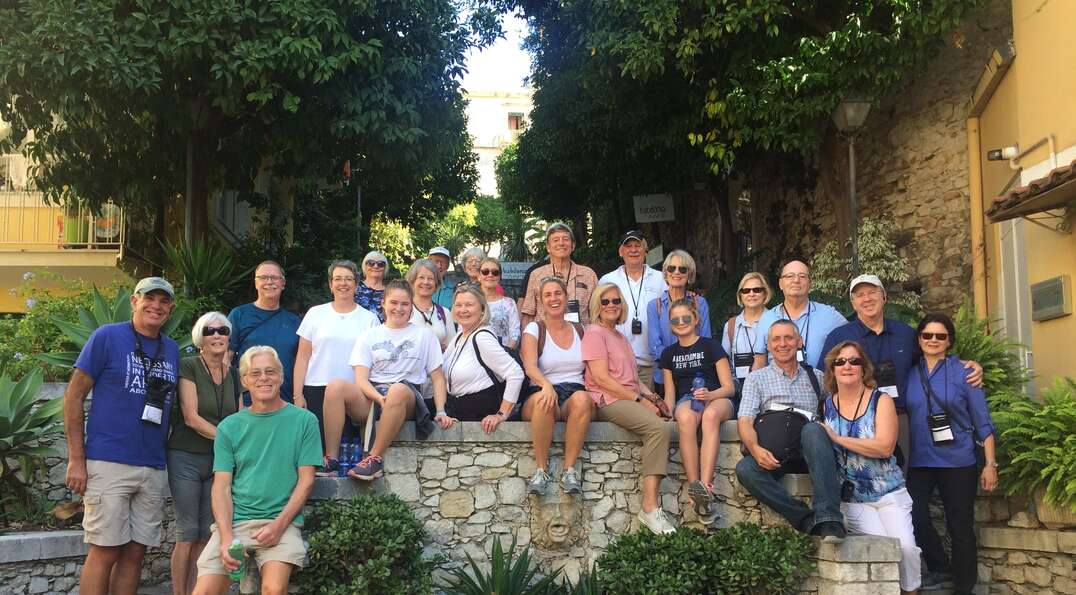
In 1986, she was put in touch with Dr. Michael Campo, chair of the Italian Department at Trinity College, who was looking for someone to lecture in Sorrento to groups with Elderhostel, which was just getting established in Italy. She happily agreed.
Not that living in Italy or becoming a group leader was how this descendant of Maine sea captains had planned her life. Raised in Maine, then-Barbara Dow attended Mount Holyoke College in Massachusetts and went abroad to study classics in Naples when, in 1963, she met a recent law school graduate, Giovanni Nucci. The two shared a love for Italian culture and history and soon, for each other. Together, they planned to go to Boston to get master’s degrees, his in literature and hers in library science. But those plans changed when Giovanni inherited a family farm just outside of Naples. They decided to stay in Italy and restore the old farmhouse, “which was falling down,” said Barbara.
She found work teaching in schools created for dependents of U.S. military families stationed in Naples, including the Navy’s Sixth Fleet, and for an Army education center that was under the NATO umbrella. Soon, the University of Maryland, which offered degree programs under contract with the U.S. military, offered her a job. She accepted.
She started doing administrative work while continuing to study Latin and archeology, as well as Italian. Then came that 1986 call from Michael Campo, and Barbara began to teach for the University of Maryland during the week and for Elderhostel on weekends, starting with a four-part course on Contemporary Italian Society. She would teach that class for 20 years, adding lectures on other topics over the years, including Famous Italian Women.
Intellectual interest was in her genes, she said. “There was curiosity about the world in my family. My parents read all the classics. I still have books from my father’s sea-faring family,” said Barbara, whose Maine lineage goes back to before the revolutionary war. “They were very well educated, as were so many coastal Mainers because they were in contact with the rest of the world. Their sea captain family members brought new ideas and new ways of doing things home long before the Internet.”
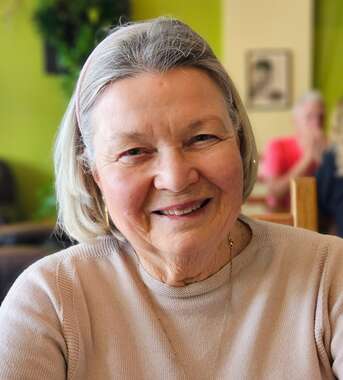
Barbara Nucci
Barbara and her husband Giovanni shared this curiosity, especially about the classical world. “We both loved history, and not just of Italy.” And they passed their intellectual curiosity and shared cultural heritages to their three children.
“My brother and I are very different but we both are passionate about bridging cultures,” said Domenico, taking a break while leading a recent Sorrento and the Amalfi Coast Road Scholar trip. “We’re a happy medium between my father’s and mother’s cultures, from coastal Maine and post-war Naples. We always embraced both our cultures.” He and his siblings – brothers Andrea and Enrico – grew up fully bilingual. “Two of us might be speaking Italian and the other English and no one noticed,” he said.
Barbara Nucci took the same approach with her Elderhostel students. “My role in both the University courses I taught and with Elderhostel/Road Scholar was to bridge cultures. I wanted to take all that is positive about the Italian culture and make it part of my life while holding on to all the good things from my own heritage.”
Her sons soon joined in. The U.S. military was organizing walking tours of Naples, which in the early 1980s was not as visitor friendly as it is today. Domenico and Enrico began to help with both logistics — meeting the military groups at train stations – and with guiding in Naples and nearby sites. The work came naturally, said Enrico, who recalled meeting Michael Campo and other early Elderhostel pioneers through his mother. “Surely the bicultural and bilingual background as the son of an Italian father and an American mother has influenced my decision to join the learning adventures with Elderhostel and now Road Scholar,” he said. “All the family travels between Italy and the United States were most likely a foundation, a bridge between cultures that was there from the very beginning.”
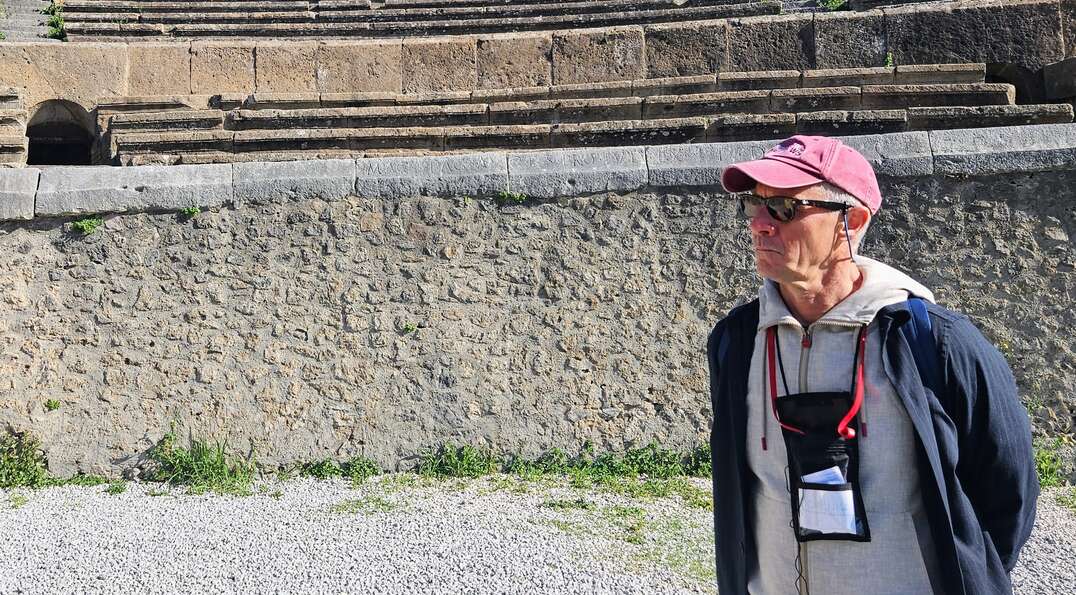
After graduating from the University of Maryland, Enrico worked in the United States for a few years before returning to Naples and joining Elderhostel in 1998 for seasonal assignments as a Group Leader. Domenico took a different geographic and professional path, spending years in Kenya, Rwanda, Sudan and elsewhere in Africa working on humanitarian issues with a series of non-governmental organizations.
The work was important and satisfying, Domenico said, but after about a decade, he was ready for a change and went from east Africa back to Italy to work full time for Elderhostel in 2006. “It was a nice return in that I could easily fit back into a culture coming from a different world. It was like coming home. I was again able to embrace both my cultures.”
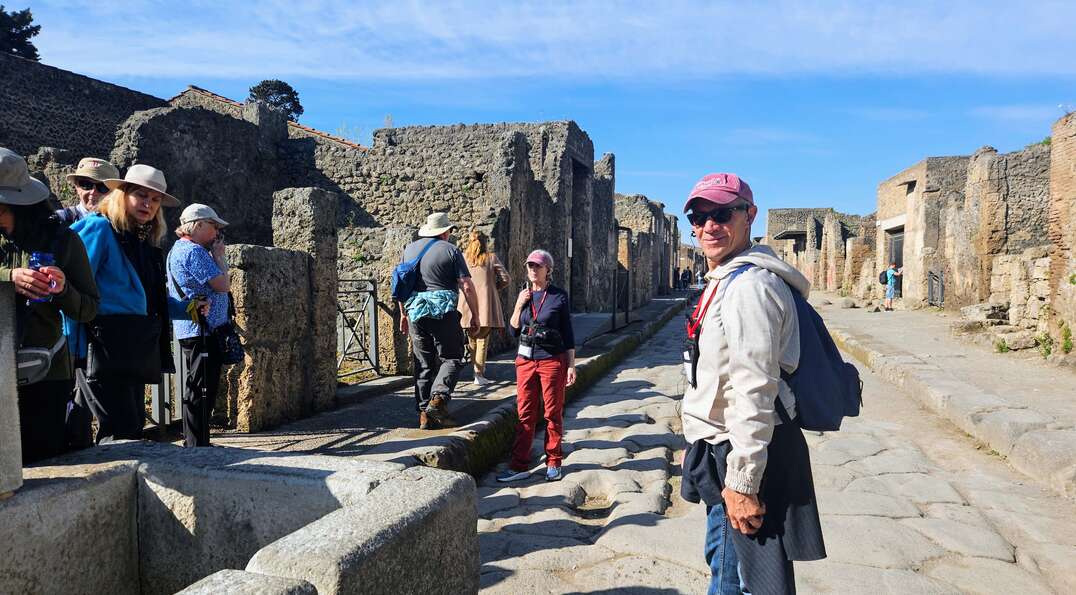
Barbara Nucci spent 20 years with Elderhostel and Road Scholar, retiring in 2008, though she remains engaged in all things cultural and Italian. Enrico and Domenico continue to work as Group Leaders in Italy. All three Nuccis have seen Elderhostel, which featured longer lectures and relatively Spartan accommodations, evolve into today’s Road Scholar. They look forward to the next stages of Road Scholar’s evolution.
“I predict that Road Scholar will adapt to new generations of travelers while holding on to the idea that travel is to learn, not just to have fun,” said Domenico. “The niche is to move into places that haven’t been discovered. If the next generation wants it, Italy has 2,000 villages waiting to be discovered.”
The challenge — and mission — for Road Scholar today is similar to what drew her to Elderhostel decades ago, Barbara Nucci said. “Our task is to introduce aspects of another culture in interesting, enjoyable ways that allow participants to return home with fresh insights into themselves and new perspectives on the world at large.”

Phil Primack is a Boston-based writer whose work has appeared in newspapers and magazines across the country. His latest book is "Put It Down on Paper: The Words and Life of Mary Folsom Blair: A Fifty-Year Search."