
Finding Amelia Earhart: How Archaeologist Dr. Richard Pettigrew Narrowed the Search

- Dr. Richard Pettigrew is an archaeologist who has been fascinated by the investigation of Amelia Earhart’s disappearance for decades.
- In 2017, Dr. Pettigrew visited Nikumaroro Island in search of evidence that it was the final place Earhart landed on her journey around the world.
- During this visit, Dr. Pettigrew identified examples of how weather can play a role in altering where and how archaeological objects can be uncovered.
- In 2020, the Taraia Object was discovered — a strange anomaly by the Taraia Peninsula. Dr. Pettigrew now believes that the Taraia Object is the remains of Earhart’s plane — and he is on a mission to prove this theory.
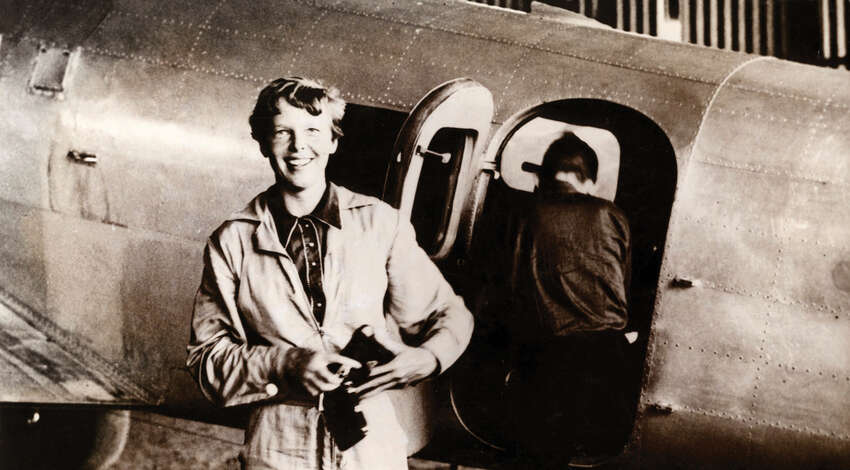
Solving the Amelia Earhart mystery was not originally a life goal of mine, even though I followed Earhart expert Ric Gillespie and my long-time friend and colleague Tom King for decades with acute interest as they continued to gather evidence in support of the Nikumaroro Hypothesis.
The Nikumaroro Hypothesis is a theory that speculates that Earhart’s Lockheed Electra 10E did not crash into the ocean, but instead landed on Nikumaroro Island, a remote uninhabited coral atoll in the central Pacific Ocean, midway between Hawaii and Australia.
By the time I traveled with Tom to the island in 2017 as an expedition participant, I was already convinced that Nikumaroro was probably the final stop for Earhart and her navigator Fred Noonan, even though the “smoking gun” proof remained elusive. At that time, Tom was focused on excavating and recovering more human remains from the Seven Site, a patch of bush on the southeastern shore of the island, where bones found in 1940 — and subsequently lost — likely belonged to Earhart. Recovering just one more human bone at the Seven Site and getting a DNA match with Earhart would confirm the hypothesis, but the effort proved to be futile.
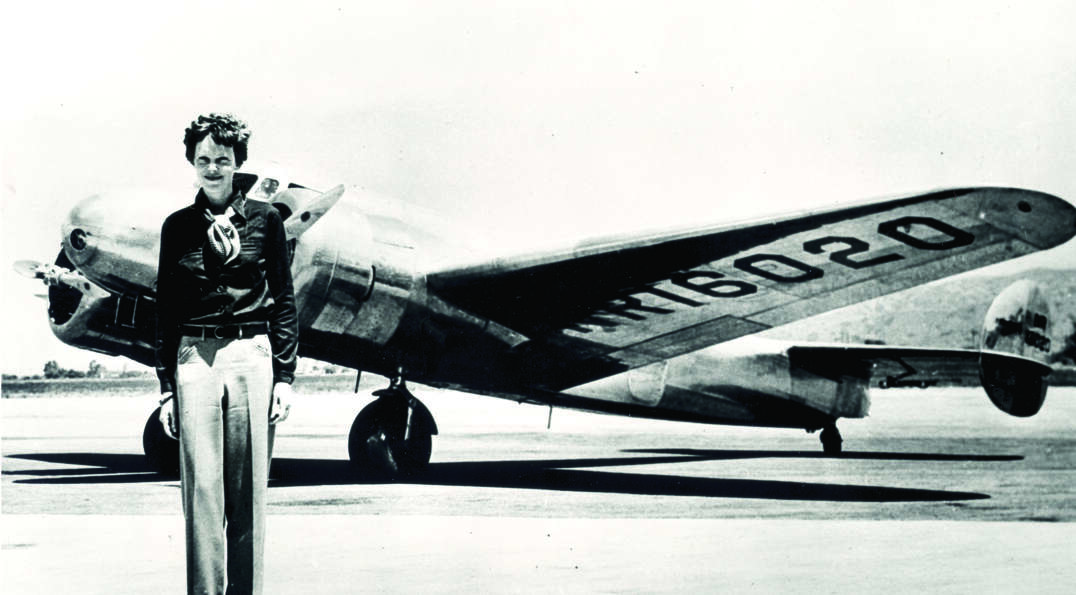
Amelia Earhart standing in front of her Lochead Electra in July 1937.
Searching for Evidence
While Tom was busy at the Seven Site, I was able to roam over key areas of the island to look for other evidence and film the search. I recognized a layer of recent flood deposits covering the colonial village area, including objects most likely brought up from the sea and dropped on the island. Among these pieces was a plastic medicine vial with the partial inscription “. . . UCA PHARMACY,” found on the surface during the previous 2015 expedition and re-found in 2017. The Toluca Pharmacy, which still exists today in Studio City, California, was the nearest drug store to Amelia Earhart’s house back in 1937.
If the Shoe Fits
Evidence of a recent flood also turned up in the old colonial village area next to Tatiman Passage, which connects the island’s lagoon to the ocean. After Tom’s son Josh found a leather shoe in that vicinity, a group of us walked up there to examine the area. We relocated the shoe — which was very much in a 1930s style favored by Earhart — and found more items on the surface, including a 1930s American flashlight, an alarm clock and a very curious but unidentified aluminum grill. These, along with seashells and other objects, had clearly been left behind by flowing water in a small space only about 100 feet in diameter.
Until that time, researchers on the island had assumed that any artifact found on the surface was something gathered and left behind by the colonists. What I saw in 2017 highlighted for me the dynamic nature of the island and made me curious about the natural forces that have shaped and modified the place from its beginning — and certainly since 1937. Learning about those dynamics became the key to what I think will be the final solution of the mystery.
Robert Ballard Joins the Search
Frustrated that I wasn’t able to go back to Nikumaroro in 2019 with Tom and the next TIGHAR (The International Group for Historic Aircraft Recovery) expedition, I resigned myself to the fact that I would never have another role to play in the Earhart search. Tom and his field team found no more human bones at the Seven Site. Robert Ballard, an American oceanographer and marine geologist famous for discovering the wreck of the RMS Titanic in 1985, came to the island with support from National Geographic but failed to locate any trace of aircraft wreckage in the deep water alongside the island’s reef. By the time 2020 arrived, every effort to find the smoking gun had reached a dead end, and many Earhart researchers whom I knew were ready to throw in the towel.
Never Throw in the Towel
Later that year, Michael Ashmore, a U.S. Navy veteran, spread the word that an Apple Maps satellite image showed a visual anomaly in the Nikumaroro lagoon alongside the Taraia Peninsula. We’d seen dozens of such claims over the years, and almost always, they turned out to be nothing significant. The TIGHAR Forum kicked it around, and Ric Gillespie expressed his judgment that the object was probably a tree.
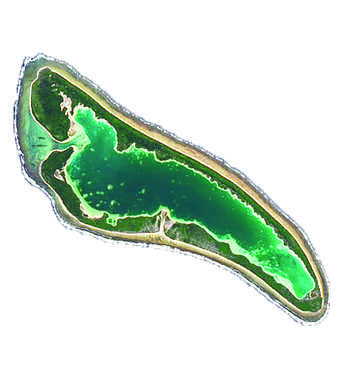
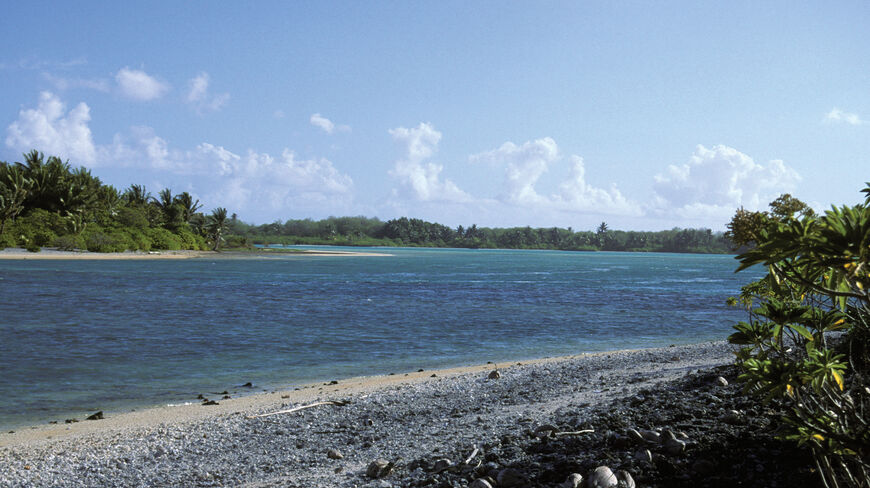
Nikumaroro Island.
The Taraia Object
In 2021, however, a friend pointed me to the anomaly again, and I began to consider what it could be. My curiosity led me to invite Michael Ashmore to participate in an Amelia Earhart symposium that we were organizing in Eugene, Oregon, so he could show us his evidence. His presentation spurred my interest further. Could the Taraia Object be the wreckage of Earhart’s Electra aircraft? This was an outlandish idea. Wouldn’t such an object have been found and identified long ago? These questions demanded answers, and I was not convinced by the TIGHAR opinion that it was a tree. It looked like no tree I had ever seen.
Although I began considering ways to get back to the island to examine the Object, I realized that no financial support for such an expedition would be forthcoming without more evidence — and it would take a lot to overcome the “Amelia fatigue” after 84 years. To learn when and for how long the Object had been visible, I convinced a group of friends to make donations so we could buy about two dozen more satellite images.
These new pictures revealed that the Object became visible in 2015, shortly after the storm surge from Tropical Cyclone Pam struck the island. They also revealed the substantial damage to the island’s vegetation caused by that storm. The Object displayed three distinct parts that looked shiny and metallic. Over a period of about six years, it became less and less distinctly visible, evolving into a V-shaped mark on the lagoon’s bottom.
Archaeologists are trained to see evidence in the context of transformations. We often find things and features that echo but do not closely resemble what they once were. We are mindful of the forces and processes that cause an artifact to change and move over time. Thus, when I looked at satellite images of the Taraia Object, I did not expect to see an aircraft, but rather how parts of an aircraft might appear after nature had had its way with them. I asked myself, “How could the Electra aircraft have become the Taraia Object?”
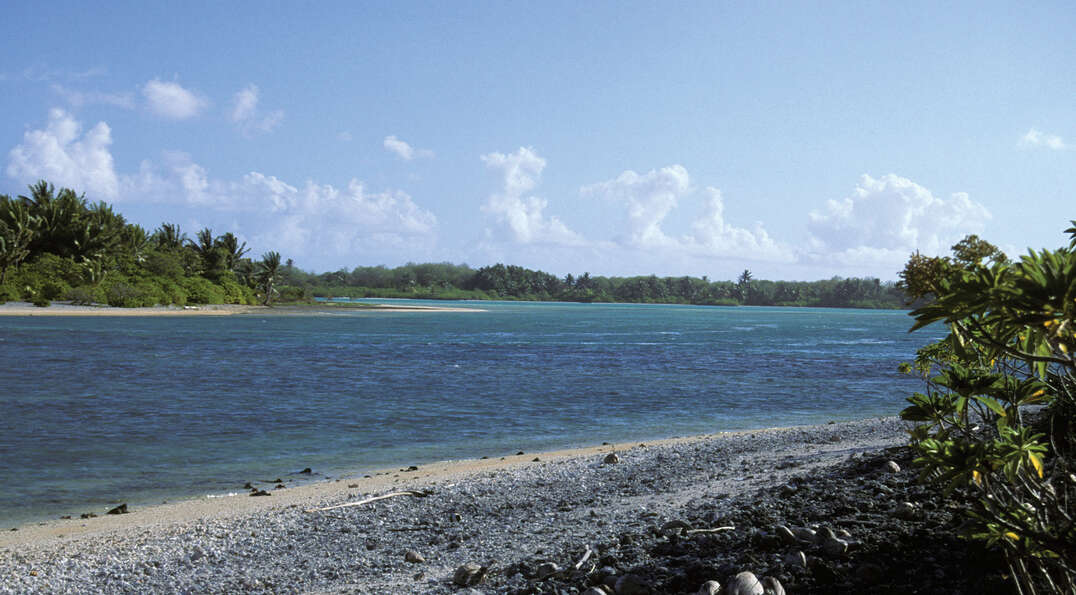
Nikumaroro Lagoon.
A Solar Reflection
To address this question, I put together an explanatory model and looked for more visual evidence. I reviewed the helicopter video shot by TIGHAR during their 2001 visit to the island. That video shows what appears to be a solar reflection coming from the lagoon bottom at the precise location of the Taraia Object. Even older visual examples appeared in aerial photographs shot by the New Zealand military in 1938 — something shiny alongside the Taraia Peninsula is seen in two photos taken from opposite sides of the island. I also found the Taraia Object in drone footage that I had shot over the island in 2017, before anybody knew that this visual anomaly existed.
All this is consistent with my theory that Earhart and Noonan landed their aircraft on the northwestern reef flat on Nikumaroro. Within days, the plane became flotsam, breaking up on the reef in the surf and reduced to a floating fuselage. Where I part ways with Ric and TIGHAR is in my proposal that the bulk of the wreckage did not go down in the deep off the reef edge — as had been assumed by everybody — but instead, floated into the lagoon with the rising tide and settled on the bottom alongside the Taraia Peninsula.
Forces of Nature
Only through an understanding of hydrodynamics and geomorphology (essentially learning how moving water can change a landscape) can one recognize the transformation that caused the Electra aircraft to become the Taraia Object. Seeing the island through my archaeological lens, I recognized the effects of moving water on the distribution of artifacts on the surface.
None of the events that led to the Taraia Object hypothesis were planned. I was simply in the right place at the right time — with the right background — and asked the right questions. I guess it was my fate to be lucky.
Dr. Pettigrew’s search is still ongoing — join us online on Wednesday, Jan. 6, 2027, at 4 p.m. (ET) for a free one-hour lecture about his most recent expedition to Nikumaroro!
Dr. Richard Pettigrew is an archaeologist and the executive director of the Archaeological Legacy Institute. With over 50 years of field experience, he holds degrees from Stanford University and the University of Oregon and has led hundreds of archaeological investigations. Dr. Pettigrew is a recipient of the Society for American Archaeology’s Award for Excellence in Public Education and currently leads a groundbreaking expedition to Nikumaroro Island to explore new evidence in the Amelia Earhart mystery.