
Día de los Muertos: Celebrating Hispanic Heritage in Oaxaca

- For Road Scholar Margie Mahan, experiencing Día de los Muertos was what drew her to enroll in her recent Oaxaca program.
- Día de los Muertos is a Mexican holiday honoring the lives of loved ones who have passed on. Family and friends celebrate their memories through colorful decorations, special cuisine and spending time together, often at the deceased’s grave.
- Beyond the celebrations of Día de los Muertos, Margie also experienced local life and culture in Oaxaca, through activities like an Indigenous dance performance.
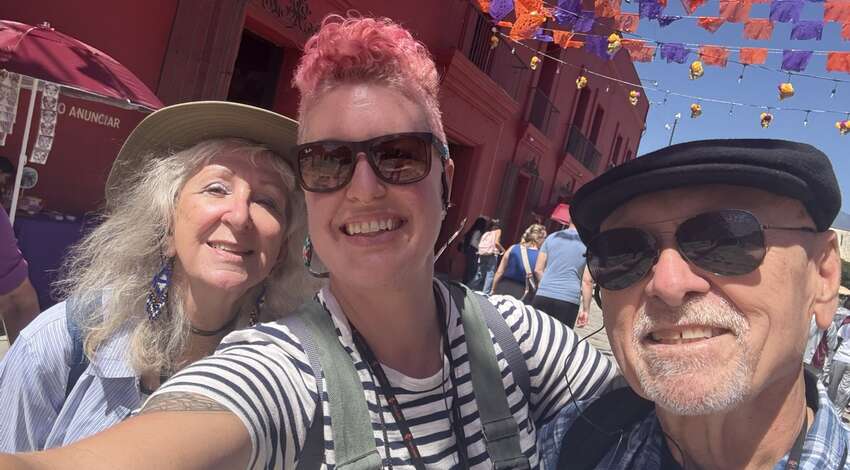
Travel opportunities aren’t hard to come by for Road Scholar participant and employee Margie Mahan. But for her, it’s not just the act of going somewhere new that excites and inspires her. “I get to realize ‘Oh, other people in the world are living different lives than me and making different choices.’ I can take a step back out of my own life and into someone else’s.”
This exploration of different cultures was something that inspired Margie to enroll in the Día de los Muertos in Oaxaca program. “My mom studied for a year in Mexico City when she was in high school, and my dad lived in Spain with me as a kid. So I’ve always had this interest in Spanish, Mexican and Latin American culture. And along with that, Halloween’s always been a fascinating time for me, not only as a kid dressing up, but also understanding the cultural aspects and the traditions surrounding that time of year.”
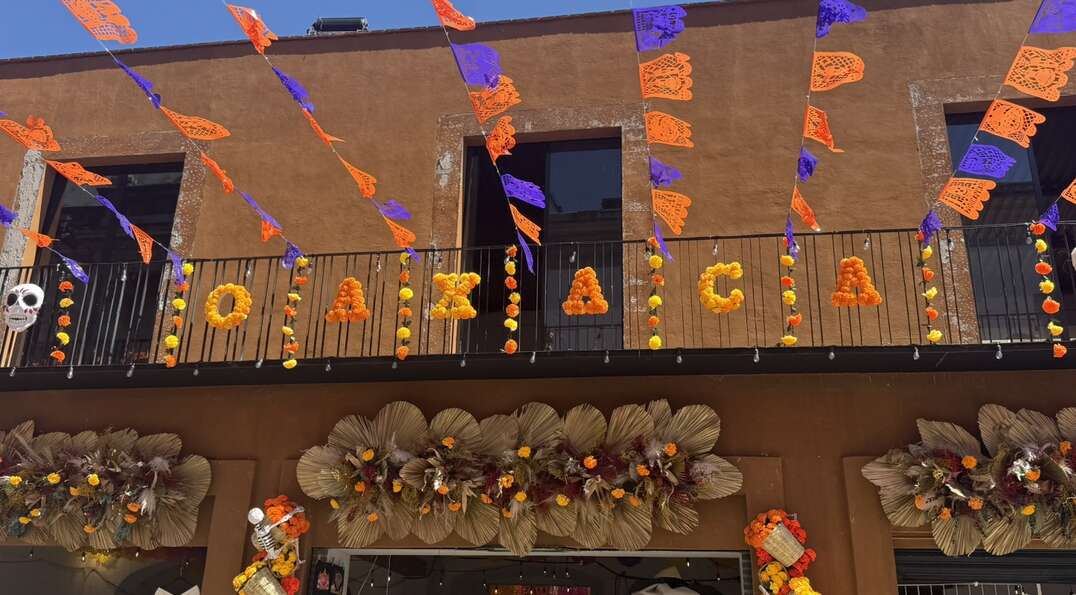
What is Día de los Muertos?
“I heard this phrase: ‘Those who are remembered, live.’ To me, that’s the core of the idea of Día de los Muertos,” Margie explained.
This multi-day holiday is dedicated to reuniting the living and the dead, with gatherings and decorations to honor the departed. “It literally means ‘Day of the Dead’ in Spanish, but there’s this theme of celebration. Mourning, yes, grief, yes, that’s a part of life. But at its core, it’s a celebration. To be in Oaxaca for Day of the Dead and be a part of it was incredible — everyone’s out in the streets and there’s so much color and music.”
Learning Through Celebrations
There were many details about Día de los Muertos that stood out to Margie. One was the festivities in local cemeteries. “Loved ones of the deceased make ofrendas, or altars, for the departed in their home and at gravesites. One night, we went to a cemetery and saw families gathered — there were many happy tears. The plots and spaces are small, but everyone’s there sharing drinks and food, and kids are all running around. There was one family singing karaoke! It was fascinating to see the differences in how death and grief are viewed during Día de los Muertos versus in the U.S.”
The idea of ofrendas inspired Margie to create one back at home this fall. “I love the idea of putting together this altar with photos and the food the person liked the most, or even a pet’s favorite treats. I’ve been doing that for a couple of years now, and I got some ideas for this year from seeing these ofrendas in Oaxaca.”
Celebrations took place during the day as well. “The comparsas are parades that happened both during the day and at night,” Margie said. “They’re made up of groups of neighbors, friends or coworkers, all coming together to celebrate. We even saw a comparsa of school kids and their parents! It was touching to see different groups doing this together.”
“There’s meaning in everything for Día de los Muertos,” Margie continued. “One of the signature holiday dishes is pan de Muerto, or ‘bread of the Dead,’ and it’s often decorated with bones or skulls. Marigolds, or cempasúchil, are the holiday’s flower — the word cempasúchil is from the Indigenous Nahuatl language used by the Aztec civilization.”
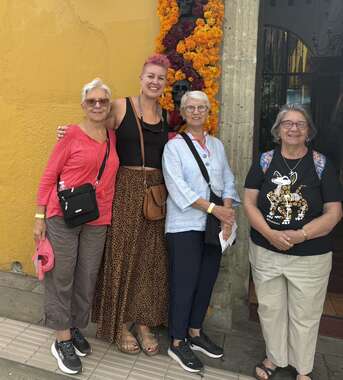
Día de los Muertos has its roots in Mesoamerican traditions — the Aztecs would honor Mictēcacihuātl, the Lady of the Dead, and deceased ancestors. The arrival of Spanish colonizers also meant the arrival of Catholicism, and the Indigenous traditions began to change to coincide with All Saints’ Day and All Souls’ Day. “It’s interesting to see how Día de los Muertos was maintained and merged with new traditions throughout the centuries,” Margie said.
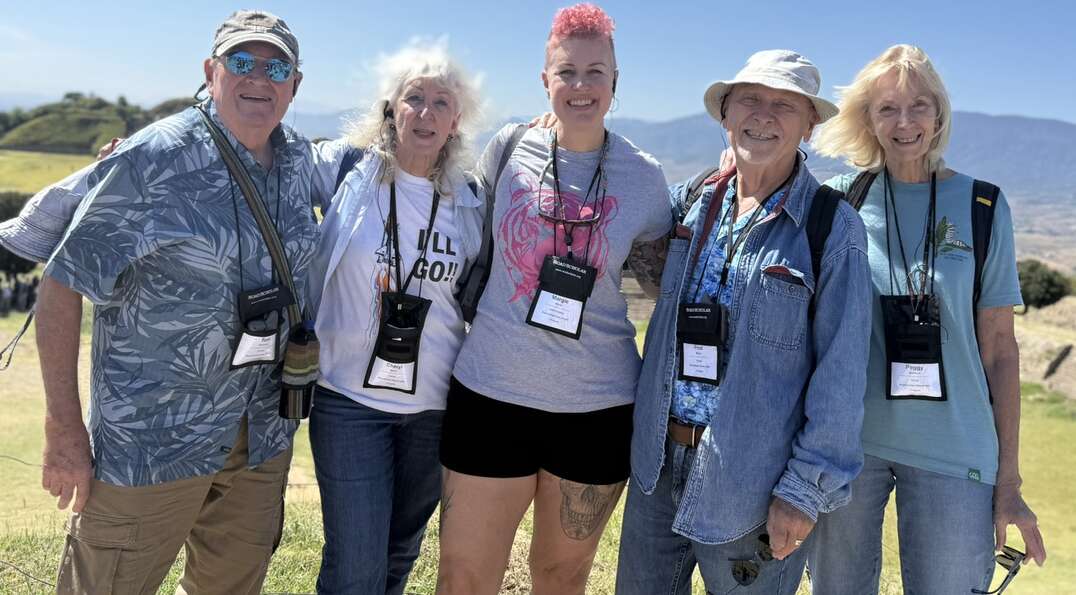
Experiencing Oaxaca Beyond the Holiday
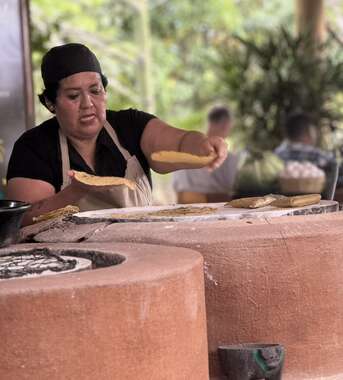
Margie’s learning journey extended beyond Día de los Muertos. “Food, music and art are my ways to really understand a culture,” Margie said. “We tried fried grasshoppers, or chapulines, which are a popular snack in Oaxaca. But I really loved this thing called huitlacoche, a fungus that grows on corn. It tastes somewhat like a mushroom and whenever it was on the menu, I knew what I was getting!”
“We also learned about Indigenous culture through a local dance performance. In July, they have what’s called Guelaguetza, a festival celebrating Indigenous food, crafts and dance. We were treated to a mini performance and saw parts of these dances and the traditional clothing.”
“You never know what you’ll bring back home from a program,” Margie added. “For me, I was so inspired by the colorful streamers and papel picado, cut paper decorations that hung over the streets in Oaxaca. I ended up making some to hang up in my home, because of how much I loved the color and art.”
Margie also tried to soak it all in during the quieter moments. “I walked around the zócalo, the town square where a lot of the restaurants and decorations are. I sat down on a bench and really tried to be present and use all my senses to take in everything. When I did that, I gained greater appreciation for being there. You know, you get so caught up in flying to a place and getting settled into your hotel, and sometimes you need to take a second to realize, ‘I can’t believe I’m actually here.’”
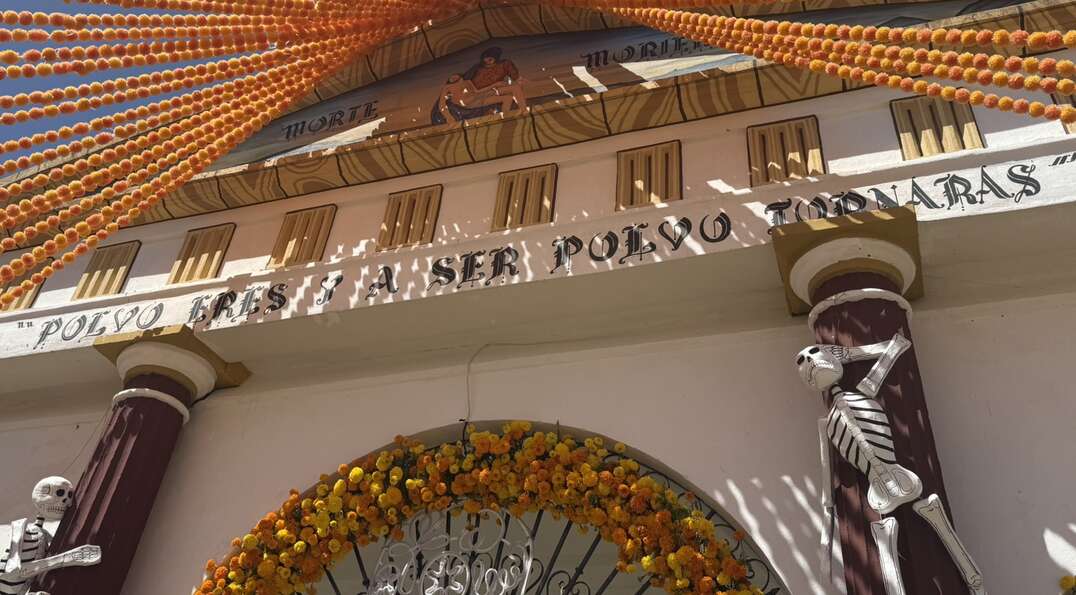
The entrance of the Panteón Mictlancíhuatl in Santa Cruz Xoxocotlán, Oaxaca, Mexico.
Ready to Learn in Oaxaca?
“If you’re considering this program, I’d recommend fully leaning into the culture when you’re there,” Margie said. “Try new things, like food — try the crickets! Even if you don’t like them, you’ll get a unique cultural experience and you’ll discover a little more about this special place.”
“I hope we, as Road Scholars, continue to honor and respect other cultures when we travel,” Margie added. “Our lives and the places we live might look different, but at our core, we’re really not that different. And that’s one of my favorite parts of travel: connecting with other people. Whether or not I see them again, the important thing to me is that moment we have of ‘Hi human, I see you. Let’s share some time together.’”
