Cooking With Sophia: Greek Recipes From the Classroom and the Kitchen

- Greek cuisine reflects regional history, trade routes and family traditions.
- Corfiot sofrito shows Venetian influence through garlic, wine and vinegar.
- Dolmas highlight hospitality and communal cooking across generations.
- Preparing traditional dishes offers cultural insight long after travel ends.
What tells you more about a place — its monuments or its meals?
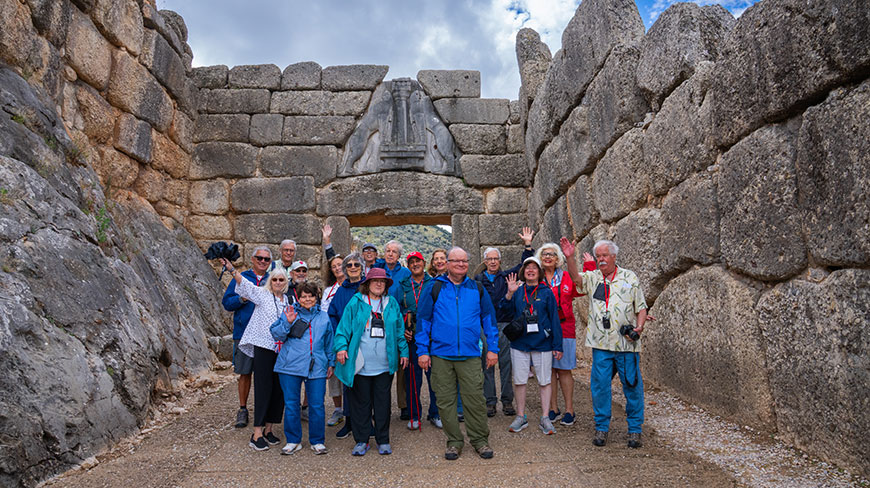
On A Mythical Journey: Stories That Shaped Modern Greece, participants stand in ancient theaters, trace the outlines of temples and debate the legacy of mythological heroes. But ask returning learners what lingers most clearly, and many mention something else entirely — the aroma of garlic warming in olive oil, the brightness of fresh lemon, the careful rolling of grape leaves around a kitchen table.
Greek food has long reflected the country’s geography and history. From island harbors shaped by Venetian trade to mountain villages built around seasonal harvests, traditional Greek recipes reveal how people have lived, gathered and adapted for generations. In many ways, cuisine becomes a living archive of Greek culture.
Group Leader Sophia Theona Brings Learning into Sharper Focus
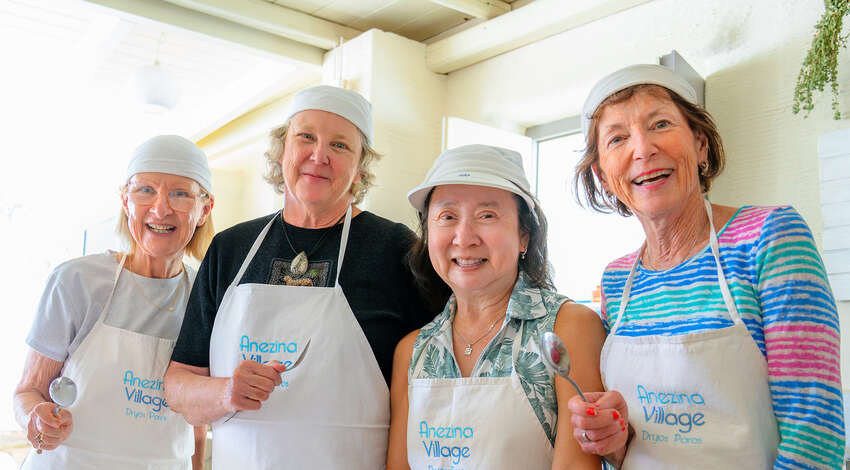
Born in Canada to Greek parents and raised in Greece, Sophia grew up between cultures. After graduating from the University of Athens more than 20 years ago, she began leading educational programs across the country. Alongside lectures on mythology and history, Sophia shares something equally revealing — Greek cooking.
“Every region has its own ingredients and traditions,” she says. “When you cook a local dish, you begin to understand daily life — what grows here, what families gather to eat and how hospitality shapes Greek culture.”
Across Greece, food links to local identity. Ionian island cuisine carries the imprint of Venetian rule. Northern regions rely on heartier grains and greens. Coastal communities build meals around seafood and olive oil, core elements of the Mediterranean diet that continues to influence modern Greek life.
Two dishes Sophia often discusses with participants offer a window into this diversity — one rooted in Corfu, the other found in kitchens throughout the country.
Sophia’s Sofrito Chicken
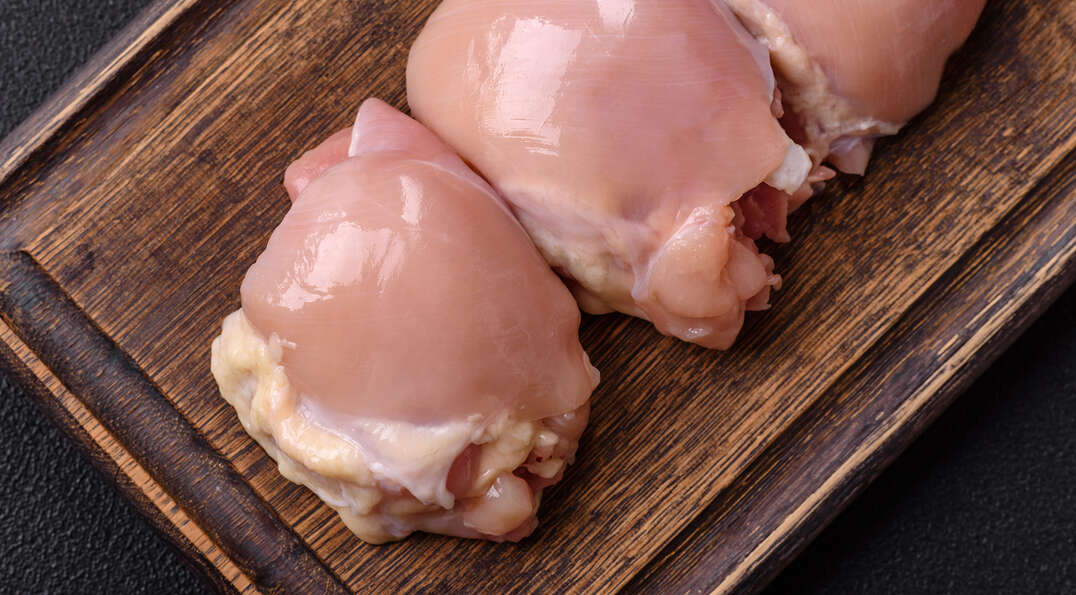
Sofrito is closely associated with Corfu, one of the Ionian Islands. Unlike many mainland Greek dishes, Corfiot cuisine shows clear Venetian influence. Garlic, white wine and vinegar define the sauce, reflecting centuries of cultural exchange through trade and occupation.
Traditionally prepared with veal, many contemporary home cooks prepare sofrito with chicken, creating a lighter version while preserving the dish’s character. The result is bold yet balanced — a study in how Greek island cuisine absorbs outside influence and makes it its own.
Ingredients
4-6 Servings
- 4–6 boneless, skinless chicken thighs or breasts, pounded to even thickness
- All-purpose flour for dredging
- 3–4 tbsp olive oil
- 6–8 cloves garlic, thinly sliced
- 1/2 cup dry white wine
- 1/3 cup white wine vinegar
- 1 cup chicken or beef broth
- 1/2 cup freshly chopped parsley
- Salt and freshly ground black pepper
- 12 oz. pasta of choice
Instructions
- Season chicken with salt and pepper. Lightly dredge in flour and shake off excess.
- Heat olive oil in a large oven-safe skillet over medium-high heat. Brown chicken 3–4 minutes per side. Work in batches if needed. Set aside.
- Reduce heat to medium. Add sliced garlic and cook about one minute without browning.
- Add wine and vinegar to deglaze the pan, scraping up browned bits. Simmer briefly.
- Return chicken to skillet. Add warm broth and bring to a simmer. Reduce heat to low, cover and cook about 15 minutes.
- Preheat oven to 400°F. Par-boil pasta in salted water for about five minutes.
- Add pasta to skillet and toss gently with sauce. Transfer skillet to oven and bake about 15 minutes, until pasta is tender and sauce absorbed.
- Finish with fresh parsley and serve.
Dolmas (Dolmadakia)
If sofrito reflects regional influence, dolmas reflect continuity.
Stuffed grape leaves appear across Greece with small variations in herbs, seasoning and preparation. Some regions emphasize dill. Others lean into mint. Some families add pine nuts or currants. Recipes shift, but the structure remains familiar.
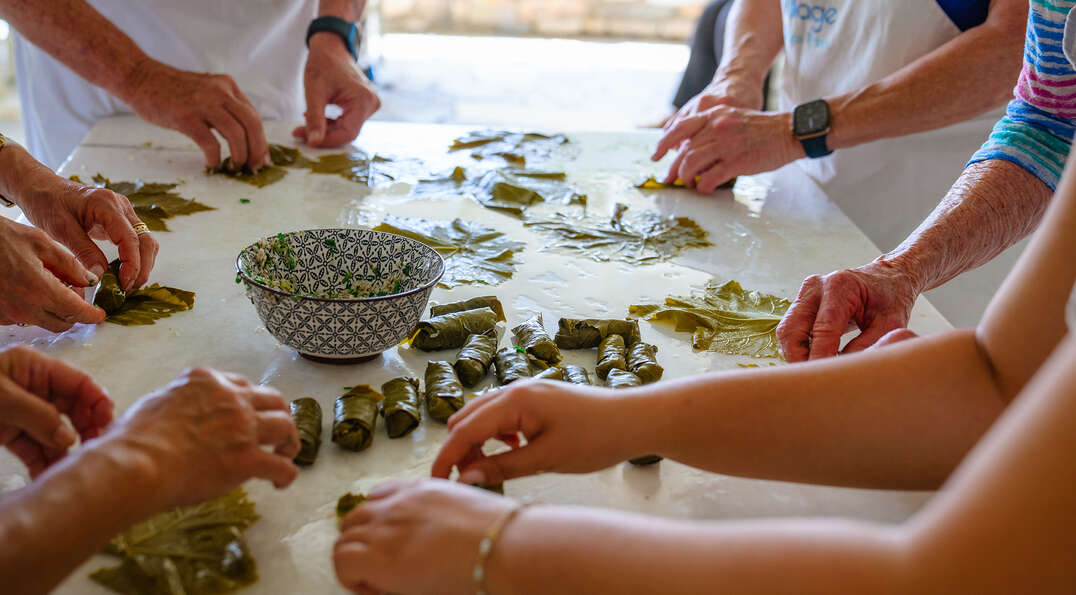
Dolmas often appear at holidays and large gatherings, yet they are equally present in everyday Mediterranean cooking. Preparing them takes time. Rice must be mixed with herbs, leaves rinsed and sorted, each roll folded carefully by hand. The work invites conversation and slows the pace of the day. In this way, dolmas embody Greek hospitality as much as flavor.
Ingredients
Makes about 45–55 dolmas
- 1 jar (16 oz) grape leaves in brine
- 1 1/2 cups short-grain rice, rinsed
- 1 large onion, finely chopped
- 1/2 cup olive oil, plus more for drizzling
- 1/2 cup chopped fresh parsley
- 1/2 cup chopped fresh dill
- 1/4 cup chopped fresh mint
- Juice of 2 lemons
- 4 cups water or vegetable broth
- Salt and freshly ground black pepper
Instructions
- Rinse grape leaves and separate carefully. Reserve torn leaves.
- Combine rice, onion, herbs, half the olive oil and juice of one lemon. Season and mix.
- Place a grape leaf on a working surface, shiny side down. Add about a teaspoon of filling near the stem. Fold bottom over filling, fold in sides and roll snugly, leaving room for rice to expand. Repeat.
- Line a heavy pot with reserved leaves. Arrange dolmas seam-side down in tight layers.
- Pour remaining olive oil and lemon juice over dolmas. Add water or broth to just cover.
- Place a heatproof plate upside down on top to keep rolls secure.
- Bring to a gentle boil, reduce heat, cover and simmer 40–60 minutes until rice is cooked and leaves are tender.
- Cool in pot at least 30 minutes before serving. Serve warm or at room temperature.
From Cultural Travel to Your Kitchen
Global exploration teaches through landscapes and lectures. Food teaches through the senses.
Preparing traditional Greek recipes like these offers insight into regional identity, trade history and the agricultural rhythms that define Mediterranean life. Each ingredient reflects climate, each technique reflects adaptation and each shared meal reflects community.
For many participants, recreating these dishes at home becomes a way to revisit conversations about mythology, history and modern Greece — and to keep learning long after returning home.
Curious what else Greek cuisine reveals about daily life and culture? On A Mythical Journey: Stories That Shaped Modern Greece, Sophia shares these culinary traditions alongside discussions of history, storytelling and contemporary society — an experience where learning continues, sometimes, over dinner.
Greece is our Campus of the Year! Visit our website to discover what else the world's first classroom has to teach you.