The Best Time to Visit Japan: A Season-by-Season Look

- Japan offers year-round attractions like temples, theater, unique cuisine and traditional ceremonies, so you can have a fulfilling journey regardless of the season.
- Spring is beautiful but can be crowded. It’s famous for its stunning cherry blossoms, but it’s also the busiest and most expensive time to visit, especially during Golden Week.
- Autumn provides pleasant, cooler weather, vibrant fall foliage and fewer crowds than the popular spring season, making it an ideal time to visit Japan for many travelers.
- Winter offers unique experiences in Japan. There’s excellent skiing in the north, while cities are quieter than in other seasons and enjoy mild temperatures. In summer, travelers will likely encounter extreme heat and humidity, which makes it a less-than-ideal time to visit for many.
When is the best time to visit Japan?
One way to answer that is simply, “Any time!” There’s enough to experience in this fascinating country year-round to fill a dozen journeys, and at Road Scholar we build a lot of our programs around such aspects of Japanese life.
That said, there are times during the year when you might prefer to go to Japan based on considerations like weather, special events, scenic experiences and so on. Let’s look at things season by season ...
Spring in Japan
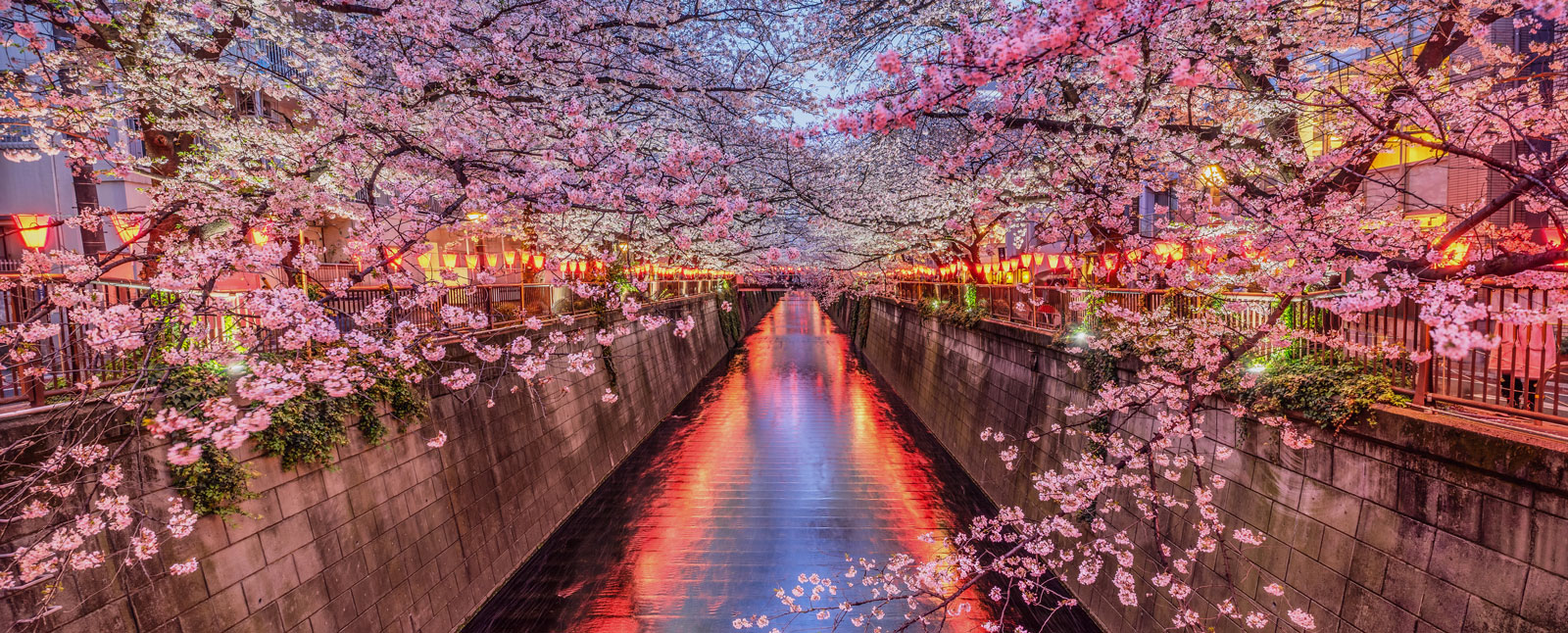
There’s no more cherished time of year in Japan than cherry blossom season. The blossoms (sakura) begin to emerge in late March in the southern part of the country, working their way north to Tokyo in early April and to Hokkaido by early May. With the country bathed in pink and white, the season is a culturally important one, with hanami (flower viewing) woven into family picnics and community festivals. In many cities, the trees are illuminated at night, a beautiful sight in its own right.
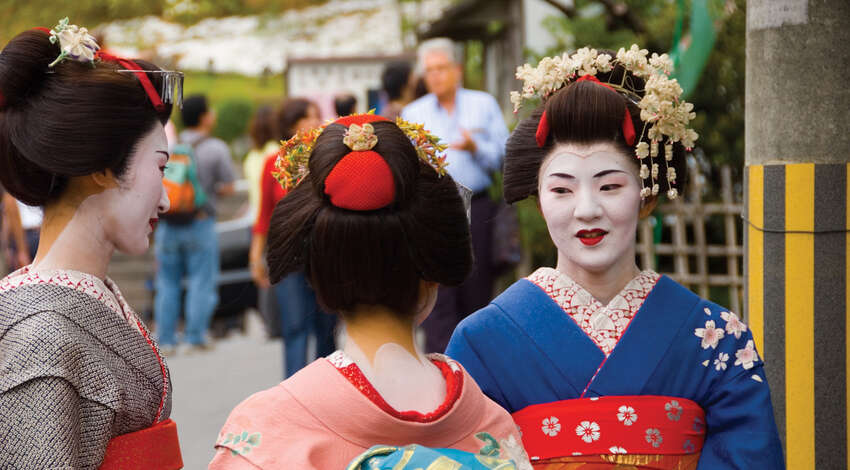
If you can tear yourself away from the cherry trees, Japan offers other special experiences during the spring. Amid the mild, pleasant weather (generally in the 50s and 60s), the landscape dazzles with color from other blossoming trees and flowers. There are also major cultural festivals like April’s Miyako Odori in Kyoto — a monthlong celebration featuring daily geisha performances — and Sanja Matsuri in Tokyo, held the third weekend in May, featuring parades and other festivities celebrating both Shinto and Buddhist traditions. Other festivals of all kinds abound in cities and towns throughout the country in spring.
On the downside, because spring is rightly very popular, it can get quite crowded. Advance planning and a strong understanding of how to avoid crowds are important. For instance, April 29-May 5 is known as Golden Week — a series of national holidays when virtually the entire population floods cities and other popular destinations. Gridlock and high prices are the norm, and so Road Scholar steers clear of programming that week.
Summer in Japan
Festivals continue in the summer months, with large-scale traditional events like July’s Tenjin Matsuri in Osaka that includes numerous parades and an impressive river procession. Spectacular fireworks shows are frequent throughout summer. And early July to early September is the only time you can legally climb Mt. Fuji!
Unfortunately, summer can be extremely hot (and often humid) throughout much of Japan, particularly in the cities, and typhoons and other severe storms can occur. Road Scholar avoids scheduling programs during most of July and all of August for that reason.
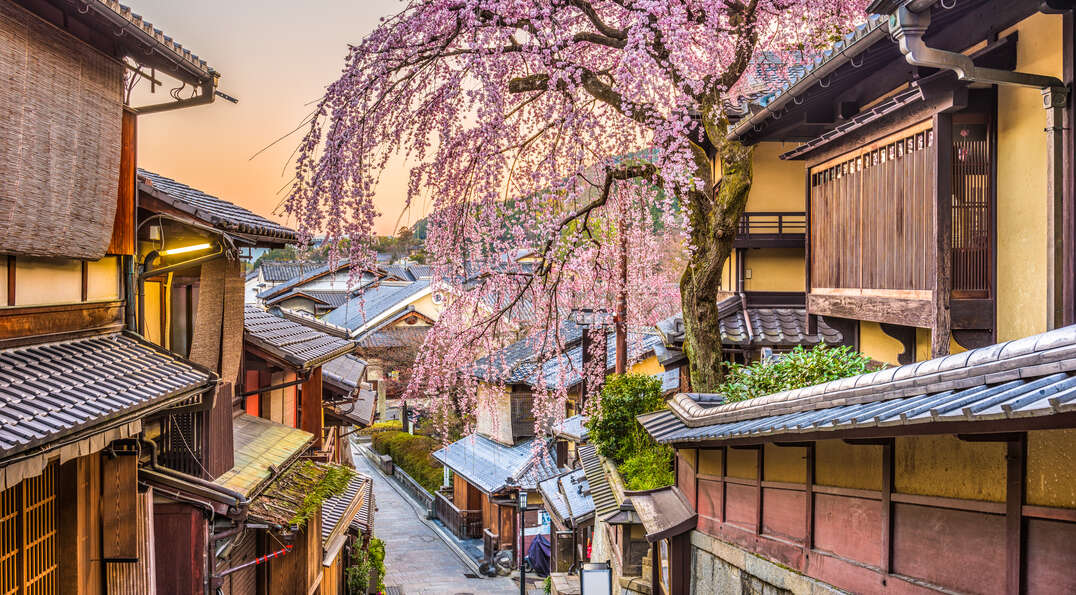
Cherry blossoms in Kyoto.
Fall in Japan
Autumn in Japan rivals New England and other U.S. destinations for the fiery foliage and cooler, drier air that pervades much of the country. It’s also harvest season, a time for numerous — you guessed it! — festivals. One of particular note is the UNESCO-listed Kawagoe Hikawa Festival, just outside of Tokyo in October, featuring massive Edo-style floats and elaborately costumed figures. The country tends to be somewhat less crowded with visitors in the fall than in the spring, making it the choice of many as the best time to visit Japan.
Winter in Japan
Northern Japan is cold and relatively dry in the winter, and a paradise for skiers and snowboarders in places like Niseko and Hakuba. Sapporo has one of the country’s most prominent winter festivals, with colossal snow sculptures and intricate ice carvings. Japan is also blessed with a wealth of thermal hot springs, and they’re a popular way to relax in the winter months.
In the cities, things are quieter and less crowded during winter, making it a good time to explore them. Temperatures are ideal, too, with daytime highs in Tokyo hovering around 50 degrees in January.
Authentic Experiences to Enjoy Year-Round in Japan
To sum up, there are things to love about every season in Japan, and depending on your preferences for displays of nature and culture (and your tolerance for crowds and weather at certain times), it’s hard to go wrong.
That’s especially true because Japan is a treasure trove of wonderful experiences to be enjoyed year-round. Whenever you go, you can:
- Experience a traditional tea ceremony. Enjoy one during Land of the Rising Sun: A Circumnavigation of Japan.
- Attend a Kabuki theater performance in Tokyo.
- Savor Japanese cuisine at a conveyor-belt sushi restaurant, go to an izakaya for irresistible comfort foods, or try a yakitori bar for barbecued chicken skewers.
- Take in a sumo wrestling event in winter, spring or fall.
- Explore Japan’s magnificent temples. The ones in Kyoto are particularly worth seeking out, especially the gold-leafed Kinkaju-ji, a stop during The Best of Japan: A Contrast in Tradition and Innovation.
- Ride a bullet train at speeds approaching 200 mph. Ride one on several Road Scholar programs, including Northern Japan: Ancient History and Scenic Beauty.
- Reflect and relax at a Shinto shrine.
- Learn about warrior culture at Himeji Castle and in a walkthrough of former samurai houses in Tsuwano.
- Indulge in a cup of sake or a dram of Japan’s renowned whiskies.
- Observe traditional fishing methods in seaside towns and on Japan’s 260 inhabited islands.
- Be amazed at the technology that surrounds you, from humanoid robots to vending machines dispensing virtually everything.
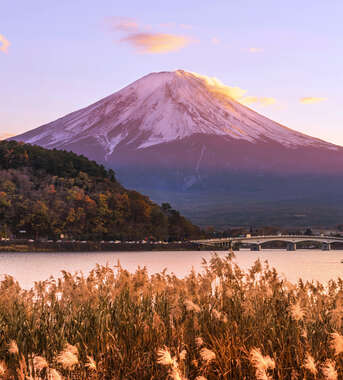
Mount Fuji during the fall.
There’s so much more to explore in a land where ancient history exists side by side with ingenious innovation. It’s a fascinating country. Truly, the best time to visit Japan is any time!
Road Scholar has nearly a dozen programs in Japan, running from early September to early June. Explore them all!