Preserving History: A Look at America’s Newest Presidential Libraries

- In 2026, America celebrates its 250th anniversary with the opening of new presidential libraries for Barack Obama and Theodore Roosevelt.
- The new libraries reflect the legacies of their respective presidents, and each a strong commitment to environmental sustainability.
- Presidential libraries serve as vital educational centers, and you can visit many of them on Road Scholar programs that explore American history and leadership.
As the nation celebrates its 250th anniversary (aka semiquincentennial) in 2026, two new presidential libraries are slated to open. One is President Barack Obama’s in Chicago, coming just 10 years after his departure from office.
The other? Theodore Roosevelt’s in Medora, North Dakota, opening July 4 — well over a century past his White House days. To understand the huge gap, you need to know a few things about presidential libraries in general.
The very idea of them was first proposed by another Roosevelt — Franklin Delano. Prior to the middle of the 20th century, presidential papers were considered the private property of a president and were preserved — or not — at his discretion. Since that time, however, a succession of laws have been passed, culminating in the Presidential Records Act of 1978, establishing that records pertaining to the duties of the president are government property.
Beginning with the administration of Herbert Hoover, FDR’s predecessor, archives have been preserved by the National Archives and Records Administration (NARA) — through negotiation with former presidents when they had discretion over the material, and by law since 1978.
FDR proposed to donate his papers to the public. He also pledged to donate land for the library on his estate in Hyde Park, New York. Friends of his formed a nonprofit to build the library itself, which was dedicated and turned over to the government in 1941.
FDR’s model — a library built with private funds, donated to the public and managed by the federal government — has been followed by every president since. Barack Obama’s will be the 14th, with the notable exception that the Barack Obama Presidential Center facility itself, which will house his library, will not be donated to the federal government. Instead, the City of Chicago will own the center; NARA will operate the library.
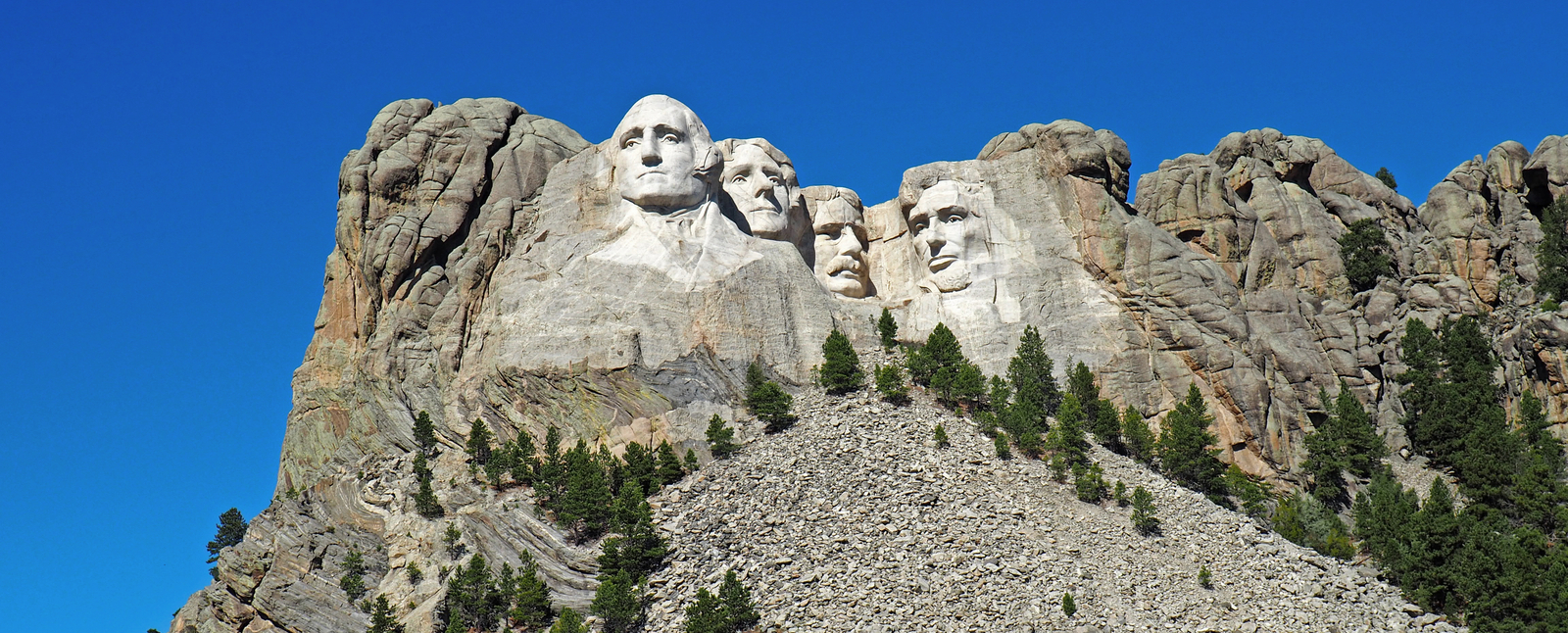
That brings us to the Theodore Roosevelt Presidential Library. While Franklin Delano Roosevelt’s was the first official presidential library, the papers of many earlier presidents have been preserved in places ranging from museums and public libraries to national parks, universities and privately constructed facilities. Teddy Roosevelt’s museum falls into the latter category. The Badlands site in Medora was chosen because Roosevelt formed a deep bond with the land while at a ranch there. He once said that if he could take just one memory from life, it would be “the memory of my life on the ranch … close to Nature and among the men who lived nearest her.”
Private funds were raised for the construction, and the State of North Dakota has provided a $50 million endowment for ongoing operations. The library will house a substantial collection of Roosevelt’s papers and other artifacts, as well as digital collections of other papers held widely across the country.
As befits a monument to a famously conservation-minded president, the library has been designed to meet the Living Building Challenge, with zero emissions, solar-only energy consumption, no waste generated and water use within the sustainable limits of the region. Only a handful of facilities worldwide have met the challenge to date.
As for the Obama Presidential Center, it too will be a model of sustainability, sourcing 100 percent of its energy from renewables and featuring a comprehensive water conservation system. In addition to the library, the 19-acre center will house a museum, an outdoor performance venue and numerous spaces for public engagement, conferences and events — a nod to the president’s community-oriented roots.
You may well see these facilities make their way into Road Scholar programs once they’re open. In the meantime, you can visit other presidential libraries — both privately and publicly administered — on a number of Road Scholar programs. This 250th anniversary of the nation’s founding would be an excellent time to do so!
A few libraries you can visit with us:
- The Abraham Lincoln Presidential Library and Museum in Springfield, Illinois, on The Life and Legacy of Abraham Lincoln (Program 8370)
- The Ronald Reagan Presidential Library and Museum in Simi Valley, California, on The Best of California: The Reagan Library to the Channel Islands (Program 14491)
- The Jimmy Carter Presidential Library in Atlanta, Georgia, on On the Road: Atlanta, Asheville, Charleston and Savannah (Program 23348)
- The Franklin D. Roosevelt Presidential Library and Museum in Hyde Park, New York, on On the Road: Autumn in the Berkshires and Hudson Valley (Program 21402)
- The Harry Truman Presidential Library and Museum in Independence, Missouri, on Signature City Kansas City (Program 21810)
- The William J. Clinton Presidential Center in Little Rock, Arkansas, on The Best of Arkansas: Little Rock, Crystal Bridges, and the Ozarks (Program 21208)