Perseverance Prevails: African American History Gets a Home

- A Century of Perseverance: The creation of the National Museum of African American History was a 100-year journey, overcoming decades of political and financial hurdles.
- The Complete Story: The collection of 40,000+ artifacts represents a broad spectrum of the African American experience, from slavery to cultural triumphs.
- Representation Matters: The museum fulfills a long-overdue mission to ensure the African American story is finally seen and heard on a national stage.
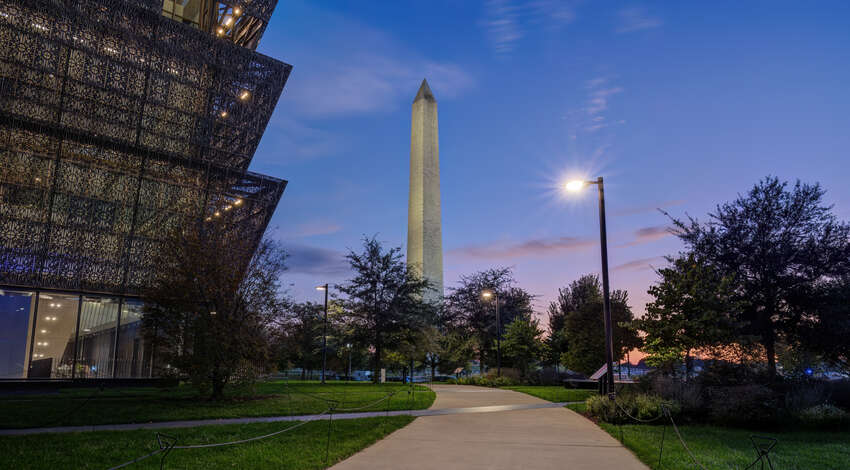
In 1915, Black veterans of the Union Army gathered in Washington, D.C., for a parade. Out of that reunion, amid a consensus that they and other Black people continued to face marginalization and discrimination, came a committee to establish a memorial for African American achievements. Fourteen long years later, in 1929, President Herbert Hoover established a commission tasked with building such a memorial.
It had been a long wait — but sadly, that was only the beginning. Congress failed to support the project and private fundraising proved unsuccessful. Over the next four decades, a succession of proposals for a museum were put before Congress, but they earned scant support from either party.
Proposals arose anew in the 1970s, leading to a Congressionally approved charter for a museum in Ohio that opened in 1988. That action inspired Tom Mack, African American founder of the National Council of Education and Economic Development, to push for a more significant, standalone museum in the nation’s capital. (Meanwhile, other organizations were advocating for better representation of the African American experience in the existing exhibits of D.C.’s Smithsonian Institution.) Mack convinced Representative Mickey Leland to sponsor a non-binding resolution in favor of a separate museum, which passed — likely spurring the Smithsonian to improve its own programming at the time.
Debate then raged until the dawn of the 21st century about whether a separate museum should be established; if an existing space in the Smithsonian would suffice instead (as its leadership proposed); to what extent, if any, a museum would operate independently; who would be in charge; what the museum would contain; and many other unresolved issues about governance and scope.
Costs, too, were hotly debated. In 2001, the Smithsonian board reversed its position and supported the idea of a separate museum; Congress passed legislation to appoint a commission; and President George W. Bush signed the legislation, expressing his hope that the museum could be located on the National Mall.
Washington being Washington, the site selection committee took several more years to agree to the president’s suggestion, and in 2008 a National Mall site was approved, a budget was set ($500 million) and a design competition was held. Ground was broken on Feb. 12, 2012. Private donations supplemented the federal budget to the tune of more than $150 million, notably including an eight-figure one from Oprah Winfrey. At long last, the building was opened on Sept. 24, 2016, and dedicated by President Barack Obama.
It had been over 100 years in the making.
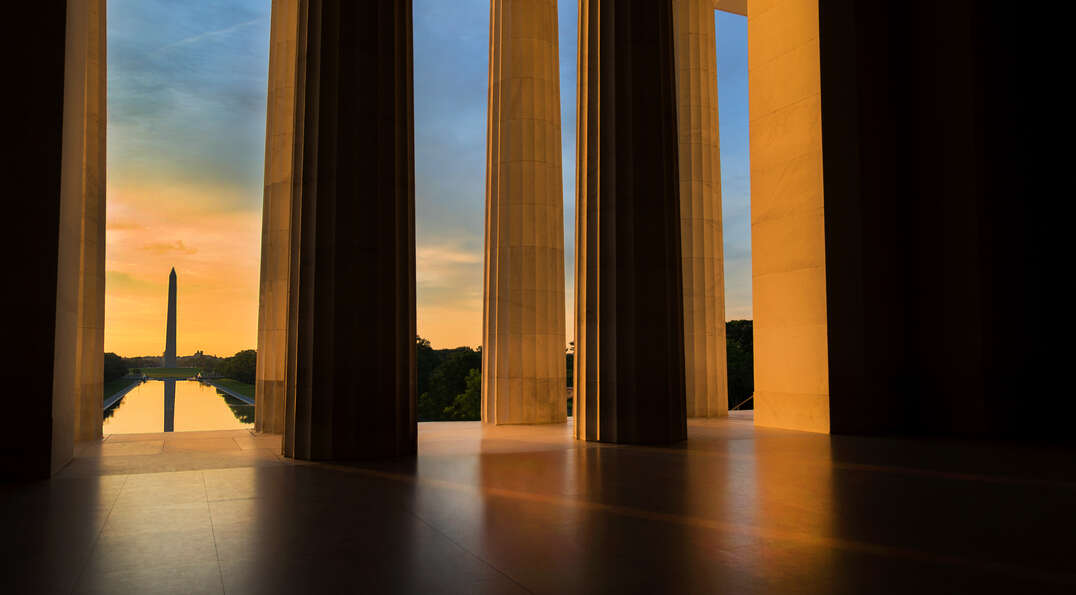
The building exists today because generations persevered, despite decades of institutional resistance. The building itself is striking, an inverted pyramid of sorts, bronze in color, with a pond and bridge at the entrance, leading visitors across water in a gesture of remembrance and reflection. True to the guidelines of the design competition, it reflects optimism and spirituality, but also a solemnity consistent with the often-painful historical experiences of Black Americans.
On display at the facility, now officially a Smithsonian Institution Museum, is an extraordinary collection of more than 40,000 objects, reflecting myriad aspects of the African American experience. The collection spans art, music, military service, daily life and the fight for freedom:
- Items from a slave ship sunk off the coast of South Africa.
- The powder horn of an African American soldier in the Revolutionary War.
- A Ku Klux Klan robe and belt, documenting a history of racism and terror.
- A slave cabin moved from its original location in South Carolina.
- Items once belonging to Nat Turner and Harriet Tubman.
- A segregated drinking fountain from the Jim Crow era.
- Jesse Owens’ track shoes from the 1936 Berlin Olympics.
- A biplane used to train members of the Tuskegee Airmen.
- Instruments and wardrobe from performers including Charlie Parker, Louis Armstrong, Pearl Bailey and James Brown, as well as a red Cadillac owned by Chuck Berry.
- Items from the Obama presidency.
Two other particularly noteworthy items in the collection are an intact guard tower from the notorious Louisiana State Penitentiary at Angola and a segregated train car from the Jim Crow era. These two artifacts were too large to be brought into the museum once constructed. Instead, they were set in place and the building was built around them.
Joys and triumphs, trials and tribulations, injustices and victories alike are all represented in the museum — and the museum’s purpose it to preserve, interpret and honor the full African American experience. The Civil War veterans in 1915 knew there was a story that needed to be told. Their message: “See us. Hear us.” More than 100 years later, the National Museum of African American History and Culture is finally a place where faces can be seen, voices can be heard and a story can be told.
For those who wish to experience the museum in person, Road Scholar programs in Washington, D.C. offer time to explore it thoughtfully. Washington D.C.: The Best of the Capital includes two free afternoons during which you can visit this and other Smithsonian museums. We’re also arranging to include the museum on the itinerary of The Quest for Equality: A Historic Look at Washington, D.C., beginning in Fall 2026.