The Incredible Adventures of Isabella Bird

- Isabella Bird defied 19th-century expectations for women by undertaking daring solo adventures across the globe.
- Despite frail health and numerous near-death experiences, her passion for exploration and learning never faded.
- Her journeys were remarkably diverse, involving everything from climbing volcanoes to meeting royalty and outlaws.
- Bird's adventurous spirit serves as a model for the curious, intrepid female travelers celebrated by Road Scholar today.
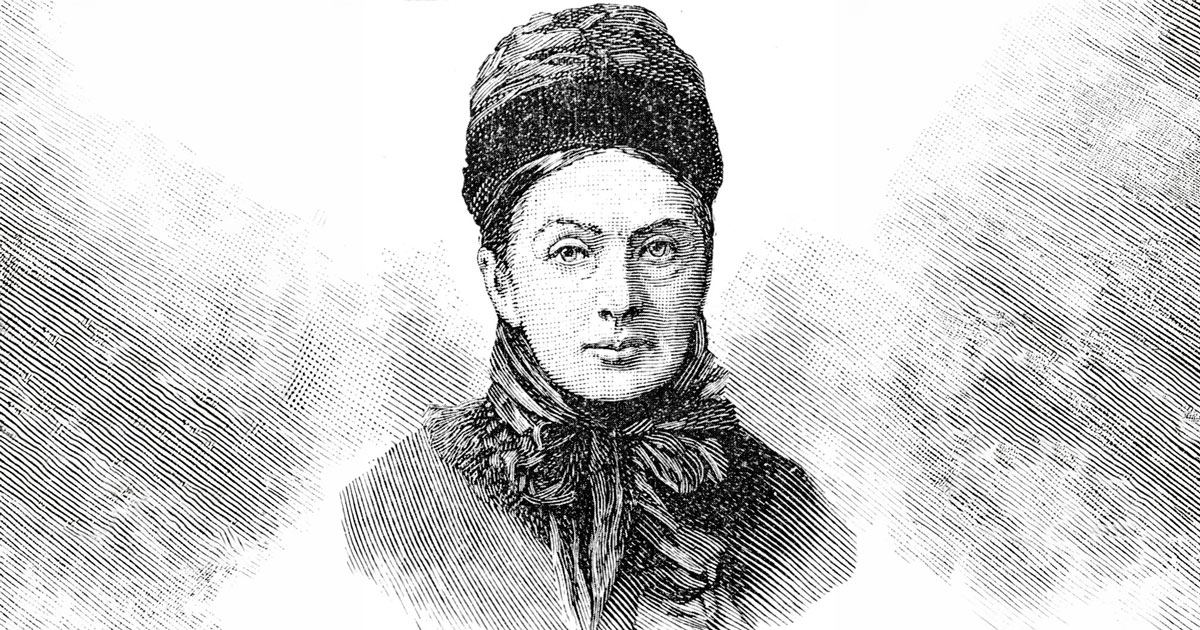
Women in the mid-1800s weren’t supposed to be worldly. They weren’t supposed to be daring or have adventures. They weren’t supposed to push the envelope.
Apparently, nobody told Isabella Bird, because she lived a life most women could only dream of, and became a role model for the kind of adventurous travel and learning Road Scholar celebrates.
Born in 1831, Isabella wasn’t a great candidate for an exciting life. A frail child plagued by health issues, she was the daughter of an unpopular minister who was forced to move the family around England several times. But Isabella was very bright, and she was assertive even at an early age (she published her first work — a pamphlet on free trade — at the age of 16), so in 1854, when doctors recommended a sea voyage, 22-year-old Isabella leapt at the chance to travel — alone — to the United States to stay with distant cousins.
Arriving in Nova Scotia, she boarded a steamer for Maine. Encountering rough seas, the ship began to fill with water. Enormous waves extinguished the lamps and the engine fires, and one struck the ship with such force at three a.m. that it knocked Isabella out. Many dangerous hours later, the ship limped into Portland, with Isabella bleeding from a head wound.
She had an even narrower brush with death not long after that when she headed west, again boarded a steamship in a violent storm — this time on Lake Ontario — and was pulled under the water that was surging through the ship during the height of the gale.
The rest of Isabella’s initial trip to North America was comparatively less eventful, but interesting enough that her observations about the experience formed the basis of her first book, “An Englishwoman in America.”
Her travels had only just begun. In 1872, Isabella ventured to Australia and New Zealand (from which she departed in yet another leaky boat that promptly sailed into a cyclone), then continued on to Hawaii — better known then as the Sandwich Islands — again without a male companion or chaperone, which was unheard of at the time. In Hawaii, she rode up Mauna Loa on horseback and ventured into the heart of the volcano on Kilauea, twice burning holes in her dog-skin gloves. Later she dined with King Lunalilo, who wrote a poem for her.
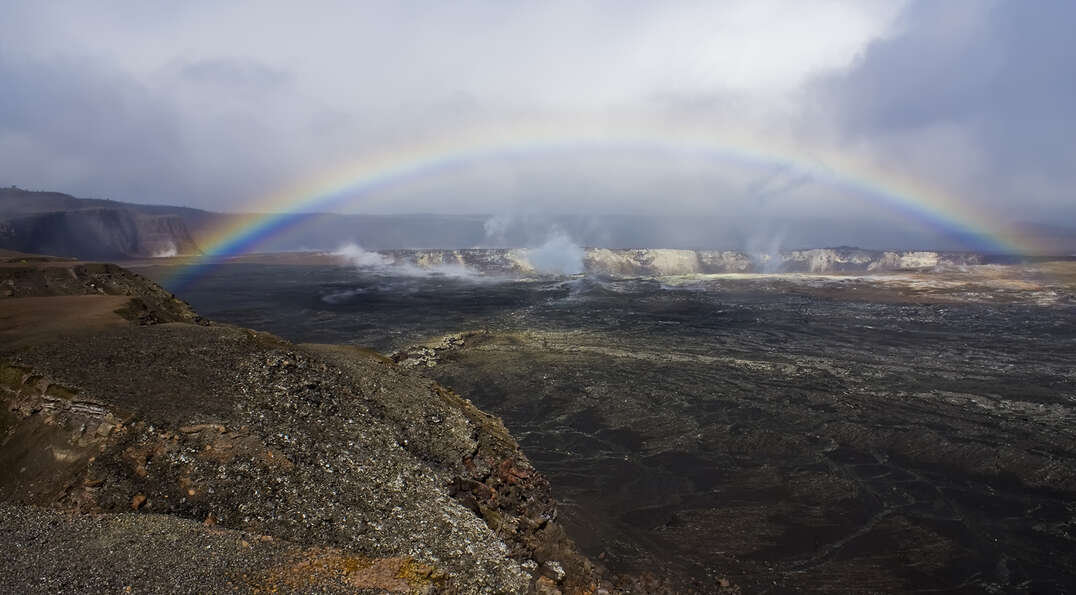
Volcano in Kilauea, Hawaii.
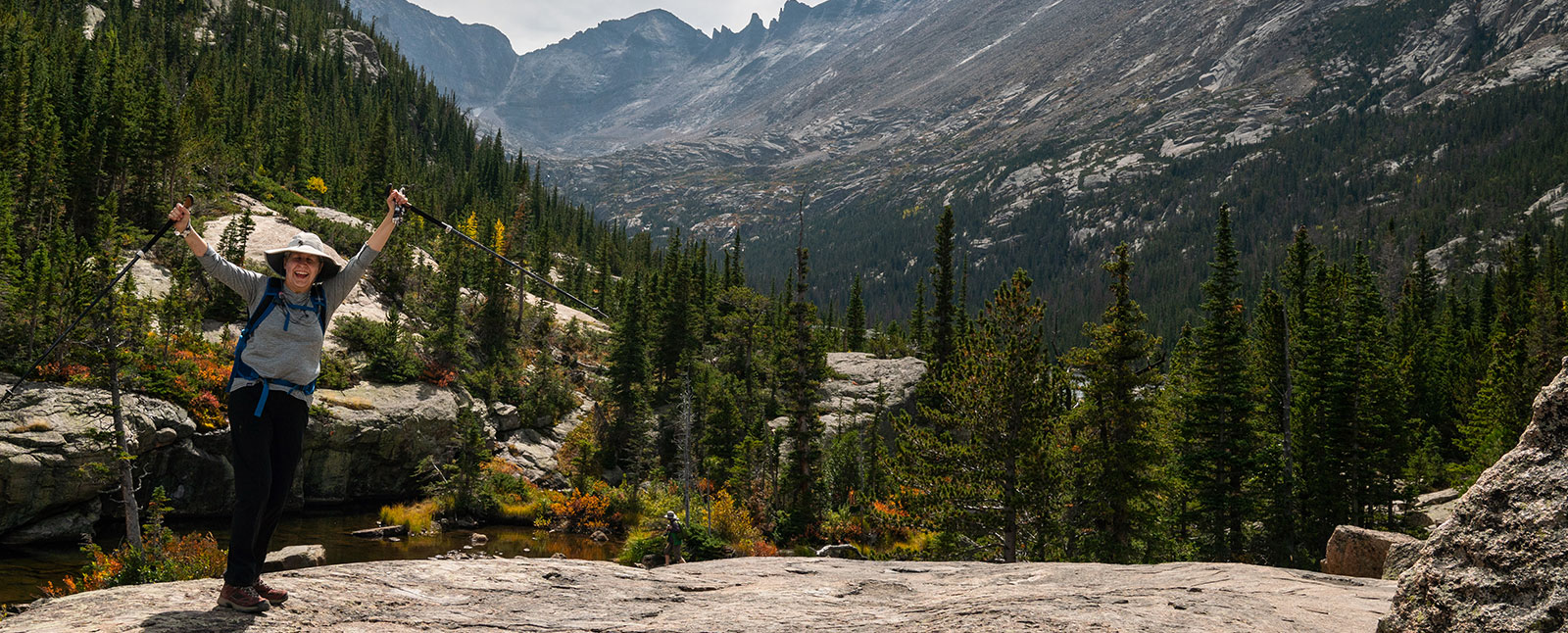
The next year, she went to Colorado where she rode frontwards (not sidesaddle) for 800 miles through the Rockies, scaled Long’s Peak in a silk dress, killed a rattlesnake outside her cabin, and wrote about it all in her fourth book, “A Lady’s Life in the Rocky Mountains.” She also fell for a one-eyed outlaw there named Rocky Mountain Jim, who had lost his eye in an argument with a grizzly bear and who, Isabella said, was “a man any woman might love but no sane woman would marry.” It would have been a short relationship in any case — Jim was shot dead in a gunfight months later.
Back home in 1881, Isabella did sanely marry a Scottish surgeon, who died in 1886, leaving her a large sum of money. She was now 55, and surely it was a time to scale back and settle in.
Except that Bird, standing all of 4 feet, 11 inches tall, set off for India in 1889, where the Maharaja of Kashmir gave her land to build a hospital in memory of her late husband. In the Ladakh region near Tibet, she was given a guard on her journey to the capital city of Leh. The gentleman, Usman Shah, walked in front of her wearing an elaborate turban festooned with feathers while resting a sword on his shoulder. Along their march, he terrorized and robbed local citizens until he and Isabella arrived in Leh, where he was recognized as a wanted murderer and arrested.
Isabella then accepted an invitation to join an expedition into the mountains, where she rode part of the way by horse and part by yak. Nearly swept away in raging river rapids, she broke her rib, then found that her party’s only possible return to Leh was over a glacier, which they accomplished with great difficulty.
From Leh she went to Lahore, where she met Rudyard Kipling, then moved on to Iran, Pakistan and Turkey, traveling with British soldiers (and her own revolver), after which she explored the source of the Karun River in Armenia. After four months on horseback, she finally arrived at the Black Sea and returned to Britain, where in 1892 she became the first woman allowed to join the Royal Geographical Society.
In 1894, at the age of 63, she traveled up the Yangtze in China and the Han in Korea as the First Sino-Japanese War broke out, and she had an audience with Korea’s king and queen not long before the queen was murdered. She next went to Morocco, traveling with Berbers, often on a black stallion given to her by the Sultan of Morocco. She eventually returned home to Britain in 1897, restlessly moving about England and Scotland for several years.
Falling ill in 1904, she died at home in Edinburgh on October 4 at the age of 72 — while planning another trip to China.
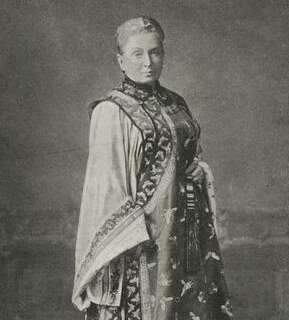
Isabella Bird wearing a Manchurian dress.
Isabella Bird’s love of adventure and endless curiosity about the world are traits shared by intrepid women today — namely, the ones who join us on Road Scholar learning journeys. Nearly 70 percent of our participants are women. Such eager explorers are they that we have two dozen programs just for them — women-led, women-only adventures all over the U.S. and as far afield as Iceland, Africa, Costa Rica and the Galápagos. Our women ride camels. They raft whitewater rapids. They scale mountains and sail into jungles and go on safari and immerse themselves in world cultures. If Isabella Bird were alive today, we suspect she’d want to come along.