
Italy
The Best of Italy: Rome, Florence and Venice
Program No. 18206RJ
See More Photos
The Best of Italy: Rome, Florence and Venice
The Best of Italy: Rome, Florence and Venice
1 of 8
Itinerary
While we make every effort to ensure the accuracy of our published materials, programs are typically advertised more than a year prior to their start date.
Read More.
While we make every effort to ensure the accuracy of our published materials, programs are typically advertised more than a year prior to their start date. As a result, some program activities, schedules, accommodations, personnel, and other logistics occasionally change due to local conditions or circumstances. Should a major change occur, we will make every effort to alert you. For less significant changes, we will update you during orientation. Thank you for your understanding.
Duration
12 days
11 nights
What's Included
Included
21 meals (
10B, 5L, 6D
)
5 expert-led lectures
13 expert-led field trips
An experienced Group Leader
Taxes and customary gratuity
Road Scholar Assurance Plan
Rome
The Best of Italy: Rome, Florence and Venice
Dec 4 - Dec 15, 2027
Program Number
18206
Day
1
In Transit to Program
Location:
In Flight
Day
2
Arrive Rome, Check-in, Orientation, Welcome Dinner
Location:
Rome
Meals:
D
Stay:
Hotel Diana Roof Garden
Activity Note
Hotel check-in from 1:00 p.m. Transfer from Rome Fiumicino Airport to the hotel is about 20 miles (45-minute ride, longer in heavy traffic). Walking approximately 1 mile.
Afternoon:
Check-in and settle in. At 4:30 p.m., we gather in the meeting room for an Orientation session. The Group Leader will greet everyone and lead introductions. We will review the up-to-date program schedule, discuss roles and responsibilities, logistics, safety guidelines, emergency procedures, and answer questions.
Breakfasts will be buffets. Other included meals will be plated and served from a set menu unless indicated otherwise; water is included, other beverages will be available for purchase.
Evenings at leisure offer opportunities to make the program more meaningful and memorable through personal independent exploration, attending performances or other events, or simply relaxing and making new friends among fellow participants. The Group Leader will always be happy to offer suggestions.
Transportation will be provided primarily by bus and regional train.
Periods in the schedule designated as "Free time" and "At leisure" offer opportunities to do what you like and make your experience even more meaningful and memorable according to your personal preferences. The Group Leader will be happy to offer suggestions.
Program activities, schedules, personnel, and indicated distances or times might change due to local circumstances/conditions. We will alert you as quickly as possible in the event of changes. Thank you for being so understanding.
Next, we will join our Group Leader in a welcome cocktail (or fruit juice).
Dinner:
At the hotel restaurant.
Evening:
Continue getting to know your fellow Road Scholars, settle in, and get a good night’s rest for the day ahead.
Day
3
Colosseum, Forum, Roman History Lecture
Location:
Rome
Meals:
B,L,D
Stay:
Hotel Diana Roof Garden
Activity Note
Getting on and off a bus. Walking up to 5 miles throughout the day, with extended periods of standing during site visits; uneven paths, cobblestones, loose gravel, and dirt paths. Elevator is available in the Colosseum. Unavoidable stairs at sites. Timed entry at the Colosseum, so punctuality is important. Limited shade in the Roman Forum. Airport-style security screening at entry.
Breakfast:
At the hotel restaurant.
Morning:
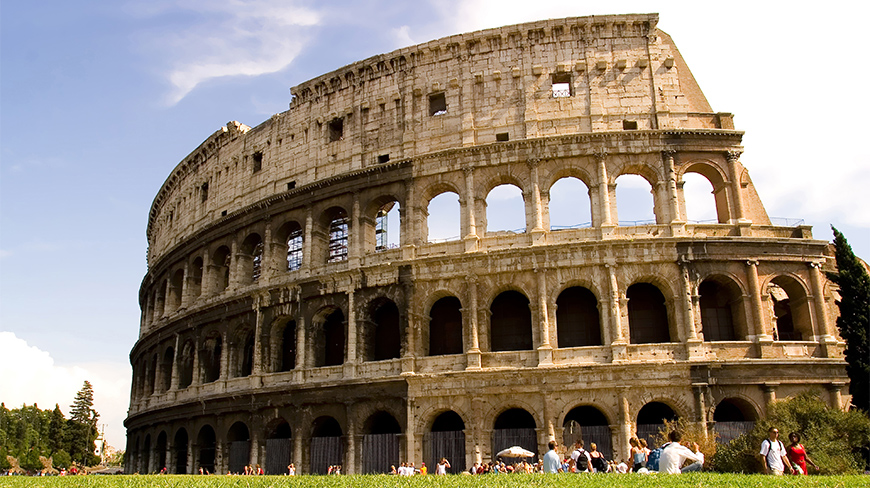
We will board a bus or van that will transport us to the nearest drop-off point by the Roman Forum, where a local expert will guide us in visualizing the now-ruined buildings. Our field trip will continue to the Colosseum, where we will learn about Roman entertainment practices from centuries past. Constructed in 80 CE and officially named the Flavian Amphitheater, the Colosseum was the largest structure in the Roman Empire. Measuring 620 by 513 feet, it accommodated over 50,000 spectators. The construction techniques used to achieve its architectural feats remain subjects of study for architects and researchers. Historically and in contemporary culture, the Colosseum is recognized as a symbol of gladiatorial combat and the suffering experienced by enslaved people, prisoners of war, condemned criminals, and animals from across the empire. Those who wish may ascend the 10-foot-high steps to the upper level.
Please note that crowded conditions may occur during our visit.
For further information, consult the "Program Notes" section of your Information Packet.
Please note that crowded conditions may occur during our visit.
For further information, consult the "Program Notes" section of your Information Packet.
Lunch:
At a local restaurant.
Afternoon:
We gather in the hotel meeting room, where a local history professor leads an introductory lecture on the long history of Rome. This session sets the stage for the explorations to come and deepens our understanding of the city’s past.
Known as the Eternal City, Rome has a rich history spanning more than 2,500 years. Founded in 753 BCE, it grew from a small village into a mighty empire that dominated the Mediterranean world, witnessing the rise and fall of the Roman Republic and the Roman Empire and leaving a lasting legacy in governance, engineering, art, and culture. It was home to iconic figures such as Julius Caesar, Augustus, and Constantine the Great.
Known as the Eternal City, Rome has a rich history spanning more than 2,500 years. Founded in 753 BCE, it grew from a small village into a mighty empire that dominated the Mediterranean world, witnessing the rise and fall of the Roman Republic and the Roman Empire and leaving a lasting legacy in governance, engineering, art, and culture. It was home to iconic figures such as Julius Caesar, Augustus, and Constantine the Great.
Dinner:
At a local restaurant.
Evening:
At leisure.
Day
4
Piazza Navona, Pantheon, Trevi Fountain, Palazzo Massimo
Location:
Rome
Meals:
B,L
Stay:
Hotel Diana Roof Garden
Activity Note
Walking up to 4 miles throughout the day, with extended periods of standing during site visits; cobblestones, uneven stone, and mostly level urban sidewalks and streets. Unavoidable steps at sites, including at the Palazzo Massimo. Security screening and bag check at the Trevi Fountain, Palazzo Massimo, and the Pantheon. Largely outdoors with limited shade at the piazzas. Crowded conditions likely at the Pantheon, Trevi Fountain, and Piazza Navona.
Breakfast:
At the hotel restaurant.
Morning:
We will embark on a walking field trip with a local expert, who will lead us to three iconic landmarks in the heart of Rome: Piazza Navona, the Pantheon, and the Trevi Fountain.
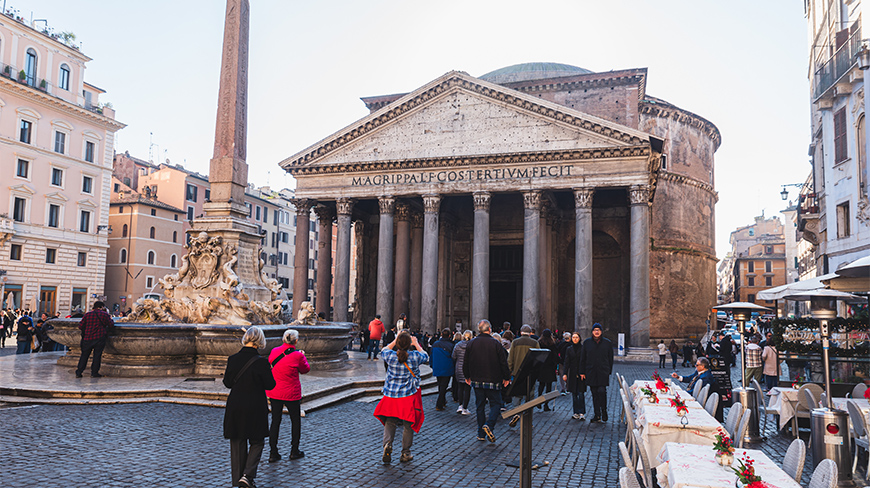
Our first destination is the Pantheon, a testament to ancient Rome's architectural prowess and the best-preserved monument of its kind. While historical accounts credit Emperor Hadrian for its commission in 118–125 CE, recent studies propose an earlier origin. The Pantheon's design achievements and original purpose continue to bewilder archaeologists, architects, and historians. Stepping inside, we will witness the play of natural light through the ceiling's oculus, illuminating the niches along the interior perimeter.
Continuing our journey, we will find ourselves at the Fontana di Trevi, a grand masterpiece and the largest fountain in Rome, completed in 1743. This magnificent structure replaced previous versions that marked the terminus of one of the city's aqueducts.
Our final stop will be the vibrant Piazza Navona, which holds a unique history. This long oval piazza has since evolved into the quintessential Baroque setting, initially built by Emperor Domitian between 81 and 96 CE as a venue for track and field games. The buildings lining the perimeter mimic the footprint of ancient bleachers. Within this lively square, artists and performers bring life to its charming atmosphere. We will encounter Gian Lorenzo Bernini's awe-inspiring Fountain of the Four Rivers at its center and admire Francesco Borromini's architectural masterpiece, the church of St. Agnes, on the west side.
Please note that there is a possibility of encountering crowded conditions during our visits.
Lunch:
At a local restaurant.
Afternoon:
Following lunch, those who wish to return to the hotel by bus or van may do so. Alternatively, you are welcome to continue exploring independently at your leisure.
We will take a quick walk around the block from our hotel to visit the Palazzo Massimo alle Terme, one of Rome's four National Roman Museum sites. With a local expert, we will examine a collection that includes ancient Roman frescoes, mosaics, sculptures, and coins. Highlights include the frescoes from the Villa of Livia, which depict a detailed garden scene, and the bronze statue of the Boxer at Rest, an exceptional example of Hellenistic sculpture.
We will take a quick walk around the block from our hotel to visit the Palazzo Massimo alle Terme, one of Rome's four National Roman Museum sites. With a local expert, we will examine a collection that includes ancient Roman frescoes, mosaics, sculptures, and coins. Highlights include the frescoes from the Villa of Livia, which depict a detailed garden scene, and the bronze statue of the Boxer at Rest, an exceptional example of Hellenistic sculpture.
Dinner:
This meal has been excluded from the program cost. The Group Leader will be happy to offer suggestions and give directions. You can also consult your list of suggested restaurants in your program materials.
Evening:
At leisure.
Day
5
Galleria Borghese, Free Time
Location:
Rome
Meals:
B
Stay:
Hotel Diana Roof Garden
Activity Note
Getting on and off a bus or vans. Walking up to 2 miles throughout the day with extended periods of standing during the visit; gravel and dirt paths through the gardens, cobblestones, and uneven surfaces. Unavoidable steps and stairs at the gallery. Timed two-hour entry, so punctuality is important. All bags must be checked in the cloakroom before entry. Security screening at entry. The extent and duration of walking and other activities during free time is according to personal choice.
Breakfast:
At the hotel restaurant.
Morning:
Our Group Leader will share the meeting time and point for us to gather and take a bus or vans to our next destination, the Galleria Borghese. This opulent palace formerly served as the private residence and reception venue of Cardinal Scipione Borghese (1577–1633), a prominent art collector, patron of Bernini, and nephew of Pope Paul V. With a local expert, we enter the gallery at our scheduled time for an in-depth exploration. Inside, we view significant artworks, including paintings by Caravaggio, Raphael, Botticelli, and Titian. The collection’s highlight is Bernini’s sculptures, which exemplify the Baroque era. After the visit, we proceed to the designated bus pick-up point and return to the hotel.
Please be aware that high visitor volume may limit clear views of the most renowned works, and crowded conditions are likely. The Borghese enforces a strict daily visitor cap and restricts group visits to two hours. Photography and videography are not permitted in the museum.
Please be aware that high visitor volume may limit clear views of the most renowned works, and crowded conditions are likely. The Borghese enforces a strict daily visitor cap and restricts group visits to two hours. Photography and videography are not permitted in the museum.
Lunch:
On your own to enjoy what you like.
Afternoon:
Free time. Take this opportunity for personal independent exploration to see and do what interests you most. The Group Leader will be happy to offer suggestions.
Dinner:
On your own to enjoy what you like.
Evening:
At leisure. Prepare for check-out and transfer in the morning.
Day
6
High-Speed Train to Florence, History of Florence
Location:
Florence
Meals:
B,L,D
Stay:
Rivoli Boutique Hotel
Activity Note
Steps getting on and off a train. Walking up to 3 miles throughout the day, with standing while waiting for the train; cobblestones, marble flooring, and urban stone sidewalks. Unavoidable stairs getting on and off the train. The high-speed Frecciarossa train to Florence takes about 1.5 hours (175 miles), reaching speeds up to 185 mph. Since checked bags travel ahead to the hotel, pack a day pack with anything you will need. Hotel check-in is from 2:00 p.m.
Breakfast:
At the hotel restaurant.
Morning:
Early in the morning, we leave our bags outside our rooms to be collected and delivered to our hotel in Florence. We board a bus or vans to Roma Termini, the city’s bustling central station, where we catch a high-speed train with reserved seats toward our next program site.
Arriving in Florence at Firenze Santa Maria Novella, we set off on foot for a short walk to lunch.
Arriving in Florence at Firenze Santa Maria Novella, we set off on foot for a short walk to lunch.
Lunch:
At the hotel restaurant.
Afternoon:
After lunch, we check into the hotel and settle into our rooms.
Later in the afternoon, a local historian will take center stage to illuminate the history of Medieval Florence and the prominent Medici family. Our journey will begin with an exploration of the city's Roman origins, setting the foundation for understanding how the Medici family ascended to power by the close of the 15th century, establishing a dynasty that would govern Florence and shape its destiny as the cradle of the Renaissance. Under the Medici's patronage, significant portions of the city were meticulously rebuilt in the resplendent style of the Renaissance, setting the stage for the flourishing of arts, humanities, and scientific endeavors. Additionally, the Medici family amassed an exceptional collection of artistic treasures, further solidifying their legacy as enthusiastic patrons of the arts.
Following a short break, we head out on a neighborhood walk with our Group Leader, getting our bearings and taking note of nearby ATMs, pharmacies, and shops to make our stay more comfortable.
Dinner:
At a local restaurant.
Evening:
At leisure.
Day
7
Duomo & Museum, Galleria dell'Accademia
Location:
Florence
Meals:
B,D
Stay:
Rivoli Boutique Hotel
Activity Note
Walking up to 4 miles throughout the day with extended periods of standing during site visits; cobblestones, marble flooring, and some uneven urban stone sidewalks. Elevator available at the Opera del Duomo Museum and Galleria dell'Accademia. Some unavoidable stairs in the museums. Airport-style security screening and bag check at entry. Timed entry, so punctuality at the meeting point is important. Large bags and backpacks must be checked before entering the galleries.
Breakfast:
At the hotel restaurant.
Morning:
Our day begins with a walk from the hotel to the Duomo, officially known as the Cattedrale di Santa Maria del Fiore. Here we meet a museum docent to explore Florence’s most iconic landmark. One of the largest churches in the world, the Duomo is an architectural masterpiece closely tied to the glory of the Renaissance. Its famous dome, designed by Filippo Brunelleschi (1377–1444) and completed in 1434, was a groundbreaking feat of engineering and remains one of the great achievements of the era.
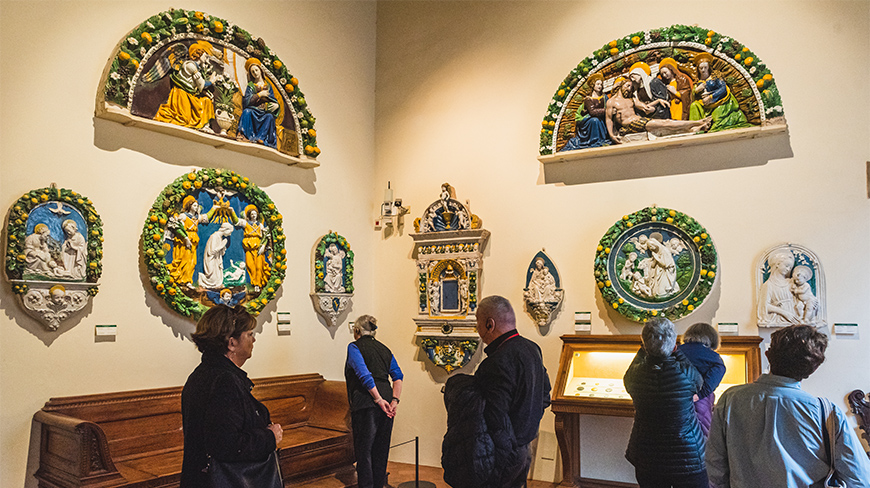
We also visit the Duomo Museum, recently reopened after a major renovation. Inside, we find more than 750 works of art spanning seven centuries, including medieval and Renaissance statues and reliefs in marble, bronze, and silver by some of the finest artists of their time.
Please note that crowded conditions are likely, which may make clear views of the most famous works difficult. Due to an ongoing restoration project, the mosaics in the vault of the Florence Baptistery may not be viewable during our visit.
Lunch:
On your own to enjoy what you like.
Afternoon:
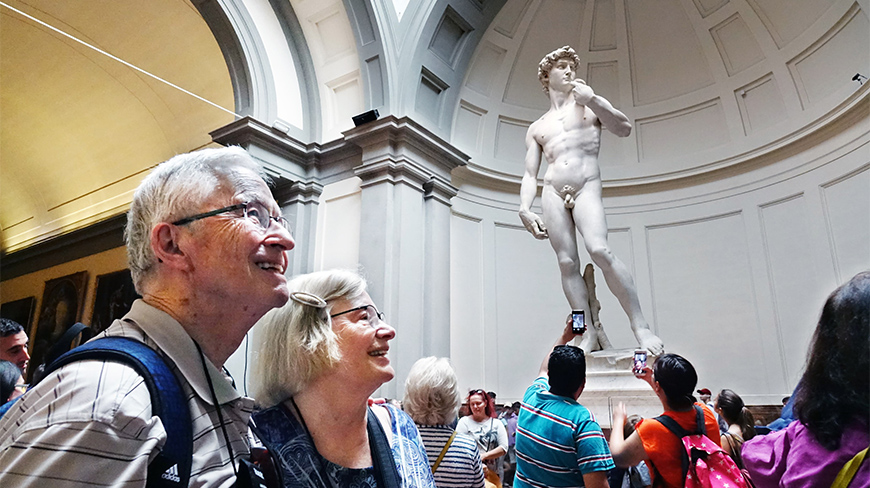
Our Group Leader will note a time and place for us to meet so we can walk together to the Accademia for a lecture on one of the most famous statues in the world, Michelangelo's David. The David stands as an enduring masterpiece of Renaissance sculpture and one of the world's most iconic works of art. Housed within the Galleria dell'Accademia, this awe-inspiring statue mesmerizes visitors with its exceptional craftsmanship and powerful depiction of the biblical figure. Carved by Michelangelo from a single block of marble between 1501 and 1504, David stands tall at over 17 feet and enthralls viewers with its remarkable level of detail and lifelike representation. From the intricate musculature to the intense gaze and the poised stance, David embodies the physical and spiritual strength that epitomized the Renaissance era.
Beyond the David, we can explore an impressive collection of Renaissance artworks, including sculptures, paintings, and musical instruments. The museum also houses Michelangelo's unfinished sculptures, known as the Prisoners, which provide valuable insights into the artist's creative process. It has been suggested that Michelangelo left them in their incomplete state to symbolize the struggle of humankind to free the spirit from matter.
Kindly note that the significant volume of visitors may present difficulties in obtaining an unobstructed view of the most renowned works; anticipate encountering crowded conditions during our visit.
Dinner:
At the hotel restaurant.
Evening:
At leisure.
Day
8
Renaissance Art, Gallerie degli Uffizi
Location:
Florence
Meals:
B,L
Stay:
Rivoli Boutique Hotel
Activity Note
Walking up to 3 miles total throughout the day with extended periods of standing during site visits; marble flooring, cobblestones, and some uneven urban stone sidewalks and streets. Unavoidable steps in the Uffizi, though an elevator is available. Airport-style security screening and bag check at entry. Timed entry, so punctuality at the meeting point is important. Large bags and backpacks must be checked before entering the Uffizi.
Breakfast:
At the hotel restaurant.
Morning:
We gather in the hotel meeting room, where an art historian joins us for an overview of medieval and Renaissance art, preparing us for our upcoming visit to the Galleria degli Uffizi. The Renaissance, an era of cultural rebirth and artistic brilliance, took shape in Italy between the 15th and 17th centuries. It marked a significant shift from the medieval period, with a renewed focus on humanism, naturalism, perspective, and classical influences.
Lunch:
At a local restaurant.
Afternoon:
We will walk to the reserved entrance of the Galleria degli Uffizi for our self-directed field trip, where we are free to venture through the museum at our own pace and explore according to our individual interests. Renowned as the most extensive collection of Renaissance art worldwide, the Uffizi showcases a remarkable journey through various artistic periods, from Gothic to medieval, Renaissance to Mannerist, encompassing painting, architecture, and sculpture. Within its hallowed halls, we will encounter a multitude of iconic masterpieces, including Leonardo da Vinci's mesmerizing Annunciation, Botticelli's ethereal Birth of Venus and enchanting Primavera, works by Titian, Michelangelo's poignant Holy Family, as well as a selection of Caravaggio and Artemisia Gentileschi's compelling artworks.
It is worth noting that a coffee bar awaits us at the end of the second corridor, atop the Loggia. Here, we can relish a moment of refreshment while marveling at the splendid view of the Palazzo Vecchio and the magnificent Duomo. This provides an ideal opportunity to rejuvenate, sip a delightful beverage, and enjoy a well-deserved rest amidst the artistic wonders that surround us.
Kindly note that the significant volume of visitors may present difficulties in obtaining an unobstructed view of the most renowned works; anticipate encountering crowded conditions during our visit.
Dinner:
On your own to sample the local fare.
Evening:
At leisure. Prepare for check-out and transfer in the morning.
Day
9
High-Speed Train to Venice, History of Venice Lecture
Location:
Venice
Meals:
B,L,D
Stay:
Hotel Principe
Activity Note
Getting on and off a high-speed train. The Frecciarossa to Venice takes about 2.25 hours (160 miles), reaching speeds up to 185 mph. Since checked bags travel ahead, pack a day pack with anything you will need. Getting on and off a vaporetto (public boat); expect some wave movement. Walking up to 3 miles on uneven stone, pedestrian-only streets and alleys. Venice is entirely pedestrian, and bridges over its smaller canals have ramps or stairs. Hotel check-in is from 2:00 p.m.
Breakfast:
At the hotel restaurant.
Morning:
As our time in Florence comes to a close, we check out of the hotel and leave our bags in the lobby with our Group Leader. From there, the bags are loaded onto a van and taken directly to our hotel in Venice, so we travel unburdened for the rest of the day.
Departing in the mid-morning, we walk to the Firenze Santa Maria Novella station and board a high-speed train to Venice, riding through the northern Italian countryside toward the city of canals.
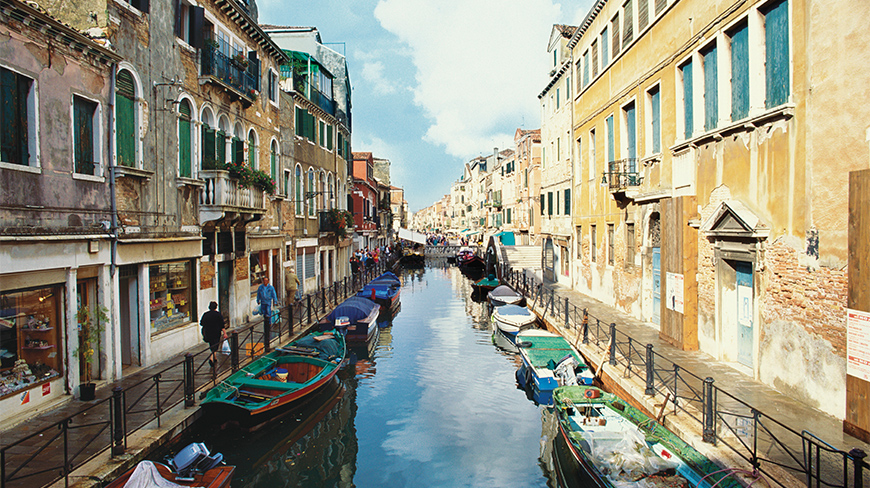
We arrive in time for lunch. On arrival, we receive our three-day vaporetto passes, which cover our time together in Venice and allow us to move around the city and reach the sites with ease. In Venice, we get around as the Venetians do, by water: from Venezia Santa Lucia station, we board an ACTV vaporetto, the city’s public transport boat, and travel the Grand Canal to Rialto, where we walk the short distance to our restaurant. Over the coming days, the vaporetto becomes our main way of moving through the city. Our three-day vaporetto passes give us unlimited rides on the major ACTV routes, making it easy to explore all six of the city’s historic districts, known as sestieri.
Please be aware that the ACTV vaporetti are often busy, and crowded conditions may limit seating and clear views along the route.
Lunch:
At the hotel restaurant.
Afternoon:
After our meal, we walk to the hotel and check into our rooms, with time to refresh and settle in after the journey.
Around 5:00 p.m., we gather in the hotel meeting room, where a local historian shares insights into the rich legacy of Venice, helping us understand the city’s history, culture, and distinctive character. Built on a lagoon, Venice has a history stretching back more than a thousand years. Founded in the 5th century as a refuge for those fleeing the fall of the Roman Empire, it grew into a powerful maritime republic and a dominant force in Mediterranean trade through the Middle Ages and the Renaissance. Its strategic position and innovative seafaring technology allowed the Venetians to build a vast trading empire and amass remarkable wealth and influence.
After the lecture, our Group Leader leads a neighborhood walk to help us get our bearings, pointing out essentials such as ATMs, pharmacies, local shops, and the nearest vaporetto stops.
Dinner:
At a local restaurant.
Evening:
At leisure.
Day
10
San Marco, Palazzo Ducale, Gondola Ride, Free Time
Location:
Venice
Meals:
B
Stay:
Hotel Principe
Activity Note
Getting on and off a vaporetto (public boat) with some waves, and getting in and out of a gondola, with assistance offered. Walking up to 4 miles throughout the day, with extended standing during site visits. Many bridges to cross, some with ramps, some with unavoidable steps. Elevators are available at San Marco and Palazzo Ducale. San Marco dress code: shoulders and knees covered. Security screening and bag checks at entry. Free-time activities are according to personal choice.
Breakfast:
At the hotel restaurant.
Morning:
By vaporetto, we will venture towards the vibrant heart of Venice, the iconic Piazza San Marco. This expansive public space, often called the "drawing room of Europe" during the 19th century, beckons us with its awe-inspiring grandeur. At the center of this splendid square, we will discover the Basilica of San Marco, adorned with intricate Byzantine-inspired mosaics and lavish decorations. Towering nearby, the Campanile, a bell tower offering panoramic views of the city, beckons us to ascend and admire the breathtaking vistas. Adjacent to these structures, the Palazzo Ducale, the seat of Venetian political power, captivates with its intricate Gothic design.
Our local expert will direct us through an immersive exploration of the Palazzo Ducale. Within the palace's opulent walls, the Doges embellished the residential quarters and ceremonial chambers of the Great Council with extravagant artwork, including murals created by masters such as Tintoretto and Veronese. As we venture through the palace, we will witness the grandeur of spacious courtrooms and the hauntingly intriguing prisons connected by the famous Bridge of Sighs. This iconic bridge earned its name from the bittersweet sighs of prisoners who crossed it, knowing it marked their final glimpse of light and freedom before incarceration.
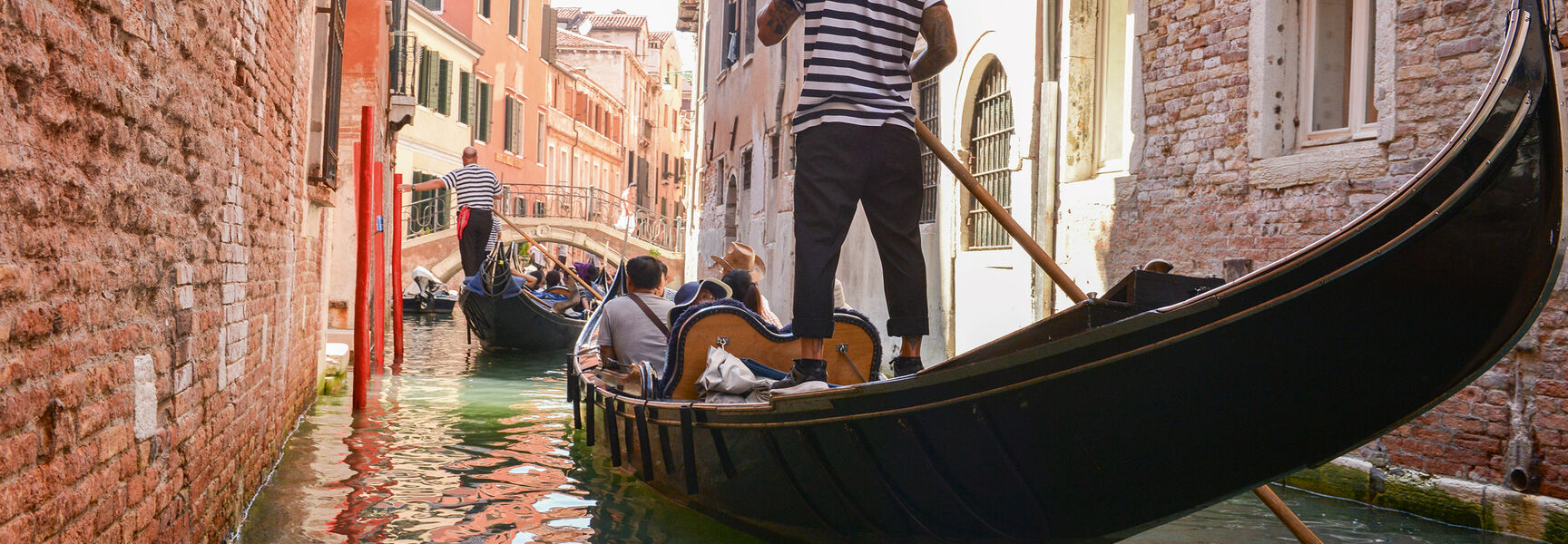
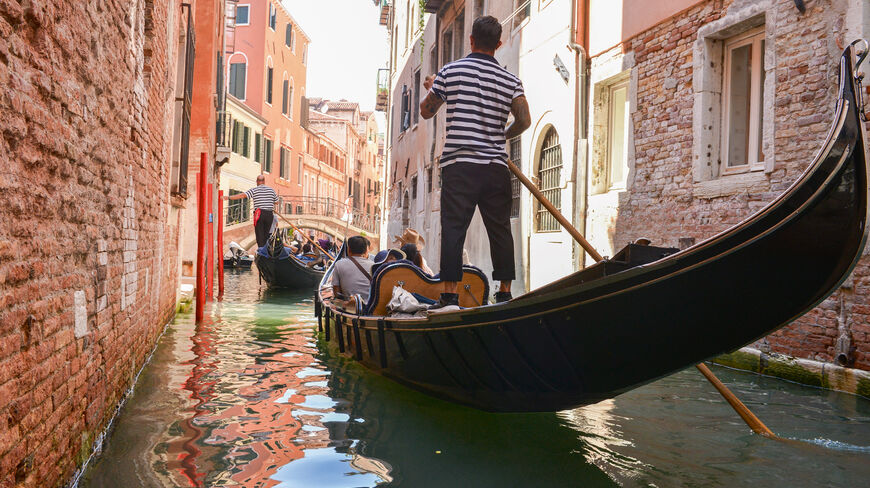
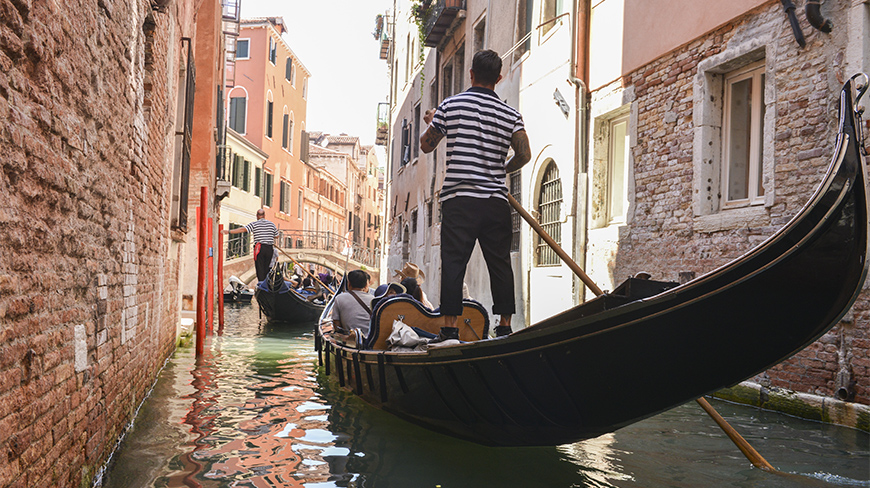
We take a gondola ride for a different view of Venice from the canals. Gondolas are flat-bottomed boats with a distinctive iron prow (the "ferro"). Once the city's main transport, they are now handmade by specialized boatbuilders and used for sightseeing.
Lunch:
On your own to enjoy what you like.
Afternoon:
Free time. Take this opportunity for personal independent exploration to see and do what interests you most. The Group Leader will be happy to offer suggestions.
Dinner:
On your own to sample the local fare.
Evening:
At leisure.
Day
11
Frari, Rialto, Free Time
Location:
Venice
Meals:
B,D
Stay:
Hotel Principe
Activity Note
Getting on and off a vaporetto, with some waves. Walking up to 4 miles throughout the day with extended periods of standing during site visits; cobblestones, marble flooring, and some uneven urban stone sidewalks. Crossing bridges that span canals, some with ramps and steps, and some may lack handrails. Unavoidable stairs, including at the Frari. Frari dress code: shoulders and knees must be covered. Free-time activities are according to personal choice.
Breakfast:
At the hotel restaurant.
Morning:
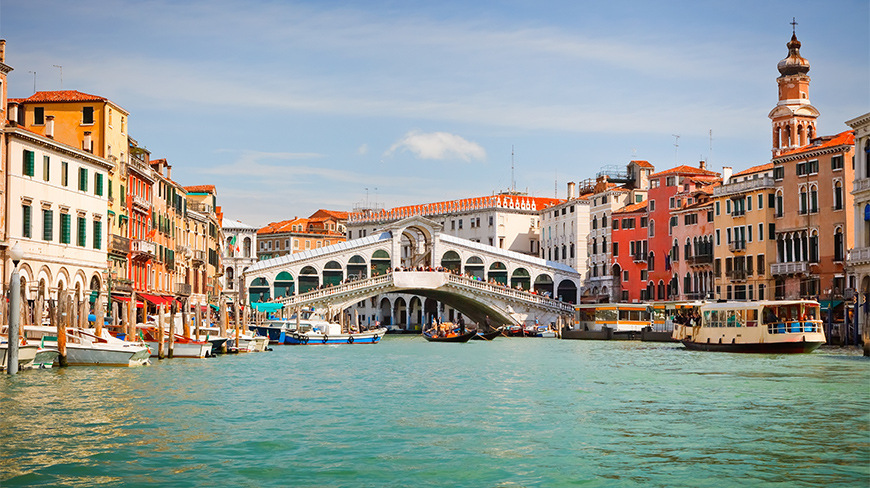
We board the vaporetto nearest our hotel and travel to the Rialto area in the historic sestiere of San Polo. With a local expert, we set out on an expert-led walk through one of Venice’s oldest districts. Along the way, we cross the Rialto Bridge, the city’s oldest, which links the San Polo and San Marco sestieri. From the top, we take in views of the Grand Canal and its busy boat traffic.
We end at the Rialto markets, a hub of Venetian food culture that has supplied the city since 1097. Each morning, barges arrive with fresh produce, and the stalls fill with fruits, vegetables, seafood, and more. We have some free time to explore the market on our own and take in its lively atmosphere, where Venetians have shopped for their food for centuries.
Please note that we may encounter crowded conditions during our visit.
Lunch:
On your own to sample the local fare.
Afternoon:
Free time. Take this opportunity for personal independent exploration to see and do what interests you most. The Group Leader will be happy to offer suggestions.
Dinner:
At the hotel restaurant. Recap your adventures and share your favorite memories.
Evening:
At leisure. Be sure to prepare for check-out and departures in the morning.
Day
12
Program Concludes, In Transit From Program
Location:
In Flight
Meals:
B
Activity Note
Hotel check-out 11:00 a.m. See your program’s travel details regarding transfers. The hotel has a private dock where bags are loaded onto the boat. Boat transfer to Venice Marco Polo Airport is about 30 minutes. At the airport dock, bags are unloaded a few steps from the water transportation wing. Follow signs to the main terminal; luggage carts and a moving walkway are available.
Breakfast:
At the hotel restaurant; for those with early departures, the hotel will prepare a bagged breakfast with a fruit, a roll or pastry, fruit juice, and water to take with you. This concludes our program.
Morning:
If you are returning home, safe travels. If you are staying on independently, have a wonderful time. If you are transferring to another Road Scholar program, detailed instructions are included in your Information Packet for that program. We hope you enjoy Road Scholar learning adventures and look forward to having you on rewarding programs in the future. Don’t forget to join our Facebook page and follow us on Instagram. Best wishes for all your journeys!
Please select a day to update the map
Map details are not available for this location.
Please Note:
This program has itinerary variations on certain dates.